
Michelin Selected
Nazuna Kyoto Higashihonganji is a Michelin Selected machiya inn in Shimogyo, positioned steps from one of Kyoto's most significant Buddhist temple complexes. Where international luxury brands compete on scale and amenity counts, Nazuna operates in the smaller-format ryokan tier, where architectural restraint and neighborhood rootedness are the primary credentials.

Pearl is the En Primeur Club membership app — saves, bookings, and concierge access live there. Same editors, same standards.
- Address
- Japan, 〒600-8159 Kyoto, Shimogyo Ward, Kamecho, 2
- Phone
- +81 75-585-2670
- Website
- nazuna.co
- Directions
- Get directions
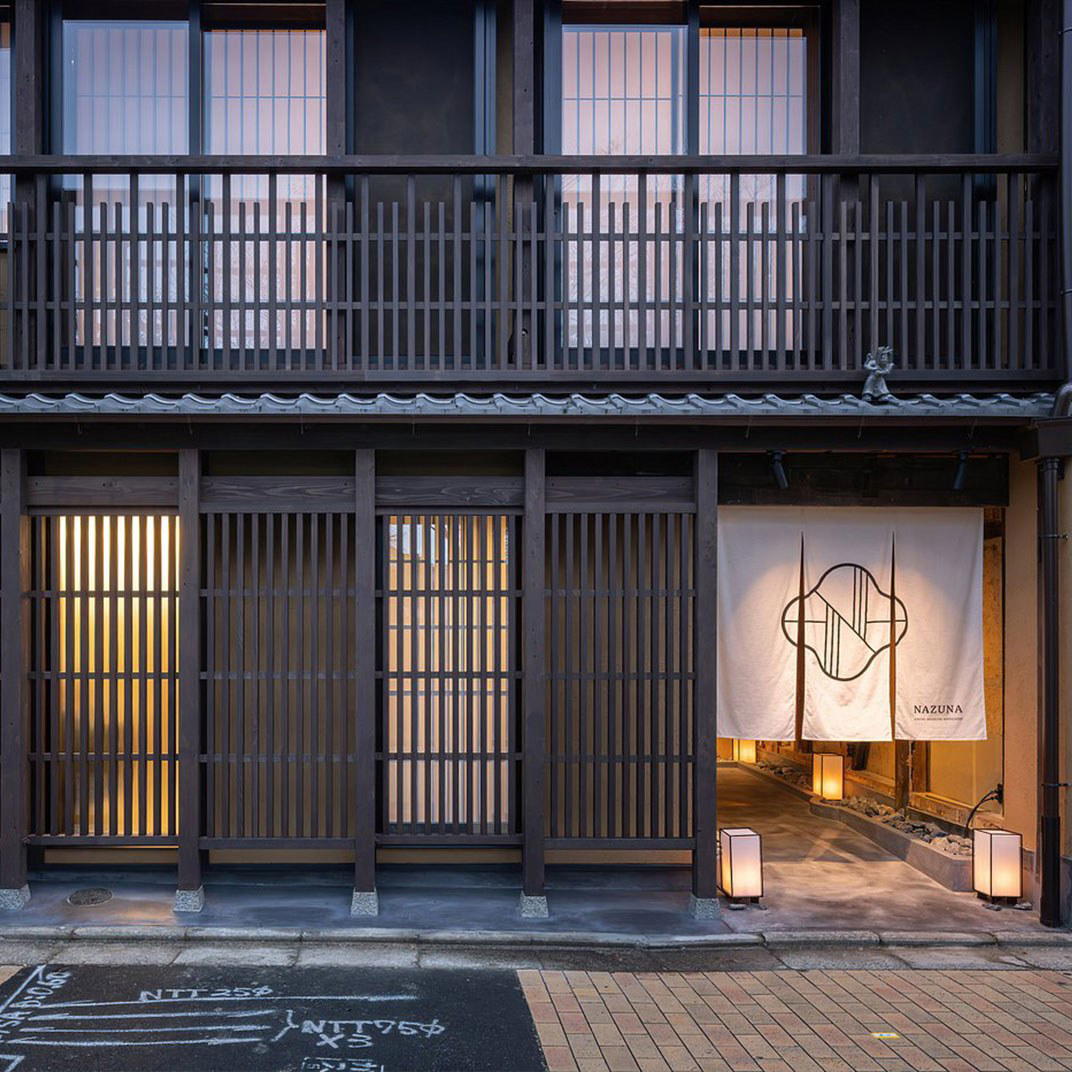
Shimogyo and the Temple District That Frames It
The district around Higashihonganji temple occupies a different register from Kyoto's more photographed corridors. Shimogyo-ku is a working ward rather than a tourist set piece: its streets mix incense merchants, fabric wholesalers, and the deep institutional gravity of one of Japan's largest wooden structures, the Goei-do hall of Higashihonganji, whose roof ridge rises above the surrounding rooflines with quiet authority. Approaching the area on foot from Kyoto Station, roughly ten minutes to the north, you move through a streetscape that transitions gradually from transit infrastructure to temple precincts, without the sudden scenographic shift that defines more deliberately curated parts of the city.
This is the context Nazuna Kyoto Higashihonganji occupies. Michelin Selected in the 2025 hotel guide, the property sits at Kamemachi 2 in Shimogyo and represents a category of Kyoto accommodation that prioritizes location depth over branded spectacle. The Michelin hotel selection process evaluates comfort, character, and service consistency rather than celebrity chef adjacency or lobby square footage, which means inclusion signals a different kind of editorial confidence than a star rating.
The Machiya Format and What It Actually Demands
Machiya inn culture in Kyoto has expanded considerably over the past fifteen years, from a handful of conversion projects to a recognizable category with its own price tier and booking conventions. The leading examples preserve the narrow-fronted, deep-plan logic of the traditional townhouse while meeting contemporary guest expectations for bath quality, bedding, and climate control. The format makes specific spatial demands: rooms are smaller than equivalent luxury hotel rooms, corridors are tighter, and the relationship between indoor and outdoor space is governed by the original structure rather than a hospitality brief.
For guests accustomed to international luxury hotels, the adjustment is real but rewarding. The machiya format is not a compromise version of a hotel room; it is a different architectural logic, one in which the layering of materials, the threshold between tatami and engawa, and the framed view of an interior garden carry the experiential weight that a larger property might distribute across a spa, multiple restaurants, and a fitness floor. Properties operating in this format compete on character density rather than amenity breadth, and Michelin's selection of Nazuna Kyoto Higashihonganji places it inside the credible tier of that category.
Kyoto's premium accommodation market has effectively split into two distinct models. The international flag model is represented by properties like Four Seasons Hotel Kyoto, Park Hyatt Kyoto, and Aman Kyoto, each deploying significant key counts, multiple dining outlets, and internationally recognizable brand infrastructure. The locally rooted model encompasses machiya inns, small ryokan, and design-led independents like The Shinmonzen and SOWAKA. Nazuna operates in the second category, with a Michelin credential that positions it among properties where editorial curation, not brand recognition, drives discovery.
Cultural Weight as an Amenity
Proximity to Higashihonganji is not incidental to the Nazuna experience. The temple is the headquarters of the Otani-ha branch of Jodo Shinshu Buddhism, a school of practice with a lay membership historically in the tens of millions across Japan, and its compound in Shimogyo is correspondingly vast. The Goei-do, rebuilt after fire in 1895, remains one of the largest wooden buildings in the world by floor area. Morning visits, before the mid-morning tourist traffic builds, place guests in a compound of exceptional spatial gravity where the predominant sounds are pigeons and the occasional hand bell rather than tour group commentary.
This kind of cultural adjacency is genuinely scarce in Kyoto's premium accommodation market. HOTEL THE MITSUI KYOTO operates near Nijo Castle with comparable historical framing. Ace Hotel Kyoto and Dusit Thani Kyoto position differently, toward the design-forward and internationally branded respectively. What Nazuna offers is not a curated cultural program layered on top of standard hospitality, but rather a structural condition: your mornings begin next to one of Japan's most significant religious sites.
Across Japan more broadly, the tier of culturally embedded small properties is deep and regionally distributed. Gora Kadan in Hakone, Amanemu in Mie, Asaba in Izu, and Nishimuraya Honkan in Kinosaki-cho each represent versions of high-context Japanese hospitality rooted in specific geographies. Nazuna belongs to that tradition, applied to an urban Kyoto address. Properties like Zaborin in Kutchan, Kamenoi Besso in Yufu, Fufu Nikko in Nikko, Sekitei in Hatsukaichi-shi, Benesse House in Naoshima, Halekulani Okinawa in Okinawa, Jusandi in Ishigaki, and Fufu Kawaguchiko in Fujikawaguchiko extend the map of this Japanese hospitality tradition to further regions, demonstrating how consistently the format travels across the country's geographic range.
Planning Your Stay
Shimogyo-ku sits immediately north of Kyoto Station, which makes it one of the most logistically convenient base locations in the city: the Shinkansen, city buses, and the Kintetsu and Karasuma subway lines are all accessible within a short walk. For guests arriving from Tokyo, the journey by Nozomi Shinkansen takes approximately two hours fifteen minutes. Kyoto's peak booking periods cluster around cherry blossom season in late March to early April and autumn foliage in November, when even smaller properties reach capacity weeks or months in advance. Visiting outside those windows, particularly in late May or September, generally allows more flexibility. Given Nazuna's Michelin Selected status and the relative scarcity of machiya-format rooms across the category, advance planning is advisable regardless of season. Our full Kyoto guide covers the broader accommodation and dining picture across the city's wards.
For travelers contextualizing this within a wider Japan itinerary, Kyoto pairs naturally with a night at Bvlgari Hotel Tokyo in Tokyo at the international luxury end, or with onsen-focused departures toward properties like Amanemu in Mie for those extending south. European travelers calibrating expectations against familiar luxury hotel coordinates might usefully compare against Badrutt's Palace Hotel in St. Moritz or Hôtel de Paris Monte-Carlo in Monte Carlo, both of which represent the grand-hotel format that machiya properties deliberately set themselves apart from. The The Fifth Avenue Hotel in New York City offers another useful contrast: boutique-scaled but Western in logic, versus the Japanese spatial grammar that defines the Nazuna experience.
Just the Basics
| Venue | Price | Awards |
|---|---|---|
| Nazuna Kyoto HigashihonganjiThis venue — the venue you are viewing | Not listed | Michelin Selected |
| Aman Kyoto | Not listed | 2 Michelin Keys · World's 50 Best #74 |
| Park Hyatt Kyoto | $500–750 | 1 Michelin Key · World's 50 Best #37 |
| The Ritz-Carlton, Kyoto | $500–750 | 1 Michelin Key · La Liste Top Hotels |
| Four Seasons Hotel Kyoto | $1,000–1,500 | 1 Michelin Key · La Liste Top Hotels |
| Ace Hotel Kyoto | $200–300 | 1 Michelin Key · Mr & Mrs Smith Seal of Approval |
Recognition history
Dated appearances from independent guides and award organizations, with the underlying list record or original source where available.
Michelin Selected
Michelin
Continue exploring
More in Kyoto
Hotels in Kyoto
Browse all →
Bars in Kyoto
Browse all →

Restaurants in Kyoto
Browse all →
Wineries in Kyoto
Browse all →
Details
- Romantic
- Quiet
- Elegant
- Intimate
- Cozy
- Sophisticated
- Minimalist
- Romantic Getaway
- Honeymoon
- Anniversary
- Weekend Escape
- Historic Building
- Design Destination
- Private Dining
- Wi Fi
- Massage
- Room Service
- Concierge
- Restaurant
- Street Scene
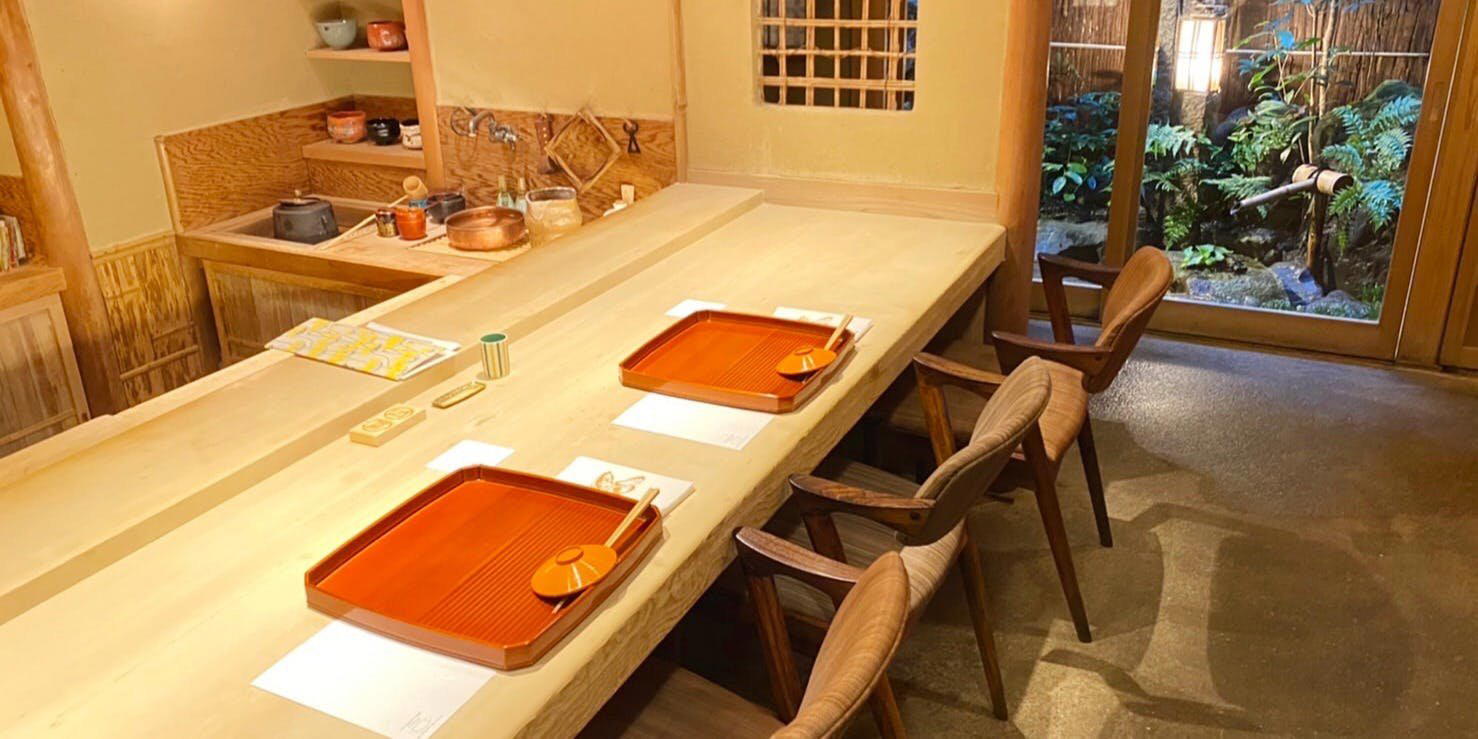
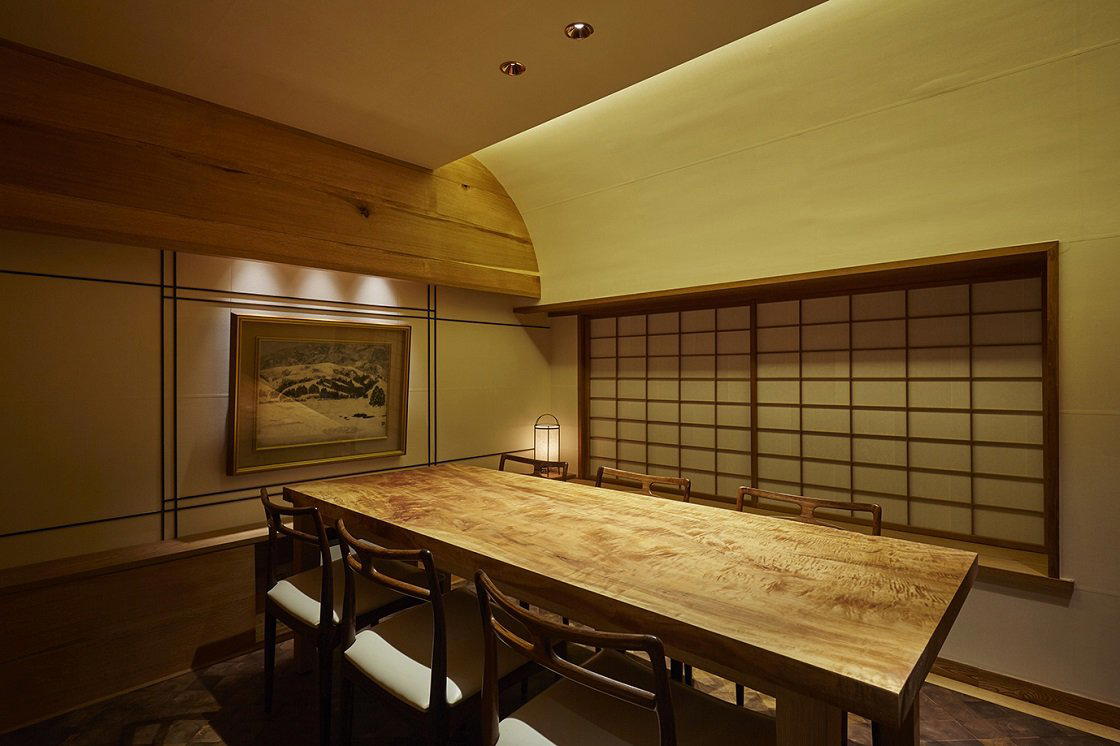
Tranquil and inviting atmosphere harmonizing traditional Japanese elements with contemporary comforts, praised for its serene and elegant charm.