
2 Michelin Keys
Five villas on a private beach in Ishigaki, the southernmost reaches of Japan's Okinawan archipelago. Designed by architect Norihito Dan, whose practice spans airports and office towers, Jusandi translates large-scale spatial thinking into intimate luxury. A Michelin 2 Keys property priced from around $1,054 per night, it represents the quieter, architecture-led end of Japanese premium accommodation.

Pearl is the En Primeur Club membership app, where members save venues, book tables and use the concierge.
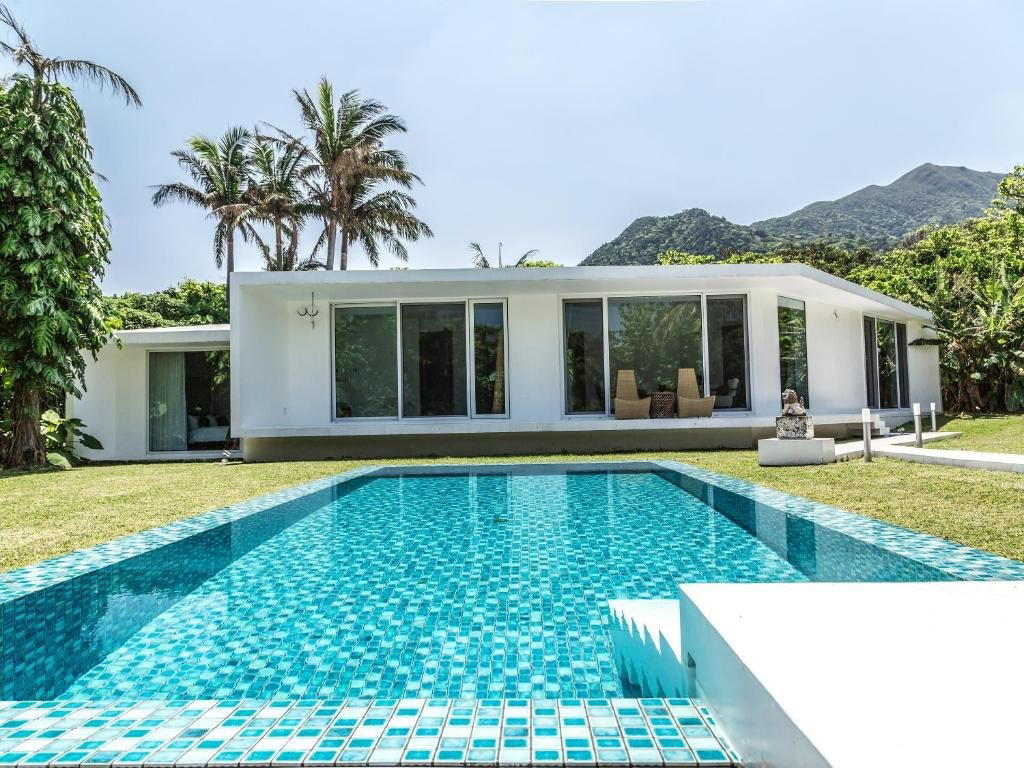
Architecture at the Edge of Japan
The southernmost islands of the Japanese archipelago sit geographically closer to Taipei than to Tokyo, and the air in Ishigaki confirms it: subtropical warmth, coral-threaded water, and a vegetation density that belongs more to Southeast Asia than to the Japan of temple gardens and cedar forests. Into this environment, architect Norihito Dan placed Jusandi, a five-villa property whose design logic runs counter to the theatrical eco-resort trend that has colonised this category across Asia. Where many properties at this price point reach for spectacle, Dan's work here is disciplined restraint applied to a site that needs no embellishment.
Dan's professional portfolio tends toward civic and commercial scale: airports, office towers, the infrastructure of mass movement. That background shows at Jusandi, not in size but in the precision with which each structure engages its site. Minimalism in Japanese architecture carries specific weight, rooted in a tradition that treats negative space as active rather than absent. Jusandi operates within that lineage, positioning it in a distinct peer group from the ornate ryokan tradition represented by properties like Araya Totoan in Kaga or Nishimuraya Honkan in Kinosaki. Both traditions belong to premium Japanese hospitality; they are simply speaking different formal languages.
Five Villas, One Private Beach
The property comprises five villas split between one- and two-bedroom configurations, each sharing access to a private beach. At this scale, the arithmetic of exclusivity is simple: on a full night, a maximum of five parties occupy the entire estate. That ratio of space to guest is what the roughly $1,054 per night starting rate is purchasing as much as any single amenity. The Michelin Guide awarded Jusandi 2 Keys in 2024, its second tier of hotel recognition, placing the property in a category defined by strong design identity and considered guest experience rather than volume of facilities.
Japan's premium accommodation market has diversified sharply over the past decade. The urban end is anchored by large-format luxury like Bvlgari Hotel Tokyo, while the ryokan tradition runs through properties such as Gora Kadan in Hakone and Asaba in Izu. A smaller cohort of design-led boutique properties sits outside both categories, prioritising architectural identity and low key counts over comprehensive programming. Jusandi belongs to that cohort. A useful comparison within the same archipelago is Halekulani Okinawa, which sits at the larger, resort-format end of Okinawan luxury. Jusandi is its structural opposite.
The Okinawan Setting as Architectural Argument
Good site-specific architecture makes an argument about place, and Ishigaki's natural character is the most compelling raw material available to any designer working here. The island sits at the northern edge of the Yaeyama archipelago, surrounded by water that shifts from pale jade at the shore to deep blue offshore. The coral systems here are among the healthiest remaining in Japanese waters, which is why snorkelling and diving function as genuine draws rather than checkbox amenities at properties of this type.
The Blue Cave, a coral-lined cavern accessible from the water near the island, has acquired a reputation well beyond the diving community. Its particular optical quality, where filtered light refracts through shallow coral-edged water to produce an ambient glow, is the kind of natural phenomenon that makes architectural restraint the appropriate response: the building's job is to frame and connect, not to compete. Dan's approach at Jusandi reads as a considered answer to that brief.
Each villa includes a plunge pool, which in this climate functions as a genuine amenity rather than a symbolic one. The thermal logic of Ishigaki, warm enough for year-round outdoor use, means that the boundary between interior and exterior at properties like this is more porous than in cooler Japanese climates. That permeability is part of what separates Okinawan luxury from the more enclosed, inward-looking character of hot spring ryokan in places like Zaborin in Hokkaido or ENOWA Yufu in Yufu.
Where Jusandi Sits in the Broader Japanese Design-Hotel Conversation
Japan has produced a distinct strand of architecture-led hospitality that sits outside the international luxury chain framework and outside the traditional ryokan format. Benesse House on Naoshima is the reference point that reshaped how the category was understood globally, fusing museum programming with hotel infrastructure on an island purpose-built for the encounter. Jusandi operates on a smaller, less programmatic register, with the architecture itself rather than the cultural program as the primary offering. Other points in this design-led cohort include Azumi Setoda in Onomichi and BYAKU Narai in Narai, each representing an approach where the physical environment carries most of the editorial weight.
What connects these properties is a commitment to specificity of place. The design vocabulary at each is calibrated to its site rather than imported from a corporate style guide. At Jusandi, that specificity is the subtropical Okinawan setting, the light, the vegetation, the relationship of the villas to the private beach, and the water that begins just beyond it. Proprietor Yutaka Momiyama's stewardship of a passion project commissioned from a large-scale commercial architect is the kind of circumstance that produces interesting results precisely because it bypasses the hospitality design industry's usual logic.
Planning a Stay
Jusandi sits at 470 Fukai, Ishigaki, Okinawa 907-0451, approximately 16 kilometres from New Ishigaki Airport via highways 390, 209, and 87, a drive of around 30 minutes depending on conditions. Ishigaki is served by domestic flights from major Japanese cities including Tokyo and Osaka, as well as some international connections through the Okinawan route network. The five-villa format means that availability is structurally limited: serious interest should translate into early planning, particularly for the winter and spring months when the subtropical climate draws visitors seeking warmth during the Japanese mainland's colder season. Room rates start from approximately $1,054 per night. For the broader Ishigaki accommodation and dining picture, see our full Ishigaki guide.
Readers considering Japan's wider premium hotel options might also look at HOTEL THE MITSUI KYOTO for urban heritage, Amanemu in Mie for onsen-anchored design hospitality, Fufu Kawaguchiko for Fuji-view ryokan, or Fufu Nikko for forest-set retreat. Each occupies a different position in what has become a genuinely diverse premium accommodation market, with Jusandi representing the architecture-first, low-density end of that range in one of Japan's most visually compelling island settings.
Quick Comparison
| Venue | Awards |
|---|---|
| JusandiThis venue (the venue you are viewing) | 2 Michelin Keys |
| Bvlgari Hotel Tokyo | 3 Michelin Keys · World's 50 Best #24 |
| Aman Kyoto | 2 Michelin Keys · World's 50 Best #74 |
| Aman Tokyo | 2 Michelin Keys · World's 50 Best #11 |
| Amanemu | 3 Michelin Keys · La Liste Top Hotels |
| Four Seasons Hotel Tokyo at Otemachi | 3 Michelin Keys · La Liste Top Hotels |
Recognition history
Dated appearances from independent guides and award organizations, with the underlying list record or original source where available.
Michelin 2 Keys
Michelin
Full recognition history (3 entries)
Michelin 2 Keys
Michelin
Michelin 2 Keys
Michelin
Continue exploring
More in Ishigaki
Hotels in Ishigaki
All hotels in Ishigaki →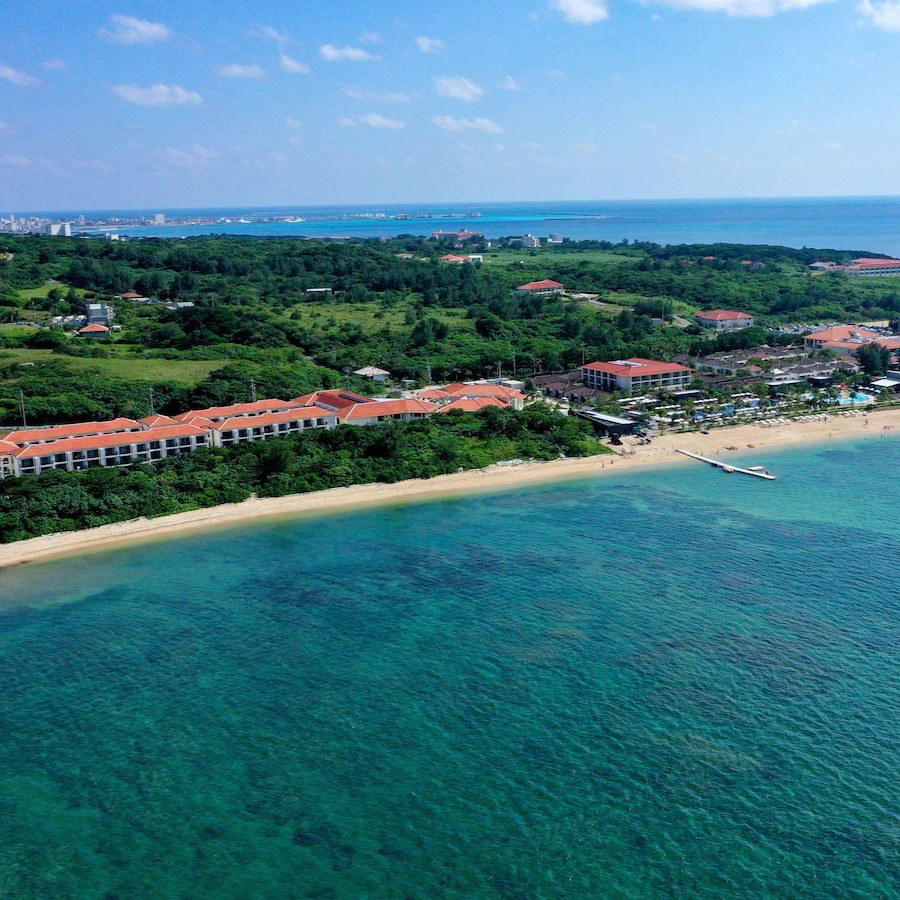

Details
- Romantic
- Quiet
- Scenic
- Intimate
- Elegant
- Honeymoon
- Romantic Getaway
- Anniversary
- Weekend Escape
- Beachfront
- Panoramic View
- Wi Fi
- Pool
- Spa
- Restaurant
- Concierge
- Room Service
- Beach Access
- Waterfront
- Garden
Tranquil and elegant with lush jungle, manicured gardens, airy modern villas, and serene sea views praised for privacy and peace.