









La Mamounia belongs to Marrakech’s grand-palace tradition: a city-wall address, expansive gardens, zellige, cedar, marble and a hospitality register shaped by nearly a century of international attention. Its current standing is backed by Condé Nast Traveler recognition, World’s 50 Best Hotels rankings, La Liste scoring,476 reviews.
Pearl is the En Primeur Club membership app — saves, bookings, and concierge access live there. Same editors, same standards.
- Address
- Avenue Bab Jdid، مراكش 40040
- Phone
- +212 5 24 38 86 00
- Website
- mamounia.com
- Directions
- Get directions
 Saves & bookings on Pearl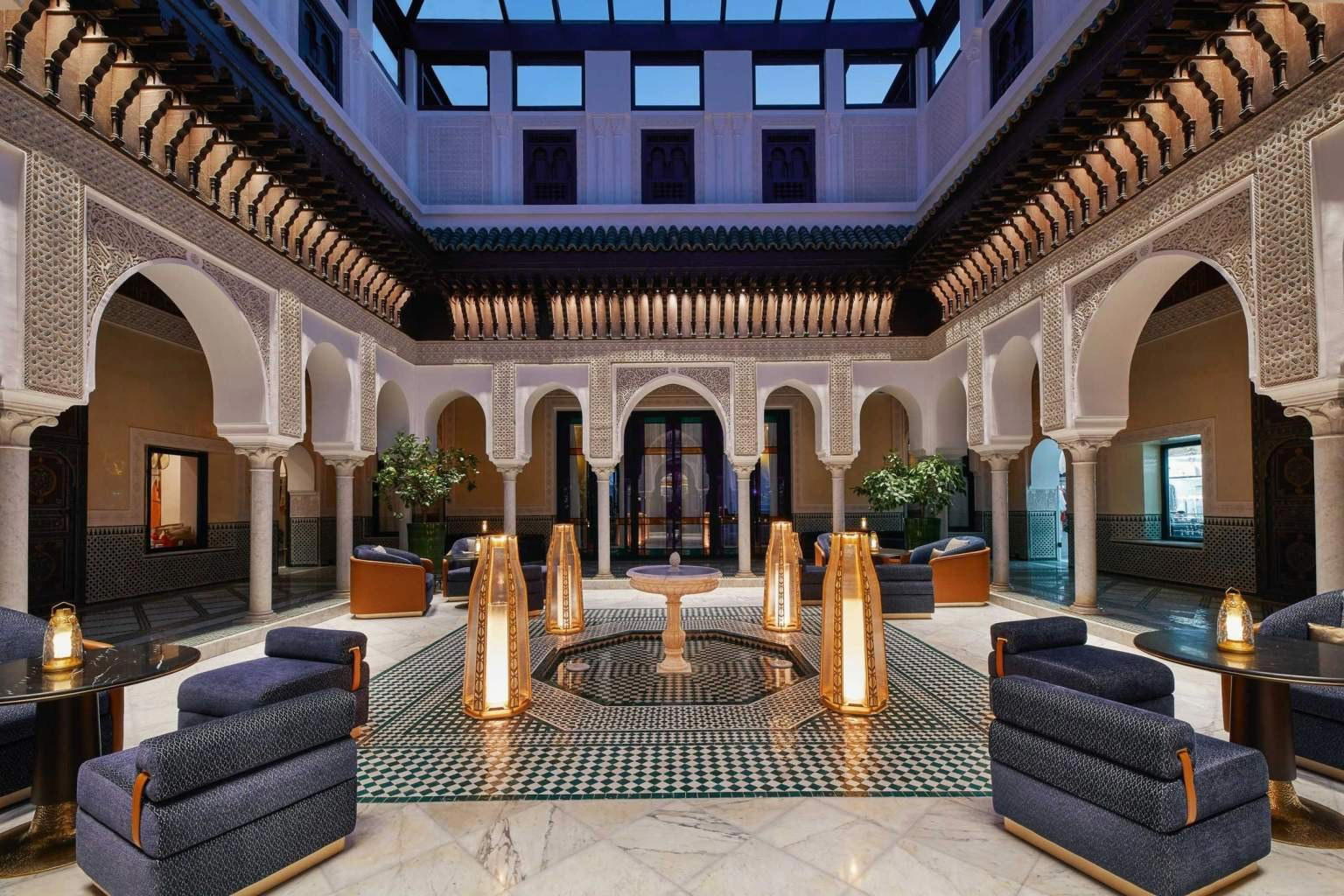
Inside the city walls, Marrakech's palace-hotel language gets amplified
The approach to La Mamounia is less about arrival than transition. Avenue Bab Jdid sits at the edge of the old medina, where the city’s noise gathers around gates, gardens and the silhouette of the Koutoubia Mosque. Inside, the hotel shifts the register: zellige tilework, fountains, ponds, cedar, marble, painted columns and the controlled perfume of orange blossom, jasmine and roses. Marrakech has many intimate riads, many resort compounds and a growing number of design-led desert retreats, but its palace hotels occupy another category. They translate Moroccan craft into scale, using courtyards, gardens and ceremonial public rooms to make hospitality feel architectural rather than decorative.
That is the lens through which La Mamounia makes sense. Opened in 1923, the hotel carries the long memory expected of a grand address, yet its current relevance depends on how convincingly that history has been reworked for contemporary luxury. The awards record is unusually dense for a Moroccan hotel: Condé Nast Traveler named it “The Leading Hotel in the World” and “The Leading Hotel in Africa” for 2021; World’s 50 Best Hotels ranked it No. 6 in 2023, No. 31 in 2024 and No. 30 in 2025; La Liste Leading Hotels gives it 98.5 points for 2026; and Condé Nast lists it at No.
Marrakech luxury has split into several recognizable forms. Royal Mansour represents high-protocol palace privacy through riads and service infrastructure. Amanjena belongs to the quieter resort tradition outside the medina’s pulse. Smaller city houses such as AnaYela, Dar Assiya, Dar Darma and Dar Housnia work from the riad grammar of enclosed domesticity. La Mamounia sits between these worlds: large enough for resort infrastructure, close enough to the medina to feel urban, and theatrical enough to treat public space as part of the stay.
Architecture, gardens and the Marrakech idea of enclosure
The hotel’s design identity rests on a particular Moroccan principle: the exterior does not reveal the interior’s full intensity. Once inside, materials do the work. The small discrepancy is less important than the scale it signals. This is not a boutique riad with a few bedrooms around a courtyard; it is a full palace hotel using riad references across a far larger canvas.
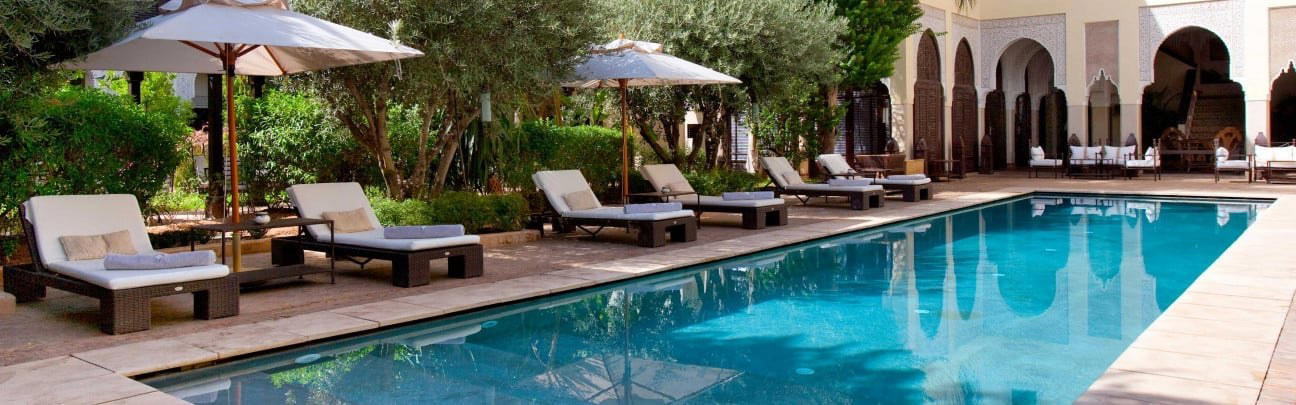
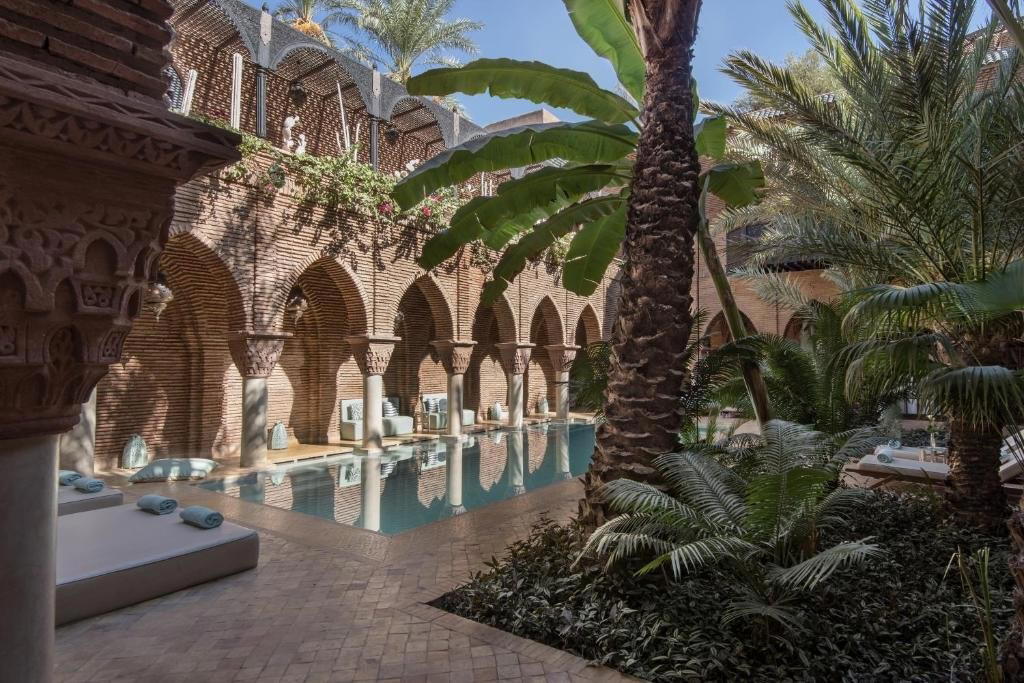
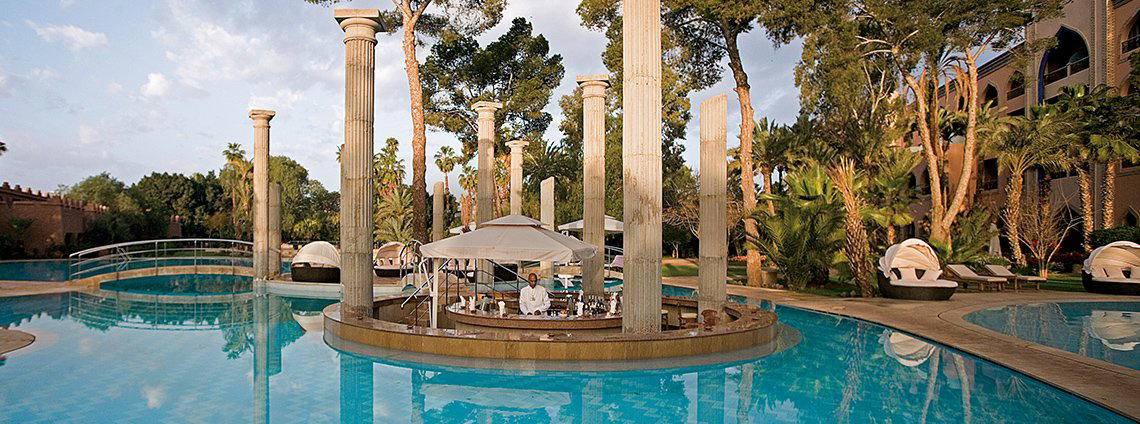
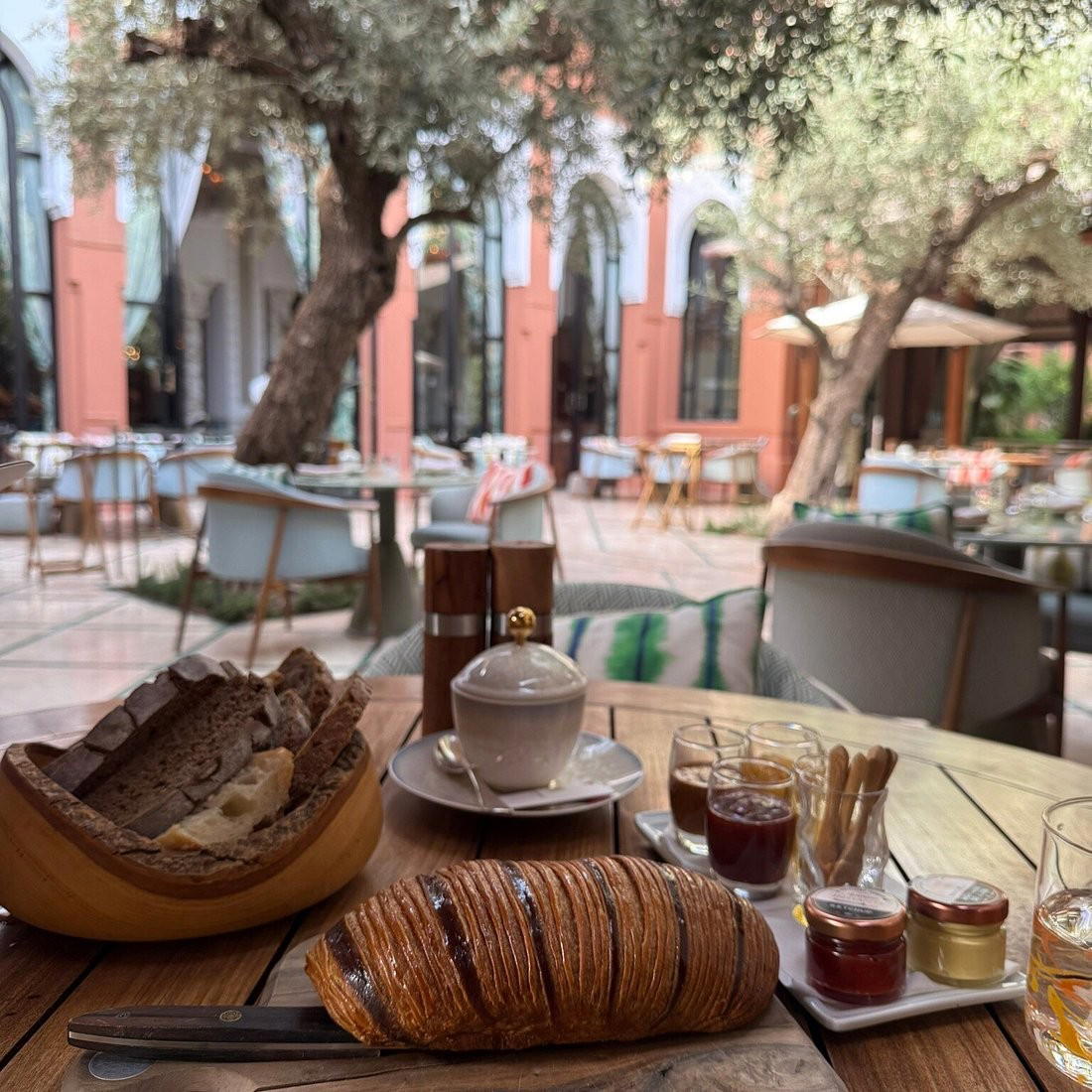
The gardens carry equal weight. The property is described as having about 20 acres filled with orange trees, rose bushes, cacti, palms and olive trees, with other published hotel material citing 17 or 18 acres in reference to the estate’s historic garden. In Marrakech, gardens are not scenery. They are climate strategy, status symbol and urban relief. Against the medina’s density, La Mamounia’s planted grounds create a cooling counter-rhythm, a reason guests can spend an afternoon on property without feeling sealed off from the city’s identity.
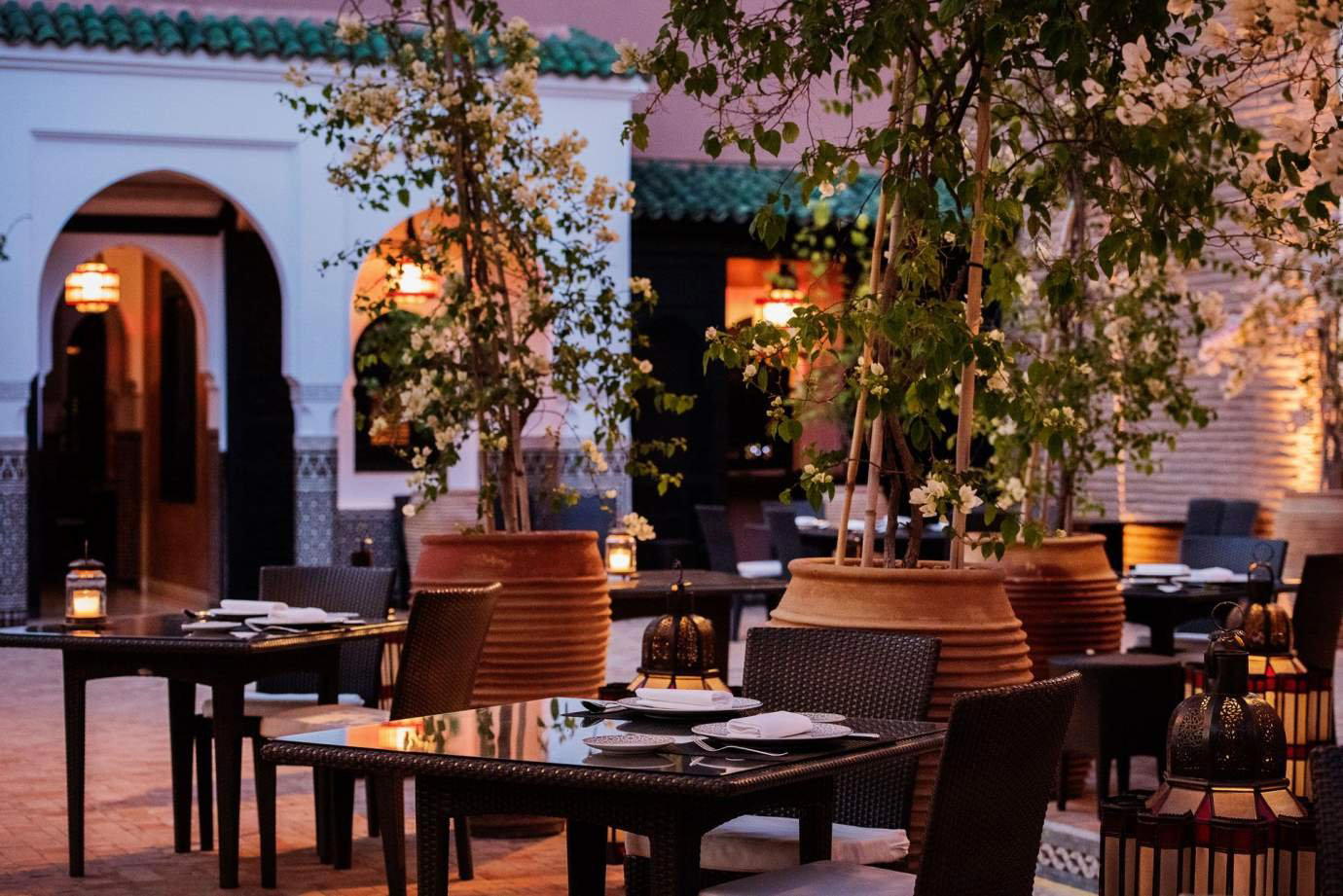
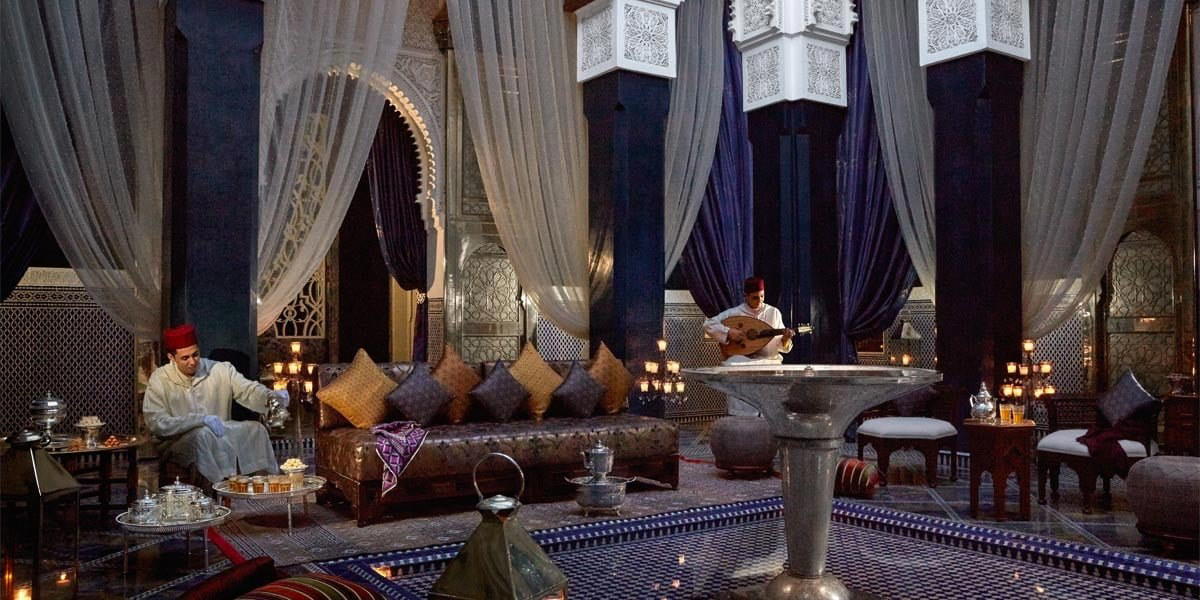
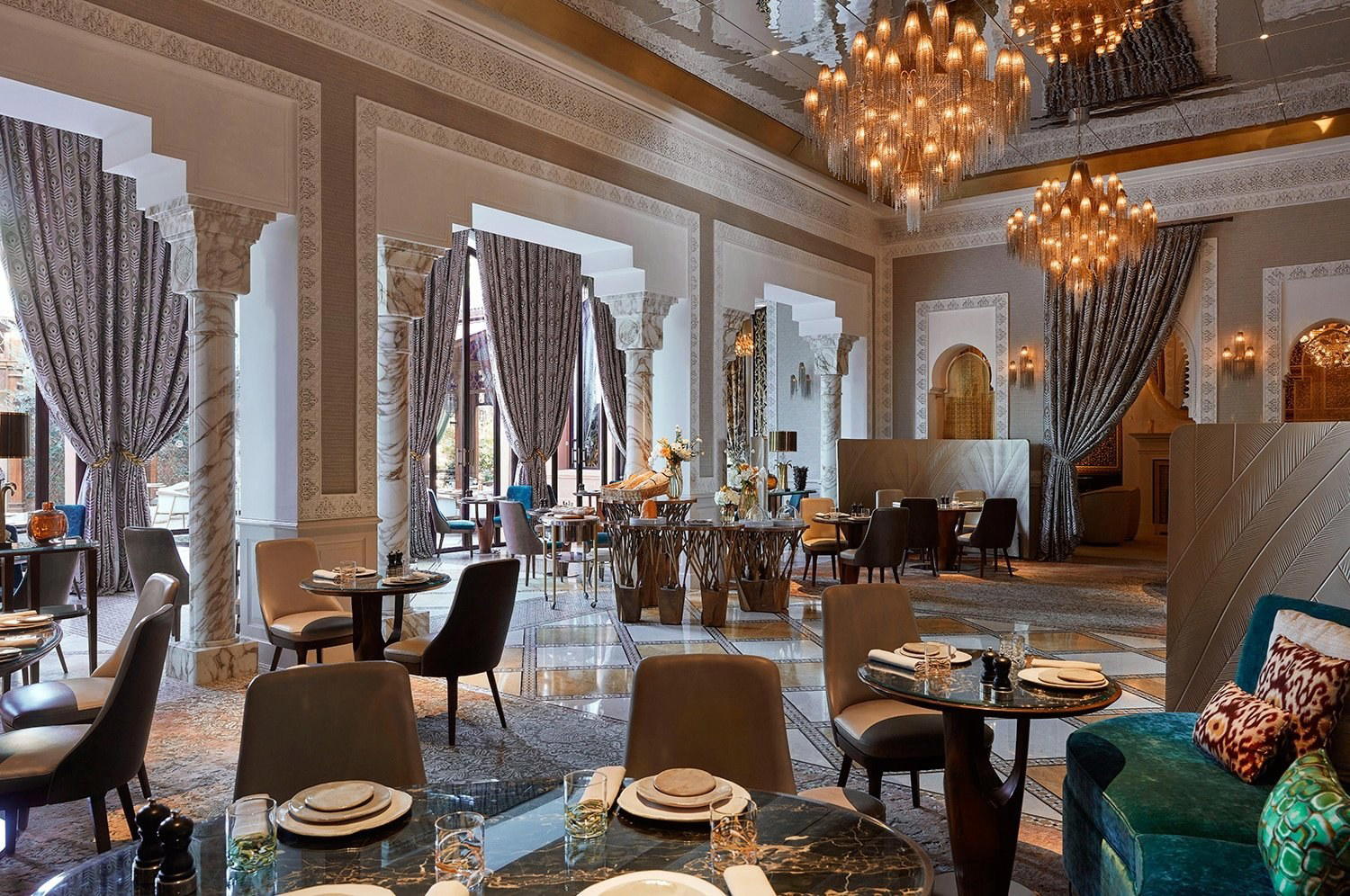
For design-led travelers, the lobby is the key first reading: colorful zellige, fountains and ponds, a public room that prioritizes pattern, reflection and scent. The hotel’s recent refresh during the pandemic period intensified the maximalist side of the property rather than trying to make it quiet or minimalist. That choice matters. A growing class of international luxury hotels has flattened local references into beige discretion; La Mamounia moves in the opposite direction, keeping Art Deco and Moroccan craft in visible conversation. Its grandeur can feel excessive, but excess is part of the point in this category.
How the rooms fit the building
Room categories are organized around outlook as much as footprint. Accommodations can face the Koutoubia minaret, the park or the Agdal Gardens. Deluxe rooms and higher categories include terraces, which makes sense in a city where morning light, evening air and garden views are part of the value proposition. Seven suites are described as distinct, with VIP service on arrival and throughout the stay, while three secluded three-bedroom riads inside the property measure 7,500 square feet each and surround a central courtyard and pool. That private-riad format places the hotel in dialogue with Marrakech’s domestic architecture, but with the security and services of a large hotel wrapped around it.
The better room decision depends on what the traveler wants from Marrakech. A Koutoubia-facing room ties the stay to the city’s skyline. Garden-facing rooms use quiet as the luxury signal. The riads suit travelers seeking privacy without leaving the main property. At a listed price of $1,457, the calculation is not about finding basic shelter near the medina; it is about choosing which version of Marrakech to inhabit: city-wall theater, garden retreat or enclosed private residence.
Dining as a map of palace-hotel expectations
Large luxury hotels in Marrakech increasingly function as dining campuses, and La Mamounia follows that pattern with a mix of Moroccan reference points and international names. L’Asiatique par Jean-Georges brings a South-East Asian frame through chef Jean-Georges. L’Italien par Simone Zanoni gives the property an Italian counterweight built around seasonal ingredients and contemporary technique. Le Marocain is the local anchor, described in the record as traditional cuisine with Arab-Andalusian decoration and high-quality products. Le Pavillon de la Piscine handles the day’s looser rhythm, with separate stations and dishes inspired from Morocco and elsewhere.
This spread says something about the city’s palace-hotel audience. The luxury traveler in Marrakech often wants Moroccan food, but not at every meal. The strongest hotel dining programs therefore balance place with escape: Moroccan craft at dinner, poolside ease during the day, and international kitchens for longer stays. Readers planning meals beyond the hotel should pair the property with Our full Marrakech restaurants guide, because the city’s dining range extends from medina courtyards to resort dining rooms and contemporary Moroccan kitchens.
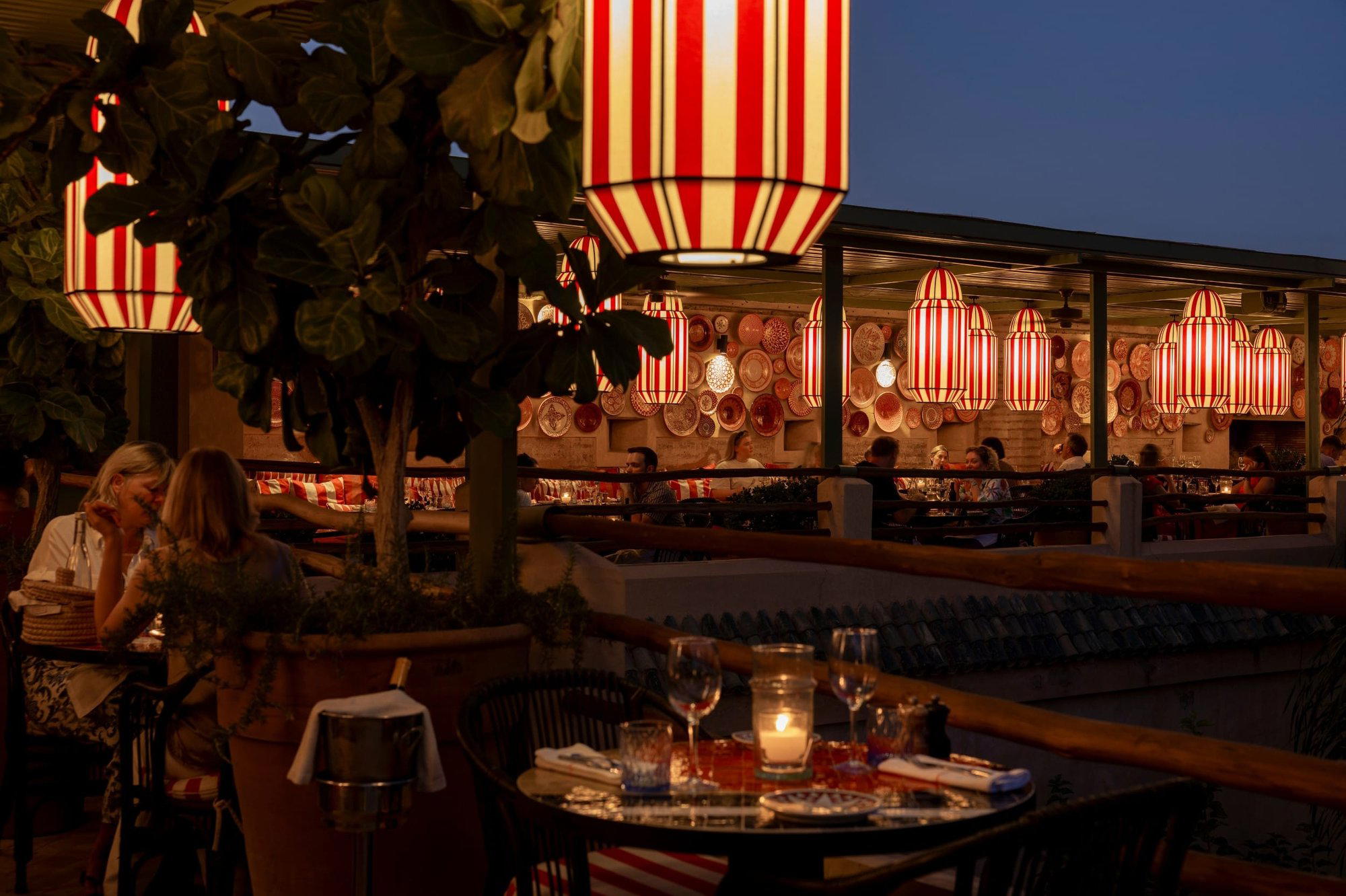
Bars are part of the same social architecture. The Churchill Bar is significant because Winston Churchill is among the documented past guests, alongside Charlie Chaplin and Alfred Hitchcock. The bar’s value is not nostalgia alone; it preserves a pocket of older hotel culture inside a property that has been repeatedly refreshed. For a wider sense of the city’s drinking rooms, rooftops and hotel bars, use Our full Marrakech bars guide.
Spa, craft retail and the modern palace hotel as a full-day address
The spa measures 2,500 square meters, a scale that turns wellness into a central part of the property rather than a basement amenity. The program works with Valmont, marocMaroc and La Mamounia’s own signature range inspired by Moroccan ancestral traditions. The hotel also lists bath products with a signature fragrance by perfumer Olivia Giacobetti. These details matter because contemporary palace hotels increasingly compete through controlled sensory identity: not just the room, but the fragrance, hammam ritual, poolside lunch, boutique objects and the pace of the afternoon.
The boutique adds another layer. Marrakech has a deep design economy, from leather and metalwork to textiles, ceramics and contemporary craft, and hotel retail now often acts as a curated entry point into that market. La Mamounia’s shop is described as carrying its own products and selected objects from designers in and around the city. That is a different proposition from the souk, less improvisational and more edited, but useful for travelers who want local material culture without spending half a day negotiating the medina.
For travelers comparing Moroccan stays beyond Marrakech, the contrast is instructive. Coastal properties such as Madada Mogador in Essaouira and Rebali Riads in Sidi Kaouki offer a different Atlantic rhythm. Urban and resort addresses such as STORY Rabat Hotel in Rabat, Four Seasons Hotel Casablanca in Casablanca, Riad Fès in Fès, Villa Mabrouka in Al Hoceima, Sofitel Agadir Thalassa Sea & Spa in Agadir, The St. Regis La Bahia Blanca Resort, Tamuda Bay in Tamuda Bay and Dar al Hossoun in Taroudant show how varied Moroccan luxury becomes once geography changes. Marrakech remains the country’s densest stage for palace hospitality.
Planning the stay
The hotel’s address is Avenue Bab Jdid, Marrakech 40040, inside the city walls and moments from Jemaa el-Fnaa Square. Marrakech-Menara Airport is listed as 6 kilometers from the city and about 15 minutes by car; Casablanca and Agadir are each cited at 200 kilometers from Marrakech, roughly a two-hour drive to the hotel.
Dress code is practical rather than incidental here. The property enforces elegant dress in public areas, including dining venues, and shorts are prohibited in restaurants and bars after 6 p.m. That rule fits the social register of a grand palace hotel, where the lobby, bars and restaurants function as public stages. It also affects packing: Marrakech days may be warm, but evening hotel spaces require a more formal wardrobe.
Advance planning is sensible for a hotel with this awards profile and price tier. La Mamounia has sustained recognition across Condé Nast Traveler, World’s 50 Best Hotels, La Liste and Leading Hotels of the World membership for 2025, which signals global demand rather than only regional popularity. Travelers building a broader Marrakech itinerary can compare city hotels through Our full Marrakech hotels guide, then add context from Our full Marrakech experiences guide. Wine tourism is not Marrakech’s primary travel driver, but regional context can be checked through Our full Marrakech wineries guide.
Where La Mamounia sits in the wider luxury conversation
La Mamounia’s international peers are not limited to Morocco. The relevant comparison is with city hotels that use history, craft and social ritual as primary assets. Cheval Blanc Paris in Paris operates through contemporary French luxury and Seine-side polish; Hotel Sacher Wien in Vienna leans on imperial urban tradition; The Fifth Avenue Hotel in New York City reframes Gilded Age detail for a newer downtown hotel audience. La Mamounia’s version is Marrakech-specific: enclosed gardens, Moroccan craft, medina adjacency and a taste for theatrical scale.
Within the Marrakech set, travelers who want countryside leisure should look at BELDI COUNTRY CLUB. Those drawn to the Agafay desert format can compare it with Caravan by Habitas Agafay. Those who want the medina at a more domestic scale should consider the riad addresses already noted. La Mamounia is for travelers who want Marrakech rendered at full volume: gardens, formal service, famous bars, elaborate materials, a major spa and enough dining infrastructure to stay in for a night without feeling disconnected from the city.
Comparable Spots
| Venue | Cuisine |
|---|---|
| La MamouniaThis venue — the venue you are viewing | This venue |
Recognition history
Dated appearances from independent guides and award organizations, with the underlying list record or original source where available.
Fodor's Most Incredible Hotels in the World
Fodor's
Forbes 4-Star
Forbes
La Liste Top Hotels
La Liste
Robb Report The 50 Greatest Luxury Hotels on Earth
Robb Report · 2026 Robb Report The 50 Greatest Luxury Hotels on Earth
Travel + Leisure 100 Favorite Hotels in the World #12 · No. 12
Travel + Leisure · 2026 Travel + Leisure 100 Favorite Hotels in the World
Virtuoso Luxury Hotel Partner
Virtuoso
World's 50 Best Best Hotels 51-100 #75
World's 50 Best
Conde Nast Best Hotels #44
Conde Nast
Forbes 4-Star
Forbes
Leading Hotels of World Member
Leading Hotels of World
Michelin 3 Keys
Michelin
Robb Report The 50 Greatest Luxury Hotels on Earth #4
Robb Report
World's 50 Best Best Hotels #30
World's 50 Best
World's 50 Best Best Hotels #31
World's 50 Best
World's 50 Best Best Hotels #6
World's 50 Best
Continue exploring
More in Marrakech
Hotels in Marrakech
Browse all →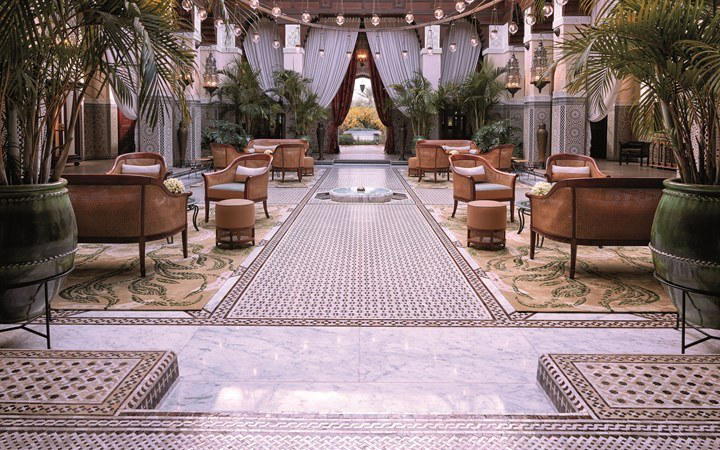
Bars in Marrakech
Browse all →
Restaurants in Marrakech
Browse all →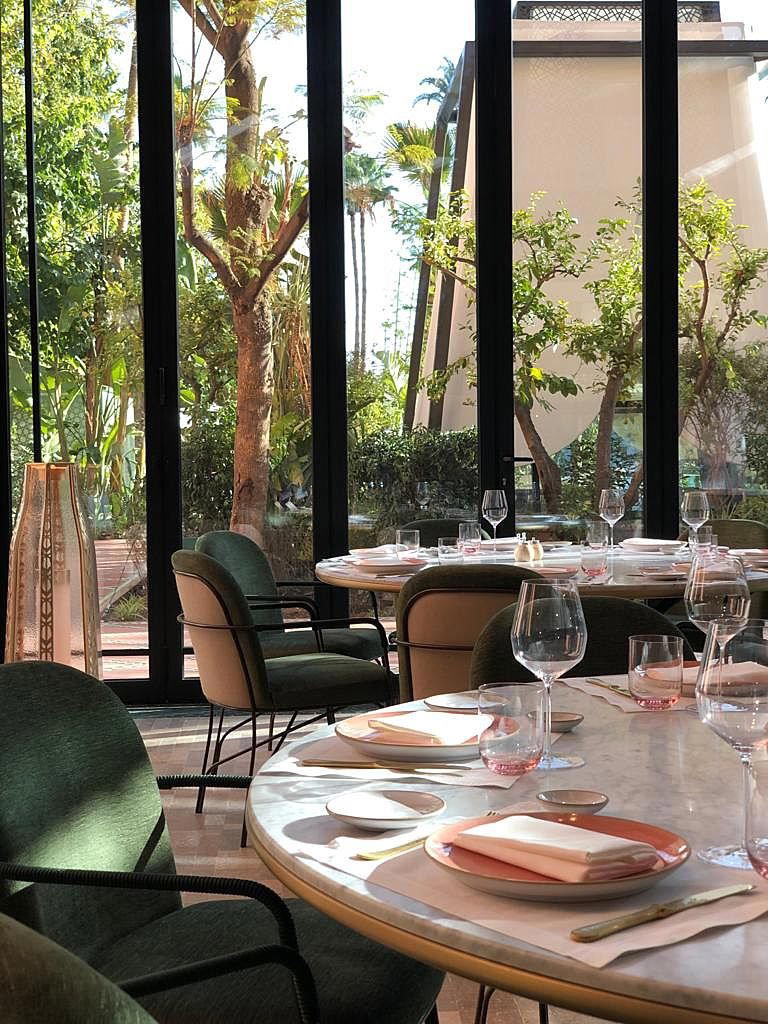
Wineries in Marrakech
Browse all →
At a Glance
- Elegant
- Classic
- Well Known
- Sophisticated
- Ornate
- Honeymoon
- Romantic Getaway
- Anniversary
- Infinity Pool
- Historic Building
- Garden
- Terrace
- Panoramic View
- Pool
- Spa
- Room Service
- Concierge
- Fitness Center
- Tennis
- Sauna
- Restaurant
- Wi Fi
- Garden
- Mountain
- Pool
- Spa
- Room Service
- Concierge
- Fitness Center
- Tennis
- Sauna
- Restaurant
- Wi Fi
Timelessly elegant with intricate zellige tiles, carved wood, grand archways, plush carpets, marble floors, and torch-lit hallways creating a sophisticated, historic Moroccan atmosphere.
Know Before You Go
- Getting there
- Avenue Bab Jdid، مراكش 40040