
2 Michelin Keys
A 24-room luxury ryokan in Japan's most historically layered mountain town, Fufu Nikko earned Michelin 2 Keys in 2024 for a design approach that pairs private onsen baths and forested bathing complexes with a restaurant blending Japanese and European cooking. At ¥1,280 per night, it sits in the upper tier of Japan's boutique onsen hotel category, drawing on the Fufu brand's reputation for deep nature immersion and contemporary restraint.

Pearl is the En Primeur Club membership app, where members save venues, book tables and use the concierge.
Where Sacred Topography Meets Contemporary Ryokan Design
Arriving at Nikko already primes you for a particular register of experience. The cedar-lined approach to the Tosho-gu shrine complex, the layered Edo-period stonework, the sense that this mountain town was built to impress: all of it establishes a visual and psychological baseline before you've set foot inside any accommodation. What Fufu Nikko does with that context is the more interesting question.
Japan's boutique onsen hotel category has matured considerably over the past decade. The better operators now treat architectural language as a primary signal rather than an afterthought, and the Fufu brand has consistently positioned itself in that modernist camp, where poured concrete, natural timber, and unobstructed landscape views do more work than ornamental lacquerwork or period reproductions. The 24-room property at 1573-8 Honcho sits within reach of Nikko's major cultural corridors, a location that rewards guests willing to spend time at the shrines in the early morning, when the crowds from Tokyo day-trippers have not yet arrived.
The Design Register: Modern Without Apology
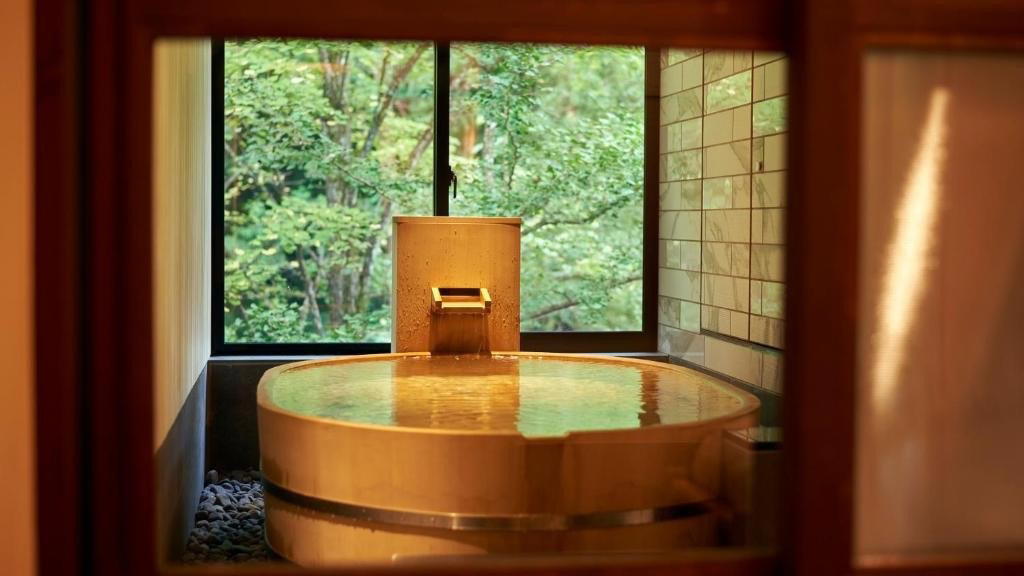
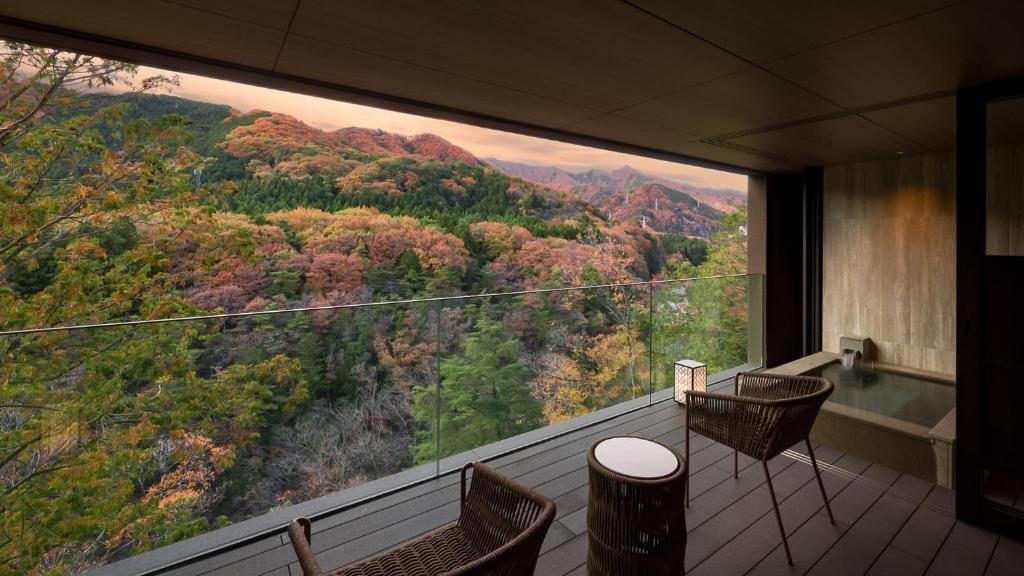
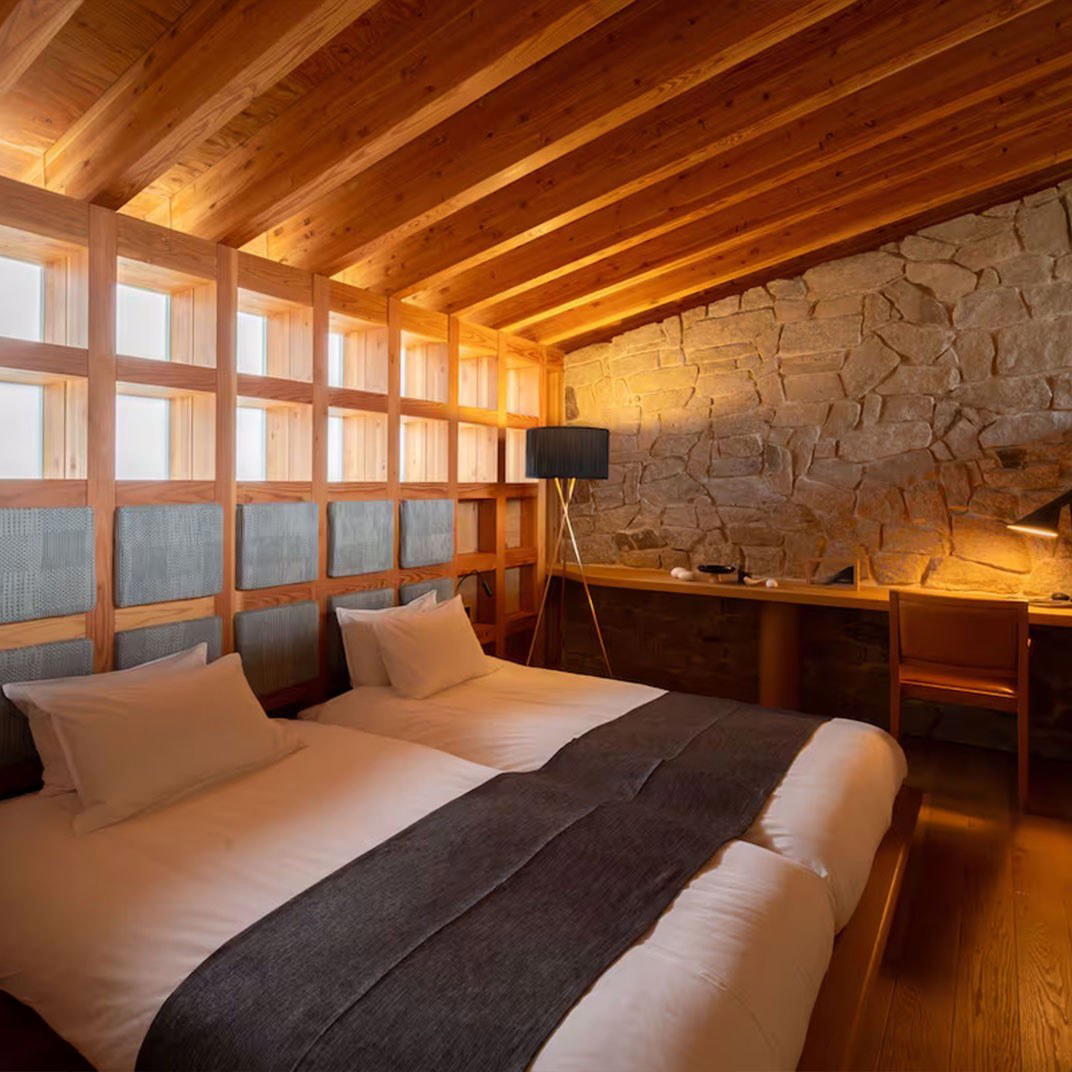
Fufu's design identity across its properties leans into a specific tension: contemporary interiors that do not pretend to be historical, placed inside landscapes that carry centuries of accumulated meaning. At Fufu Nikko, this plays out in rooms that are modern in both visual grammar and functional specification. Clean lines, considered material palettes, and private hot-spring baths that position the act of bathing as architectural experience rather than amenity checkbox.
The private onsen bath is, in the context of Japan's ryokan hierarchy, a critical differentiator. Properties that offer rotenburo or semi-private baths operate in a different experiential tier from those where guests have guaranteed access to natural thermal water on their own schedule, in their own space. Fufu Nikko falls into the latter group, and the design consequence is that each room functions as something closer to a self-contained retreat than a hotel room with a bathing facility attached.
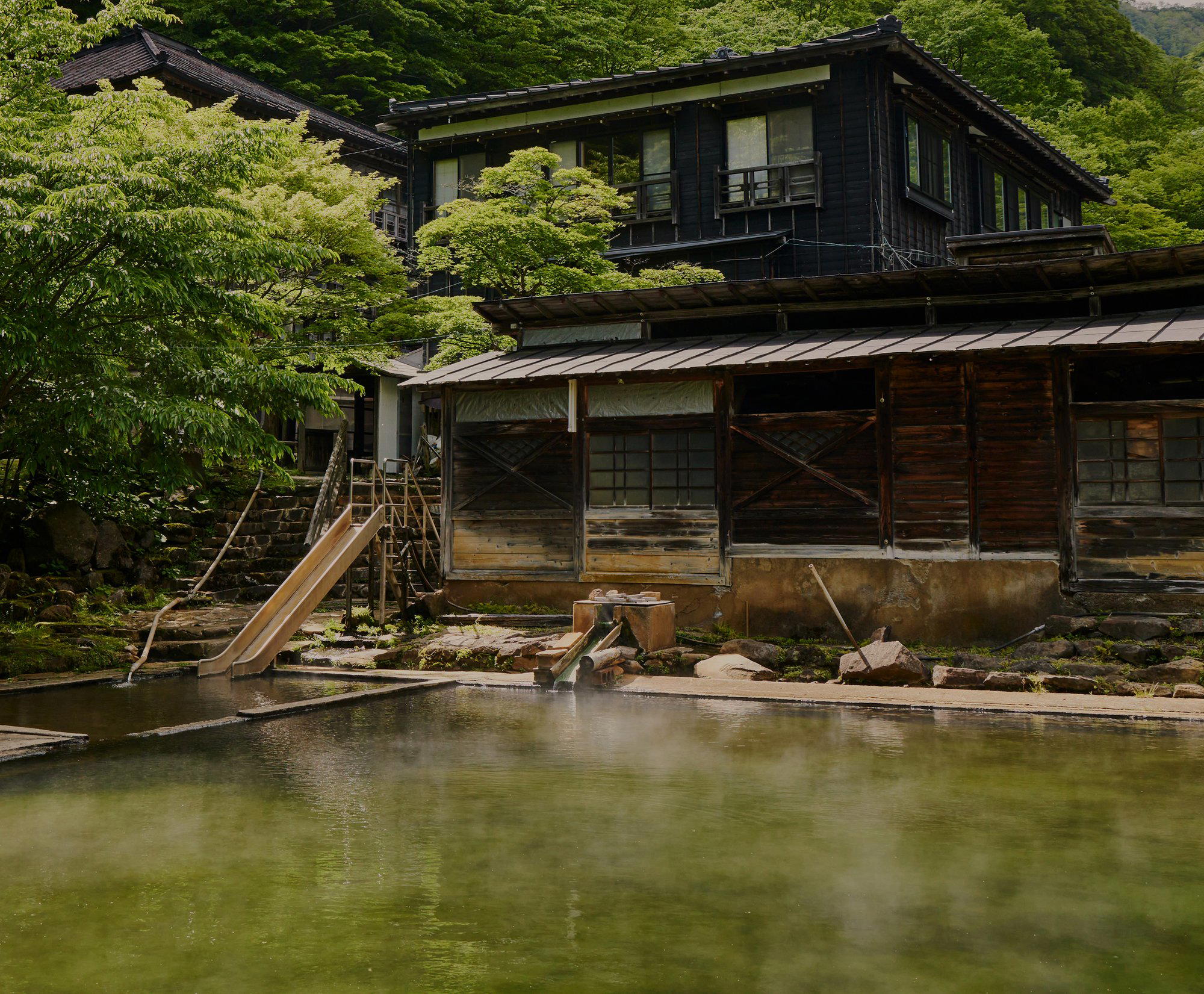
The public bathing complex adds a second register. Where private baths are about solitude and control, the communal facility here is framed against a forest view that appears, by design, to be the only thing in the world beyond the water's edge. This is a spatial decision as much as a landscape one: the architecture of the viewing axis has been calibrated so that the forest reads as immersive rather than decorative. For comparison, properties like Zaborin in Kutchan and Gora Kadan in Hakone use similar principles, placing landscape at the centre of the design logic rather than behind it.
Setchu: The Case for a Blended Kitchen
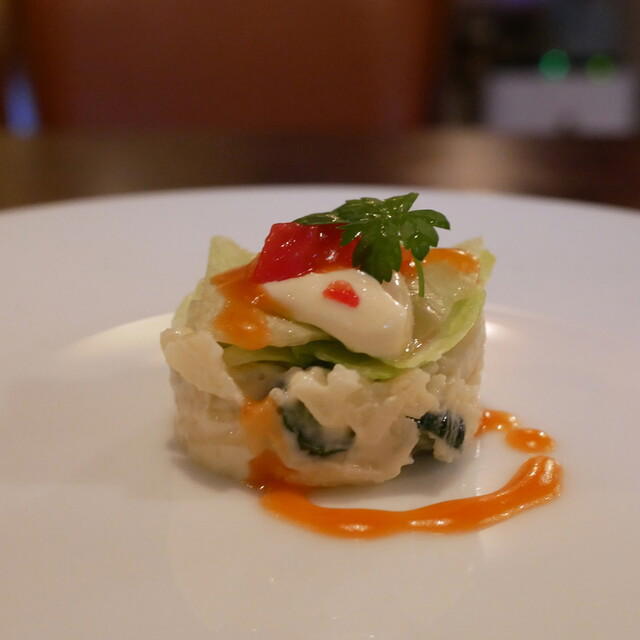
Japan's luxury ryokan circuit has largely standardised around kaiseki, the multi-course Japanese format that gives seasonal produce a formal structure. The decision to run a different model at Fufu Nikko is, therefore, a deliberate positioning choice. Setchu, the in-house restaurant, works a hybrid of Japanese and European cooking rather than committing to either tradition exclusively.
This kind of blended kitchen has become more common in Japan's premium hospitality sector as operators respond to a broadening international guest base and a domestic audience with increasingly cosmopolitan reference points. Done poorly, it produces menus that satisfy neither tradition. Done with discipline, it creates a format that reflects the actual complexity of contemporary Japanese culinary practice, where French technique, Italian produce logic, and Japanese seasonality have been in productive conversation for decades. Setchu's name, which in Japanese suggests a middle path or point of equilibrium, signals that the intent is synthesis rather than fusion novelty.
For guests building a longer itinerary through Japan's onsen hotel circuit, the restaurant programming at Fufu Nikko offers a meaningful contrast to kaiseki-centred properties like Asaba in Izu or Araya Totoan in Kaga.
Nikko's Cultural Context and Why It Matters for a Stay
Nikko's cultural density is not incidental to this property's value. The town holds a concentration of UNESCO World Heritage shrines and temples, including the Tosho-gu, the Futarasan Shrine, and the Rinno-ji, all within the Shinkyo district. This is not the contemplative minimalism of Kyoto, nor the hot-spring resort sprawl of the Kinugawa valley. Nikko's character is grander, more deliberately monumental, shaped by the Tokugawa shogunate's decision to enshrine Ieyasu here in the early seventeenth century.
A ryokan stay in this setting extends the cultural encounter beyond shrine visiting hours. The Nikko National Park wraps the town in forested mountains that become a practical asset for a property like Fufu, where immersion in nature is a structural part of the brand proposition. Properties anchored to landscape in this way tend to reward guests who time their visit around the seasons: autumn foliage in Nikko is well-documented and draws significant visitor volume, so those seeking quieter access should look at late spring or the shoulder weeks on either side of the peak autumn window.
For a different pace within the Nikko region, Kinugawa Keisui offers a comparable onsen focus with its own architectural language, while The Ritz-Carlton, Nikko represents the international brand approach to the same mountain setting.
Where Fufu Nikko Sits in the Broader Japanese Luxury Circuit
The Fufu brand operates at the intersection of the contemporary ryokan and the design hotel. It is neither a preserved traditional inn nor a boutique property that happens to have an onsen. The Michelin 2 Keys recognition it received in 2024 positions it within a peer group that includes design-forward properties across Japan rather than only the classic ryokan heritage houses. Fufu Kawaguchiko, at the foot of Fuji, operates from a similar design playbook, which makes moving between the two properties a coherent itinerary for guests tracking the brand's approach across different landscape contexts.
Further afield, properties like Amanemu in Mie, ENOWA Yufu in Yufu, and Benesse House in Naoshima share the design-led, landscape-integrated positioning, though each arrives at it through a distinct brief and architectural sensibility. For guests building a Japan itinerary that threads high-design accommodation through the country's most culturally loaded settings, Fufu Nikko at 24 rooms and a rate around $1,280 occupies a clearly defined slot: the upper tier of the boutique category, below the pure-luxury room count of the international flag carriers, but above the entry-level onsen hotel circuit in both design ambition and pricing signal.
Urban bookends work well here. Arriving from Tokyo, where Bvlgari Hotel Tokyo or HOTEL THE MITSUI KYOTO represent the flagged luxury tier, Fufu Nikko provides a calibrated decompression into nature and heritage. Nikko is accessible from Tokyo in under two hours by direct Limited Express rail service, which makes it practical as a two- or three-night extension rather than a destination requiring a separate domestic flight or extended transfer.
See the full range of dining and accommodation options across the region in our full Nikko restaurants guide.
Planning Your Stay
Fufu Nikko runs 24 rooms, a scale that sustains a quieter house atmosphere while supporting both the private and communal bathing facilities without the compression that larger ryokan complexes can produce. At approximately $1,280, the nightly rate positions this firmly within the premium boutique tier. Booking lead times at properties of this calibre in Japan's heritage destinations tend to lengthen significantly during autumn foliage season (typically late October through November in Nikko) and during Japanese national holiday clusters. Guests travelling outside those windows will find more flexibility, though advance planning is still advisable at a 24-room property.
A Quick Peer Check
Comparable venues nearby, for context on price, style, and recognition.
| Venue | Cuisine | Price | Awards | Notes |
|---|---|---|---|---|
| Fufu NikkoThis venue (the venue you are viewing) | Small luxury resort inheriting stylistic beauty of Japan with modern architecture and private setting. | Not listed | 2 Michelin Keys | Not listed |
| The Ritz-Carlton, Nikko | Luxury resort blending traditional Japanese architecture with modern minimalist design | Not listed | 2 Michelin Keys · La Liste Top Hotels | Oku-Nikko |
| Kinugawa Keisui | Modern luxury ryokan blending traditional Japanese hospitality with contemporary design | $500–750 | 1 Michelin Key | Kinugawa Onsen |
| Hoshinoya Tokyo | Contemporary luxury ryokan blending traditional Japanese aesthetics with modern minimalist design; each floor operates as a private inn with shared lounge spaces. | $750–1,000 | Michelin Selected · World's 50 Best #85 | Chiyoda |
| Fufu Kawaguchiko | Modern luxury forest resort ryokan | Not listed | 2 Michelin Keys | Fujikawaguchiko Onsen-kyo |
| The Tokyo Edition Toranomon | Boutique luxury hotel designed by Kengo Kuma blending minimalist sophistication with Japanese tranquility. | Not listed | Michelin Selected · World's 50 Best #45 | Minato |
Recognition history
Dated appearances from independent guides and award organizations, with the underlying list record or original source where available.
Michelin 2 Keys
Michelin
Full recognition history (3 entries)
Michelin 2 Keys
Michelin
Michelin 2 Keys
Michelin
Continue exploring
More in Nikko
Hotels in Nikko
All hotels in Nikko →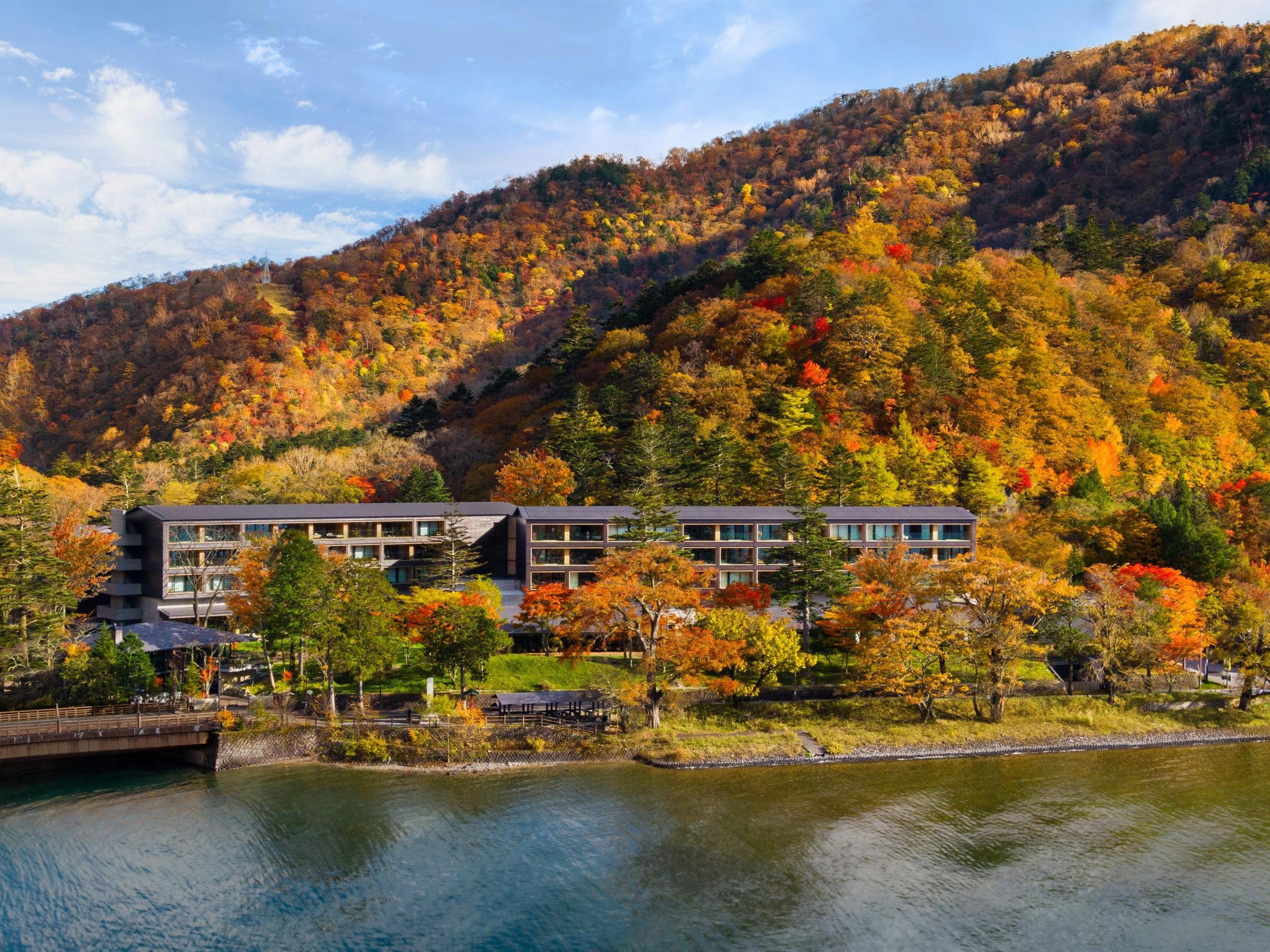
Details
- Elegant
- Scenic
- Quiet
- Sophisticated
- Cozy
- Romantic Getaway
- Honeymoon
- Wellness Retreat
- Anniversary
- Panoramic View
- Garden
- Wi Fi
- Room Service
- Concierge
- Restaurant
- Air Conditioning
- Garden
- Mountain
- Elevator
Elegant and nostalgic atmosphere with classical music, fireplace in the lounge, and serene zen gardens; guests describe it as luxurious, comfortable, and relaxing amid lush woods.