
1 Michelin Key
A two-room, 200-year-old ryokan in the cedar-covered gorge of Kibune, Ugenta sits at the furthest remove from Kyoto's hotel mainstream. Meals are served on a deck hovering above the river in summer, shifting to private in-room kaiseki in winter. Rates on request; Michelin 1 Key (2024). Reservations require direct contact with EP Club's service team.

Pearl is the En Primeur Club membership app — saves, bookings, and concierge access live there. Same editors, same standards.
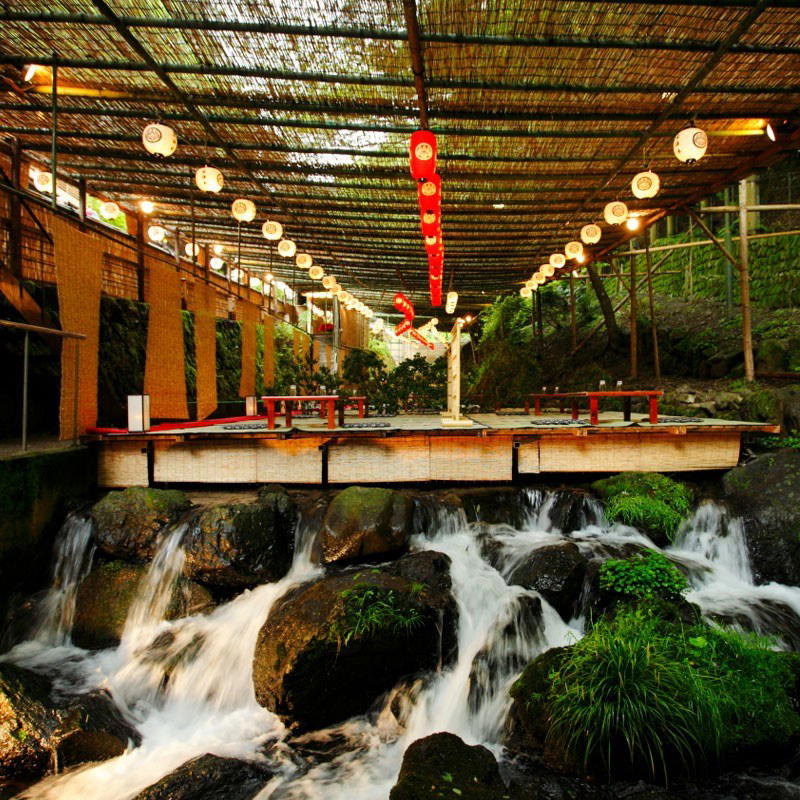
Where the River Does the Work
The road into Kibune climbs north from Kyoto through a narrowing gorge, the cedar canopy closing overhead until the city feels several world-states away. This is mountain country in the Sakyo Ward sense: mossy, cool even in August, threaded by a river whose sound arrives before any building comes into view. The premium ryokan tradition in Japan has always understood that the right setting is not backdrop but active ingredient, and Kibune is among the most deliberately remote of those settings within day-trip distance of a major cultural capital. Ugenta sits in that geography not as an escape hatch from Kyoto but as an argument that the experience of place requires slowing the frame rate considerably.
The Architecture of Restraint
Japan's finest ryokan have long operated on a principle that reduction, not accumulation, is what creates presence. Ugenta, now two centuries old and running two guest rooms, applies this logic with unusual consistency. The property has as many teahouses as guest rooms: one built roughly a century ago for formal tea ceremony, a newer glass-walled structure surrounded by cedar for more casual use. The decision to maintain that ratio, rather than convert either teahouse into revenue-generating accommodation, signals where the priorities sit. Host attention, already distributed across just two parties at any time, remains focused in a way that larger properties, however well-staffed, cannot replicate.
Among Japan's premium small-scale ryokan, Ugenta occupies a tier alongside properties like Asaba in Izu and Zaborin in Kutchan, where the room count is a deliberate editorial statement rather than a scale constraint. Properties like Gora Kadan in Hakone and ENOWA Yufu in Yufu work within similar logic: high-ratio service, curated natural settings, meals as a structural element of the stay rather than an add-on. The difference at Ugenta is the age of the building and the specificity of the location. Two hundred years of continuous use in a mountain gorge is not a design decision you can replicate.
Two Rooms, Two Registers
The two guest rooms differ in orientation more than in quality. The traditional Japanese-style room accommodates up to six guests, though configured for two it offers a degree of spatial generosity that feels almost theatrical. The second room leans slightly toward Western conventions: a different table configuration, a fireplace encased in glass rather than an enclosed wood stove, the river rather than the gorge as its primary view. In both, the design vocabulary is stripped to the point where furniture and fittings recede, and the window becomes the dominant object in the room. Both rooms include paired bathing options, one indoor and one outdoor, with the outdoor tub orienting the guest toward the river sounds and forest air in a way that the indoor option, however comfortable, does not.
Choosing between the two comes down to party size and personal preference for framing. The Japanese-style room is the more architecturally considered of the pair; the Western-inflected room is somewhat more immediately accessible in layout. Both carry Michelin's 1 Key designation (2024), which applies to the property as a whole and reflects the consistency of experience across both configurations.
The Meal as the Architecture of the Stay
At a two-room ryokan in a mountain gorge, the meal is not separate from the accommodation experience. It is the structure around which the day organises itself, and Ugenta's kitchen understands this sequencing with the clarity that comes from having operated in the same location across generations.
In summer, the first signal is spatial: guests are seated on a deck positioned a couple of feet above the surface of the river. The elevation is low enough that the water's movement registers in peripheral vision and in sound throughout the meal. Fish served here has been drawn from the water below the table, which is less a marketing proposition than a geographical fact of eating in Kibune. The river that shapes the gorge also shapes what arrives on the plate, and the distance between the two is measurable in minutes rather than supply chain links. The meal unfolds in that context, each course arriving against a backdrop of mossy river rocks and cedar, the temperature dropping as the afternoon light shifts.
Winter changes the spatial logic entirely. Meals move inside to the privacy of the guest room, and the menu shifts accordingly: hot pot soup, mountain vegetables, wild boar. This is not a lesser version of the summer experience but a different argument about season and interiority. The same river that hosts the summer deck becomes a sound element against the walls of the room, and the dishes that arrive reflect what the mountain produces when it closes in. The progression from first course to last in winter is as carefully managed as in summer, the sequence designed around warmth and weight in a way that matches the environmental conditions outside the window. This is the kaiseki tradition operating as it was always intended: not as a fixed template but as a response to season, location, and what the land currently offers.
One logistical note that shapes the meal experience: Ugenta's kitchen is built around fish stock as a foundational ingredient, including in vegetable preparations. Guests with significant dietary restrictions, and vegetarians in particular, will find options severely limited. This is not an oversight but a reflection of the kitchen's commitment to a specific culinary tradition. Children under 13 are not permitted at the property.
Getting There and Booking
Ugenta sits at 76 Kuramakibunecho, Sakyo Ward, in the Kibune area north of central Kyoto. The property can arrange complimentary shuttle service from Kibune station when requested in advance, which is the practical approach given the gorge road. Rates begin at 124,200 JPY per night, priced on request given the two-room capacity and the nature of the stay. Reservations require direct coordination through EP Club's customer service team, as Ugenta collects additional guest information before confirming bookings.
For guests approaching Kyoto from other directions, the city's broader premium hotel offering runs from design-led urban properties like The Shinmonzen and SOWAKA to larger international flagships including HOTEL THE MITSUI KYOTO, Four Seasons Hotel Kyoto, Park Hyatt Kyoto, and Aman Kyoto. Properties like Ace Hotel Kyoto and Dusit Thani Kyoto occupy the middle ground between scale and character. None of them are in a gorge. See our full Kyoto restaurants and hotels guide for broader context on the city's accommodation tiers.
For further reference within Japan's small-scale luxury ryokan category, Nishimuraya Honkan in Kinosaki-cho, Fufu Kawaguchiko, Fufu Nikko, Sekitei in Hatsukaichi-shi, Jusandi in Ishigaki, Benesse House in Naoshima, Halekulani Okinawa, and Amanemu in Mie each represent distinct approaches to the genre. Beyond Japan, the logic of minimal-key, maximum-context luxury hospitality appears in very different forms at Bvlgari Hotel Tokyo, Aman New York, The Fifth Avenue Hotel in New York City, and Aman Venice.
Cost and Credentials
Comparable venues nearby, for context on price, style, and recognition.
| Venue | Price | Awards | Notes |
|---|---|---|---|
| Kifune UgentaThis venue — the venue you are viewing | Not listed | 1 Michelin Key | Not listed |
| Aman Kyoto | Not listed | 2 Michelin Keys · World's 50 Best #74 | Kita, Contemporary ryokan-inspired pavilions integrated into a forested landscape. |
| Yoshida Sanso | $1,000–1,500 | Michelin Selected | Sakyō, Luxury heritage ryokan housed in a restored 1932 imperial residence with contemporary comforts integrated into traditional Japanese design. |
| MOGANA | Not listed | Michelin Selected | Nakagyō, Modernist reimagination of traditional Japanese aesthetics with contemporary European design influences, positioned as an intimate design-focused luxury boutique hotel. |
| Higashiyama Shikikaboku | $300–500 | Michelin Selected | Higashiyama, Contemporary ryokan blending modern architecture with traditional Kyoto craftsmanship |
| Maana Kamo | $750–1,000 | Michelin Selected | Higashiyama, Restored traditional machiya townhouse designed for quiet reflection. |
Recognition history
Dated appearances from independent guides and award organizations, with the underlying list record or original source where available.
Michelin 1 Key
Michelin
Full recognition history (3 entries)
Michelin 1 Key
Michelin
Michelin 1 Key
Michelin
Continue exploring
More in Kyoto
Hotels in Kyoto
All hotels in Kyoto →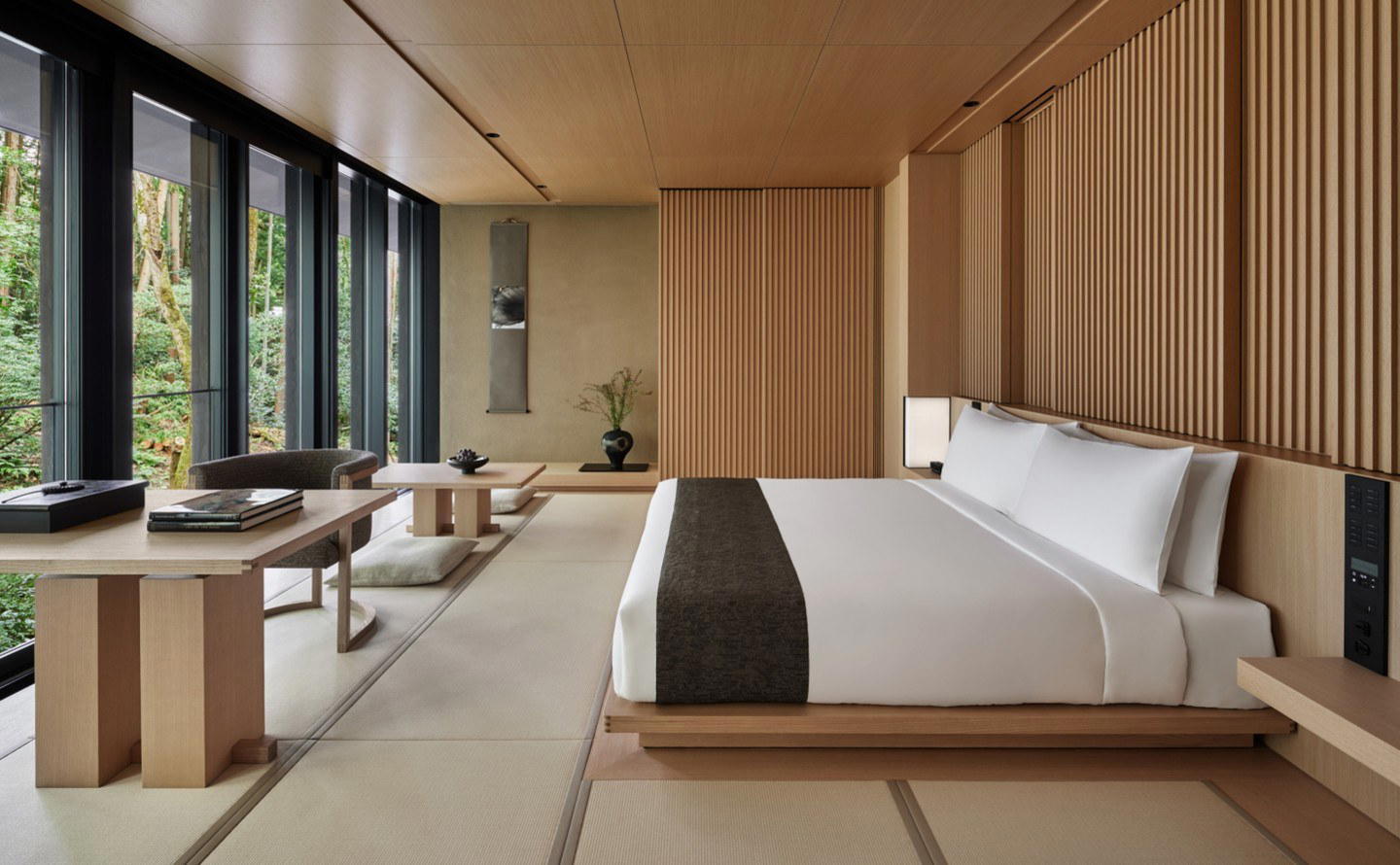
Bars in Kyoto
All bars in Kyoto →
Restaurants in Kyoto
All restaurants in Kyoto →
Wineries in Kyoto
Browse all →
Details
- Romantic
- Quiet
- Elegant
- Scenic
- Intimate
- Sophisticated
- Honeymoon
- Romantic Getaway
- Anniversary
- Weekend Escape
- Private Villa
- Historic Building
- Panoramic View
- Wi Fi
- Air Conditioning
- Room Service
- Concierge
- Mountain
- Garden
Serene and relaxing atmosphere with natural light from large windows overlooking the river and mountains, enhanced by the sound of the nearby stream and polished service.