
2 Michelin Keys
A restored 1920s villa at the foot of Mount Yufu, Kamenoi Besso operates as a 17-room ryokan where Japanese craft traditions and mid-century European design share the same walls. Recognized with two Michelin Keys in 2024, it sits at the quieter, more considered end of Yufu's lodging spectrum, with on-request pricing that signals a property calibrated for guests who prioritise experience over rate transparency.

Pearl is the En Primeur Club membership app, where members save venues, book tables and use the concierge.
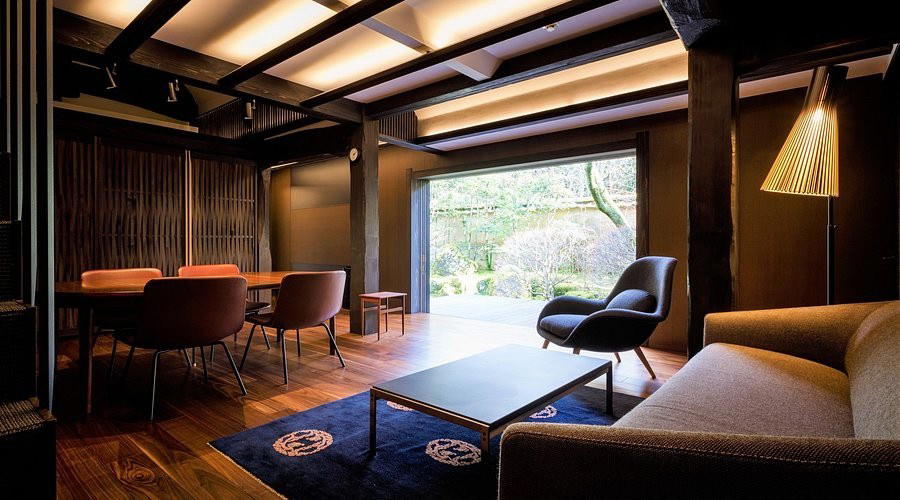
Where a 1920s Villa Meets the Eastern Edge of Yufu
The road toward Kamenoi Besso runs along the wilder, less trafficked eastern flank of Yufuin, where Mount Yufu rises sharply and the tree line thickens before the grounds come into view. There are no resort gates or valet theatrics. Instead, a property that reads more like a private estate than a hotel: substantial land, mature garden plantings, forested edges, and a 1920s villa at its centre that architect Shri Kakinuma restored and expanded into a coherent 17-room ryokan. The approach sets a tone that the property maintains consistently throughout a stay.
Yufu's onsen lodging market has developed along two parallel lines over the past two decades. One track runs toward larger, newer properties with full amenities and direct access from Yufuin Station. The other stays smaller, older, and more architecturally specific, betting that a guest willing to seek out a particular address also wants something that reflects a particular sensibility. Kamenoi Besso sits firmly in the second track, with the Michelin two-Key recognition it received in 2024 confirming what guests and critics had noted for some time: that the property operates at a peer level above what its size and relative obscurity might suggest. Among comparable Yufu properties, ENOWA Yufu takes a more contemporary architectural approach, while Gettouan and Yufuin Tamanoyu each occupy slightly different points on the traditional-to-modern spectrum. Kamenoi Besso's distinction lies in the tension it holds between a historical structure and design choices that are neither purely Japanese nor purely Western.
The Logic of the Interiors
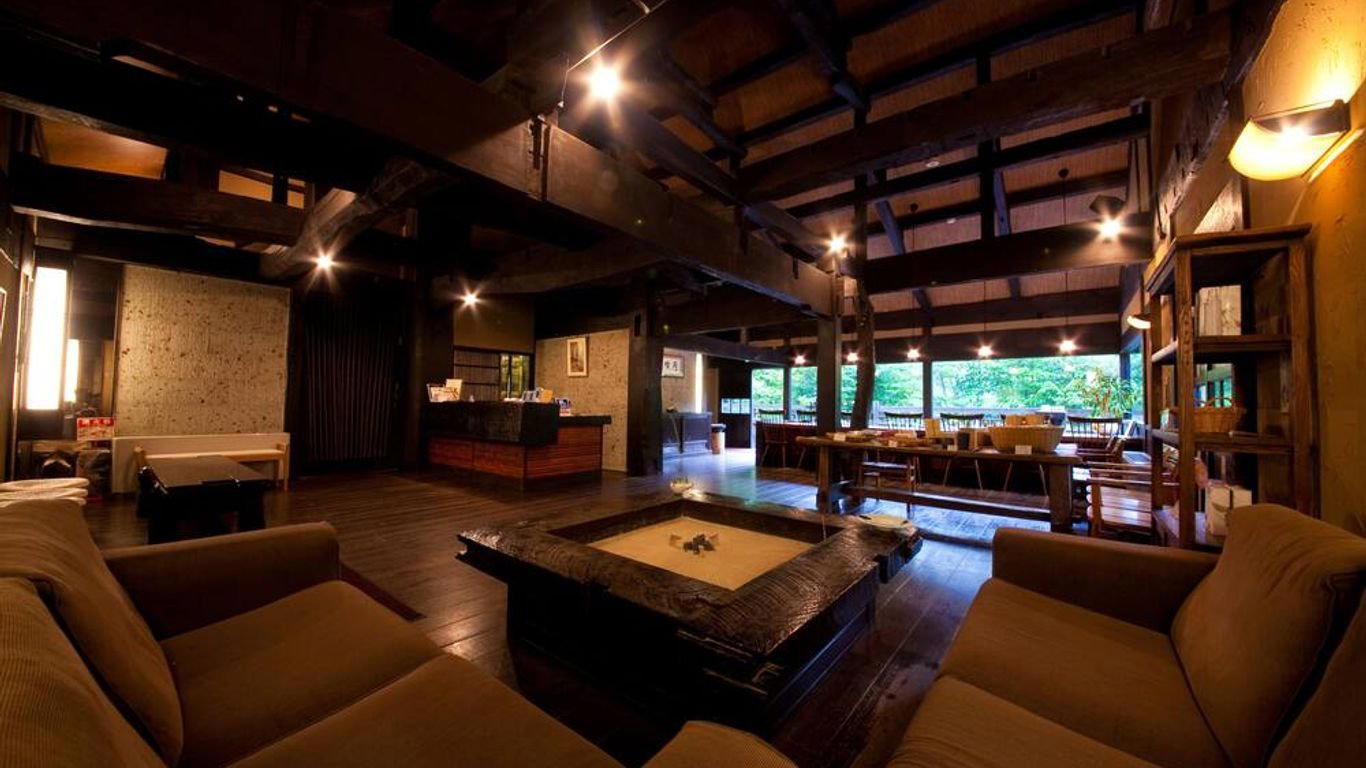
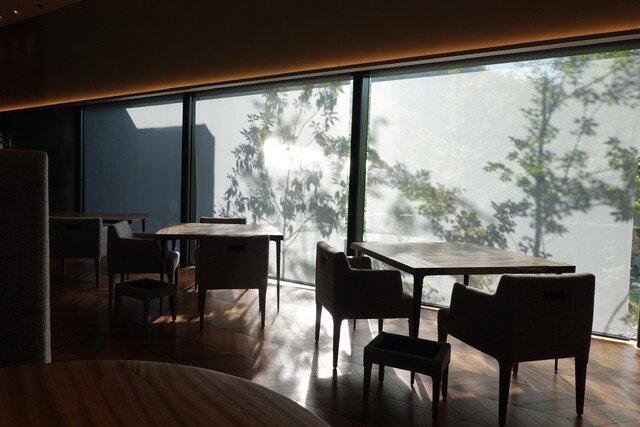
The design approach here is not the result of aesthetic indecision. Japanese ryokan interiors have absorbed Western furniture and materials at various points since the Meiji period, and the integration at Kamenoi Besso reflects that longer tradition rather than a contemporary styling exercise. Danish-designed furniture sits alongside local craft objects; clean-lined wood pieces share rooms with tatami flooring or shoji screens. The effect, when it works, is a space that feels genuinely inhabited rather than dressed for photography.
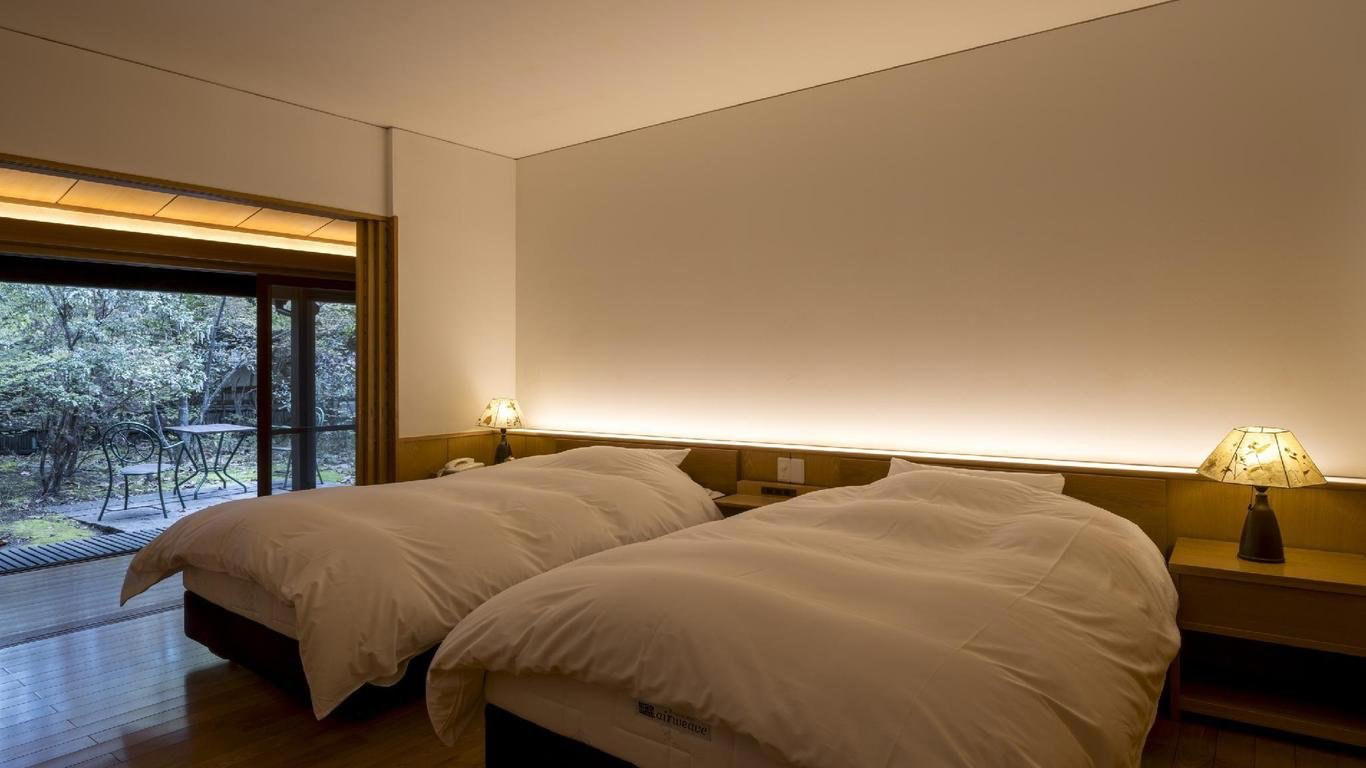
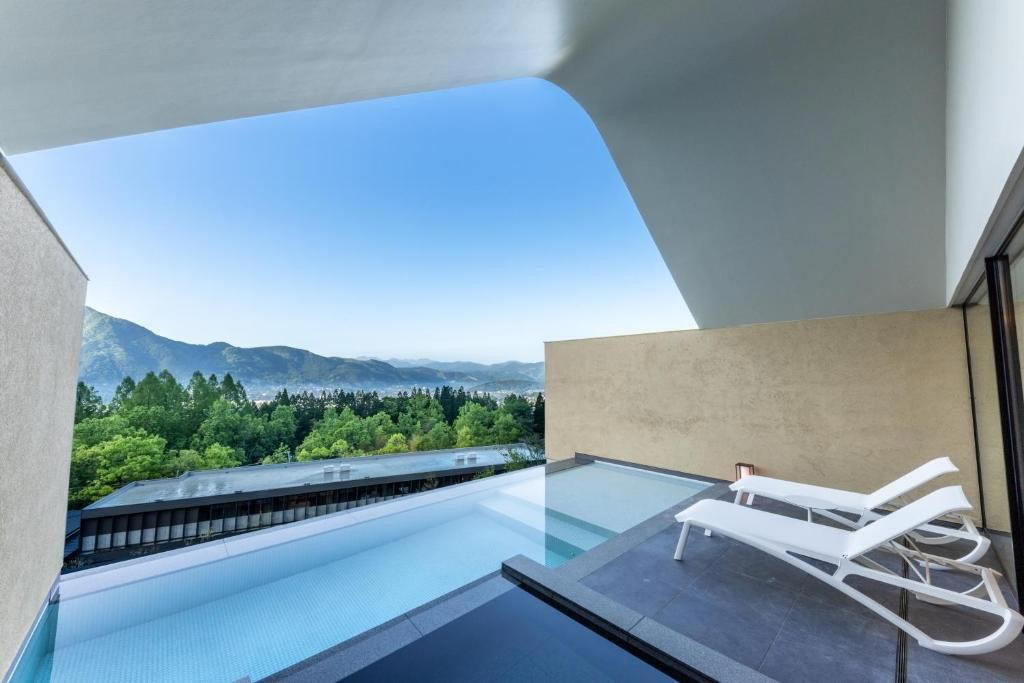
The 17 rooms divide between tatami-style and Western-style configurations, which matters more than it sounds in practice. Guests who find floor-level sleeping uncomfortable in traditional ryokan may find the Western-style rooms a better functional fit while retaining the broader ryokan experience, the seasonal turndown rhythms, the communal bath access, the set-meal dining structure. Across both room types, views face gardens or forested slopes rather than other buildings, a consequence of the property's land size and its position at the base of Mount Yufu.
For comparable design-led ryokan operating at this tier in other Japanese regions, the reference points shift considerably. Zaborin in Kutchan takes a more minimalist Hokkaido approach, Benesse House in Naoshima frames its rooms around an art collection, and Gora Kadan in Hakone leans on imperial villa provenance. Kamenoi Besso's 1920s villa origin gives it a different kind of historical authority, civilian rather than aristocratic, regional rather than nationally curated.
Service Calibrated to Restraint
Ryokan service culture in Japan operates on a different axis from Western hotel hospitality. The reference point is not the concierge desk or the front desk interaction but the okami, the proprietress, and the staff she directs in anticipating what a guest needs before that need is expressed. At properties of this scale (17 rooms is small enough that staff-to-guest ratios can be maintained at levels impractical in larger hotels), anticipatory service becomes more achievable, not less.
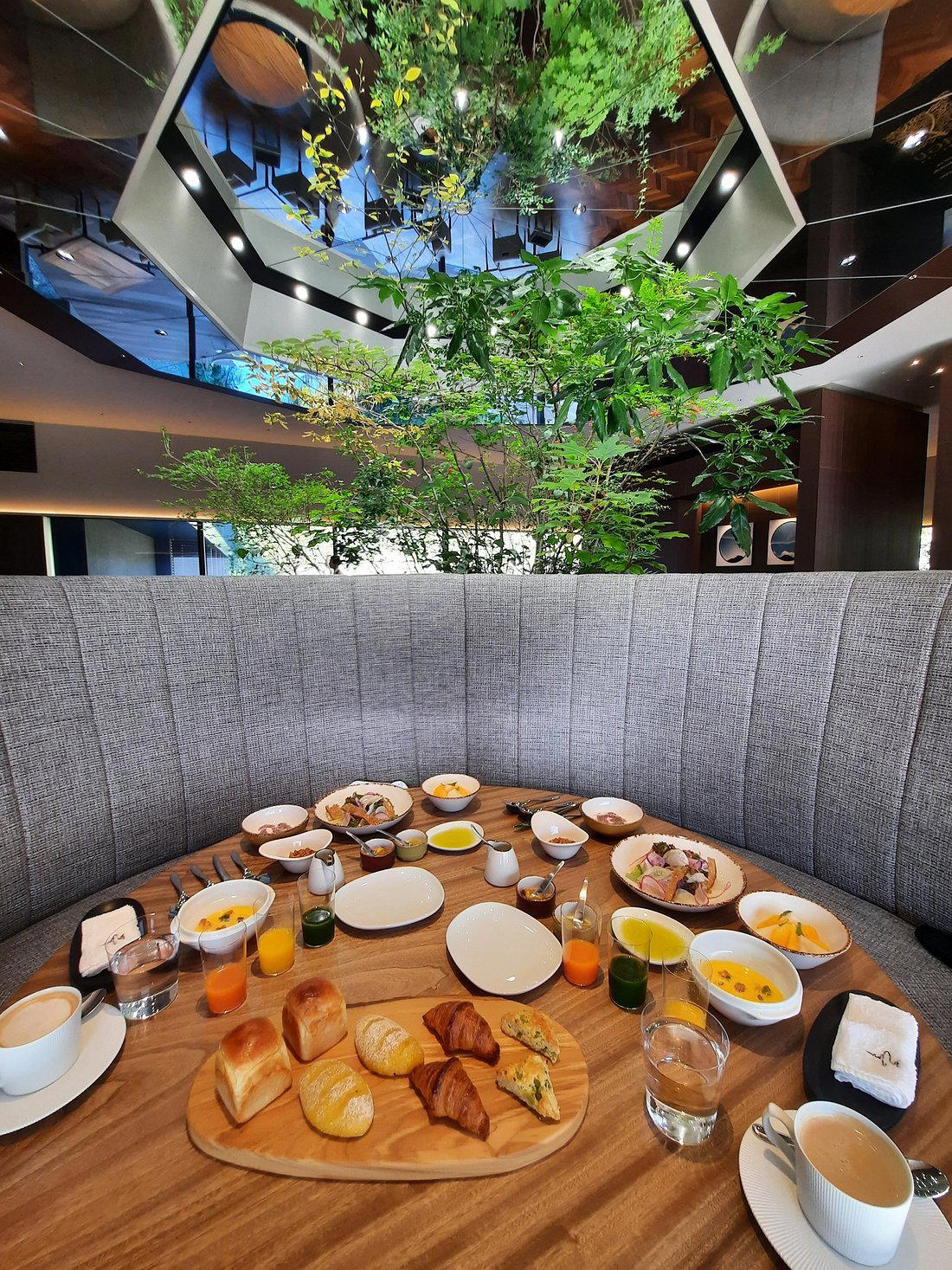
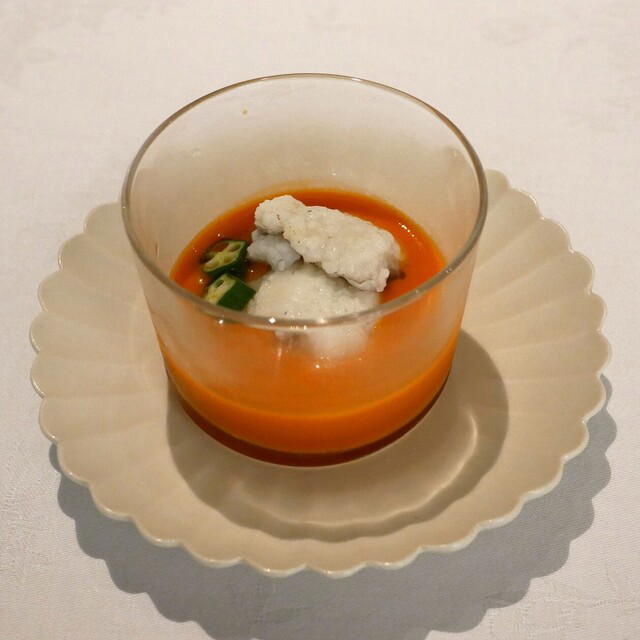
The service structure at a property like Kamenoi Besso is built around the meal rhythm. Dinner is exclusively Japanese, served in the kaiseki or kaiseki-adjacent format standard to properties of this standing in Oita Prefecture. Western-style breakfast is available as an alternative to the traditional Japanese morning meal, a practical option that many international guests find useful without it compromising the overall character of the stay. Dinner and breakfast together effectively anchor the day, meaning a guest's experience of the property is significantly shaped by the dining program rather than by ancillary amenities.
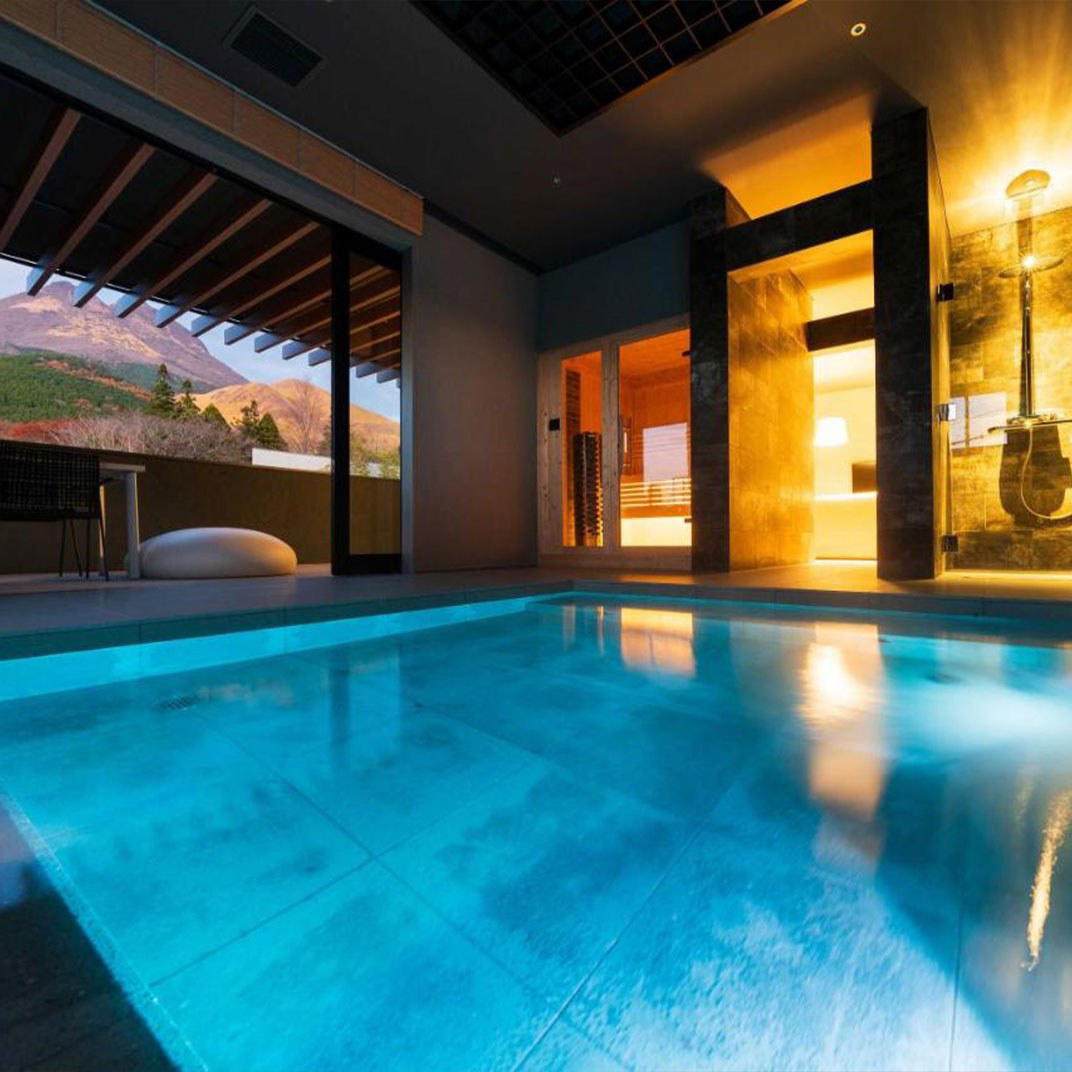
For guests whose primary interest is the onsen rather than the dining, Yufu's geothermal credentials are well-established. Oita Prefecture accounts for a substantial share of Japan's total hot spring output, and the Yufuin area specifically has developed a reputation for smaller, quieter onsen lodging relative to the larger resort infrastructure in Beppu, where the ANA InterContinental Beppu Resort and Spa operates at a much larger scale. Kamenoi Besso's onsen access sits within the broader framework of a property that treats bathing as embedded in the daily rhythm rather than as a spa add-on.
Position in the Japanese Ryokan Tier
The two-Key Michelin designation, introduced in 2024 as part of the Guide's hotel recognition program, places Kamenoi Besso in a cohort of Japanese properties that Michelin's inspectors identify as delivering a complete and distinctly excellent stay. The two-Key tier acknowledges properties where the experience warrants a significant detour, not simply a convenient overnight but a destination in its own right. In the ryokan category nationally, that peer group includes properties like Asaba in Izu, Nishimuraya Honkan in Kinosaki-cho, and Araya Totoan in Kaga, each of which operates in a distinct regional tradition but shares the small-scale, high-attention-per-guest structure that defines the tier.
Pricing at Kamenoi Besso is available on request only, which in Japan typically signals a property operating at a level where rates are room-type and season-specific, and where the booking relationship begins with a direct inquiry rather than an online transaction. This is not unusual at the two-Key level. Properties in the same category such as Amanemu in Mie and Sekitei in Hatsukaichi-shi operate with similar pricing transparency conventions, reflecting a guest relationship that favours direct communication over rate comparison. For international visitors, the most practical route to booking is via a specialist travel agent or directly through the property's contact address at 2633-1 Yufuinchō Kawakami, Yufu, Oita 879-5102.
Getting to Yufu and Placing the Visit
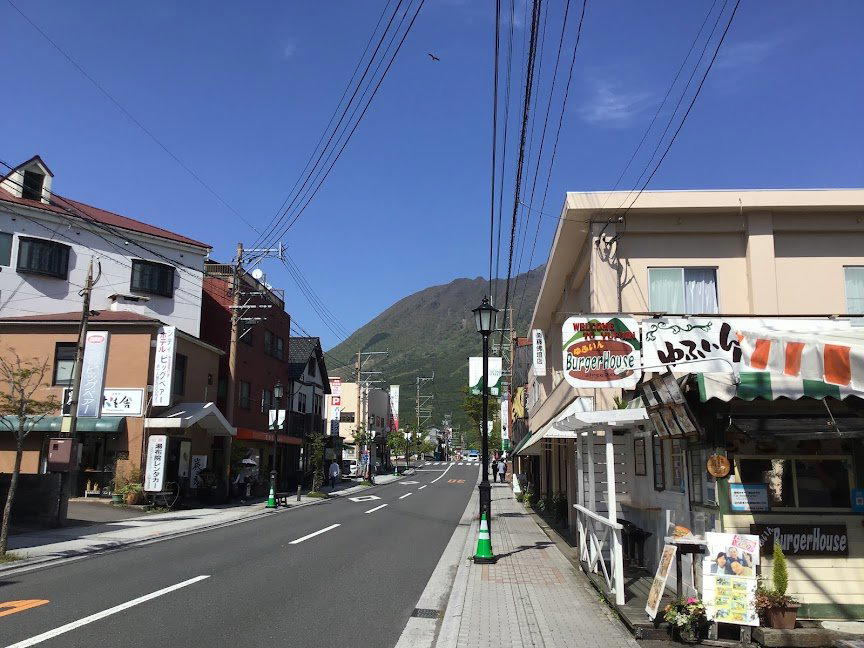
Yufu sits in Oita Prefecture on the northeastern shoulder of Kyushu. The nearest rail access is Yufuin Station on the JR Kyudai Main Line, with direct limited express services from Hakata (Fukuoka) running under two hours. Beppu, roughly 30 minutes by road, provides a second access point for those arriving by ferry or connecting from Oita Airport. The property's address on the eastern edge of the Yufuin basin means it is set back from the main town corridor, which tends to concentrate day-trippers and souvenir shopping. That distance is not incidental, it reflects the same logic as the design and pricing: a deliberate preference for quiet over convenience.
The clearest argument for Kamenoi Besso over Yufu's other options, including Yufuincho Kawakami, is that the historical structure, the design layering, and the Michelin recognition together make a case for the property as worth the trip rather than simply adequate for an overnight. Guests who have stayed at comparable small-format Japanese ryokan such as Fufu Kawaguchiko or Fufu Nikko will find Kamenoi Besso operating in an adjacent register, unhurried, staff-intensive, and structured around the assumption that a guest's time is the resource being protected. See our full Yufu guide for broader context on the town's lodging and dining options.
Style and Standing
| Venue | Price | Awards |
|---|---|---|
| Kamenoi BessoThis venue (the venue you are viewing) | Not listed | 2 Michelin Keys |
| ENOWA Yufu | $750–1,000 | 2 Michelin Keys · Relais Chateaux Award |
| Yufuin Tamanoyu | $750–1,000 | 1 Michelin Key |
| Gettouan | $200–300 | Not listed |
Recognition history
Dated appearances from independent guides and award organizations, with the underlying list record or original source where available.
Michelin 2 Keys
Michelin
Full recognition history (3 entries)
Michelin 2 Keys
Michelin
Michelin 2 Keys
Michelin
Details
- Quiet
- Classic
- Scenic
- Cozy
- Elegant
- Rustic
- Romantic Getaway
- Anniversary
- Wellness Retreat
- Weekend Escape
- Historic Building
- Panoramic View
- Private Villa
- Wi Fi
- Restaurant
- Bar
- Air Conditioning
- Garden
- Mountain
- Wheelchair Accessible
Tranquil and serene atmosphere with natural lighting from garden views, mid-century Scandinavian furniture in public areas, and classic Japanese ryokan elements creating a restorative retreat.