



Gion Sasaki holds three Michelin stars and a Tabelog score of 4.34, placing it among Kyoto's most decorated kaiseki counters. Operating from a 20-seat room on Yasaka Street in Higashiyama, the kitchen runs on a philosophy of subtraction, drawing out seasonal ingredients at their natural peak rather than supplementing them. Dinner runs from ¥40,000–¥49,999; reservations open by phone at the start of each month for up to two months ahead.
Pearl is the En Primeur Club membership app — saves, bookings, and concierge access live there. Same editors, same standards.
- Address
- 566-27 Komatsucho, Higashiyama Ward, Kyoto, 605-0811, Japan
- Phone
- +81 75-551-5000
- Website
- gionsasaki.com
- Directions
- Get directions
 Saves & bookings on Pearl
Kaiseki in Higashiyama: The Counter as Kitchen Theatre
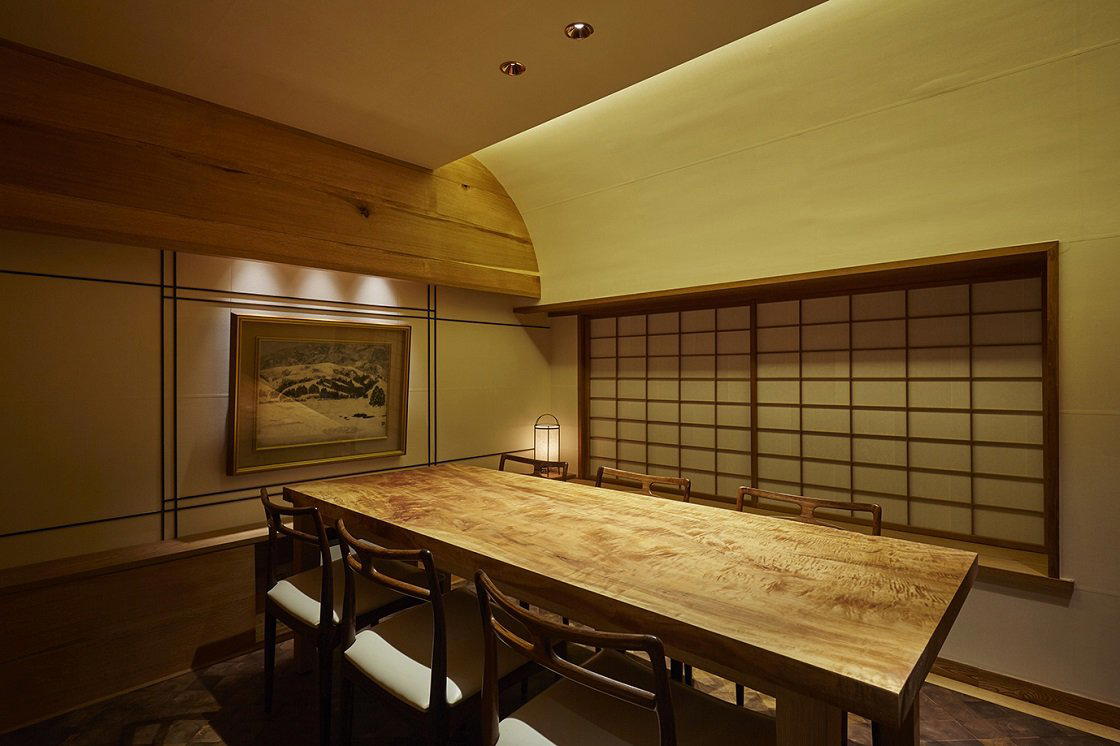
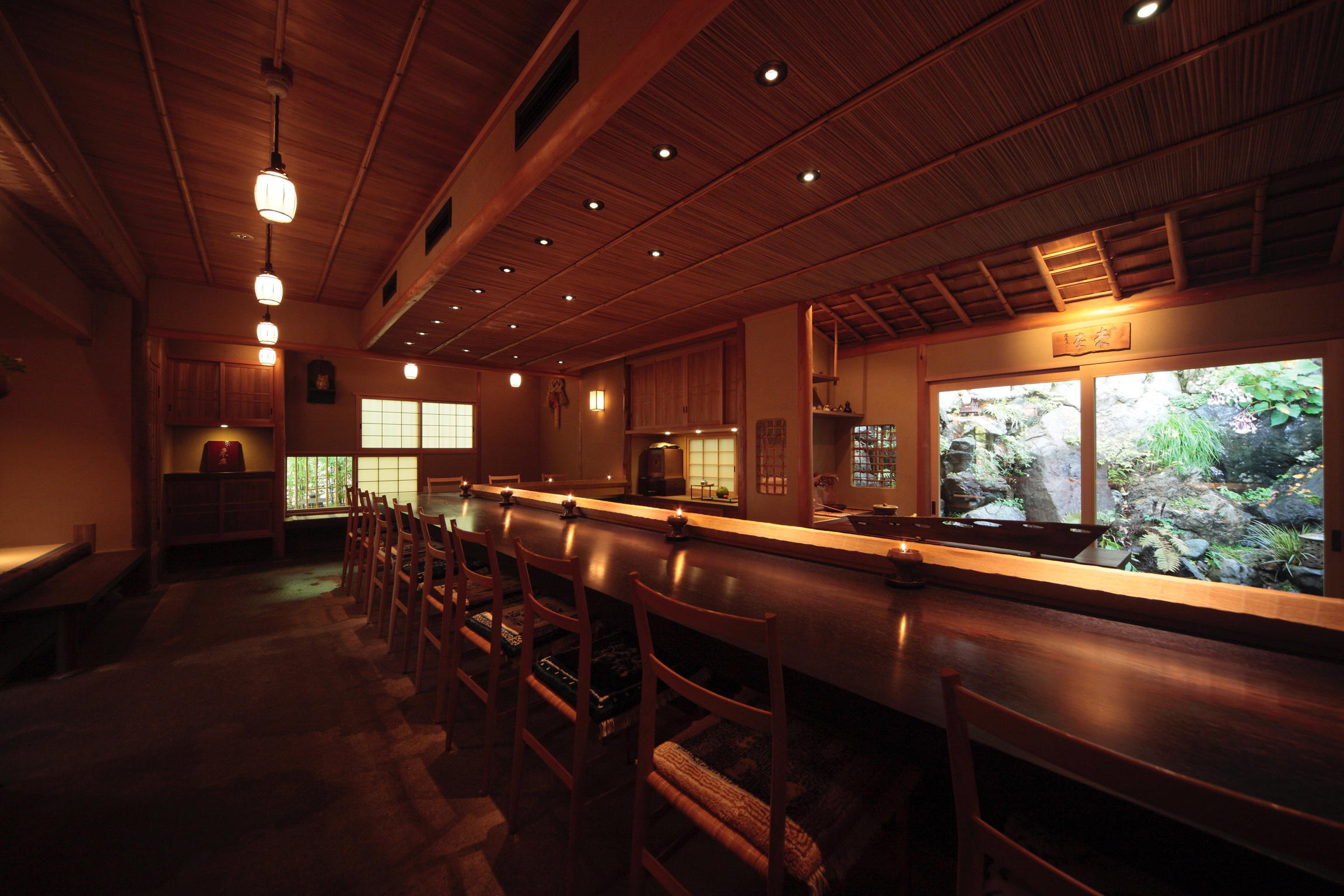
Kyoto's kaiseki tradition is not monolithic. At its upper tier, a small number of counters have moved away from the ceremonial rigidity associated with the form and toward something more kinetic, where the kitchen is visible, where the sequence of courses reflects what arrived from suppliers that morning, and where the distance between cook and diner is measured in centimetres rather than corridors. Gion Sasaki is a three-Michelin-star restaurant in Kyoto’s Higashiyama Ward, serving modern kaiseki at about $300 per person. It operates firmly within this current. The room seats 20 across a 13-seat main counter and a 7-seat private counter, and service runs simultaneously for all diners, a structure that makes the kitchen's rhythm impossible to miss.
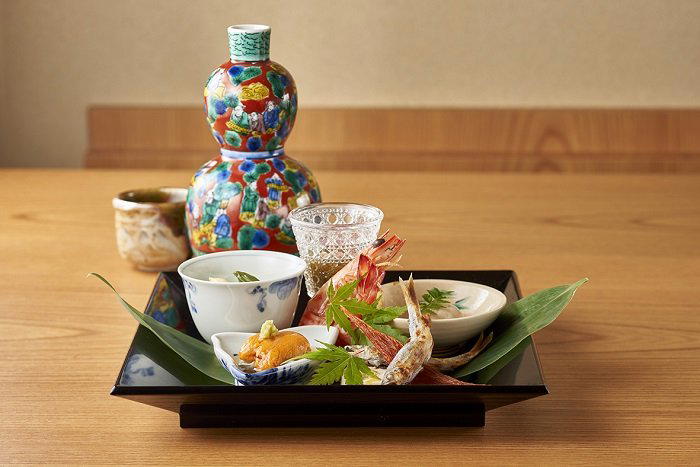
Approaching along the stone-flagged lanes of Higashiyama, the address reads like a residential conversion: shoes removed at the entrance, tatami and sunken seating visible beyond the counter, the smell of charcoal already present before the first course arrives. That charcoal brazier, fixed at the centre of the open kitchen, functions as both tool and signal, a reference point around which younger cooks move in what Gion Sasaki's own documentation describes as a "blur of motion." The spatial arrangement turns cooking into a shared event rather than a backstage process.
Ingredient-Forward: The Logic of Subtraction
The phrase associated most directly with this kitchen is "the art of subtraction", a discipline that foregrounds raw material rather than technique. In kaiseki broadly, this is an old principle: the form is built around the seasonal calendar, and the leading kitchens resist the temptation to impose flavour where the ingredient already provides it. At the level Gion Sasaki operates, that principle demands sourcing precision as much as cooking skill. The beverage program is built around carefully selected sake and wine rather than treated as an afterthought, a combination that positions the kitchen as attentive to the full arc of a meal, not just the cooking itself.
What distinguishes the stronger kaiseki counters in Kyoto's Gion district from the broader field is not the presence of seasonal ingredients, every kitchen at this price tier claims that, but the specificity of selection and the restraint applied afterward. Seasonal produce appears in its most direct form; dashi, the foundational stock of Japanese cuisine, is deployed to amplify rather than mask. The approach has consistent recognition.
Where It Sits Among Kyoto's Leading Kaiseki Counters
Kyoto's Michelin three-star kaiseki tier is a small peer group. Hyotei operates from a multi-generational estate format with a longer institutional lineage. Kikunoi Honten runs a larger room and has broader name recognition internationally. Mizai holds two Michelin stars at ¥¥¥¥ and occupies a different register. Within the Gion neighbourhood specifically, Gion Maruyama and Gion Nishikawa offer points of comparison in cuisine type and setting. The restaurant's three Michelin stars, combined with its relatively compact format and the generational teaching structure embedded in its kitchen, place it in a distinct cohort: high-recognition, small-capacity, with a visible emphasis on culinary development as an ongoing process rather than a fixed repertoire.
Beyond Kyoto, Japan's premium kaiseki and Japanese cuisine category includes counters with comparable recognition and different approaches. RyuGin in Tokyo and Kanda in Tokyo represent the capital's version of the same tier. HAJIME in Osaka applies a different philosophical framework to high-end Japanese cuisine. The comparison across these counters is useful primarily for what it reveals about regional priorities: Kyoto kitchens, including the restaurant, tend to weight seasonal ingredient sourcing and dashi construction more heavily than their Tokyo or Osaka equivalents, where technique and concept sometimes take precedence.
The Kitchen's Generational Structure
One element that sets the approach at the restaurant apart from more hierarchically traditional kaiseki operations is the explicit role given to younger cooks in menu development. Chef Hiroshi Sasaki solicits ideas from his apprentices, and dishes developed through that exchange can move from kitchen conversation to the actual menu. This is not a common model in a tradition where seniority typically determines creative authority.
From an ingredient standpoint, this generational method has a practical consequence: younger cooks sourcing and proposing dishes tend to bring current market knowledge, seasonal awareness, and supplier relationships that complement the senior chef's technical framework. The result, over successive Tabelog award cycles from 2017 through 2026, appears to be a kitchen that has not calcified around a fixed interpretation of kaiseki but has continued to shift within the tradition's structural constraints.
Planning Your Visit
The restaurant operates Tuesday through Saturday, with dinner service beginning at 18:30 on all open evenings and lunch available Thursday, Friday, and Saturday from 12:00. Sunday and Monday are closed. The restaurant is reservation-only.
Dinner runs at about $300 per person. The dress code is smart casual, and shoes are removed on entry.
Elsewhere in Japan, akordu in Nara, Goh in Fukuoka, Harutaka in Tokyo, 1000 in Yokohama, and 6 in Okinawa represent comparable levels of culinary seriousness in different regional registers.
A Tight Comparison
Comparable venues nearby, for context on price, style, and recognition.
| Venue | Cuisine | Price |
|---|---|---|
| Gion SasakiThis venue — the venue you are viewing | Higashiyama, Modern Kaiseki | $$$$ |
| Kikunoi Honten | Higashiyama, Kyoto Kaiseki Ryotei | $$$$ |
| Hyotei | Sakyō, Traditional Kaiseki | $$$$ |
| Mizai | Higashiyama, Traditional Kaiseki | $$$$ |
| Gion Nishikawa | Higashiyama, Michelin-Starred Kaiseki | $$$$ |
| Isshisoden Nakamura | Nakagyō, Traditional Kyoto Kaiseki | $$$$ |
Recognition history
Dated appearances from independent guides and award organizations, with the underlying list record or original source where available.
La Liste Top Restaurants
La Liste
Michelin 3 Stars
Michelin
Opinionated About Dining Top Restaurants in Japan Recommended
Opinionated About Dining
Tabelog Bronze #386
Tabelog
La Liste Top Restaurants
La Liste
Michelin 3 Stars
Michelin
Opinionated About Dining Top Restaurants in Japan Ranked #246
Opinionated About Dining
Tabelog 100 #13 · No. 13
Tabelog · Tabelog 100 - Japanese cuisine - WEST - 2025
Tabelog Silver
Tabelog
Michelin 3 Stars
Michelin
Opinionated About Dining Top Restaurants in Japan Ranked #267
Opinionated About Dining
Opinionated About Dining Top Restaurants in Japan Highly Recommended
Opinionated About Dining
Continue exploring
More in Kyoto
Restaurants in Kyoto
Browse all →
Bars in Kyoto
Browse all →
Hotels in Kyoto
Browse all →
Wineries in Kyoto
Browse all →
At a Glance
- Elegant
- Sophisticated
- Intimate
- Cozy
- Special Occasion
- Date Night
- Chefs Counter
- Open Kitchen
- Sake Program
- Garden
Current opening hours
- Monday
- Closed
- Tuesday
- 12–2 PM, 6:30–9 PM
- Wednesday
- 12–2 PM, 6:30–9 PM
- Thursday
- 12–2 PM, 6:30–9 PM
- Friday
- 12–2 PM, 6:30–9 PM
- Saturday
- 12–2 PM, 5–10 PM
- Sunday
- Closed
Hours can change for holidays and private events. Last verified .
Minimalist elegant interior with warm wood, tatami private rooms, and lively open kitchen counter.