



1 Michelin Key · World's 50 Best #37 · La Liste Top Hotels
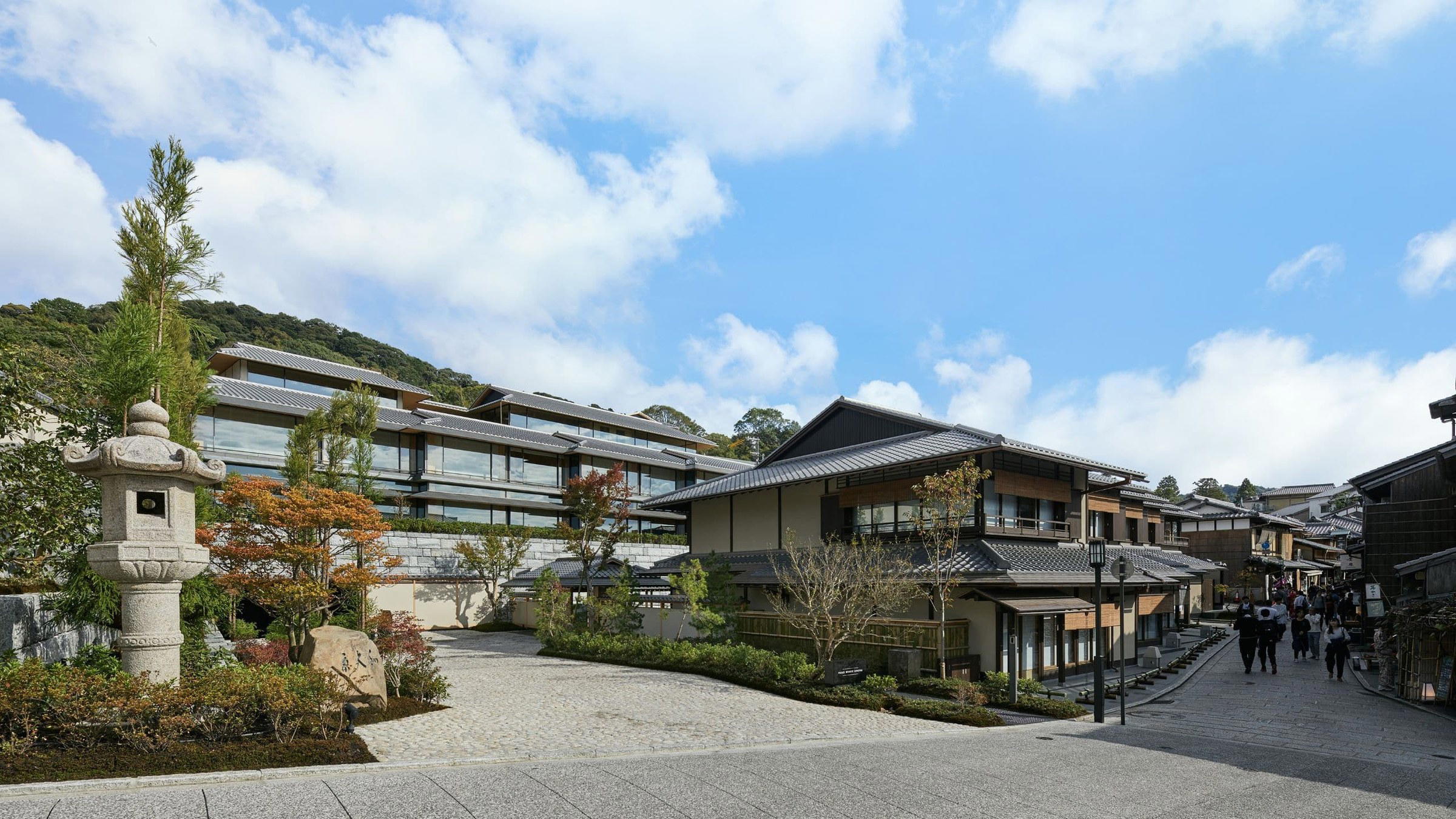
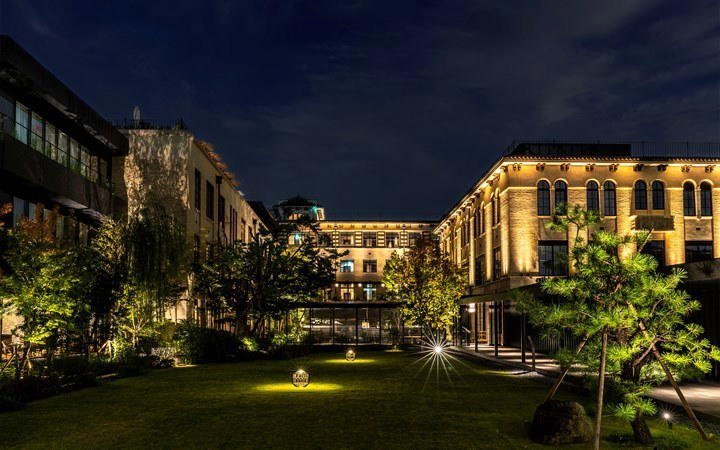
Park Hyatt Kyoto occupies a hillside position in the Higashiyama district, 70 rooms and suites spread across low-slung interconnected buildings designed to recede into the neighbourhood rather than dominate it. Ranked #27 on the World's 50 Best Hotels in 2024 and awarded a Michelin Key that same year, it represents the international luxury chain format at its most restrained, rates from approximately $1,229 per night.

Pearl is the En Primeur Club membership app, where members save venues, book tables and use the concierge.
A Different Kind of Park Hyatt
To understand what Park Hyatt Kyoto is, it helps to understand what it is not. The Park Hyatt Tokyo, made famous by its skyscraper setting and its cameo in Lost in Translation, reads as a monument to vertical urban ambition. The Kyoto property inverts that logic entirely. Its low-slung interconnected buildings spread across the hillside like a village cluster, designed to dissolve into the Higashiyama district rather than announce a presence. Where Tokyo reaches upward, Kyoto spreads outward, embedding itself between stone-paved lanes, centuries-old temples, and the quiet rhythm of a neighbourhood that has resisted modernisation more successfully than almost anywhere else in Japan.
That contrast is not accidental. When the property opened in 2019, international luxury brands were still working out how to enter Kyoto without antagonising a city famously protective of its architectural character. The answer Park Hyatt arrived at, low-profile architecture, a palette of tamo wood and natural stone, a 70-room scale that feels closer to a ryokan than a metropolitan flagship, has since proved more durable than the flashier approaches attempted elsewhere. The hotel has climbed from Condé Nast Traveler's Hot List in 2020, through a top-30 finish on the World's 50 Best Hotels in 2023, to a ranking of #27 on the same list in 2024, while simultaneously receiving a Michelin Key that year. By 2025 it had settled at #59, reflecting a maturing rather than a declining position as the field around it expanded.
Higashiyama as Context
The Higashiyama district is one of Kyoto's eleven historically protected preservation zones, where building heights, signage, and materials are subject to strict municipal controls. Hotels operating in this zone are not simply choosing a neighbourhood, they are accepting constraints that filter out certain formats entirely. The result is a tier of properties that tend toward intimacy, craft, and visual quietness. Park Hyatt Kyoto sits within this cohort alongside SOWAKA and The Shinmonzen, though at a notably different scale and price point. Elsewhere in the city, Aman Kyoto and HOTEL THE MITSUI KYOTO occupy different neighbourhoods and different registers of the same premium segment. The Four Seasons Hotel Kyoto is the closest geographic and category peer, though its larger footprint and garden-facing orientation give it a different atmosphere. Fufu Kyoto, Dusit Thani Kyoto, and Ace Hotel Kyoto each address a different price tier or atmosphere.
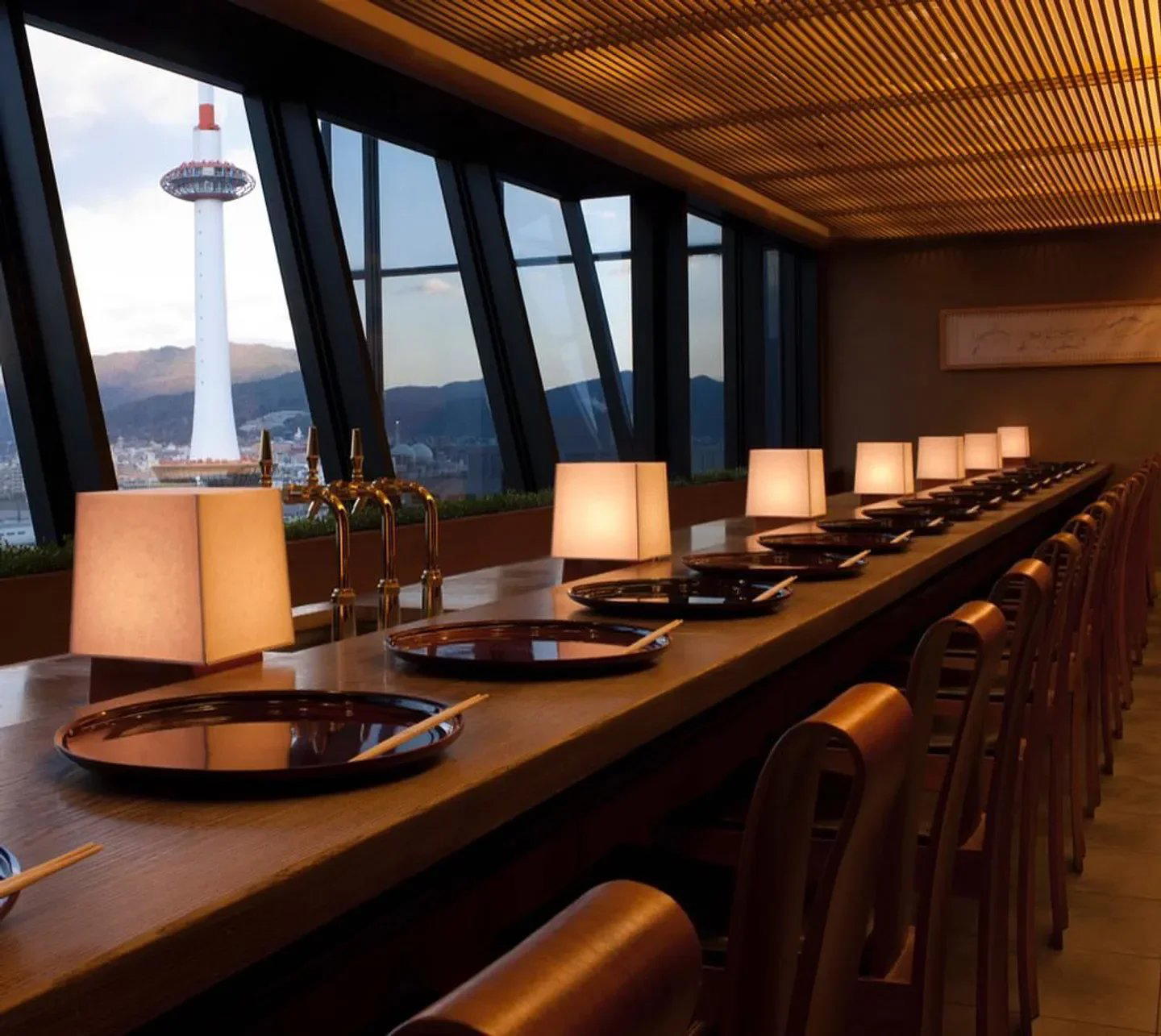
What defines the Park Hyatt Kyoto position specifically is the Yasaka Pagoda view. The five-storey pagoda, one of the few structures in Higashiyama visible above the roofline, frames the hotel's signature restaurant outlook and several guest room windows. In a city where views are typically filtered through garden screens or borrowed from rooftop distances, a direct sightline to one of Kyoto's most photographed structures is a spatial advantage that is genuinely difficult to replicate.
Scale and What It Produces
At 70 rooms and 9 suites, Park Hyatt Kyoto ranks among the smallest properties in the global Park Hyatt portfolio. That scale shapes the experience in practical terms: staff-to-guest ratios climb, service becomes more anticipatory, and the common areas never feel crowded. International luxury brands operating at this scale are threading a needle, small enough to feel personal, large enough to sustain the infrastructure (three restaurants, a lounge, a bar, a spa) that the Park Hyatt brand requires.
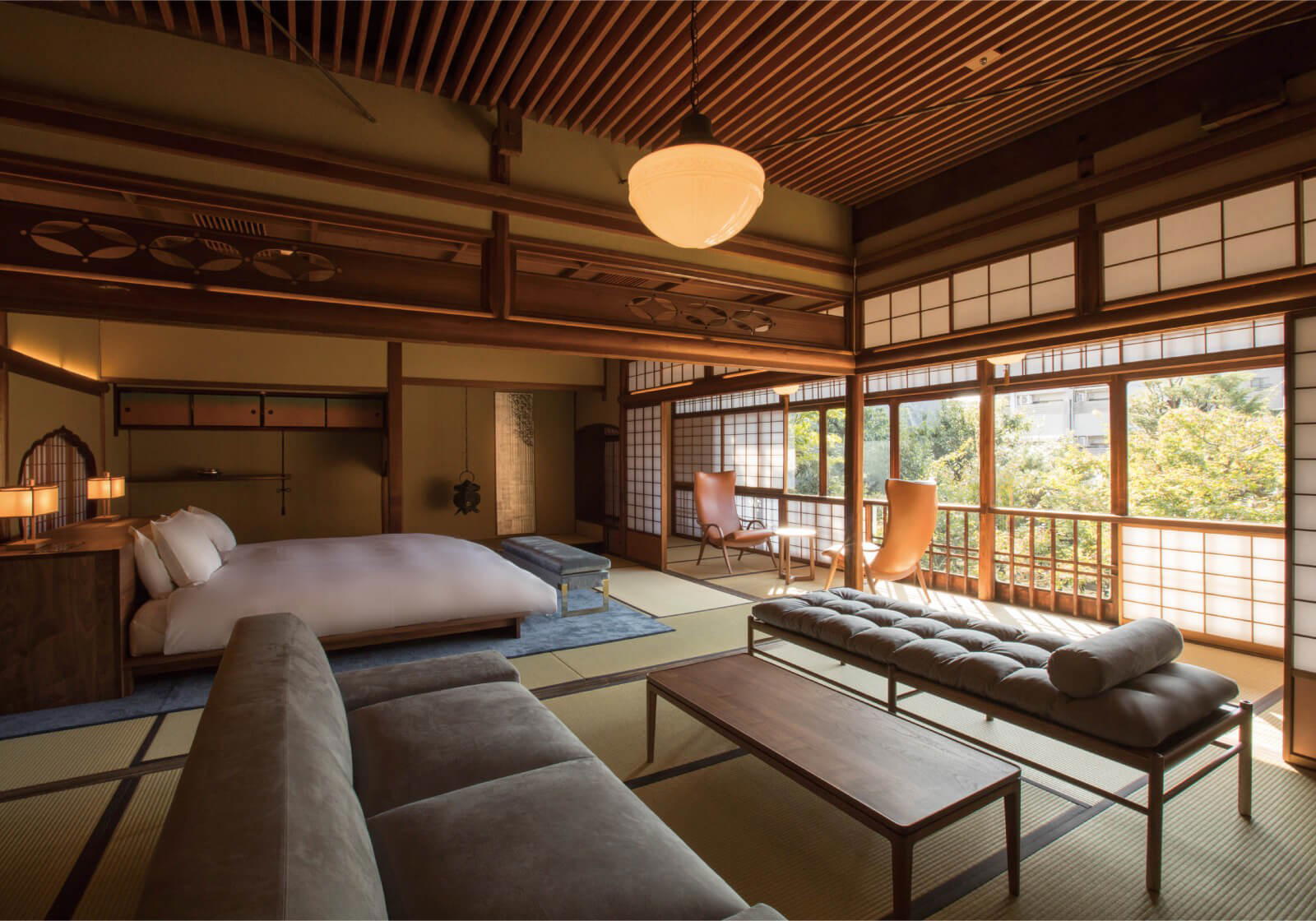
The rooms draw from ryokan spatial logic, generous floor areas, low furniture lines, warm material palettes, but interpret that language in contemporary terms rather than reproducing period detail. Original artworks and handcrafted elements from local makers sit alongside the conveniences the brand delivers universally. Garden-view rooms offer enclosed, private green outlooks; pagoda-view rooms trade that enclosure for the visual drama of the landmark. Neither is obviously superior, the choice depends on whether you prefer inward calm or outward orientation.
Dining and the Kyoyamato Connection
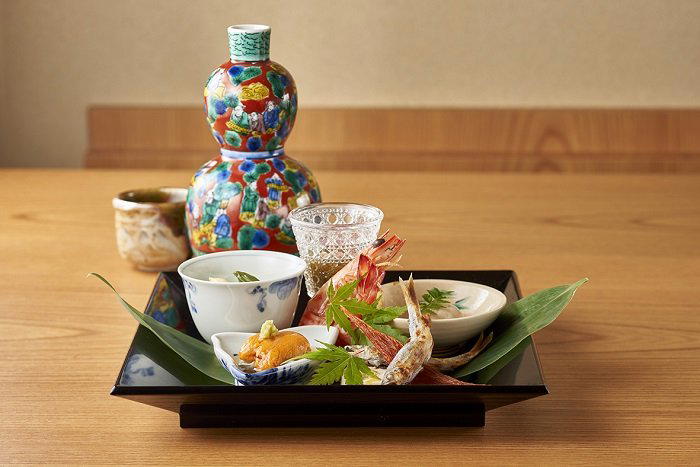
Luxury hotels in Japan have spent two decades grappling with how to handle food and beverage. The default, a hotel restaurant that gestures toward local cuisine without committing to it, has given way, in the premium tier, to a more specific approach: establish at least one dining format with genuine local credibility, and build the rest of the offering around it. Park Hyatt Kyoto's anchor here is Kyoyamato, a kaiseki institution in operation since 1877. The decision to site a family-run Kyoto kaiseki house within the hotel, rather than develop an in-house programme to approximate the same cuisine, is significant. It means the kaiseki experience carries provenance the hotel itself cannot manufacture, and it places a genuine Kyoto culinary tradition at the centre of the dining offer rather than at its margins.
The signature restaurant and bar, which holds the Yasaka Pagoda view, offers a different register: more accessible formats, the same commitment to local and seasonal ingredients, and a setting calibrated for guests who want the view without the formality of kaiseki. The spa draws from Kyoto's bathhouse tradition, extending the hotel's engagement with local practice beyond the dining rooms and into physical restoration. For a broader sense of where this hotel fits within Kyoto's dining and hospitality culture, see our full Kyoto restaurants guide.
Park Hyatt Kyoto in the Wider Japan Context
Japan's luxury accommodation market has fractured into distinct registers over the past decade. At one pole sit small, independently operated ryokan, places like Nishimuraya Honkan in Kinosaki-cho, Asaba in Izu, or Gora Kadan in Hakone, where the format is entirely Japanese and the guest volume is radically small. At the other pole sit international flagship hotels in Tokyo, exemplified by Bvlgari Hotel Tokyo, which prioritise brand architecture and urban spectacle. Between these sits a hybrid tier: international brands operating in historic cities at reduced scale, incorporating local materials and culinary traditions as structural features rather than decorative ones. Park Hyatt Kyoto, alongside properties like Amanemu in Mie, Zaborin in Kutchan, and Benesse House in Naoshima, occupies this middle register. It is a growing cohort, driven by travellers who want the logistical reliability of an international brand but reject the generic aesthetic that often accompanies it. The 2020 Architectural Digest Great Design Award for Hotels, received in the hotel's first full year of operation, confirmed that the design approach met a credible external standard, not just a brand-internal brief.
Planning a Stay
Rates at Park Hyatt Kyoto begin around $1,229 per night, positioning the property in the upper bracket of Kyoto's luxury market and in line with peer properties in the same district. With 70 rooms, availability tightens significantly during cherry blossom season (late March to mid-April) and the autumn foliage period (mid-November), when Higashiyama draws its heaviest visitor concentration. Booking several months in advance for these windows is standard practice. Architecturally, the hotel's exterior profile is low enough that approaching guests sometimes pass it without recognising it, a quality the property has described as intentional, and one that reinforces the guesthouse logic on which its design is premised.
For comparison within Japan's broader luxury portfolio, Fufu Kawaguchiko, Fufu Nikko, Halekulani Okinawa, ENOWA Yufu, Jusandi in Ishigaki, and Sekitei in Hatsukaichi-shi each offer a different geography and a different interpretation of premium hospitality within Japan. Internationally, the Park Hyatt brand's commitment to city-specific design finds different expression at Aman New York, The Fifth Avenue Hotel in New York City, and Aman Venice, properties that similarly negotiate between international brand identity and site-specific character, though in markedly different cultural contexts.
Price Lens
Comparable venues nearby, for context on price, style, and recognition.
| Venue | Price | Awards | Notes |
|---|---|---|---|
| Park Hyatt KyotoThis venue (the venue you are viewing) | $500–750 | 1 Michelin Key · World's 50 Best #37 | Not listed |
| Aman Kyoto | Not listed | 2 Michelin Keys · World's 50 Best #74 | Kita, Contemporary homage to traditional ryokan inns with latticed pavilions |
| HOTEL THE MITSUI KYOTO | $1,000–1,500 | 3 Michelin Keys · World's 50 Best #79 | Nakagyō, Blends traditional Japanese aesthetics with contemporary elegance on the historic site of the Mitsui family residence facing Nijo Castle. |
| Dusit Thani Kyoto | $1,000–1,500 | 1 Michelin Key · La Liste Top Hotels | Shimogyō, Urban luxury sanctuary fusing Thai and Japanese design |
| The Shinmonzen | $1,000–1,500 | 2 Michelin Keys · Mr & Mrs Smith Seal of Approval | Higashiyama, Contemporary minimalist design inspired by traditional Japanese ryokan aesthetics, blending Tadao Ando's architectural vision with cosmopolitan luxury and curated contemporary art. |
| ROKU KYOTO, LXR Hotels & Resorts | Not listed | 1 Michelin Key · La Liste Top Hotels | Kita, Mountain resort blending Japanese artisanship with modern luxury |
Recognition history
Dated appearances from independent guides and award organizations, with the underlying list record or original source where available.
Michelin 1 Key
Michelin
World's 50 Best Hotels #37 · No. 37
World's 50 Best · 2026 World’s 50 Best Hotels 1-50
La Liste Top Hotels
La Liste
Forbes 4-Star
Forbes
Virtuoso Luxury Hotel Partner
Virtuoso
Full recognition history (10 entries)
Michelin 1 Key
Michelin
World's 50 Best Hotels 51-100 #59
World's 50 Best
Michelin 1 Key
Michelin
World's 50 Best Hotels #27
World's 50 Best
World's 50 Best Hotels #30
World's 50 Best
Park Hyatt Kyoto
Featured Guides
Continue exploring
More in Kyoto
Hotels in Kyoto
All hotels in Kyoto →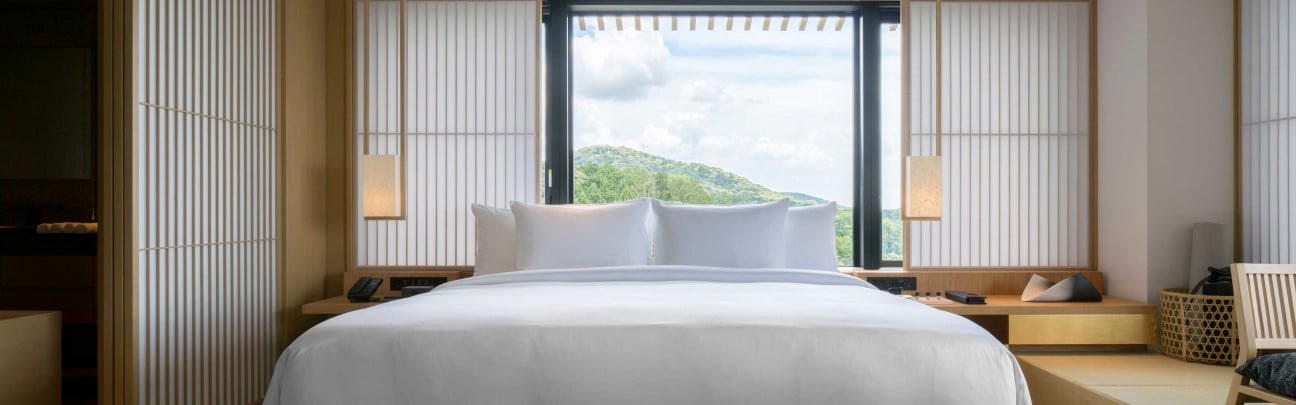

Bars in Kyoto
All bars in Kyoto →


Restaurants in Kyoto
All restaurants in Kyoto →
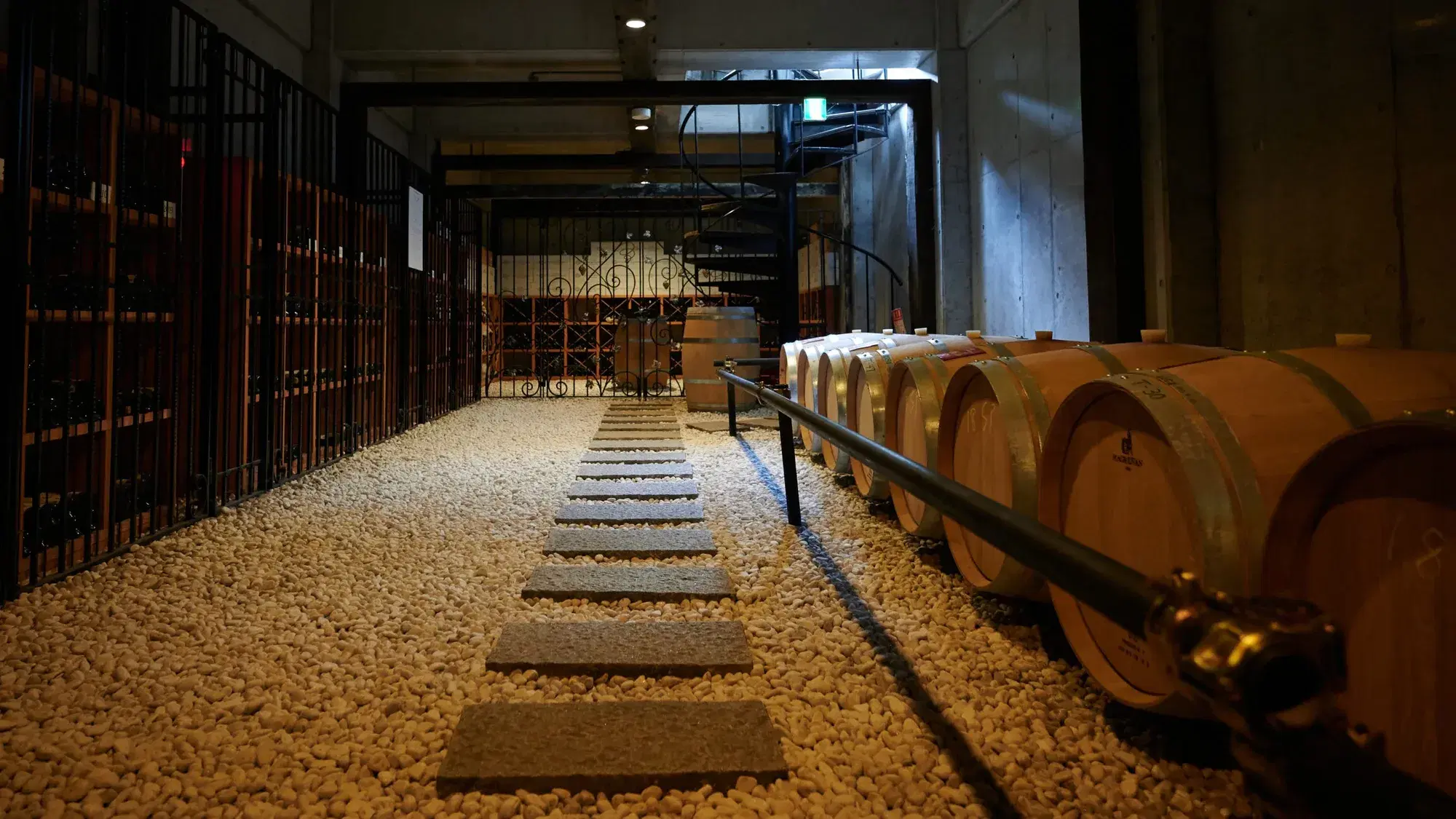
Wineries in Kyoto
Browse all →
Details
- Elegant
- Sophisticated
- Quiet
- Scenic
- Intimate
- Honeymoon
- Romantic Getaway
- Anniversary
- Wellness Retreat
- Garden
- Historic Building
- Panoramic View
- Wi Fi
- Spa
- Fitness Center
- Room Service
- Concierge
- Valet Parking
- Sauna
- Garden
- Mountain
- Skyline
- Elevator
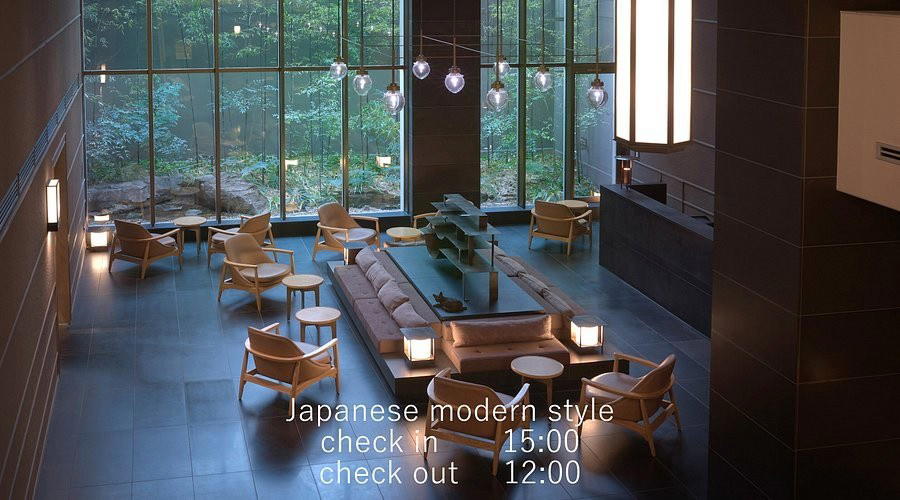
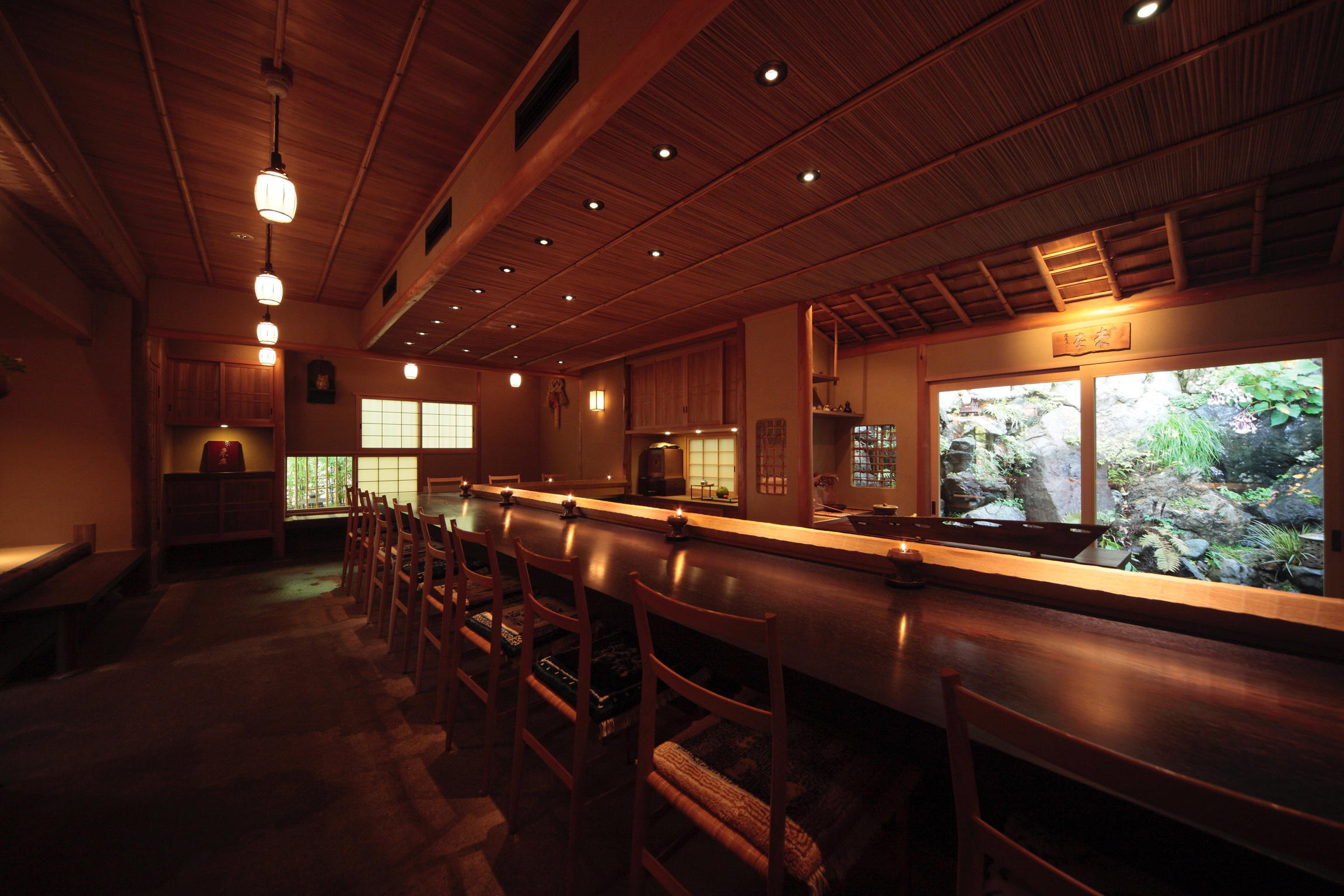
Serene and tranquil with subtle lighting, warm wood accents, and a peaceful atmosphere inspired by surrounding hills and gardens.