
Michelin Selected
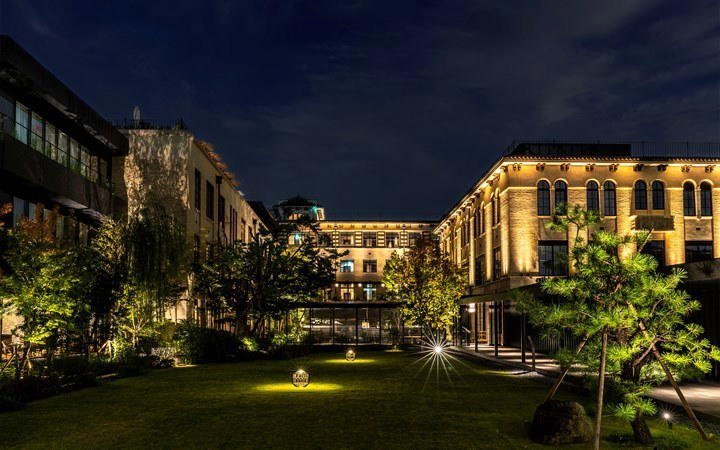
Positioned in Higashiyama-ku at the foot of Kyoto's eastern hills, The Hotel Higashiyama by Kyoto Tokyu Hotel, A Pan Pacific Hotel, carries a 2025 Michelin Selected distinction and places itself within the city's smaller-scale, design-conscious luxury tier. The address puts guests within walking distance of Sanneizaka, Chion-in, and the Shirakawa canal district, making it one of the more practically sited hotels in this part of the city.

Pearl is the En Primeur Club membership app — saves, bookings, and concierge access live there. Same editors, same standards.
- Address
- Japan, 〒605-0033 Kyoto, Higashiyama Ward, Ebisucho, 三丁目175-2
- Phone
- +81 75-533-6109
- Website
- panpacific.com
- Directions
- Get directions
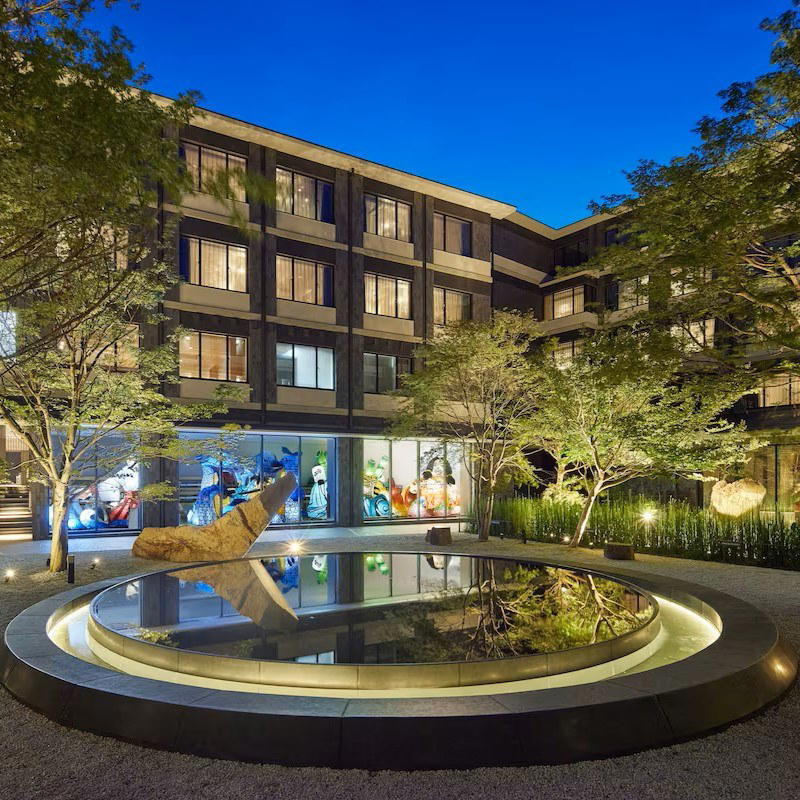
Where Higashiyama's Street Grid Meets Considered Hospitality
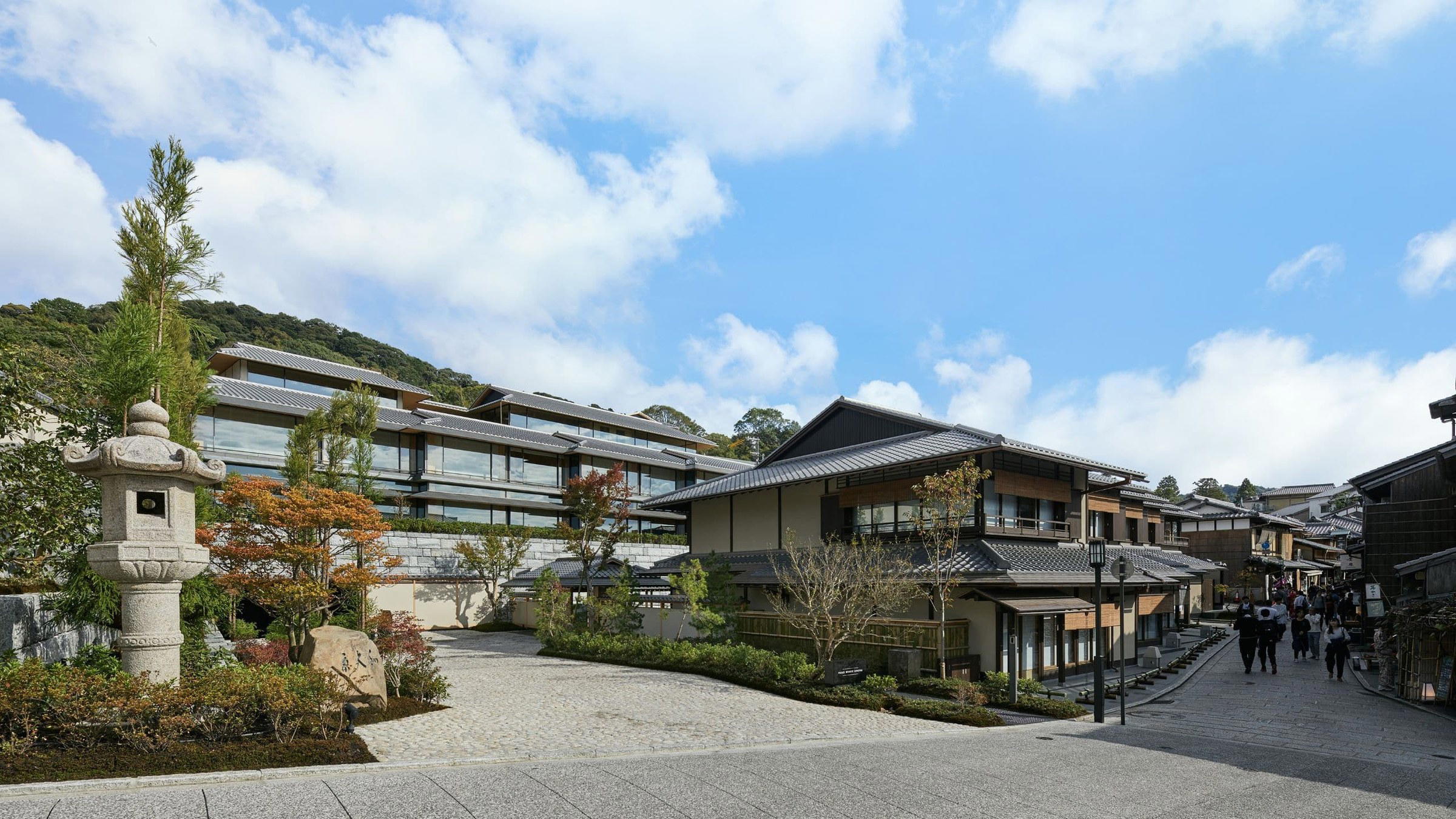
Approach from Sanjo-dori and the shift is immediate. The commercial density of central Kyoto gives way to stone-paved lanes, preserved machiya frontages, and the low roofline that Higashiyama-ku's building codes have defended for decades. The Hotel Higashiyama by Kyoto Tokyu Hotel, A Pan Pacific Hotel sits inside this transition, on Ebisucho at the Shirakawabashi crossing, where the Shirakawa canal runs alongside rows of cherry and willow before the slope rises toward Chion-in and Shoren-in. It is a location that requires almost nothing of a guest in terms of effort: the district's principal cultural sites are within a short walk, and the quieter residential lanes between the canal and the Higashiyama hills are accessible on foot from the door.
Kyoto's luxury hotel market has expanded considerably since the mid-2010s, and the eastern districts have attracted a specific subset of that expansion. Properties in Higashiyama-ku and the Shirakawa corridor tend to position themselves as counterpoints to the grand-scale international flagships along the Kamo River. Aman Kyoto withdraws entirely into the northern forest above Kinkaku-ji. The Shinmonzen occupies a converted antique-dealer building on the canal itself. SOWAKA works within the Gion fabric. The Hotel Higashiyama by Kyoto Tokyu Hotel belongs to a different bracket: a Pan Pacific-affiliated property that brings international operating standards to a neighbourhood that rewards architectural sensitivity and contextual restraint.
Design in a District That Sets the Bar
Higashiyama-ku is one of the most architecturally regulated districts in Japan. The preservation zones covering the approach to Yasaka Shrine and the Ninenzaka-Sannenzaka corridor enforce height limits, material palettes, and signage controls that have no direct equivalent in Tokyo or Osaka. Any hotel operating here is making an implicit design commitment whether it intends to or not: the neighbourhood itself is the brief. Properties that read as incongruous imports sit at a structural disadvantage relative to those whose scale and material language hold a conversation with the surroundings.
The hotel's Ebisucho address positions it at a point where the canal district meets the base of the hills, a zone that has historically attracted the kind of quiet, detail-conscious accommodation that Kyoto's longer-stay visitors seek out. The Tokyu Hotels group, operating through Pan Pacific, has a track record of adapting its formats to local context across its Japanese properties, and that institutional approach tends to produce a more calibrated fit than either the pure luxury independents or the large international chains that import their design language wholesale.
Park Hyatt Kyoto sits higher up the Higashiyama slope on Ninen-zaka, with a deliberately refined remove from street-level Kyoto. Four Seasons Hotel Kyoto anchors itself around a reconstructed garden in Myohoin. The Hotel Higashiyama positions closer to the canal and the daily rhythm of the district: temple bells audible in the morning, the foot-traffic patterns of the Sanneizaka stone steps, the lantern light of the Maruyama Park perimeter at dusk.
The Michelin Signal and What It Means in This Context
The Michelin Guide's hotel selection, now operating independently of its restaurant listings, applies a set of criteria that weight atmosphere, service consistency, and setting alongside physical comfort. A Michelin Selected distinction in the 2025 guide places a property within the upper tier of the guide's curated inventory without assigning starred status, which is reserved for the very highest performers. In Kyoto, where the hotel supply has grown sharply and the Michelin hotel list functions as a meaningful filter for international travellers, the designation carries practical weight as a shortlisting signal.
Among the Michelin-recognized properties in Kyoto, the Hotel Higashiyama sits in a competitive group that includes HOTEL THE MITSUI KYOTO, Dusit Thani Kyoto, and Ace Hotel Kyoto. Each carries distinct positioning: the Mitsui operates around a historic site with Edo-period garden remains; the Dusit Thani brings a Thai-group sensibility to a central Kyoto address; the Ace Hotel draws a design-forward, culturally engaged crowd to Karasuma-Oike. The Hotel Higashiyama's distinguishing variable is its address, which places it deeper inside the historic eastern district than any of these alternatives.
Practical Positioning: Getting Here and Using the Location
Higashiyama-ku is not a taxi-distance neighbourhood in the way that Gion or the central shopping district can be. It rewards pedestrian engagement. From Kyoto Station, the most practical approach is by taxi or bus to the Sanjo Keihan or Higashiyama subway stop, after which the property is reachable on foot in a few minutes. The Tozai subway line stops at Higashiyama Station, making connections to Karasuma-Oike and the city centre direct without requiring a car.
The hotel's proximity to Shirakawabashi places it within easy reach of the Heian Shrine and Okazaki museum corridor to the north, Gion to the south, and the full Higashiyama walking trail that connects Nanzen-ji down through Chion-in, Maruyama Park, Kodai-ji, and the Kiyomizudera approach. For guests who want to spend time in the eastern hills across multiple days, this address functions as a base rather than a transit point, a distinction that matters when the typical Kyoto itinerary involves covering significant ground on foot. For a broader view of dining options in the city while staying here, see our full Kyoto restaurants guide.
Travellers considering the hotel within a wider Japan itinerary can weigh it against properties elsewhere in the country. Design-led ryokan formats like Zaborin in Kutchan or Gora Kadan in Hakone offer a different spatial experience rooted in onsen culture. Properties like Benesse House in Naoshima frame themselves around contemporary art. Urban alternatives such as Bvlgari Hotel Tokyo in Tokyo occupy a different register entirely. The Hotel Higashiyama's specific proposition is urban Japan at pedestrian scale, in a district that has maintained its physical character more intact than almost anywhere else in a major Japanese city.
Those planning longer stays in the Kansai region can consider onward options including Nishimuraya Honkan in Kinosaki-cho for a traditional hot-spring town experience, or Amanemu in Mie for a more remote coastal counterpoint. Both offer departure points from Kyoto's intensity into quieter registers of Japanese hospitality.
Comparison Snapshot
Comparable venues nearby, for context on price, style, and recognition.
| Venue | Cuisine | Price | Awards | Notes |
|---|---|---|---|---|
| The Hotel Higashiyama by Kyoto Tokyu Hotel, A Pan Pacific HotelThis venue — the venue you are viewing | Blends traditional ryokan hospitality with contemporary luxury inspired by Kyoto's feudal-era Higashiyama district. | $300–500 | Michelin Selected | Not listed |
| Suiran, A Luxury Collection Hotel, Kyoto | Traditional Japanese ryokan with modern luxury | Not listed | 1 Michelin Key · La Liste Top Hotels | Ukyō |
| The Ritz-Carlton, Kyoto | Contemporary ryokan-inspired urban resort blending traditional Japanese elements with modern luxury. | $500–750 | 1 Michelin Key · La Liste Top Hotels | Gion |
| Yoshida Sanso | Luxury heritage ryokan housed in a restored 1932 imperial residence with contemporary comforts integrated into traditional Japanese design. | $1,000–1,500 | Michelin Selected | Sakyō |
| FAUCHON L'Hotel Kyoto | Luxury boutique hotel merging French Parisian design with Japanese minimalism and contemporary aesthetics | $300–500 | Michelin Selected · Small Luxury Hotels of the World Member | Shimogyō |
| MOGANA | Modernist reimagination of traditional Japanese aesthetics with contemporary European design influences, positioned as an intimate design-focused luxury boutique hotel. | Not listed | Michelin Selected | Nakagyō |
Recognition history
Dated appearances from independent guides and award organizations, with the underlying list record or original source where available.
Michelin Selected
Michelin
Continue exploring
More in Kyoto
Hotels in Kyoto
Browse all →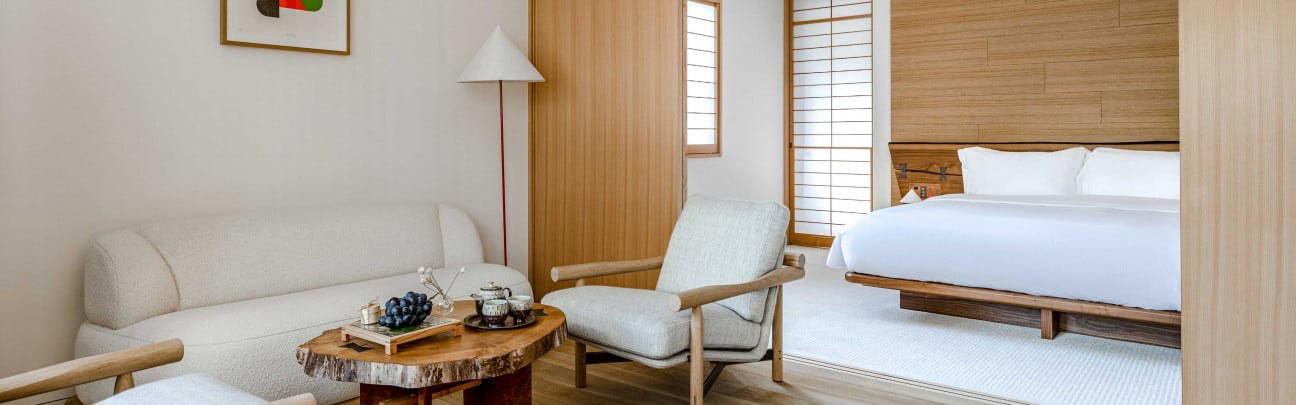
Bars in Kyoto
Browse all →
Restaurants in Kyoto
Browse all →
Wineries in Kyoto
Browse all →
Details
- Elegant
- Quiet
- Sophisticated
- Scenic
- Romantic Getaway
- Wellness Retreat
- Anniversary
- Historic Building
- Panoramic View
- Garden
- Wi Fi
- Spa
- Fitness Center
- Room Service
- Concierge
- Garden
- Street Scene
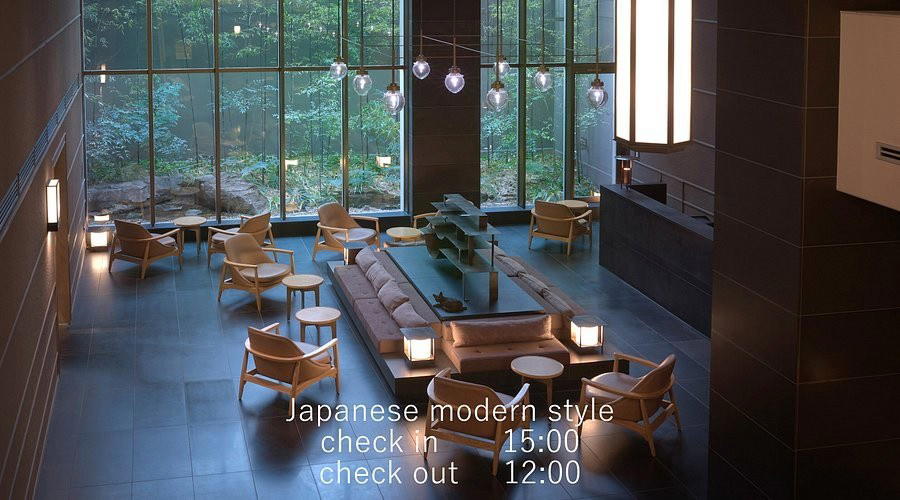
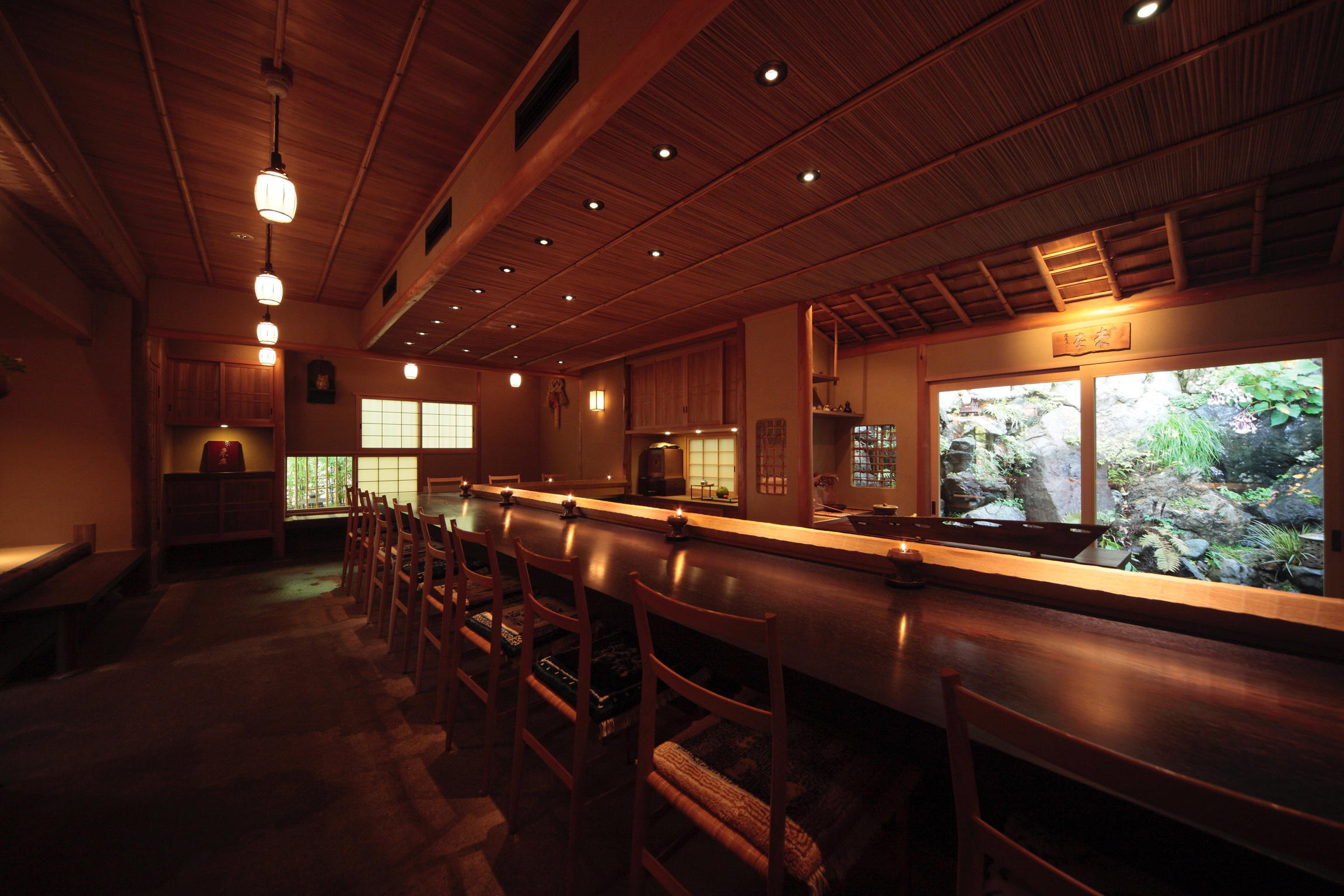
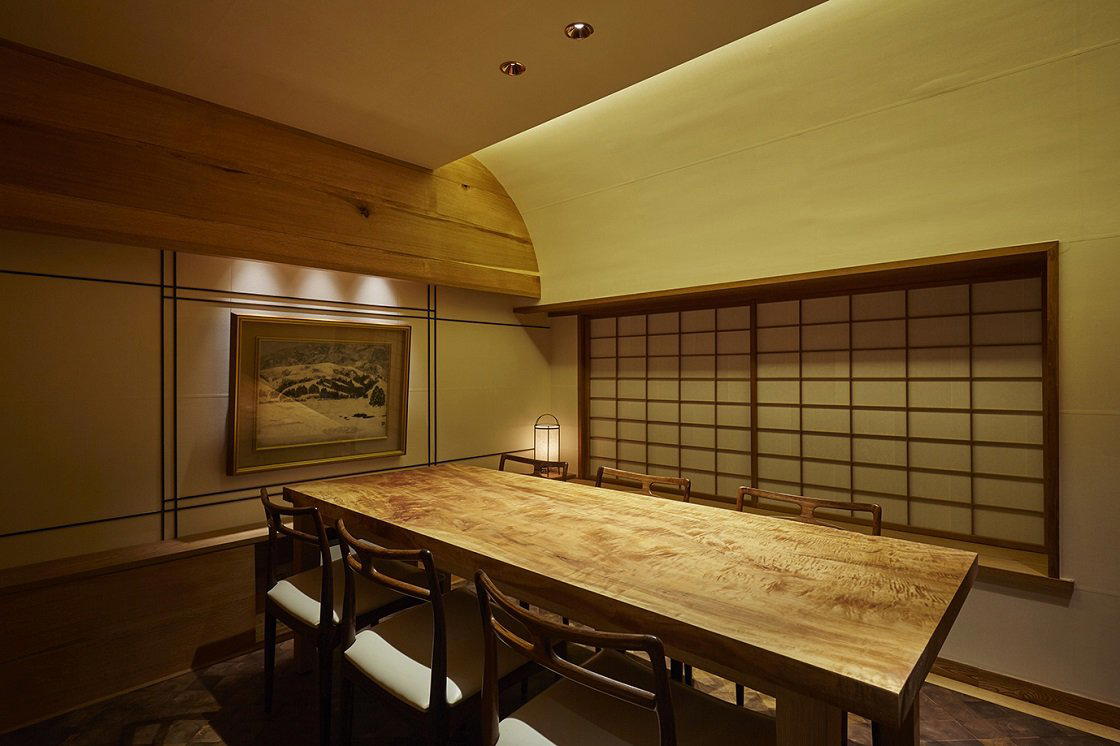
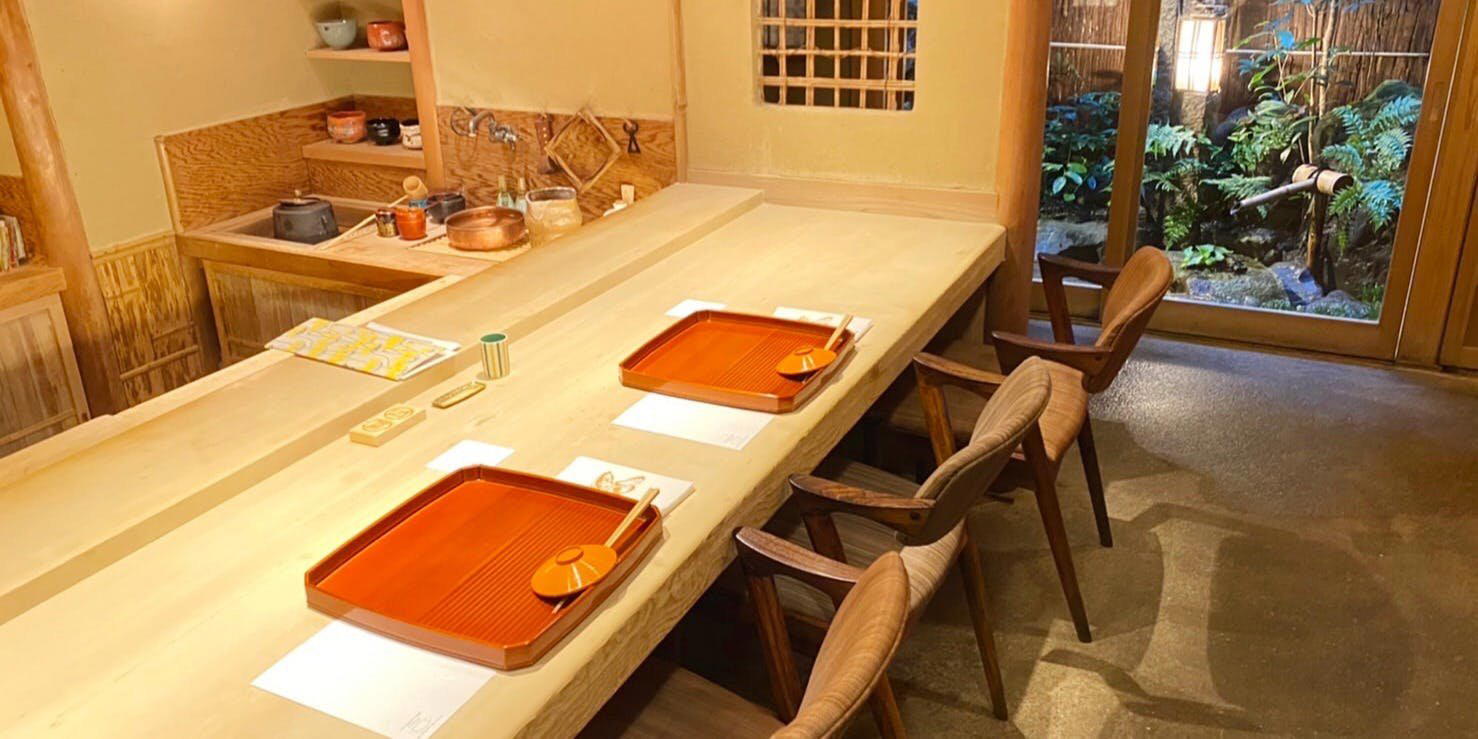
Serene and calming atmosphere with traditional Japanese design elements, modern touches, tranquil garden views, and a relaxing lobby featuring original artwork.