





2 Michelin Keys · La Liste Top Hotels · Star Wine List
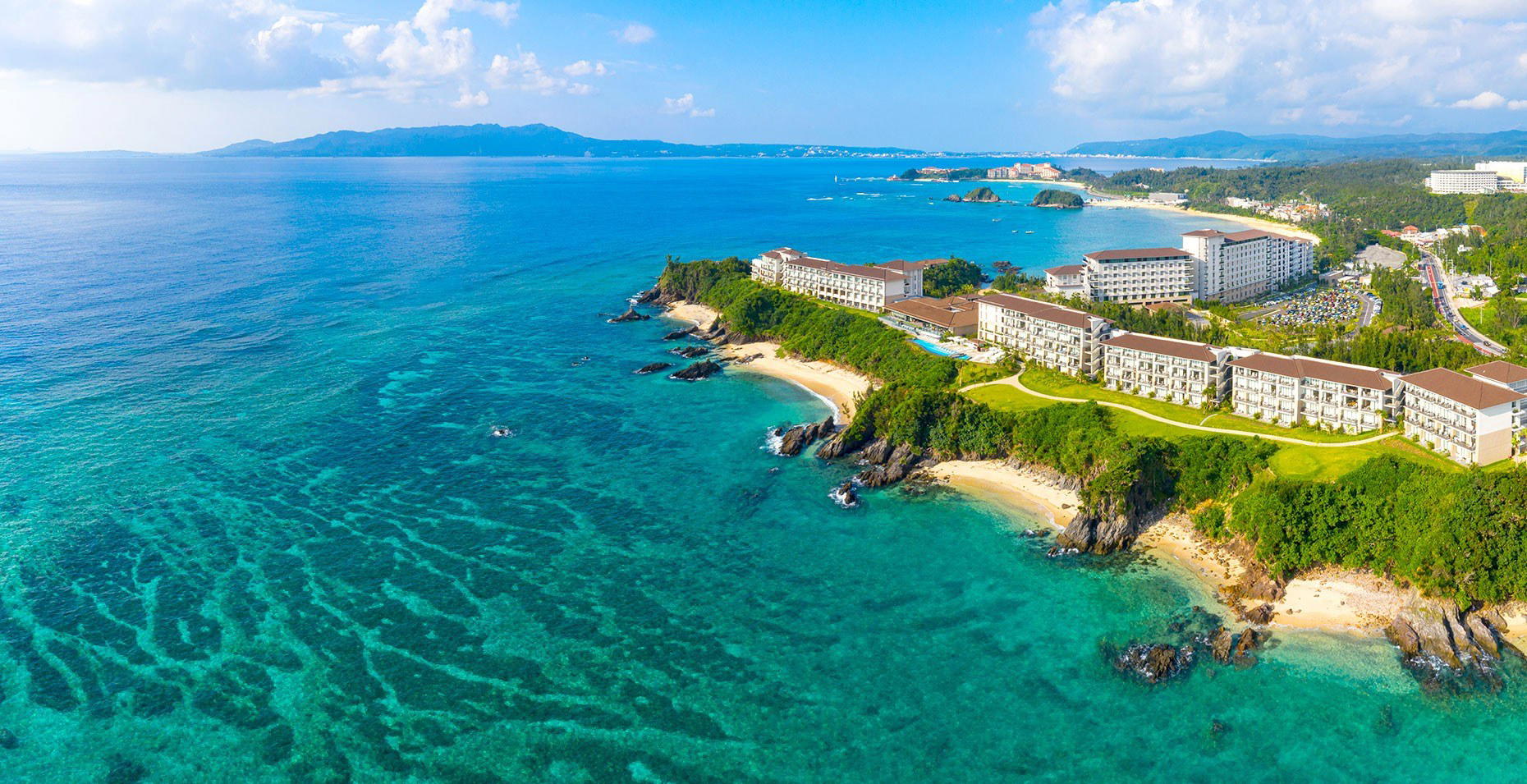
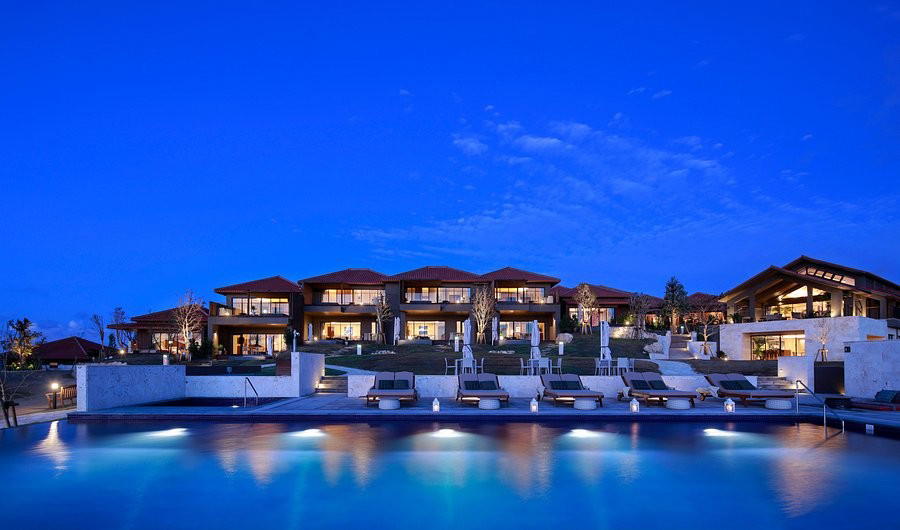
Halekulani Okinawa holds Michelin 2 Keys (2024), a 95-point La Liste Top Hotels rating (2026), and Star Wine List recognition. The 360-room property occupies nearly a mile of Onna Village coastline within the Okinawa Kaigan Quasi-National Park, with five pools, a spa drawing on ancient Ryukyu healing traditions, and a dining programme spanning Japanese cuisine, American barbecue, and steakhouse formats. Every room faces the ocean.

Pearl is the En Primeur Club membership app, where members save venues, book tables and use the concierge.
Coastline Scale, Controlled Interior
The coastal strip of Onna Village, running through the Okinawa Kaigan Quasi-National Park, has attracted resort development for decades, but the properties vary considerably in how they relate to the landscape. Some face it; Halekulani Okinawa occupies it, spreading across nearly a mile of coastline with a physical footprint that places it in a different category from the smaller, design-forward retreats that define Okinawa's premium tier. Where Hyakuna Garan operates on intimacy and The Terrace Club Wellness Thalasso at Busena specialises in thalassotherapy at scale, Halekulani Okinawa pitches itself as a full-service resort with brand heritage that predates most of its regional competitors by several decades. The Hawaiian parent property has operated on Waikiki Beach for over a century; the name, meaning 'house befitting heaven' in Hawaiian, carries weight that few Asia-Pacific resort openings can claim at launch.
That heritage shows most directly in the interior language. Champalimaud Design, a New York-based practice with a portfolio across major international hotel openings, specified just seven shades of white for the rooms and suites. The palette is a deliberate restraint strategy: by keeping the interior neutral, the design directs attention to the emerald sea beyond the floor-to-ceiling sliding glass doors. All 308 standard rooms (538 square feet) and 47 suites (ranging from 818 to 3,164 square feet) follow this logic, each with a large soaking tub positioned in front of a window facing the water. The total room count reaches 360, making this one of the larger footprints in the Okinawa premium tier, comparable in scale to Fusaki Beach Resort Hotel & Villas though with a markedly different positioning in terms of design language and brand origin.
The Dining Programme: Range Over Specialisation
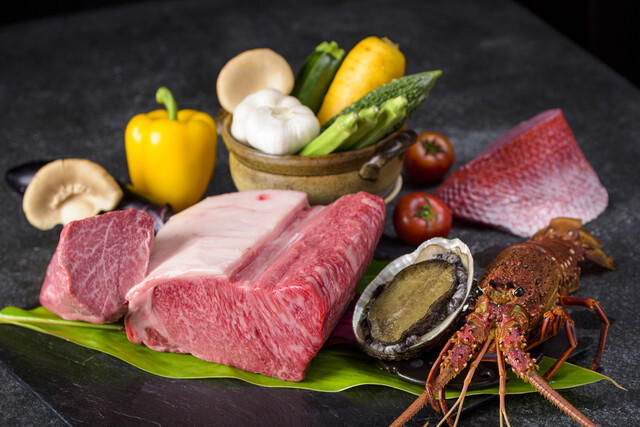
Okinawa's resort dining has historically leaned on a single strong concept, often kaiseki or local Ryukyuan cuisine, as the anchor. Halekulani Okinawa takes a broader approach, with venues covering Japanese cuisine, American barbecue, and steakhouse formats within the same property. That breadth reflects a calculation familiar from large Hawaiian resort properties: when guests are staying multiple nights in a relatively remote coastal location, multi-outlet dining reduces the pressure to leave the property for variety. The Star Wine List recognition (2026) signals that the beverage programme across these outlets meets a standard that few resort wine lists in this region achieve, placing the property in a selective group alongside properties like Amanemu in Mie where food and drink infrastructure is treated as a serious component rather than an amenity checkbox.
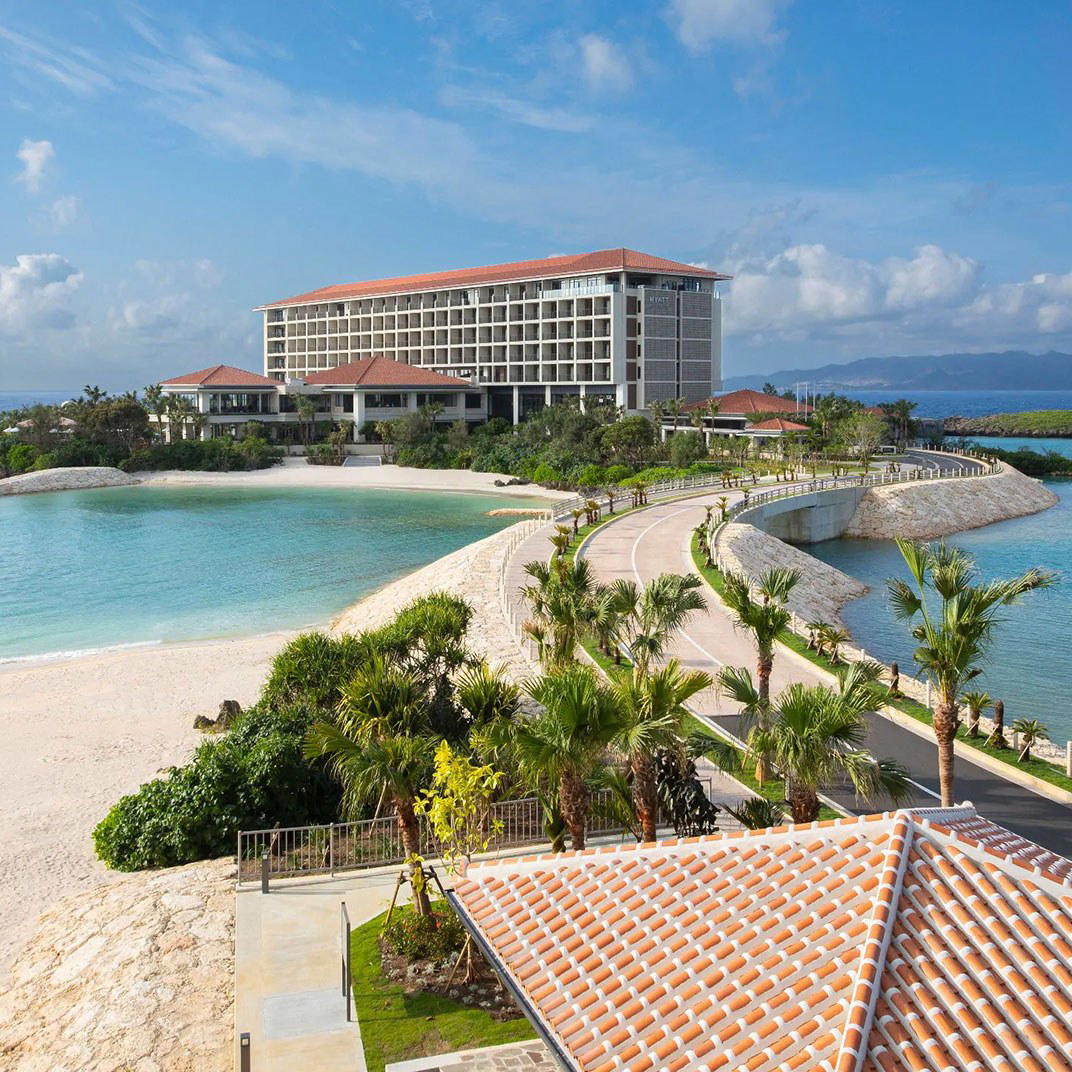
Evening programming at the Orchid Pool adds a hospitality layer that the dining venues alone do not provide. Nightly performances of Hawaiian and jazz music position the pool terrace as a social gathering point at sunset, which addresses a structural challenge for resort properties on this coastline: the famous Okinawan sunset, with its characteristic orange and purple register, creates a natural audience moment every evening. The Sunset Wing rooms command the leading vantage point for this, while the Beachfront Wing trades that view for closer proximity to the sand and tends to draw families. Guests prioritising quiet should account for that distinction when booking.
Pool Architecture and the Orchid Detail
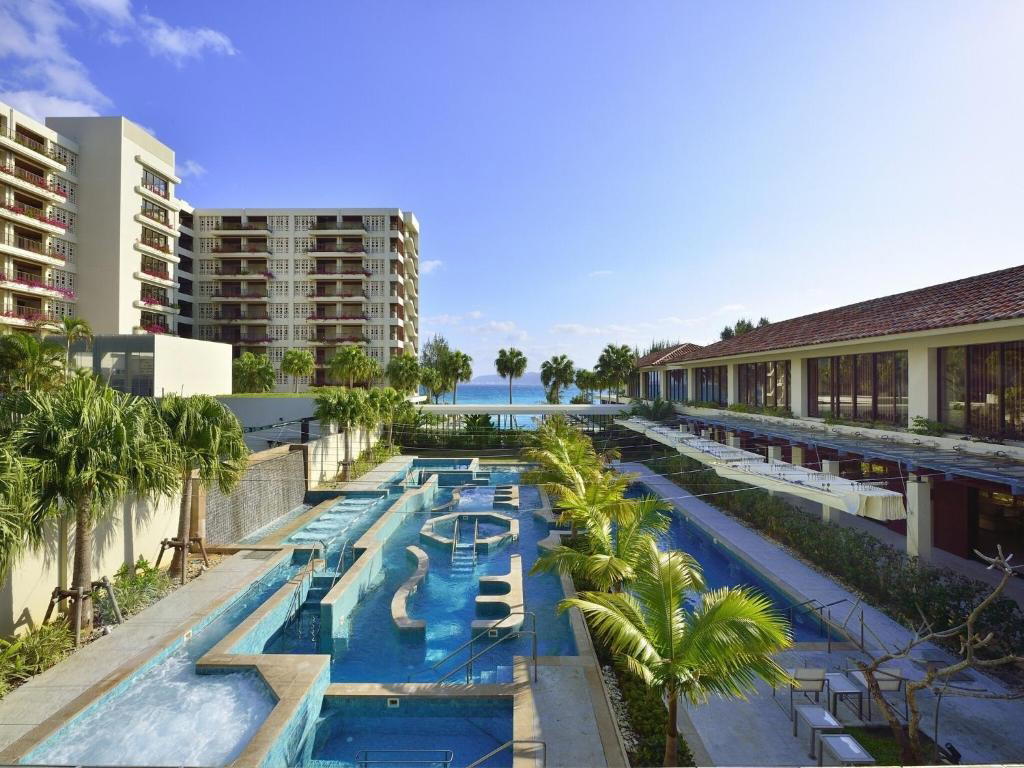
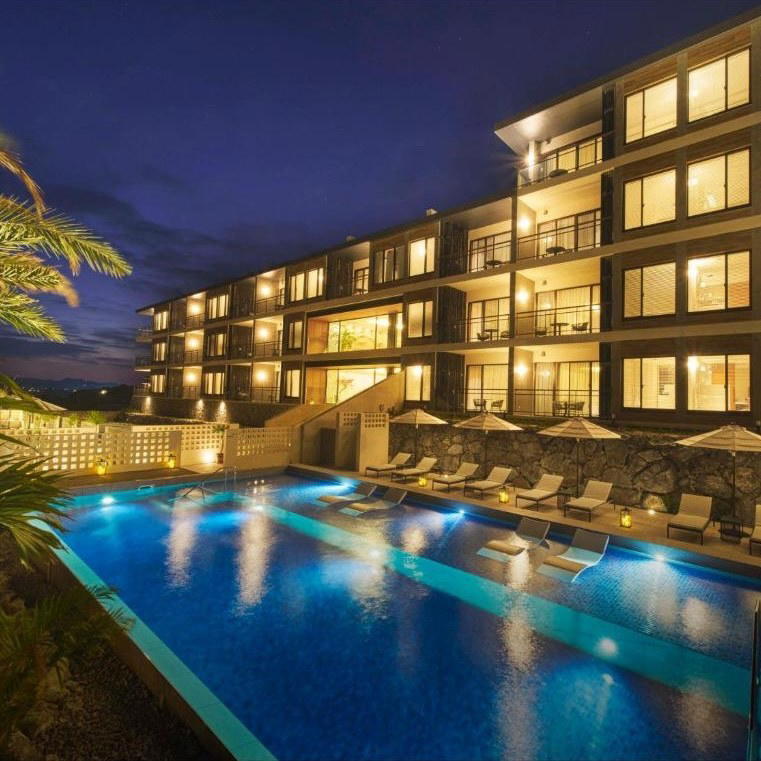
Five pools across the property is a high count by any regional standard. Three of the five are infinity pools, and one is tiled with 1.5 million mosaic pieces in the shape of a cattleya orchid, a motif inherited from the Waikiki property but executed here at twice the scale. That detail is worth noting not as decorative trivia but as a measure of investment density: mosaic pools at this specification represent a significant capital commitment, and the decision to exceed the Waikiki version suggests the Okinawa property was positioned from the outset to surpass rather than simply replicate the original.
For guests requiring separation from the broader resort, five standalone villas each include a private heated pool and an onsen fed by natural hot springs. Access to the Club Lounge, which handles private check-in and checkout alongside afternoon tea and cocktail service, is reserved for villa guests and Premier Club Ocean Front room occupants. That tiering is standard practice at properties of this scale, visible across comparable Japanese resort hotels like Gora Kadan in Hakone and Zaborin in Kutchan, but the onsen-equipped private pool combination is a more unusual pairing in the Okinawa context.
Spa as Cultural Document
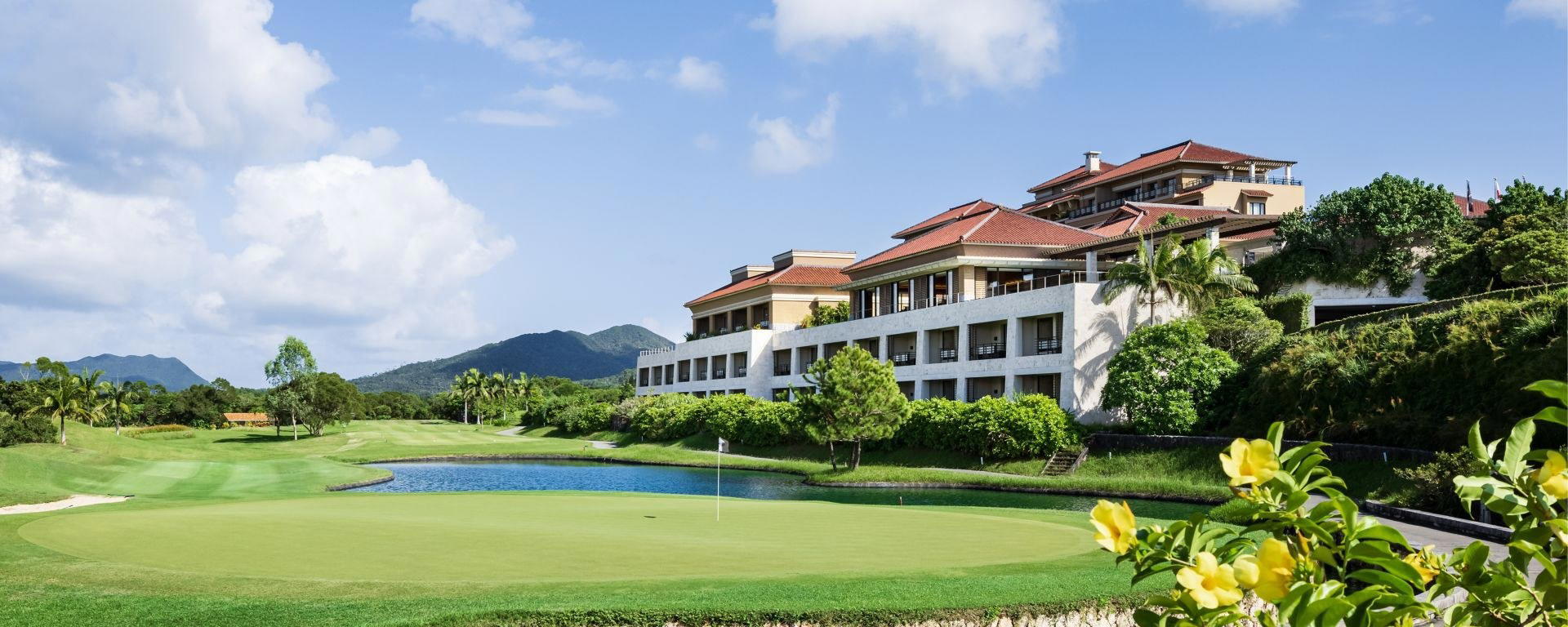
SpaHalekulani draws from two distinct traditions: ancient Ryukyu Kingdom folk remedies, which predate the Japanese annexation of Okinawa and reflect a 400-year period of autonomous rule stretching from the 15th to 19th centuries, and traditional Hawaiian treatments carried over from the parent brand. The combination is less arbitrary than it might appear. Both traditions share an emphasis on plant-derived materials and a therapeutic relationship with water, and Okinawa's own longevity culture, documented in medical literature and tied to local diet and lifestyle, gives Ryukyuan healing practices a credibility that the spa can reference honestly. Among luxury resort spas in the region, this dual-tradition structure gives the programme a more specific cultural grounding than the generic 'Asian wellness' framing common at properties like Miyakojima Tokyu Hotel & Resorts.
Activities and Seasonal Calendar
The activities roster is wide: diving, snorkelling, powerboat cruising, cultural classes, and tennis courts cover the standard resort expectations. One more time-specific offering is the guided firefly experience in the island's forests, available from July through September. Okinawa's firefly season, concentrated in the summer months, draws on species endemic to the Ryukyu archipelago and represents a genuinely different type of evening excursion from the poolside and beach programming that dominates most resort itineraries. The front desk arranges access on request at check-in. Among Okinawa's resort properties, this kind of nature-linked programming places Halekulani in a conversation with ecologically positioned properties like Sankara Hotel & Spa Yakushima, though the two properties operate in very different physical environments.
For guests using the property as a base to explore the wider Ryukyu archipelago, HOSHINOYA Taketomi Island and Jusandi in Ishigaki represent options further south in the island chain, each with a markedly smaller scale and a more immersive relationship with local vernacular architecture. The choice between those properties and Halekulani Okinawa is largely a choice between resort infrastructure and experiential compression.
Recognition and Peer Positioning
The Michelin 2 Keys designation (2024) places Halekulani Okinawa in the second tier of Michelin's hotel classification, below the 3 Keys ceiling but above the entry-level single key. Combined with Leading Hotels of the World membership and the Star Wine List recognition, the property accumulates a credential stack that positions it at the senior end of Japan's coastal resort tier, alongside properties like Benesse House in Naoshima and Asaba in Izu in terms of multi-publication recognition, though each of those operates in a completely different physical and cultural register.
Within Japan's broader luxury hotel conversation, the property sits further from the high-density urban positioning of Bvlgari Hotel Tokyo or HOTEL THE MITSUI KYOTO and closer to the nature-integrated resort format. For further context on the Okinawa hotel and dining scene, see our full Okinawa restaurants guide.
Planning Your Stay
The property sits at 1967-1 Nakama, Onna Village, in the Kunigami District, within the Okinawa Kaigan Quasi-National Park. The Beachfront Wing suits families and those who want direct beach access; the Sunset Wing provides the cleaner ocean view and better privacy. Villa guests and Premier Club Ocean Front occupants access the Club Lounge for private arrival and departure processing as well as afternoon tea and cocktail service. The firefly excursion is a July-through-September option arranged at the front desk. Comparable Japanese ryokan and resort options at a similar recognition level include Araya Totoan in Kaga, Nishimuraya Honkan in Kinosaki-cho, and ENOWA Yufu in Yufu, for those building a broader Japan itinerary around resort properties with serious food and beverage programmes.
Cost Snapshot
Comparable venues nearby, for context on price, style, and recognition.
| Venue | Price | Awards | Notes |
|---|---|---|---|
| Halekulani OkinawaThis venue (the venue you are viewing) | $200–300 | 2 Michelin Keys · La Liste Top Hotels | Not listed |
| Hyakuna Garan | Not listed | 1 Michelin Key · Forbes Recommended | Nanjo, Japanese-Okinawan fusion with Ryukyu limestone and red tile roofs |
| Sankara Hotel & Spa Yakushima | $300–500 | 1 Michelin Key · Star Wine List | Yakushima-cho, Luxury eco-retreat blending modern villas with Yakushima's ancient forest. |
| The Terrace Club Wellness Thalasso at Busena | Not listed | La Liste Top Hotels · Star Wine List | Cape Busena, Luxury wellness resort with club-floor privileges and personalized service. |
| HOSHINOYA Taketomi Island | Not listed | 1 Michelin Key | Taketomi Island, Ryukyu-inspired traditional village resort with contemporary comforts |
| Miyakojima Tokyu Hotel & Resorts | Not listed | Preferred Hotels Member | Maehama Beach, Classic beachfront resort with modern updates |
Recognition history
Dated appearances from independent guides and award organizations, with the underlying list record or original source where available.
Michelin 2 Keys
Michelin
La Liste Top Hotels
La Liste
Star Wine List
Star Wine List
Forbes 5-Star
Forbes
Virtuoso Luxury Hotel Partner
Virtuoso
Full recognition history (9 entries)
Forbes 5-Star
Forbes
Leading Hotels of World Member
Leading Hotels of World
Michelin 2 Keys
Michelin
Michelin 2 Keys
Michelin

Details
- Elegant
- Sophisticated
- Scenic
- Quiet
- Ornate
- Honeymoon
- Romantic Getaway
- Family Vacation
- Wellness Retreat
- Beachfront
- Infinity Pool
- Destination Spa
- Panoramic View
- Pool
- Spa
- Fitness Center
- Room Service
- Concierge
- Valet Parking
- Kids Club
- Beach Access
- Tennis
- Wi Fi
- Waterfront
- Garden
- Wheelchair Accessible
- Elevator
- Accessible Parking
Elegant and serene with natural light, ocean views, and a tranquil resort atmosphere blending Hawaiian and Okinawan elements.