
2 Michelin Keys
On a small island in Japan's Inland Sea, Benesse House places 65 rooms across four Tadao Ando-designed buildings within a working museum holding works by Jackson Pollock, James Turrell, and Claude Monet. Awarded two Michelin Keys in 2024, it occupies a tier of its own among Japanese luxury hotels: a collaboration between architecture and art at a scale that no resort formula has replicated. Rates begin at JPY 135,000 per night, by request only.

Pearl is the En Primeur Club membership app, where members save venues, book tables and use the concierge.
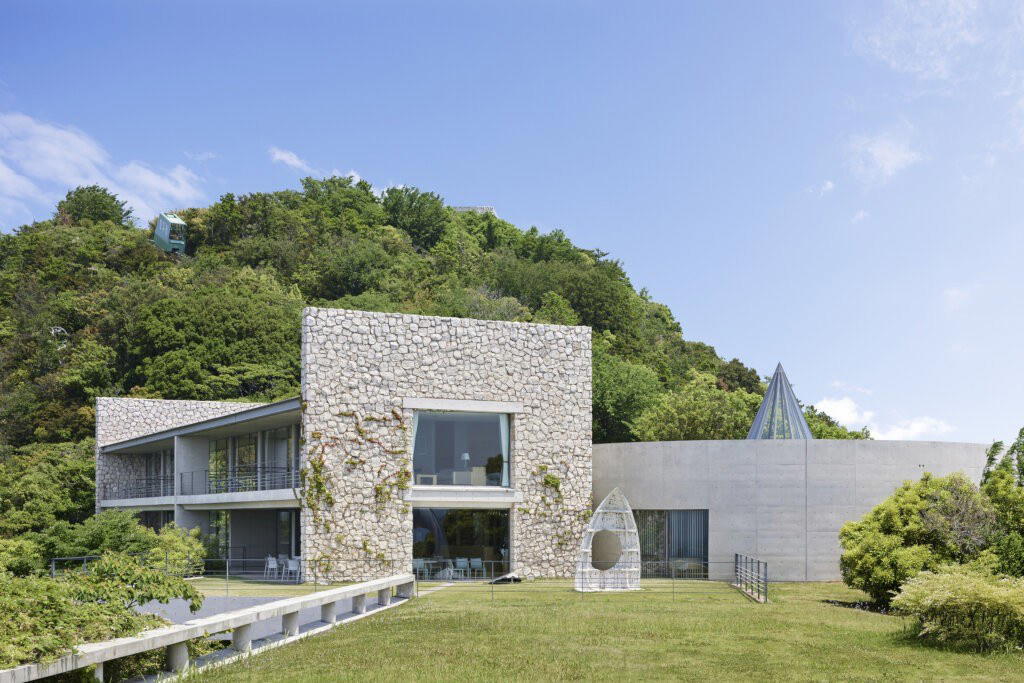
Where the Building Is the Collection
Japan's premium hotel category has bifurcated sharply over the past decade. On one side sit the international flagships Bvlgari Hotel Tokyo in Tokyo and the urban Aman properties, designed for city-centre convenience and a known luxury grammar. On the other side sits a smaller, harder-to-categorise cohort: properties where the physical experience of the building is itself the argument for the stay. Benesse House belongs to the second group, and occupies an extreme position within it. The hotel is not adjacent to art or inspired by art. It is, structurally and operationally, a museum that also happens to contain guest rooms.
The island of Naoshima, in the Seto Inland Sea between Honshu and Shikoku, was a working industrial site before the Fukutake family's Benesse Corporation began a decades-long transformation of its southern half. The project brought Pritzker Prize-winning architect Tadao Ando into a sustained collaboration that produced not just Benesse House but a network of art spaces, landscape interventions, and site-specific installations across the island. What guests arrive into, then, is not a resort that has acquired some art, but an art project that has built accommodation into its logic. The distinction matters when you are deciding how to allocate a night in Japan's crowded premium market.
Four Buildings, Four Spatial Arguments
Ando's architecture is most legible in Japan when read against the tradition it is in quiet conversation with: the discipline of ma, the considered use of negative space, and the idea that a building's relationship to natural light is as important as its physical structure. At Benesse House, that language is distributed across four architecturally distinct buildings, each making a different proposition to the guest.
The Museum building places guests as close to the permanent collection as the programme allows, with original works from the museum's holdings in both the rooms and the shared spaces. For guests who came specifically to be with the art after visitor hours, this is the operative choice. The Oval building is the most formally adventurous: it centres on a dark reflective pool carved into a hillside, with an elliptical open roof that frames a moving patch of sky. The geometry functions as a device for attention, directing the eye upward through a framed aperture in a way that recalls James Turrell's sky spaces, several of which are present elsewhere on the island. The Park building is the most conventionally hotel-like of the four, with a restaurant and retail spaces alongside rooms. The Beach building sits directly at the waterline, with unobstructed views across the Inland Sea, the kind of relationship to horizon that more elaborately landscaped resorts on larger islands rarely achieve.
The 65 rooms across all four buildings share an aesthetic sensibility that reads as Western in format but Japanese in its economy of means. Blond timber, picture windows, and restrained modern furnishings appear in each, and the views, to island vegetation or open water, do significant work. The rooms do not feel sparse so much as precisely edited, which is the point. In the context of Japanese luxury accommodation, that approach places Benesse House in a different register from the kaiseki-ryokan model represented by properties like Gora Kadan in Hakone or Asaba in Izu. Those properties work through tradition and ceremony. Benesse House works through visual discipline and sustained artistic encounter.
The Inland Sea as Context, Not Backdrop
Remote luxury in Japan typically takes one of two forms: the onsen destination, where geography is medicinal and the draw is thermal waters and kaiseki dining, or the island retreat, where seclusion is the primary offer. Properties like Amanemu in Mie or ENOWA Yufu in Yufu belong to the first category. Naoshima belongs to neither, which is part of what makes it difficult to place in any standard hotel taxonomy.
The island is small enough that the Benesse House compound is a meaningful proportion of what there is to do on it, but it is not entirely self-contained. A network of art houses and public installations extends into the island's older residential quarter, operated by the same foundation. Guests who leave the hotel find that the curatorial vision extends into the village streets, where historic homes have been redesigned around site-specific commissions. This is unusual even by the standards of Japan's more considered resort destinations: the hotel and its surrounding environment have been shaped by the same institutional hand. Our full Naoshima restaurants guide covers what else the island offers beyond the Benesse properties.
Getting to Naoshima requires a ferry from either Uno Port, near Okayama, or Takamatsu, in Kagawa Prefecture. Neither journey is long, but the transit has the effect of separating the island from the mainland's pace in a way that a road trip does not. The physical act of crossing water to reach the hotel is not incidental; it functions as a threshold that the architecture then continues. For guests considering the logistics alongside other Japanese remote-luxury options, the comparison point is not Hakone or Kyoto but rather a property like Azumi Setoda in Onomichi, which similarly uses the Inland Sea as its geographic frame.
Art at Scale, and What That Costs
The economics of Benesse House are instructive. Pricing is available on request only, with rates beginning at JPY 135,000 per night. For context, that opening price positions it within the upper range of Japan's premium ryokan tier, occupied by properties like Nishimuraya Honkan in Kinosaki-cho or Araya Totoan in Kaga, but the offer is structurally different. You are not paying a premium for heightened service choreography or for the materials of a centuries-old inn. You are paying, in part, for after-hours access to a collection that includes five Monet water lily works set within a garden designed in reference to Giverny, and for site-specific installations by James Turrell, among others. The Michelin Guide awarded Benesse House two Keys in 2024, a recognition that sits within the guide's relatively recent hotel assessment program and signals quality in hospitality rather than cuisine alone.
For further reading on Japan's premium hotel range, the HOTEL THE MITSUI KYOTO in Kyoto and Zaborin in Kutchan represent different points on the spectrum between architectural ambition and traditional hospitality. Beyond Japan, the closest international parallel in terms of the integration of architecture, art, and hotel function might be found at a property like Aman Venice in Venice, where the building itself carries historical weight that the hotel programme is arranged around, though the curatorial intent at Benesse House is more deliberate and more recent.
The amenities at Benesse House extend to several restaurants, a spa, and a bathhouse that doubles as an art space, though the specifics of dining format and programming are best confirmed directly through the hotel, given that rates and availability are handled individually. Reservations for Benesse House through EP Club require contact with the customer service team, as the property requests additional guest information before confirming bookings.
Where to Place This in a Japan Itinerary
The decision to go to Naoshima is most logically made in the context of a broader western Japan itinerary. Okayama, the nearest Shinkansen hub, is thirty minutes from Uno Port; Takamatsu on Shikoku is also well-connected. Both provide onward routes to Hiroshima, Kyoto, and Osaka. Properties in the adjacent region worth considering alongside Benesse House include Sekitei in Hatsukaichi-shi and, for those extending into Kyushu, Bettei Otozure in Nagato. For Naoshima specifically, the island's other accommodation option is Naoshima Ryokan Roka, which offers a more traditional format and represents the only meaningful local alternative to Benesse House for guests who want to stay overnight rather than day-trip.
Timing matters. The island is most crowded during Japan's Golden Week holidays and in late autumn, when domestic tourism peaks across western Japan. Spring shoulder periods and autumn weekdays offer quieter access to both the outdoor installations and the museum spaces. Given the ferry dependency and the relatively limited room count across four buildings, booking well ahead, particularly for the Oval and Museum buildings, is the practical baseline. The property does not publish availability in the conventional sense; the request-only pricing model reflects a booking process calibrated for a specific guest rather than a volume market.
At-a-Glance Comparison
Comparable venues nearby, for context on price, style, and recognition.
| Venue | Cuisine | Price | Awards | Notes |
|---|---|---|---|---|
| Benesse HouseThis venue (the venue you are viewing) | Contemporary art museum-hotel complex by Tadao Ando across four distinctive buildings | $750–1,000 | 2 Michelin Keys | Not listed |
| Naoshima Ryokan Roka | Modern Japanese ryokan blending contemporary art, local materials, and island serenity. | Not listed | 1 Michelin Key | Honmura |
| Oyado The Earth | Luxury Japanese onsen ryokan blending tradition with modern comfort | $500–750 | 1 Michelin Key · World Luxury Hotel Awards WLHA Continent Winner | Ijika-cho |
| SETOUCHI RETREAT by Onko Chishin | Small luxury all-suite hotel designed by Tadao Ando | Not listed | 1 Michelin Key · Design Hotels Member | Yanaidanimachi |
| TIAD, Autograph Collection | Contemporary luxury boutique hotel with Biophilia Nest design philosophy integrating natural elements and Japanese cultural aesthetics into modern architecture. | $1–100 | 1 Michelin Key | Naka |
| The Hiramatsu Hotels & Resorts Kashikojima | European ryokan with simple modern decor reflecting sacred natural location | $750–1,000 | 1 Michelin Key | Kashikojima |
Recognition history
Dated appearances from independent guides and award organizations, with the underlying list record or original source where available.
Michelin 2 Keys
Michelin
Full recognition history (3 entries)
Michelin 2 Keys
Michelin
Michelin 2 Keys
Michelin
Continue exploring
More in Naoshima
Hotels in Naoshima
All hotels in Naoshima →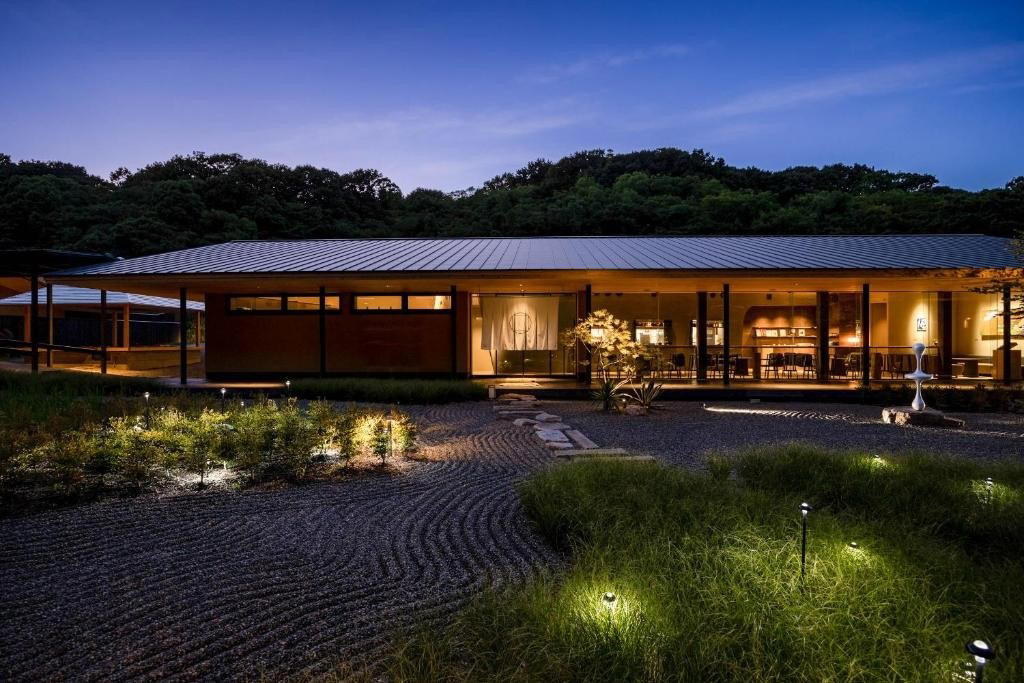
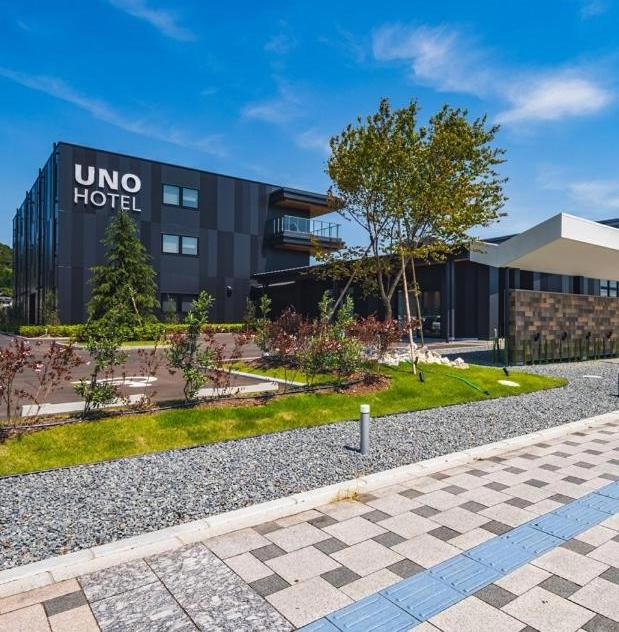
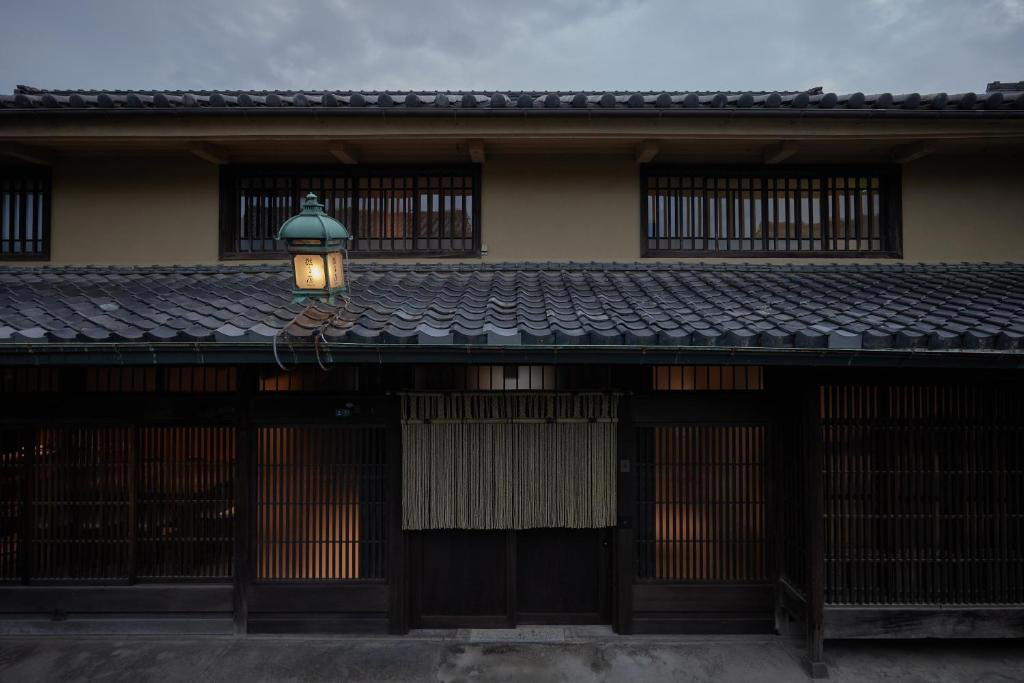
Bars in Naoshima
Browse all →
Details
- Modern
- Scenic
- Elegant
- Minimalist
- Sophisticated
- Well Known
- Romantic Getaway
- Wellness Retreat
- Anniversary
- Weekend Escape
- Design Destination
- Panoramic View
- Terrace
- Wi Fi
- Spa
- Fitness Center
- Room Service
- Concierge
- Restaurant
- Bar
- Waterfront
- Garden
- Mountain
Minimalist with natural light flooding through large windows, offering serene views of the sea and art, creating a tranquil yet sophisticated atmosphere.