Sekitei

A Michelin 2-Key ryokan on a terraced hillside above Miyajima's floating torii gate, Sekitei offers 12 villa-style rooms set within layered gardens overlooking the Inland Sea. Forty minutes from Hiroshima, the property sits at the convergence of onsen culture and Seto Naikai scenery, operating at rates from ¥38,500 per night through reservation-only booking.
Pearl is the En Primeur Club membership app — saves, bookings, and concierge access live there. Same editors, same standards.
- Address
- 3-chōme-5-27 Miyahamaonsen, Hatsukaichi, Hiroshima 739-0454
- Phone
- +81 829-55-0601
- Website
- sekitei.to
- Directions
- Get directions
 Saves & bookings on Pearl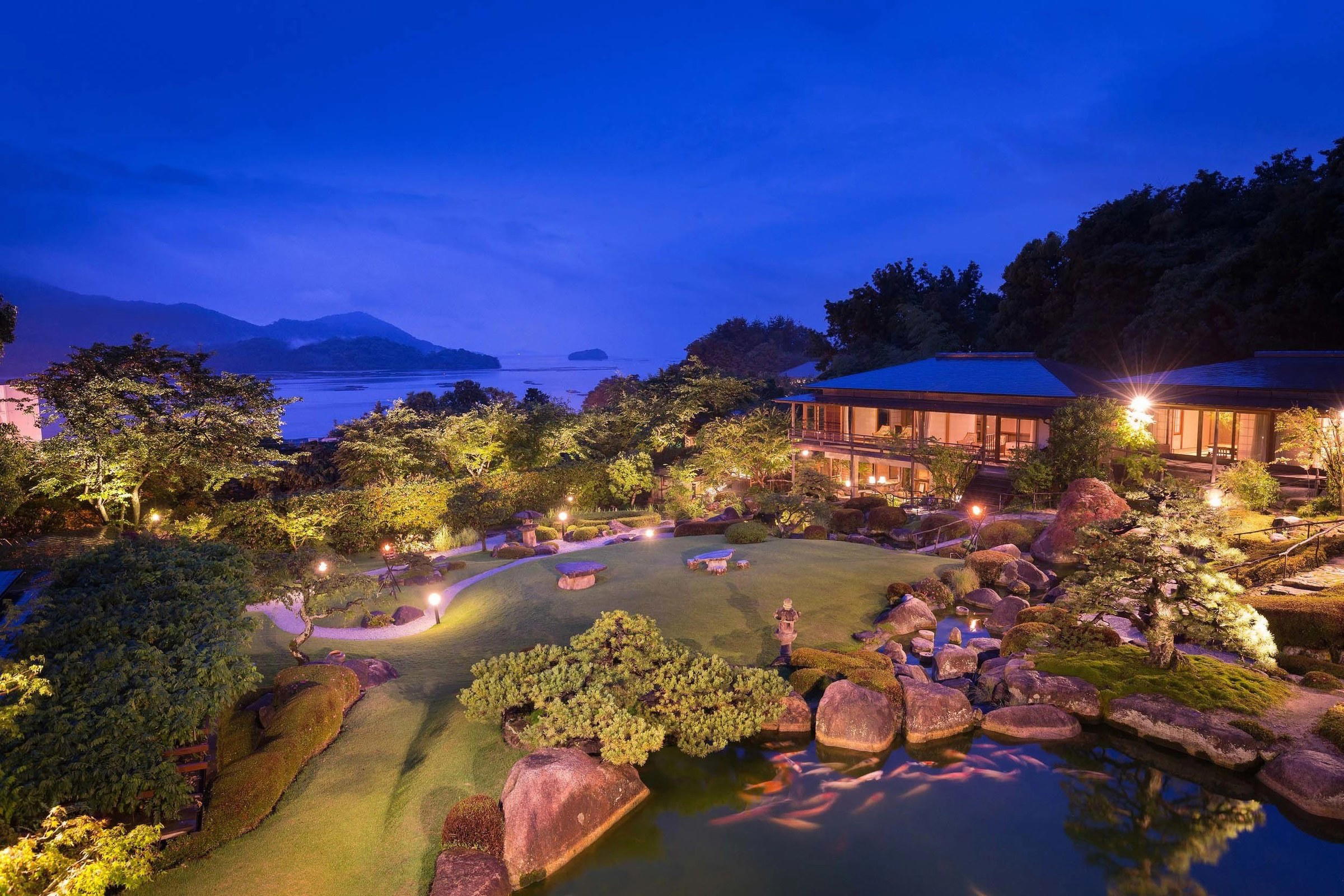
Where the Inland Sea Becomes the View
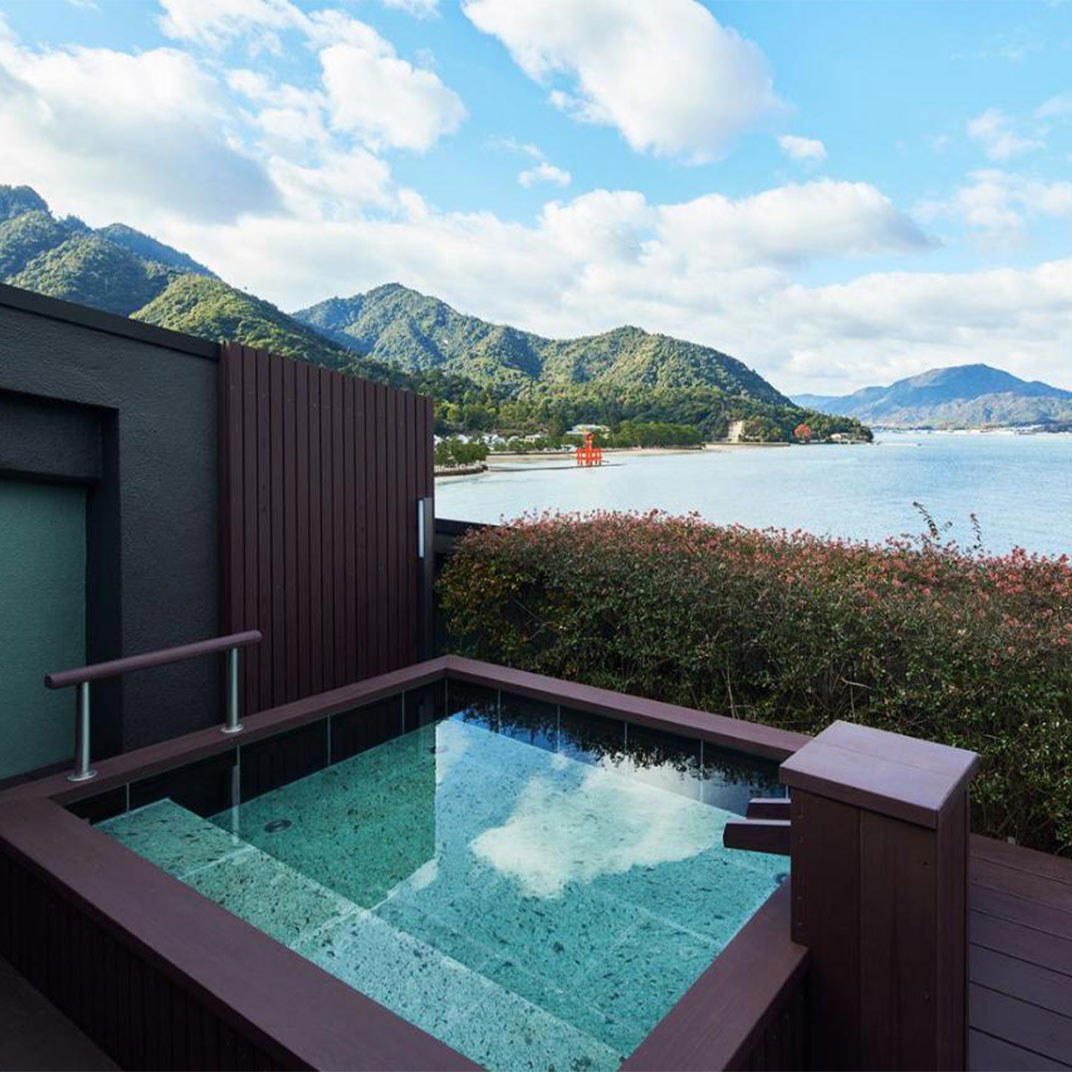
The approach to Miyajima sets a particular register before you even arrive. The famous torii gate of Itsukushima Shrine rises from the water between the mainland and the island, its vermilion lacquer reading differently at every hour, orange at midday, near-black at dusk, briefly luminous in the early morning. It is among the more reproduced images in Japan, which makes the fact that Sekitei sits directly above it, on a hillside in Miyahama Onsen, a piece of genuinely useful geography. The property earns its position: a Michelin 2 Keys designation in 2024 places it among a small cohort of Japanese ryokan recognized not merely for hospitality delivery but for the integration of setting, architecture, and experience as a unified proposition.
Architecture as Argument
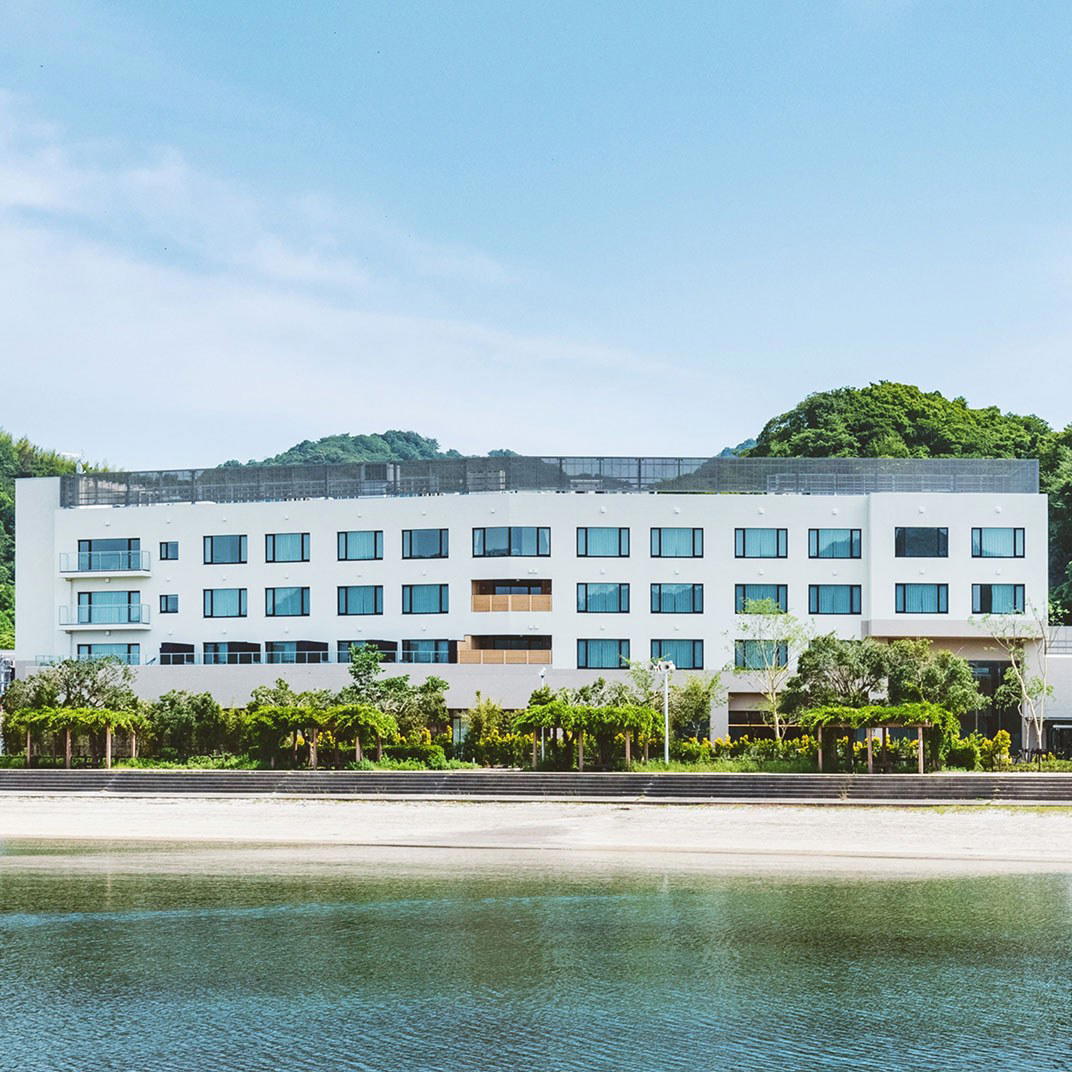
The Japanese ryokan tradition has always made an argument through architecture: that the built environment, the garden, and the body's relationship to water can be arranged to produce a specific quality of attention. Sekitei makes that argument with particular conviction. The 12 rooms are structured as detached villas rather than corridor-accessed hotel rooms, each one cascading down a terraced hillside in a sequence that creates privacy without isolation. The effect is residential in the leading sense, not the anonymous luxury of a resort room, but something closer to a borrowed house on a hillside that happens to have been designed with the precision of a tea garden.
Water appears throughout in deliberate repetition: ponds, hot springs, plunge pools, and the Inland Sea visible below. This is not accidental. In traditional Japanese garden design, water carries symbolic and spatial weight simultaneously, marking transitions between states, inside and outside, hot and cool, active and still. At Sekitei, the layering of these water elements across the terraced site creates a sequence of thresholds rather than a single destination. The property's aesthetic sits between the historical and the contemporary without resolving cleanly into either, which places it in a similar design register to properties like Benesse House in Naoshima, where the relationship between site-specific design and natural context does most of the editorial work.
This detached-villa format has become one of the dominant structural models among Japan's serious ryokan properties. Zaborin in Kutchan applies a similar logic in a Hokkaido forest setting, while Gora Kadan in Hakone works its hillside geometry against a backdrop of volcanic terrain. What distinguishes Sekitei is the specificity of its view: no other property in Japan's premium ryokan tier places guests directly above the Miyajima torii gate with this degree of proximity and hillside height. That sightline is structural, built into the orientation of the villas from the ground up.
The Onsen Context
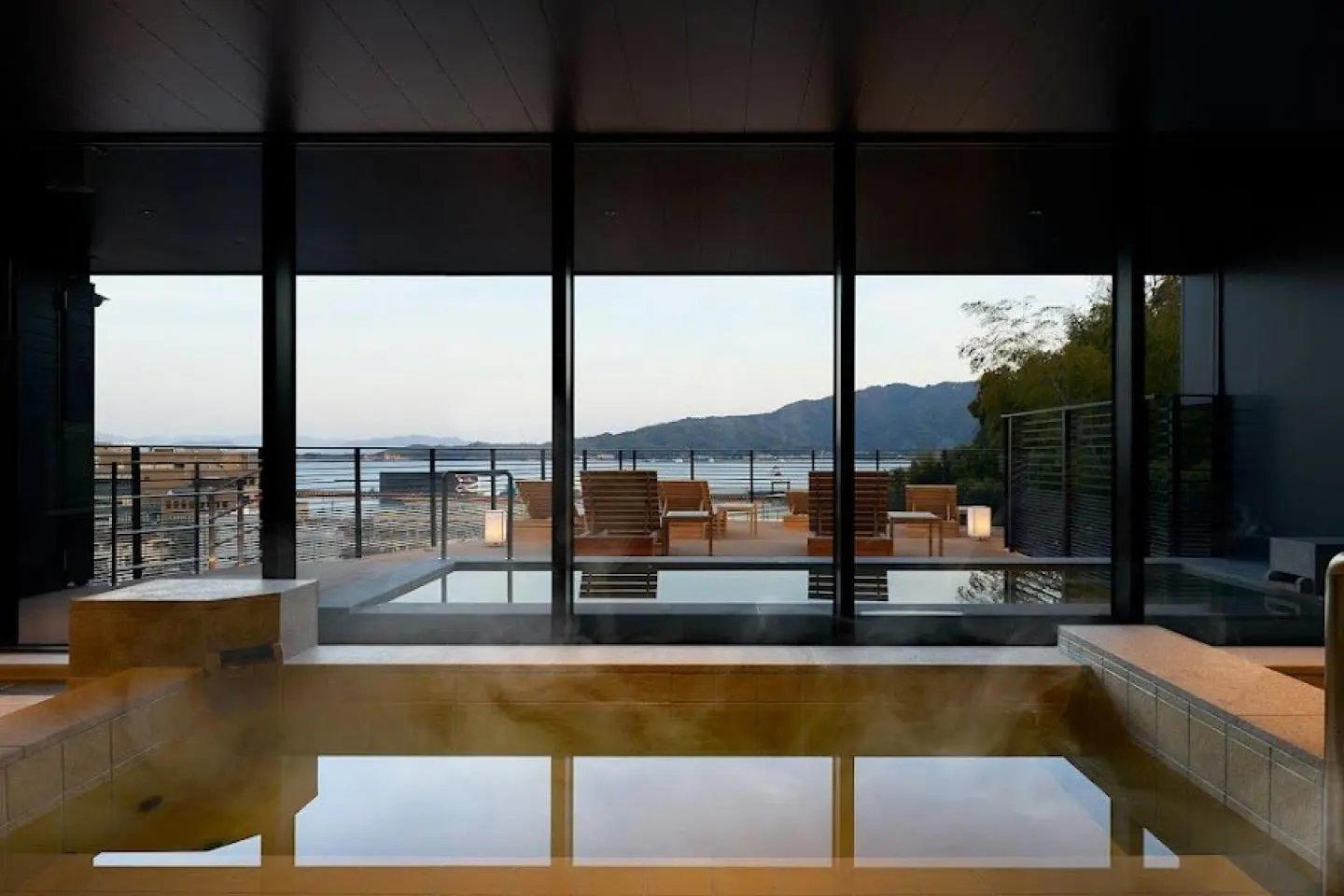
Miyahama Onsen is one of the smaller, more curated hot-spring districts in Hiroshima Prefecture. It lacks the volume tourism of Beppu or the international profile of Hakone's onsen circuit, which means the springs here operate in a quieter register, suited to the ryokan format, where the bath is a private or near-private experience rather than a communal public facility. Properties like Amanemu in Mie have built their entire proposition around onsen access at this scale and privacy level; at Sekitei, the hot springs anchor the programme without overwhelming it. The plunge pools in individual villas reinforce the sense that immersion here is a personal rather than a collective act.
Across Japan's premium onsen-ryokan segment, the competition is substantial. Asaba in Izu, Nishimuraya Honkan in Kinosaki, and Araya Totoan in Kaga each represent a different regional tradition within the same broad category. What differentiates Sekitei is the combination of view, onsen access, and garden architecture rather than any single element in isolation.
Getting There and Booking
Sekitei sits at 3-chōme-5-27 Miyahamaonsen, Hatsukaichi, Hiroshima 739-0454. The journey from Hiroshima is forty minutes by car, or thirty minutes by train from JR Hiroshima Station to Onoura, followed by a five-minute complimentary transfer arranged by the property. The train option is logistically clean and puts the final approach, the water, the gate, the hillside, in immediate view before arrival. Reservations are essential, and rates start from ¥38,500 per night.
For travellers building a broader Hiroshima-region itinerary, Azumi Setoda in Onomichi represents a logical companion stop along the Seto Naikai coast, a different architectural register on the same Inland Sea, oriented more toward the Shimanami Kaidō cycling route than the shrine circuit.
Pace and Programme
The ryokan format self-selects for a particular kind of guest and a particular pace of travel. There is no nightlife infrastructure at Miyahama Onsen in any meaningful sense, and the property does not compensate for that with programmed activity. The rhythm here is the traditional one: bath, meal, garden, sleep, bath again. Local sake from Hiroshima Prefecture's production area is a natural complement to that rhythm, the region produces clean, dry sake suited to the seafood that defines much of the Seto Naikai table. The gardens at Sekitei function as an extension of the interior rather than a separate attraction: an evening stroll among the ponds and lanterns is a reasonable interpretation of what a good evening here looks like.
Properties like ENOWA Yufu in Yufu and Bettei Otozure in Nagato operate on the same premise: the environment does the work, and the guest adjusts their pace accordingly. At Sekitei, the Inland Sea view from a hillside villa does considerable heavy lifting in that regard. The floating torii gate at Itsukushima changes character with the tide, which means the view itself has a programme, something that no scheduled activity can quite replicate.
Travellers more familiar with Japan's urban luxury tier, arriving via Bvlgari Hotel Tokyo or HOTEL THE MITSUI KYOTO, will find the register at Sekitei deliberately different: smaller, quieter, and more dependent on the guest's willingness to slow down. That is the point of the ryokan format, and Sekitei executes it from a site that few comparable properties in Japan can match for sheer locational drama.
Planning Notes
Twelve rooms across a hillside property means Sekitei operates closer to a private residence than a hotel in terms of capacity and atmosphere. Weekend dates move quickly, contact EP Club's customer service team early for confirmed availability. The complimentary transfer from Onoura Station makes the train approach from Hiroshima the more composed option for first-time visitors, allowing the Miyajima coastline to introduce the property before you arrive at the gate. Fufu Kawaguchiko, Fufu Nikko, Beniya Kofuyuden in Awara, Bettei Senjuan in Minakami, BYAKU Narai in Narai, Atami Izusan Karaku, Halekulani Okinawa, Jusandi in Ishigaki, and ANA InterContinental Beppu Resort & Spa.
How It Stacks Up
Comparable venues nearby, for context on price, style, and recognition.
| Venue | Cuisine | Price | Awards | Notes |
|---|---|---|---|---|
| SekiteiThis venue — the venue you are viewing | Traditional Japanese ryokan with modern residential accents on a hillside | $$$$ | Michelin 2 Key | Not listed |
| ENOWA Yufu | Modern botanical retreat with striking architecture inviting nature indoors | $$$$ | Michelin 2 Key | Yufuincho Kawakami |
| The Hiramatsu Karuizawa Miyota | Contemporary luxury resort blending Japanese hospitality with European design sensibilities, emphasizing natural materials and forest integration. | $$$$ | Michelin 2 Key | Miyota |
| Onyado Chikurintei | Traditional Japanese ryokan deeply integrated with surrounding nature and gardens | $$$$ | Michelin 2 Key | Takeo |
| Kamenoi Besso | Historic luxury ryokan with restored traditional cottages and main villa. | $$$$ | Michelin 2 Key | Yufuin |
| Fufu Nikko | Small luxury resort inheriting stylistic beauty of Japan with modern architecture and private setting. | $$$$ | Michelin 2 Key | Tamozawa |
Recognition history
Dated appearances from independent guides and award organizations, with the underlying list record or original source where available.
Michelin 2 Keys
Michelin
Michelin 2 Keys
Michelin
Continue exploring
More in Hatsukaichi-shi
Hotels in Hatsukaichi-shi
Browse all →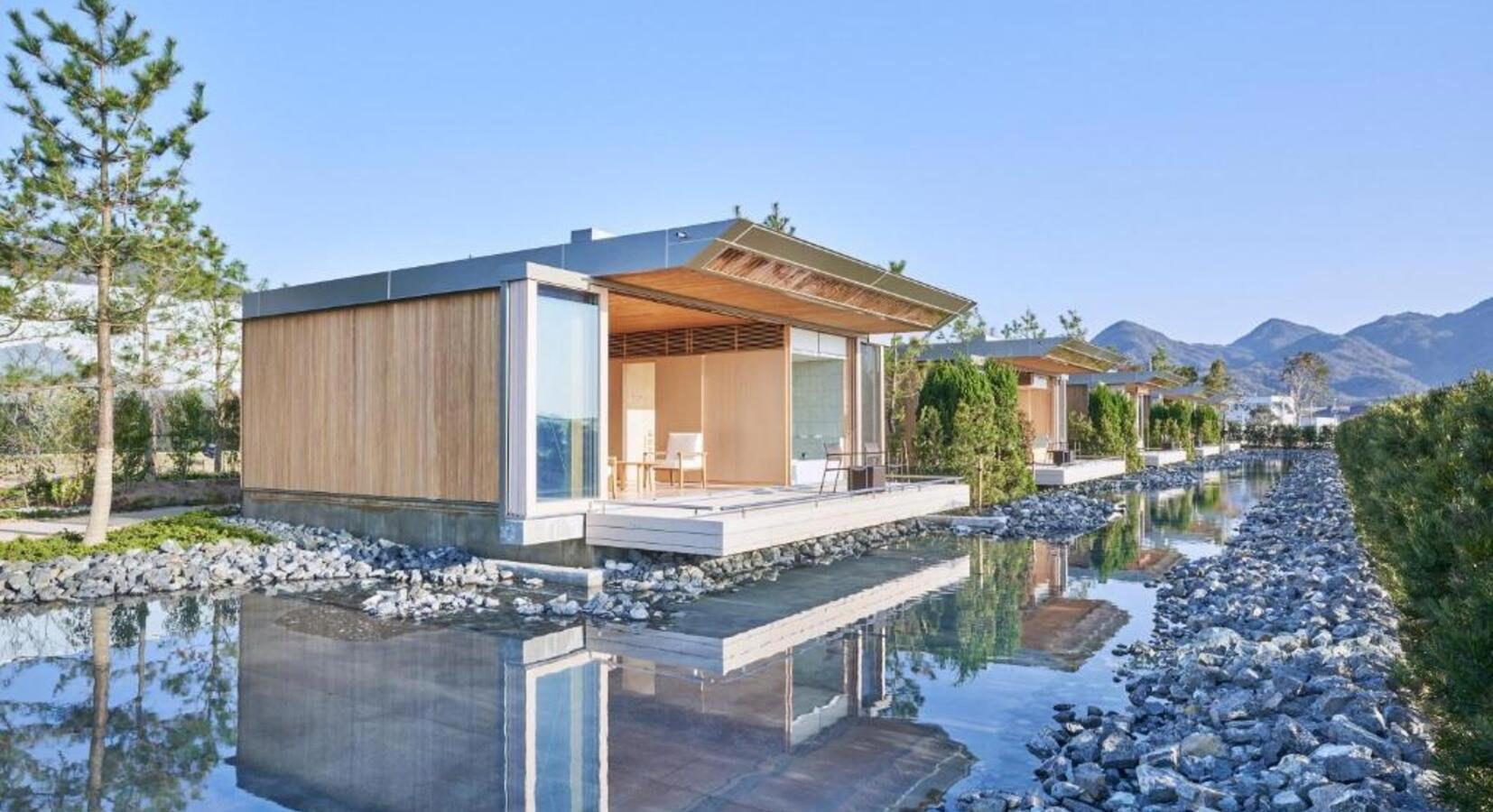
Bars in Hatsukaichi-shi
Browse all →
At a Glance
- Quiet
- Elegant
- Scenic
- Classic
- Intimate
- Sophisticated
- Romantic Getaway
- Honeymoon
- Anniversary
- Wellness Retreat
- Garden
- Panoramic View
- Wi Fi
- Spa
- Massage
- Room Service
- Garden
- Concierge
- Garden
- Mountain
- Wi Fi
- Spa
- Massage
- Room Service
- Garden
- Concierge
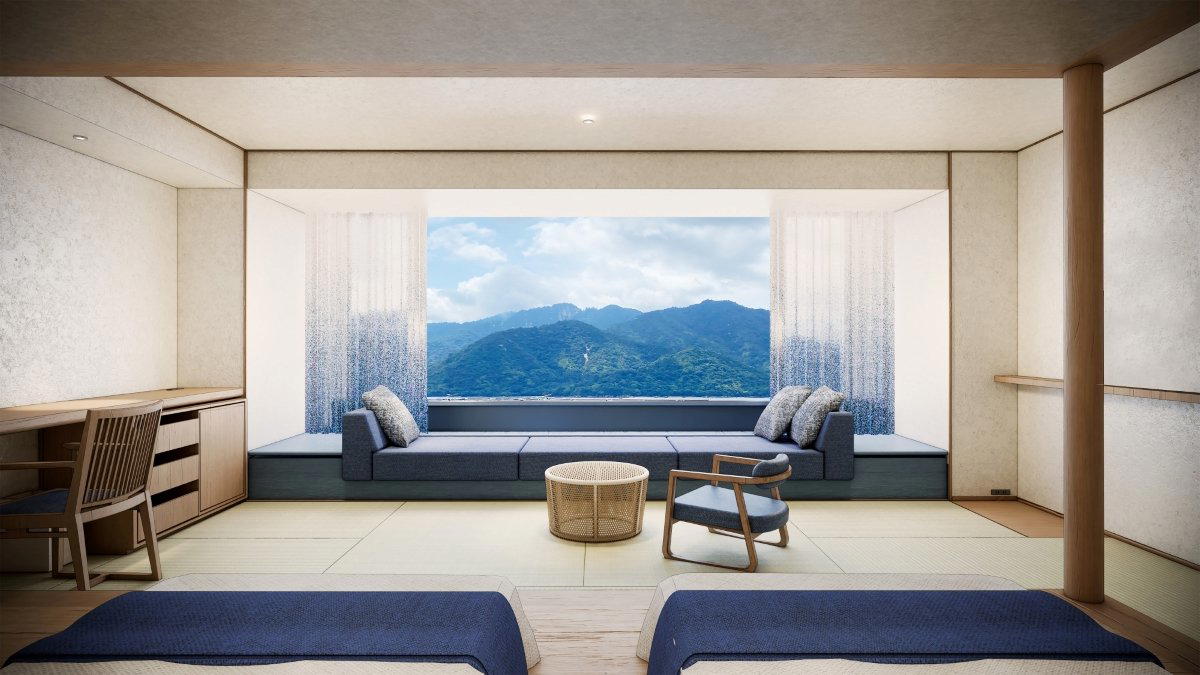
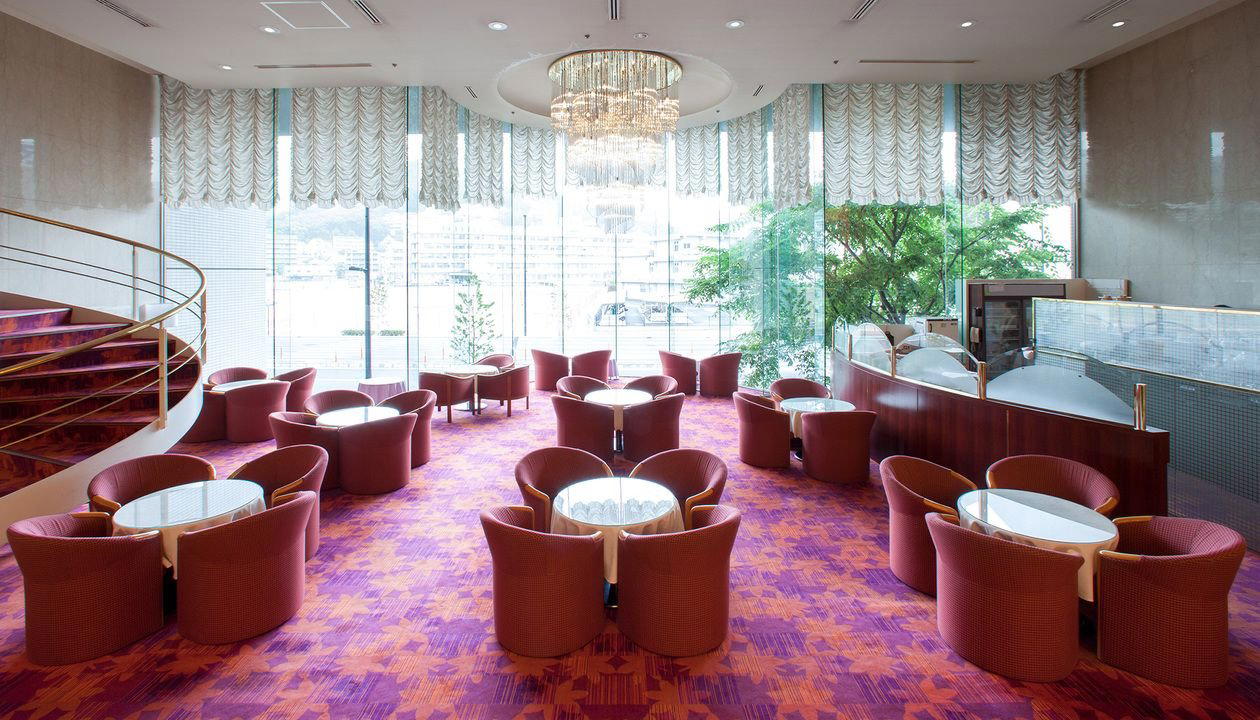
Zen-like and residential with traditional Japanese elements, soft natural lighting from garden and sea views, tatami floors, and a serene hot spring atmosphere.