



3 Michelin Keys · La Liste Top Hotels · Relais Chateaux Award
A ten-generation, family-run ryokan set along the Katsura River in Shuzenji, Asaba occupies a former Buddhist temple site with 530 years of unbroken history. Twelve tatami rooms face a central pond where a floating Noh stage hosts traditional performances. Recognised by Michelin with 2 Keys (2024) and La Liste Top Hotels 2026 with 93 points, rates begin from US$1,316 per night.

Pearl is the En Primeur Club membership app, where members save venues, book tables and use the concierge.
Where the Ryokan Tradition Has Its Longest Roots
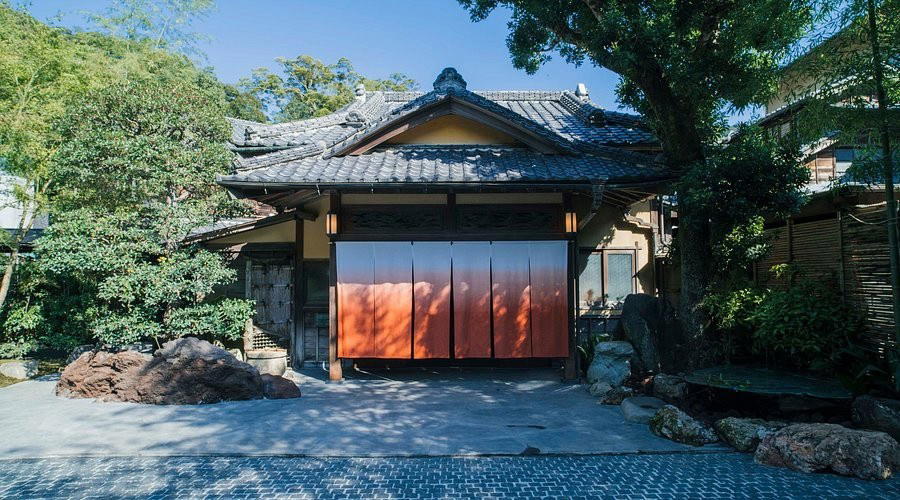
The approach to Asaba along the Katsura River in Shuzenji tells you, before you have crossed the threshold, that you are somewhere operating on a different temporal scale than most luxury accommodation. Shuzenji itself is one of the Izu Peninsula's oldest hot spring towns, a place where the rhythm of a stay is measured in baths and meals rather than itineraries. Among the properties that line its forested valleys, Asaba occupies a position that its peers cannot replicate: a site with recorded history stretching back 530 years, through ten consecutive generations of the same family, on land that once functioned as a Buddhist temple complex.
That kind of continuity is rare anywhere. In the premium ryokan category across Japan, properties compete on setting, cuisine, and service depth, but lineage of this length is not something a renovation can manufacture. The result is a property that functions less as a curated retreat and more as a living document of what the ryokan form, at its most distilled, actually is. For guests calibrating their understanding of the category, Asaba is a useful reference point precisely because it has not modernised to appeal to a broader audience.
The Setting: Pond, Bamboo, and a Floating Stage
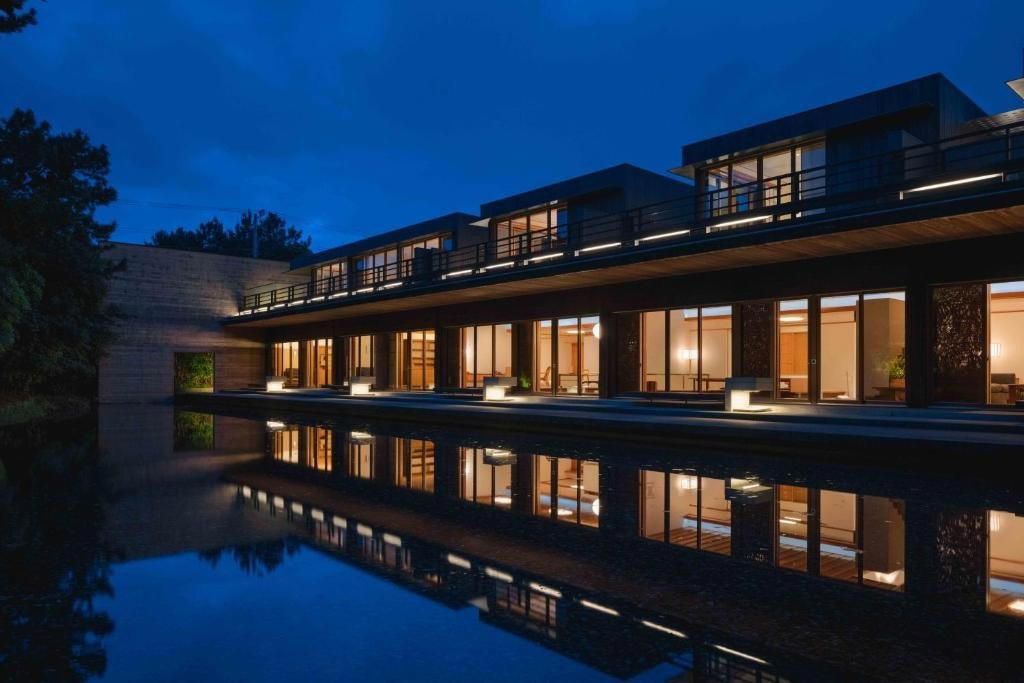
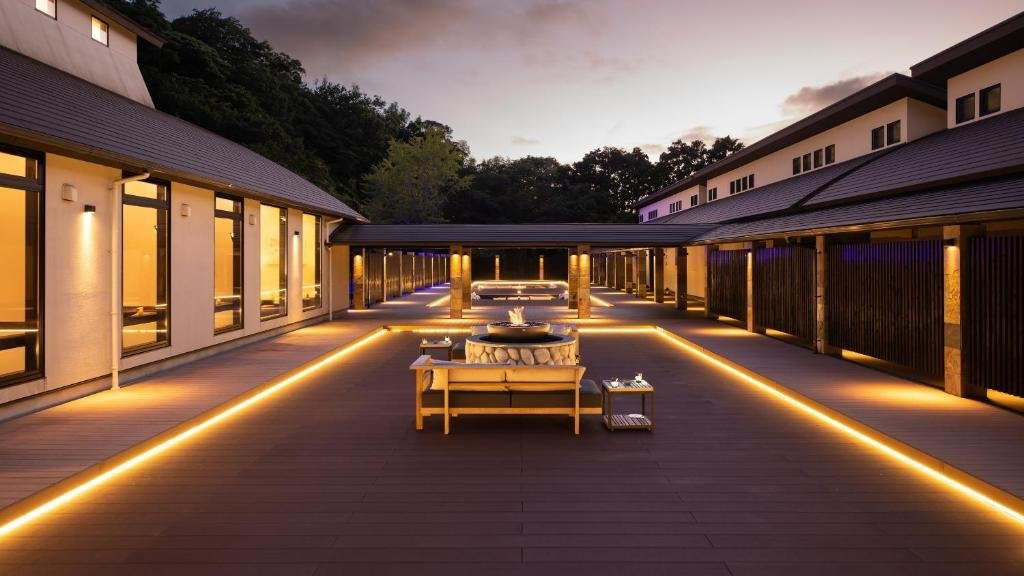
The physical arrangement of Asaba organises itself around a central pond rather than outward views of forest or mountain. This is a deliberate inversion of the typical luxury-resort logic, where rooms are positioned to maximise private panoramas. Here, all twelve rooms face inward toward the courtyard, because the courtyard contains something worth facing: a floating Noh stage positioned at the centre of the pond, connected to the inn by a covered bridge, and framed by bamboo. Traditional Noh performances are staged here regularly, and the theatre is not decorative. The stage is functional and historic, and the performances belong to the same ceremonial tradition that has been practised in Japan for centuries.
The rooms are tatami in format, with minimal furniture, and they read as spare rather than austere. The distinction matters because austerity implies something withheld; sparseness here is the aesthetic argument. Twelve rooms across the property means the guest-to-space ratio remains low, and the atmosphere is closer to a private house than a hotel in any conventional sense. The pond-facing orientation means that from most rooms, the view across the water to the stage anchors the day in a way that a forest panorama would not.
The Dining Programme: Kaiseki Without Concession
Premium ryokan category in Japan has in recent years split between properties that maintain strict kaiseki traditions and those that introduce contemporary technique, international ingredients, or tasting-menu formats borrowed from the restaurant world. Asaba sits firmly in the first group. The cuisine is described without qualification as traditional, and that position is held consistently: nothing modern has been introduced as a concession to contemporary dining preferences.
Traditional kaiseki in this context means a multi-course seasonal meal structured around the produce and preparations specific to the Izu and wider Shizuoka region. The Izu Peninsula is positioned between the Pacific coast and mountainous interior, which means access to fresh seafood from Suruga Bay alongside mountain vegetables and river fish. A kaiseki programme at this latitude draws on both, and the discipline of the format requires that each course respond to the season precisely, not approximately. For guests whose primary interest is the dining component, this is the most relevant framing: Asaba's cuisine is not a supplementary amenity but the central expression of what a stay at a property of this lineage means.
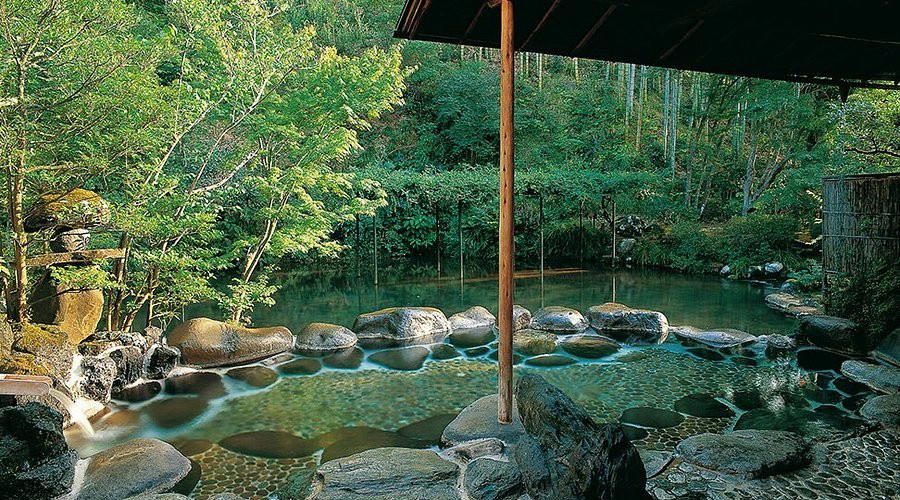
The bathing programme follows the same logic of non-deviation from tradition. Options include semi-public baths, private in-room tubs, and a hot spring pool separated from the main pond by a natural ring of rocks. The onsen water here draws from Shuzenji's thermal sources, which have been in continuous use since the Heian period.
Recognition and Positioning in the Premium Ryokan Tier
Asaba's position in the premium ryokan tier is substantiated by two significant trust signals. Michelin awarded it 3 Keys in 2025, a designation that applies to hotels rather than restaurants and assesses the quality of the overall hospitality experience. La Liste included Asaba in its Leading Hotels ranking for 2026, scoring it 93 points. Tatler Asia placed it among the Leading Hotels of the Asia-Pacific in 2025. These three recognitions come from different evaluative traditions and different audiences, but they converge on the same property, which indicates that Asaba performs consistently across the criteria each list prioritises.
Rates begin from US$1,316 per night, which places Asaba at the upper end of Japan's ryokan pricing. For comparison, this is the tier occupied by properties such as Gora Kadan in Hakone, Araya Totoan in Kaga, and Nishimuraya Honkan in Kinosaki-cho, all of which carry comparable historical depth and maintain kaiseki programmes at a similar standard. Within Izu itself, the competitive set includes properties like Arcana Izu, Ochiairo, and Fugaku Gunjo, though these operate with different architectural identities and guest experiences. See our full Izu restaurants and hotels guide for broader context on the peninsula's hospitality offering.
Guests who prioritise design-led minimalism alongside a cultural programme might also consider Zaborin in Hokkaido or Benesse House in Naoshima, both of which operate at similar price points but with very different aesthetic philosophies. For those whose travel circuit extends to Japan's urban properties, HOTEL THE MITSUI KYOTO in Kyoto and Bvlgari Hotel Tokyo occupy the upper bracket in their respective cities with a different register of luxury entirely.
For onsen-focused alternatives elsewhere in Japan, Amanemu in Mie, ENOWA Yufu in Yufu, and ANA InterContinental Beppu Resort and Spa each take the thermal bathing tradition in a markedly different direction. Atami Izusan Karaku in Atami sits closest geographically and offers a useful point of comparison for guests deciding between the Izu coast and Shuzenji's mountain-river environment.
A Note on Children and the Villa Tenko Option
Asaba applies an age policy worth knowing before booking: the main ryokan accepts children aged seven and older. The separate Villa Tenko, operated independently from the main property, accommodates families with younger children. This division is common among high-calibre traditional ryokan, where the format of communal spaces, evening performances, and kaiseki service is oriented toward an experience that very young children would find difficult to participate in and would disrupt for other guests.
Getting There
Shuzenji is 2.5 kilometres from Asaba, accessible by taxi. The journey from Tokyo follows the Shinkansen to Mishima JR station (approximately one hour), then a further 40-minute car journey to Shuzenji. Alternatively, a direct express train from Tokyo Station reaches Shuzenji in around two hours. From Mishima, the route follows National Route 136 toward Izu City; at Shuzenji, turn left at the Kokei bridge in front of Shuzenji Temple, then right, with the property 200 metres further on the left. Asaba provides a fixed-rate taxi service from both Shuzenji and Mishima stations. For those arriving by air, Tokyo Haneda is approximately 130 kilometres; Tokyo Narita is approximately 200 kilometres. The GPS coordinates are 34.9788, 138.9460.
Those building an extended Japan itinerary around ryokan culture might pair Asaba with Fufu Kawaguchiko in Fujikawaguchiko or Fufu Nikko in Nikko, both of which are reachable from Tokyo within a comparable travel window. Farther afield within Japan's ryokan circuit, Sekitei in Hatsukaichi, Beniya Kofuyuden in Awara, and Azumi Setoda in Onomichi represent different regional expressions of the form. For international comparison, Jusandi in Ishigaki and Halekulani Okinawa extend the conversation about Japanese hospitality at its premium edge into subtropical settings, while Aman New York, The Fifth Avenue Hotel, and Aman Venice offer a sense of how the ultra-low-key luxury register translates across geographies.
Budget Reality Check
Comparable venues nearby, for context on price, style, and recognition.
| Venue | Price | Awards | Notes |
|---|---|---|---|
| AsabaThis venue (the venue you are viewing) | $750–1,000 | 3 Michelin Keys · La Liste Top Hotels | Not listed |
| Ochiairo | $1,000–1,500 | 1 Michelin Key | Yugashima, Traditional sukiya-style onsen ryokan blending historical architecture with modern comforts. |
| Fugaku Gunjo | Not listed | 1 Michelin Key | Yagisawa, Traditional Japanese ryokan with modern luxury |
| Arcana Izu | Not listed | 1 Michelin Key | Yugashima, Izu Peninsula, Modern luxury auberge blending contemporary minimalism with traditional Japanese ryokan hospitality in a forest setting. |
| Gora Kadan | Not listed | 3 Michelin Keys · La Liste Top Hotels | Gora, Traditional Japanese ryokan with modern luxuries |
| Amanemu | Not listed | 3 Michelin Keys · La Liste Top Hotels | Ise-Shima National Park, Inspired by historic Minka architecture with modern luxury and natural materials blending seamlessly into the landscape. |
Recognition history
Dated appearances from independent guides and award organizations, with the underlying list record or original source where available.
Michelin 3 Keys
Michelin
La Liste Top Hotels
La Liste
Relais Chateaux Award
Relais Chateaux
Tatler Listed in Best Hotels Asia-Pacific
Tatler
Full recognition history (7 entries)
Michelin 3 Keys
Michelin
Relais Chateaux Award
Relais Chateaux
Michelin 2 Keys
Michelin
Details
- Quiet
- Elegant
- Scenic
- Intimate
- Historic
- Romantic Getaway
- Anniversary
- Wellness Retreat
- Historic Building
- Panoramic View
- Wi Fi
- Room Service
- Garden
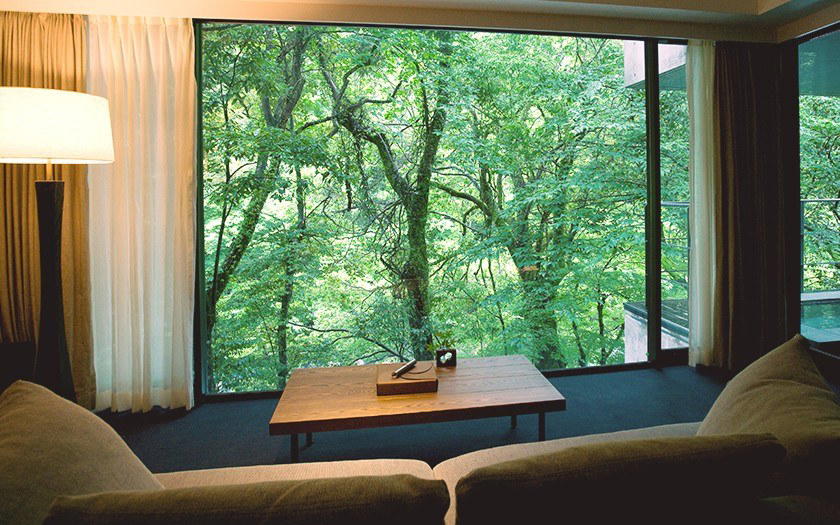
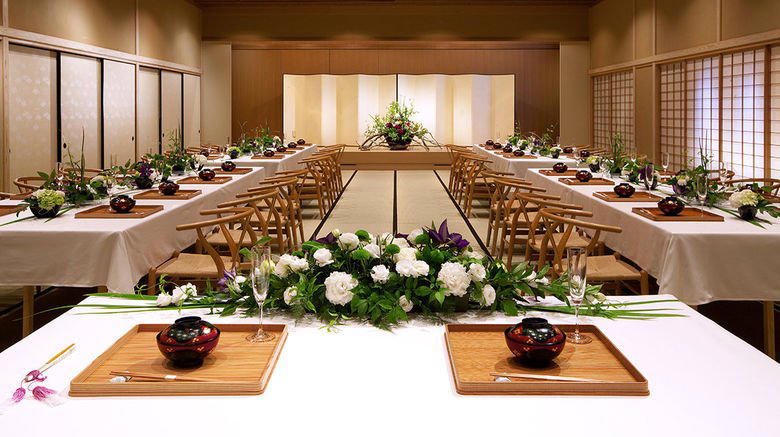
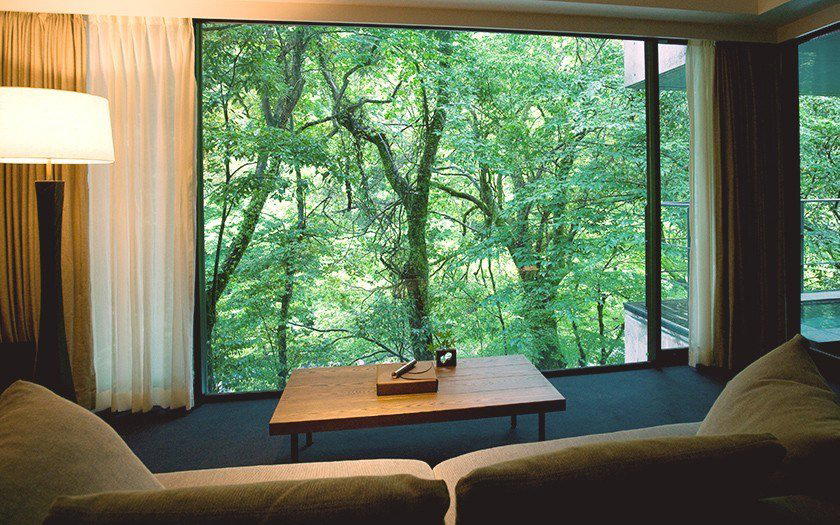
Spacious tatami rooms with plush futons, serene lighting, and tranquil atmosphere overlooking a peaceful pond and garden, creating a deeply soothing and museum-like experience.