


La Liste Top Hotels · Forbes 4-Star · Small Luxury Hotels of the World Member
A 23-key ryokan conversion in Gion, SOWAKA occupies a restored teahouse more than a century old and earns 90.5 points from La Liste's 2026 Top Hotels ranking. Rooms split between traditional garden-facing quarters in the main building and a minimalist annex with city views. The on-site restaurant La Bombance Gion, cultural programming, and a sake-focused bar complete a stay shaped by Kyoto's neighbourhood character rather than hotel convention.

Pearl is the En Primeur Club membership app, where members save venues, book tables and use the concierge.
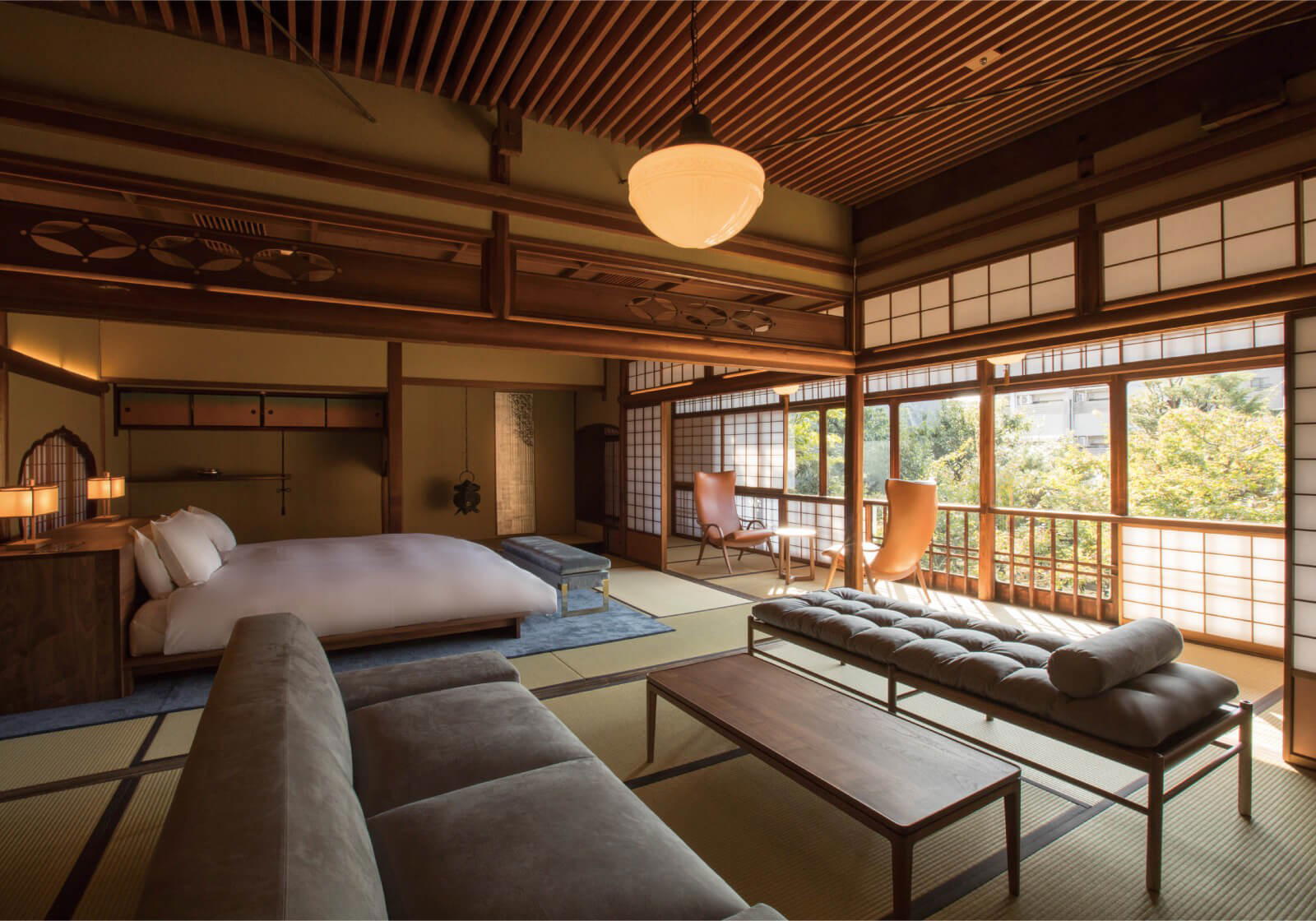
Gion's Ryokan Tradition, Revisited
Kyoto's Higashiyama district has always been where the city keeps its most concentrated version of itself: stone-paved lanes, machiya townhouses, the sound of wooden geta on cobblestones, and the occasional flash of a geisha's obi disappearing around a corner. The ryokan format belongs to this neighbourhood more naturally than almost anywhere in Japan, and the properties that thrive here tend to do so not by competing with international hotel brands on amenity breadth, but by anchoring guests inside a very specific sense of place. SOWAKA, at 480 Kiyoichō in Higashiyama Ward, sits at the serious end of that local tradition: a restored teahouse over a century old, holding 23 keys, recognised with 90.5 points by La Liste's 2026 Leading Hotels ranking.
Within Kyoto's premium accommodation market, the competitive set has widened considerably. Park Hyatt Kyoto occupies a hillside position with panoramic reach; Aman Kyoto operates through forest-garden seclusion north of the centre; Four Seasons Hotel Kyoto anchors itself near the Sanjusangendo corridor. SOWAKA's answer to all of that is neighbourhood density rather than remove: you are inside Gion, not above or beside it.
Arrival and the Physical Environment
The approach along a tree-lined path to a stone genkan threshold is the first signal that SOWAKA is calibrated differently from conventional luxury hotels. The genkan, the traditional raised threshold marking the transition between outside and inside in Japanese domestic architecture, functions here not as decorative gesture but as genuine orientation: you are crossing into a different kind of attention. The building's age reads in the materials rather than in any staged rusticity, the structure is the credential.
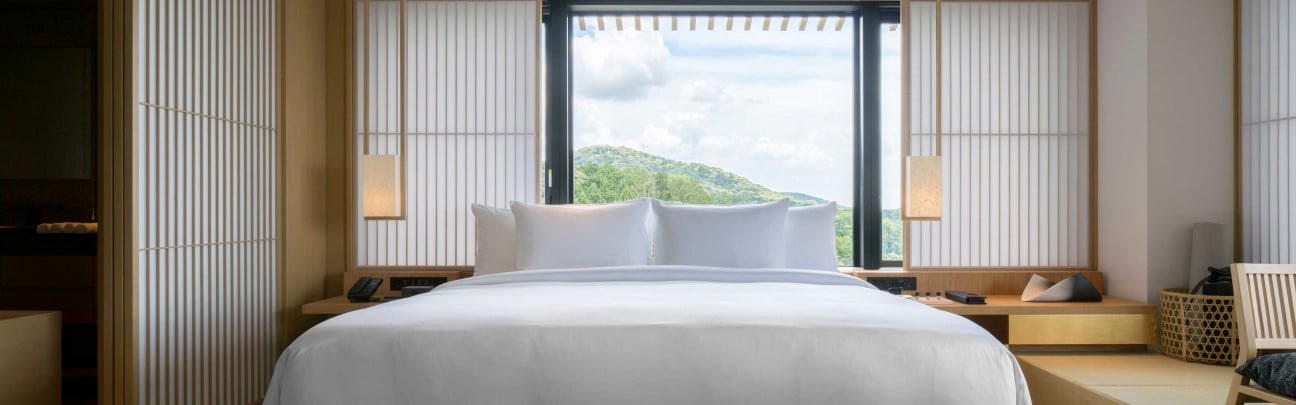
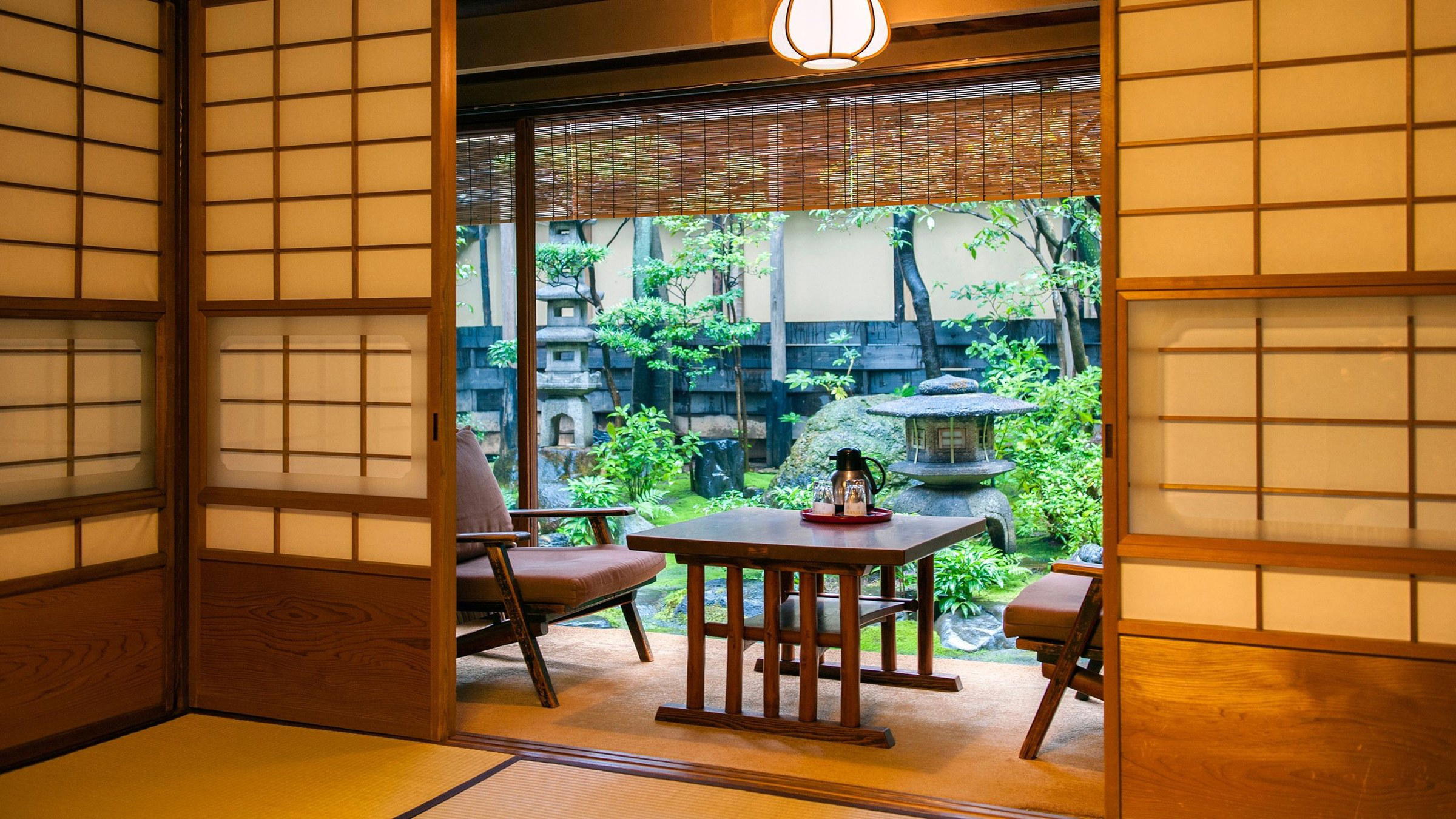
The 23 keys divide into two distinct experiences. The 11 rooms in the main building lean into traditional ryokan language: garden views, proportions shaped by the original structure, materials that carry the building's history. Rooms 103 and 104 are specifically noted for garden vistas, a point worth holding onto when booking. The separate annex holds 12 rooms in a deliberately different register: minimalist in form, city-facing, with a lower-friction relationship to contemporary travel. The split is deliberate rather than inconsistent, SOWAKA is offering two interpretations of the same place rather than one blurred average.
Service as the Organising Principle
At properties of this scale and type, staff connectivity is not a peripheral offering but the mechanism through which the stay actually functions. Japan's most accomplished boutique ryokan have long understood that the quality of cultural access a guest can reach depends almost entirely on who is facilitating it. At SOWAKA, the staff arrange private tea ceremonies, kimono fittings, behind-the-scenes temple tours, and geisha dinners, programmes that require local relationships developed over time, not just a concierge desk with a phone. This is the model that small-key Gion properties can do, and that larger international hotels in the city's other districts structurally cannot replicate at the same depth.
The range of arranging capacity matters in Gion specifically because the neighbourhood's cultural offer is almost entirely non-commercial in the standard tourist sense. The ochaya, the private teahouses where geisha entertainment actually occurs, do not take walk-ins; the leading temple access is organised rather than queued for. A property's ability to reach these experiences directly is what separates a Gion address from merely a Gion postcode.
Small material choices reinforce this orientation. Bath amenities come from Kazurasei, a Kyoto beauty company with close to 160 years of operation behind it, a sourcing decision that functions as a quiet statement about whose city this is. Mattresses are from Iwata Larkowl, another local brand. These are not decorative local-colour gestures; they are the accumulation of decisions that make a stay feel like it was assembled with geographical specificity in mind.
La Bombance Gion and the Bar
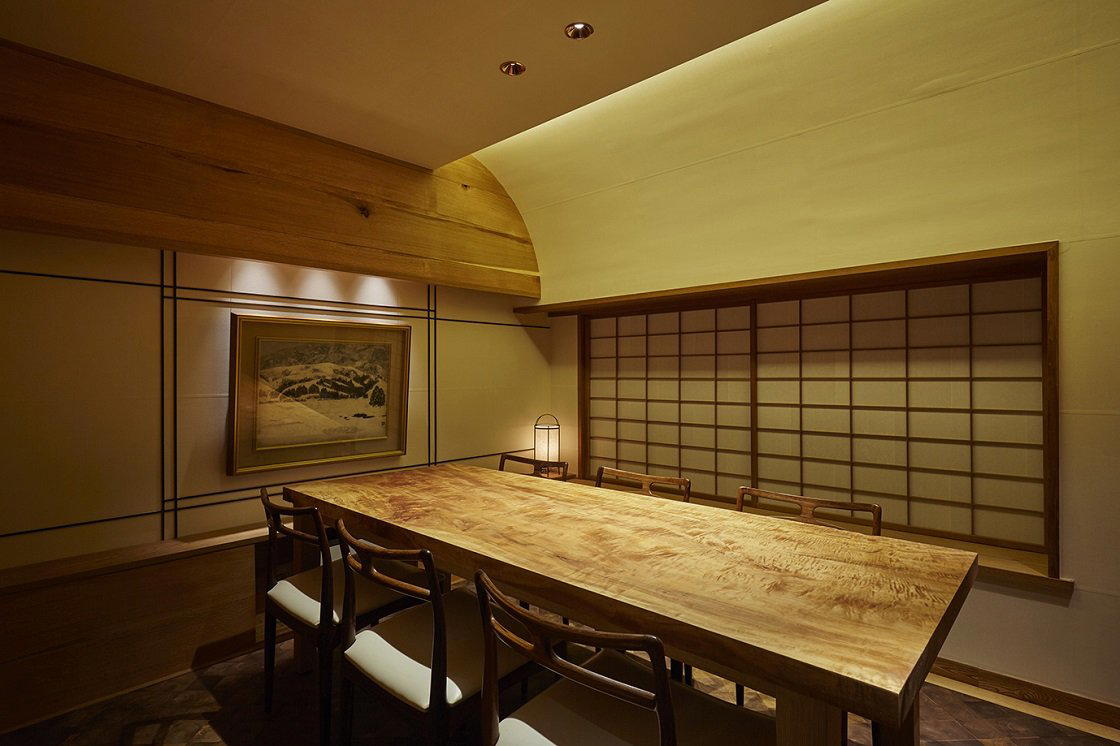
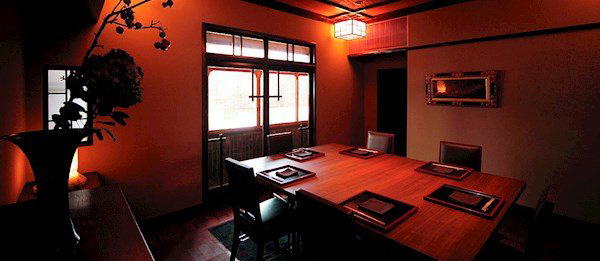
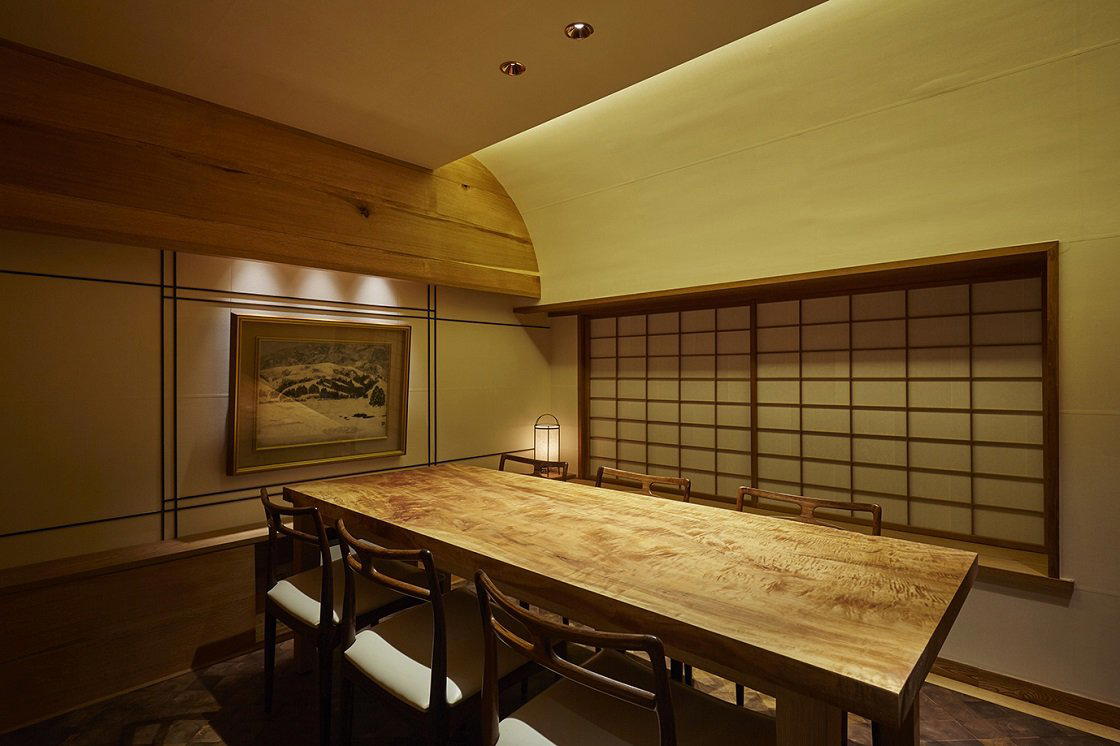
Japan's better boutique hotels increasingly treat the in-house restaurant as a separate destination rather than an amenity, and SOWAKA follows that structure with La Bombance Gion, which shares its name with an acclaimed Tokyo sibling. The restaurant serves seasonally driven Kyoto cuisine in an intimate room with black walls and wooden tables, a format that positions it clearly within Kyoto's kaiseki-adjacent dining tradition while maintaining its own visual identity. Guests travelling to Kyoto specifically for the food culture will find this a relevant on-site option rather than a fallback.
The bar's focus on local sake and shochu gives it a programme logic beyond simple beverage provision. Sake production in and around Kyoto benefits from Fushimi's soft water, which produces a lighter, more approachable style compared to the harder-water brewing of regions like Nada in Hyogo. A bar that organises itself around this regional context rather than a standard international spirits list is making an argument about where you are.
Neighbourhood Position and When to Go
SOWAKA's address in Higashiyama Ward means that Yasaka Shrine, Maruyama Park, and Kiyomizu-dera Temple are all accessible on foot. Yasaka Shrine is most charged during the Gion Matsuri in July, one of Japan's most significant summer festivals, when Gion's streets carry a different kind of energy than their typical meditative quiet. Kiyomizu-dera, a UNESCO World Heritage Site with a wooden stage extending from its main hall, is less than fifteen minutes' walk and is most visited during cherry blossom season, mid-March to early April, and again during autumn foliage in November. Maruyama Park is Kyoto's primary hanami (blossom-viewing) site during that same spring window. Both peak periods see the Higashiyama corridor become heavily visited, which is worth factoring into booking timing.
Properties operating at the other end of the city's accommodation spectrum, such as HOTEL THE MITSUI KYOTO or Ace Hotel Kyoto, occupy different neighbourhoods and architectural registers. Beyond Kyoto, the boutique ryokan format has strong regional comparators: Gora Kadan in Hakone, Asaba in Izu, Zaborin in Kutchan, and Nishimuraya Honkan in Kinosaki-cho each represent different regional expressions of the same format discipline. For guests building a Japan itinerary around this category, Amanemu in Mie, ENOWA Yufu in Yufu, Halekulani Okinawa, Jusandi in Ishigaki, Fufu Kawaguchiko, Fufu Nikko, Sekitei in Hatsukaichi-shi, and Benesse House in Naoshima round out the full domestic picture. See our full Kyoto restaurants and hotels guide for broader context on the city.
Planning Your Stay
SOWAKA's address at 480 Kiyoichō, Higashiyama Ward, Kyoto (605-0821) places it within Gion's walkable core. The property offers 24-hour room service, a bar, restaurants, babysitting services, and is pet-friendly. Given the 23-key scale and the property's La Liste recognition, rooms book ahead during peak travel windows, cherry blossom season (mid-March to early April), the Gion Matsuri (July), and autumn foliage (November) all represent tighter availability periods. Booking directly with the property or through a specialist travel agent with established hotel relationships is the standard approach for properties of this type. For travellers planning a wider Japan circuit, Bvlgari Hotel Tokyo, Dusit Thani Kyoto, and Aman New York or Aman Venice represent comparable positioning at their respective destinations.
A Credentials Check
Comparable venues nearby, for context on price, style, and recognition.
| Venue | Cuisine | Price | Awards | Notes |
|---|---|---|---|---|
| SOWAKAThis venue (the venue you are viewing) | Restored traditional Japanese ryokan with modern comforts in a historic teahouse. | Not listed | La Liste Top Hotels · Forbes 4-Star | Not listed |
| KIKOKUTEI Bekkan | Contemporary boutique ryokan blending modern minimalism with traditional Japanese hospitality principles | $300–500 | Michelin Selected | Shimogyō |
| Aman Kyoto | Contemporary ryokan-inspired pavilions integrated into a forested landscape. | Not listed | 2 Michelin Keys · World's 50 Best #74 | Kita |
| The Hotel Higashiyama by Kyoto Tokyu Hotel, A Pan Pacific Hotel | Blends traditional ryokan hospitality with contemporary luxury inspired by Kyoto's feudal-era Higashiyama district. | $300–500 | Michelin Selected | Higashiyama |
| Higashiyama Shikikaboku | Contemporary ryokan blending modern architecture with traditional Kyoto craftsmanship | $300–500 | Michelin Selected | Higashiyama |
| MOGANA | Modernist reimagination of traditional Japanese aesthetics with contemporary European design influences, positioned as an intimate design-focused luxury boutique hotel. | Not listed | Michelin Selected | Nakagyō |
Recognition history
Dated appearances from independent guides and award organizations, with the underlying list record or original source where available.
La Liste Top Hotels
La Liste
Forbes 4-Star
Forbes
Small Luxury Hotels of the World Member
Small Luxury Hotels of the World
Full recognition history (4 entries)
Forbes 4-Star
Forbes
Continue exploring
More in Kyoto
Hotels in Kyoto
All hotels in Kyoto →
Bars in Kyoto
All bars in Kyoto →

Restaurants in Kyoto
All restaurants in Kyoto →
Wineries in Kyoto
Browse all →
Details
- Quiet
- Elegant
- Intimate
- Cozy
- Sophisticated
- Scenic
- Minimalist
- Honeymoon
- Romantic Getaway
- Anniversary
- Wellness Retreat
- Garden
- Historic Building
- Wi Fi
- Concierge
- Room Service
- Garden
Serene and tranquil oasis with soft natural light filtering through shoji screens, gentle breezes in the courtyard garden, and a zen-like atmosphere evoking calm and ethereal elegance.