



2 Michelin Stars · La Liste Top Restaurants · Tabelog Gold #20
Our verdict
Ogata is a Kyoto kaiseki room for diners who want the form at its most disciplined: seasonal Japanese cuisine, a counter-led format, and a reputation supported by Michelin, Tabelog, La Liste, and Opinionated About Dining recognition. The cooking belongs to Kyoto’s high-end kaiseki tradition, but the appeal is not ceremony for ceremony’s sake; it is precision, restraint, and a clear point of view inside a competitive local field.

Pearl is the En Primeur Club membership app — saves, bookings, and concierge access live there. Same editors, same standards.
- Address
- 726 Shinkamanzacho, Shimogyo Ward, Kyoto, 600-8471, Japan
- Phone
- +81 75-344-8000
- Hours
- Daily 4–9 PM
- Website
- youshoku-ogata.com
- Directions
- Get directions
- Booking
- Book on Omakase
The menu
What to order
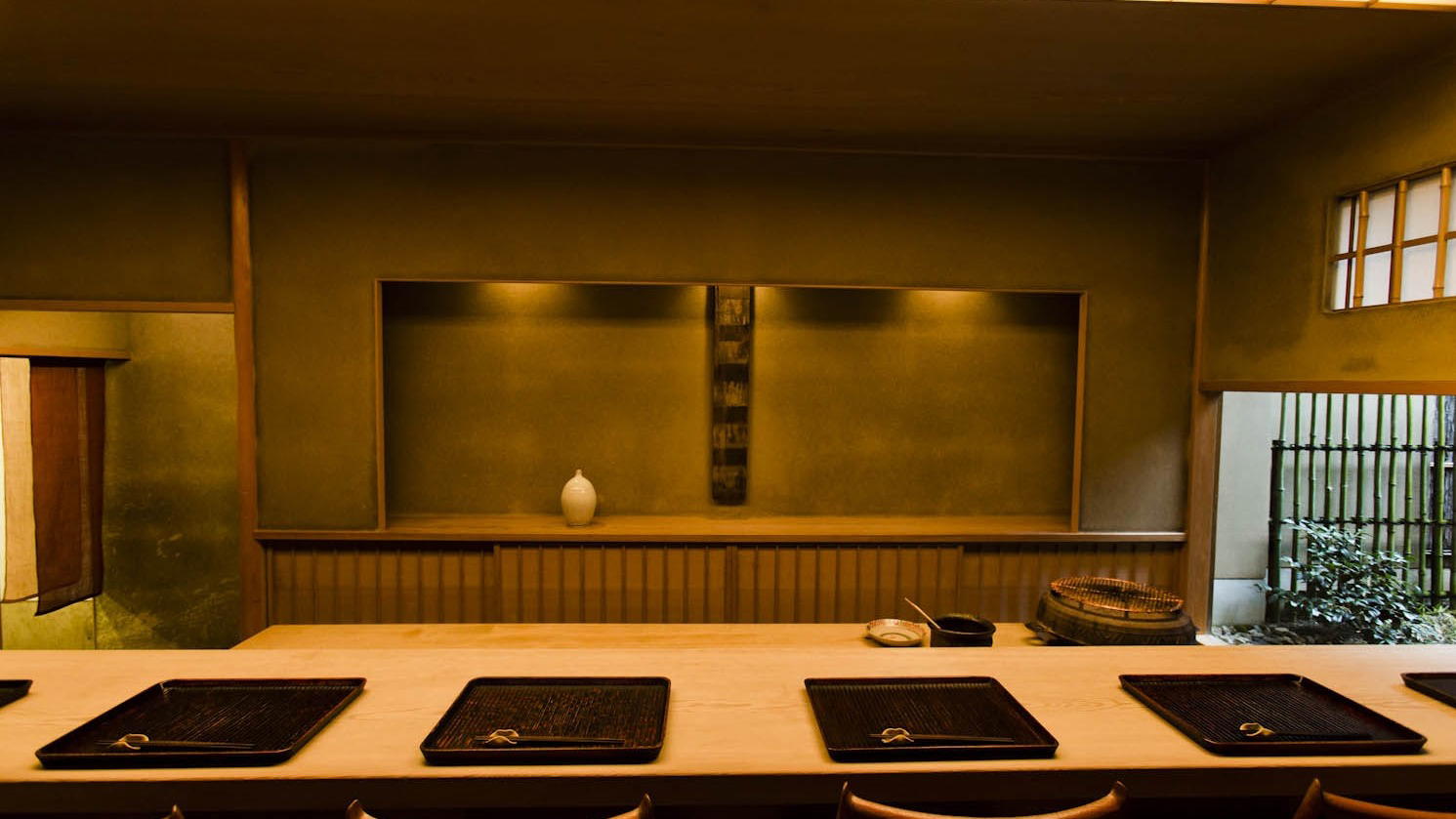
- Deep-fried bonito
- Baby tuna sashimi
- Blowfish sashimi
Approaching a serious Kyoto kaiseki room, the city narrows: side streets off the central grid, low light, quiet façades, and an evening measured course by course. The ogata kyoto restaurant sits within that older rhythm, where the room is for concentration, not theatre. Kyoto’s formal Japanese restaurants ask diners to read season, sequence, vessel, temperature, and pause; pleasure accumulates rather than announces itself.
Kyoto kaiseki is often misunderstood outside Japan. It is not a long tasting menu in Japanese dress, but a structured tradition: an opening that sets tone, then soup, seasonal produce, fish, cooked dishes, rice, and a closing register. In stronger rooms, luxury is editing, not excess. Ogata belongs to that camp, publicly recognized among the city’s serious high-end Japanese counters, not the casual washoku tier.
Kyoto kaiseki reduced to discipline rather than display
Kyoto’s kaiseki culture has visible branches. Gion houses often lean into inherited district atmosphere; downtown counters can feel austere, centered on the exchange between kitchen and diner. Gion Maruyama, Gion Nishikawa, Gion Owatari, and Gion Sasaki each represent a different version of Kyoto formality, from grand hospitality to counter intimacy. Ogata reads in the latter direction: compressed, exacting, and built around the seasonal grammar of Japanese cuisine rather than decorative nostalgia.
The relevant comparison is between forms of Kyoto restraint, not Japanese fine dining and Western tasting-menu culture. Kaiseki depends on seasonality, yet stronger kitchens do not present ingredients as a checklist. They decide how much to show, when to hold back, and how one course alters the memory of the last. Public descriptions point to Tamba matsutake, Maizuru crab, Kyoto vegetables, and a fish-focused kitchen, placing the cooking inside the region’s seasonal luxury register without reducing the meal to famous products.
Chef Toshiro Ogata’s name functions as credential, not biography. In Kyoto, chef-led authorship can be quieter than in cities where personality drives narrative. The diner enters a system where sourcing, cut, heat, pacing, and vessel carry meaning. Michelin listed the restaurant with two stars in 2024 and 2025; Tabelog named it a Gold winner for 2026 after earlier Gold and Silver results; La Liste scored it in the mid-90s for 2025 and 2026; and Opinionated About Dining ranked it within its Japan restaurant list across recent years. These signals come from different rating cultures, making their overlap more useful than any single badge.
Where it sits among Kyoto's serious Japanese counters
Kyoto is unusually dense at the upper end of Japanese dining, so the decision is rarely whether to eat kaiseki, but which expression fits the trip. Godan Miyazawa and Jiki Miyazawa occupy a slightly different price and mood bracket, while Kiyama, Muromachi Wakuden, and Gion Sasaki frame other versions of the same high-end conversation. Ogata sits in the expensive, reservation-only tier, and its small-format structure matters: a kaiseki meal changes when the diner can observe the kitchen’s timing and the room leaves little slack for anonymity.
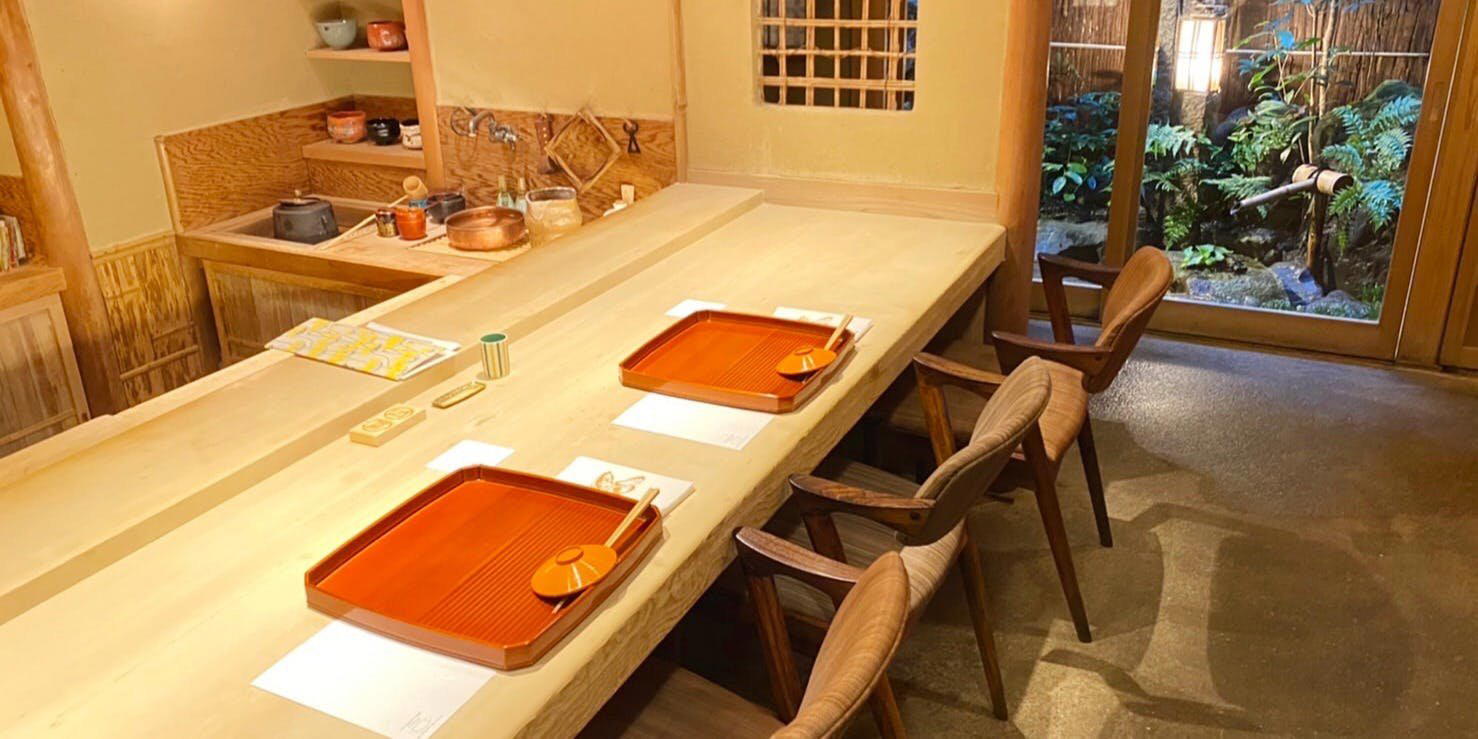
The counter is central. In Kyoto, counter dining does not automatically mean informality; often it means greater scrutiny. The guest sees less ornament and more process. For travelers used to hotel dining rooms or broad-menu Japanese restaurants, this can feel severe, but that severity is the point. At this level, the meal is calibrated around sequence, quiet service, and a narrow margin for error, rewarding attention rather than celebration.
The price tier shapes expectations. Kyoto has excellent Japanese meals below this level, but the upper bracket is where rare seasonal products, labor-intensive preparation, and limited seating converge. The restaurant’s awards history and rating consistency suggest a dining room competing with Kyoto’s established kaiseki elite, not casual temple-district lunch counters or tourist-facing Japanese cuisine. It is better for a focused dinner than a broad first taste of the city.
For broader planning, our full Kyoto restaurants guide maps the city’s dining range beyond kaiseki, while our full Kyoto hotels guide, full Kyoto bars guide, full Kyoto wineries guide, and full Kyoto experiences guide place dinner inside a longer itinerary. Kyoto rewards sequencing: a formal meal lands differently after temples, a tea-focused afternoon, or a quiet bar nightcap rather than a rushed transfer between districts.
Who should choose this over another Kyoto kaiseki reservation
The case for Ogata is strongest for diners who already understand, or want to understand, kaiseki as an aesthetic system. It is not the obvious choice for guests seeking a broad, relaxed introduction to Japanese food, or for a group wanting a highly social dining room. The format favors attention, patience, and comfort with drama delivered through small adjustments rather than loud gestures.
That does not make the room inaccessible in spirit. Kyoto kaiseki can intimidate because its rules are not always explained in modern restaurant criticism’s language. Read the meal through contrasts: warm and cool, raw and cooked, mountain and sea, lacquer and ceramic, restraint and release. The closer a diner follows those shifts, the more coherent the evening becomes. Recognition from Michelin, Tabelog, La Liste, and OAD is less a guarantee of personal taste than proof that multiple evaluative systems place it in the same serious category.
Travelers comparing Japanese fine dining across cities should note the Kyoto difference. Tokyo often prizes specialization: sushi counters, tempura rooms, kappo, French-Japanese hybrids, and highly technical tasting menus. Kyoto kaiseki houses ask a broader cultural question: how does a meal express season, place, and form through a complete sequence? For a Tokyo counterpoint in the same cuisine family, Ginza Kojyu, Kaiseki, Japanese in Tokyo offers a useful contrast, while Aburi Hana, Kaiseki, Japanese in Toronto shows how the vocabulary travels outside Japan.
For readers building a wider Japan or Japanese-cuisine itinerary, the network can range far from Kyoto formality: -Grilled beef Sukiyaki- KAMAKURA TANUKIAN 鎌倉 たぬき庵 in Kamakura. 鮪と炭火焼き うお炭 秋葉原店 in Tokyo.cafe in Osaka.know in Kumamoto, (Shoku) Vietnam in Kawasaki, and [Curry Senmon Ten] Maruyama Kyoju. in Sapporo sit in completely different registers. That contrast is useful: Kyoto kaiseki is not a universal template for Japanese dining, but one of its most codified forms.
The verdict is simple: choose this restaurant for a concentrated Kyoto kaiseki experience backed by serious external recognition and a small-room format. Choose elsewhere for looseness, breadth, or a more casual first encounter with Japanese cooking. In a city crowded with tradition, the appeal here is the refusal to dilute it.
Frequently asked questions
When can I go to Ogata?
Hours at Ogata: Hours: Monday 4–9 pm Tuesday 4–9 pm Wednesday 4–9 pm Thursday 4–9 pm Friday 4–9 pm Saturday 4–9 pm Sunday 4–9 pm.
Is there a head chef associated with Ogata?
The chef associated with Ogata is Toshiro Ogata.
What style of cooking does Ogata do?
Ogata serves Kaiseki, Japanese cuisine.
What price level is Ogata?
Pricing at Ogata is listed as ¥¥¥¥.
Where exactly is Ogata?
Ogata is located in Kyoto.
How It Stacks Up
Nearby venues at a similar price tier for orientation.
| Venue | Cuisine | Price | Awards | Notes |
|---|---|---|---|---|
| OgataThis venue — the venue you are viewing | Kaiseki Omakase | $200–300 | 2 Michelin Stars · La Liste Top Restaurants | Not listed |
| Isshisoden Nakamura | Traditional Kyoto Kaiseki | $200–300 | 3 Michelin Stars | Nakagyō |
| Sojiki Nakahigashi | Michelin 2-Star Seasonal Kaiseki | $50–100 | 2 Michelin Stars · La Liste Top Restaurants | Sakyō |
| Kodaiji Wakuden | Luxury Kaiseki | $300–500 | 2 Michelin Stars · La Liste Top Restaurants | Higashiyama |
| Miyamaso | Tsumikusa Kaiseki | $500+ | 2 Michelin Stars · La Liste Top Restaurants | Shimogyō |
| Kyokaiseki Kichisen | Kyoto Kaiseki | $200–300 | 2 Michelin Stars · La Liste Top Restaurants | Sakyō |
Recognition history
Dated appearances from independent guides and award organizations, with the underlying list record or original source where available.
Michelin 2 Stars
Michelin
La Liste Top Restaurants
La Liste
Opinionated About Dining Top Restaurants in Japan Ranked #19
Opinionated About Dining
Tabelog Gold #20
Tabelog
Full recognition history (13 entries)
La Liste Top Restaurants
La Liste
Michelin 2 Stars
Michelin
Opinionated About Dining Top Restaurants in Japan Ranked #15
Opinionated About Dining
Tabelog Silver
Tabelog
Tabelog Chef's Gold
Tabelog
Tabelog 100 #10 · No. 10
Tabelog · Tabelog 100 - Japanese cuisine - WEST - 2025
Michelin 2 Stars
Michelin
Opinionated About Dining Top Restaurants in Japan Ranked #22
Opinionated About Dining
Opinionated About Dining Top Restaurants in Japan Ranked #11
Opinionated About Dining
Continue exploring
More in Kyoto
Restaurants in Kyoto
Browse all →
Bars in Kyoto
Browse all →
Hotels in Kyoto
Browse all →
Wineries in Kyoto
Browse all →
Details
- Elegant
- Intimate
- Quiet
- Sophisticated
- Minimalist
- Special Occasion
- Date Night
- Chefs Counter
- Open Kitchen
- Sake Program
- Local Sourcing
- Garden
- Tasting Menu
- Omakase
- Counter Dining
- Sake
Current opening hours
- Monday
- 4–9 PM
- Tuesday
- 4–9 PM
- Wednesday
- 4–9 PM
- Thursday
- 4–9 PM
- Friday
- 4–9 PM
- Saturday
- 4–9 PM
- Sunday
- 4–9 PM
Hours can change for holidays and private events. Last verified .
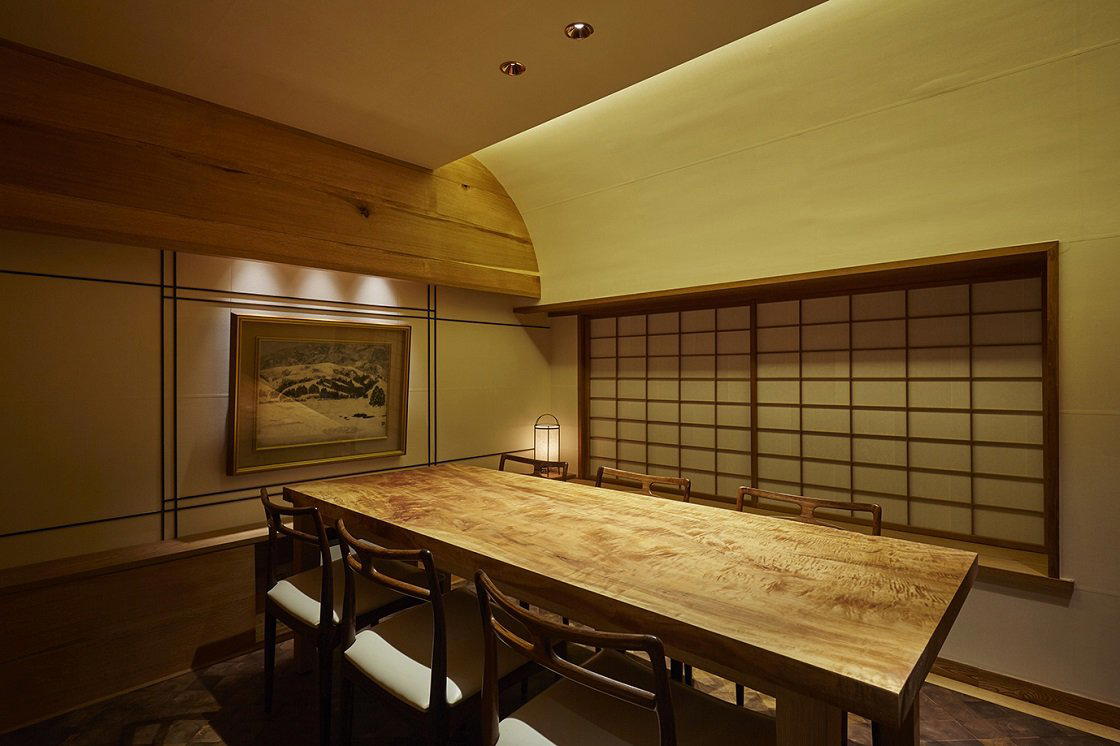
Serene, Zen-like atmosphere with tranquil lighting, intimate counter seating overlooking a small yard, and traditional Japanese service.