On the fourth floor of a lamp-lit Nakagyo building, APOTHECA operates in a register that Kyoto's bar scene has quietly cultivated for decades: precise, considered, and resistant to trend-chasing. The address alone — Yōtōkan, a preserved Western-style structure on Aburayachō — signals that what happens inside is worth the climb. For cocktail-focused visitors, it belongs in the same conversation as the city's most serious drinking rooms.

Pearl is the En Primeur Club membership app — saves, bookings, and concierge access live there. Same editors, same standards.
- Address
- 〒604-8063 Kyoto, Nakagyo Ward, Aburayachō, 145 洋燈館 4F
- Phone
- +81 75-253-0770
- Website
- apotheca-kyoto.jp
- Directions
- Get directions
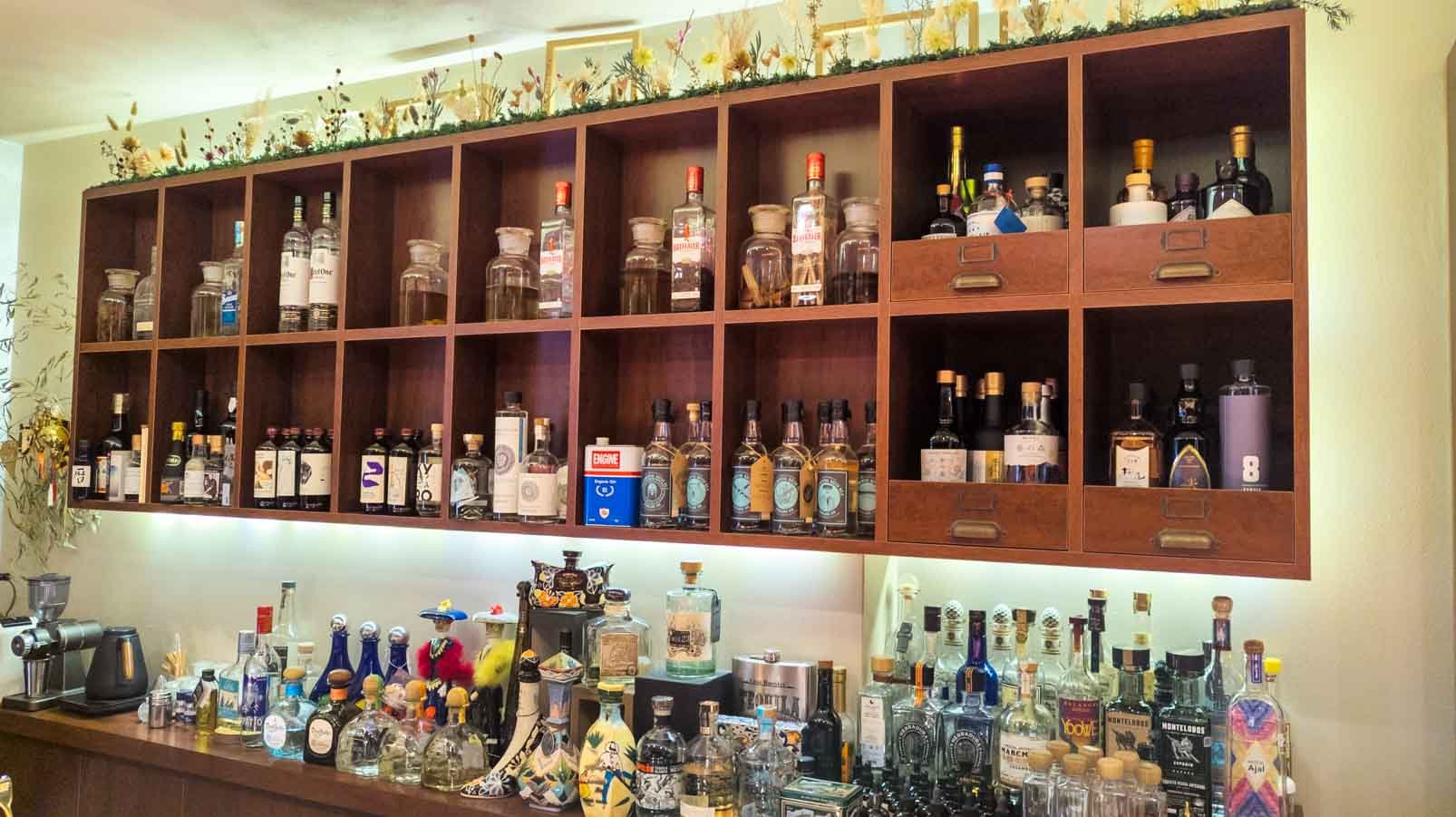
The Building Before the Bar
Kyoto's most serious drinking rooms have long preferred anonymity over exposure. The city's bar culture occupies upper floors, back streets, and converted prewar structures in a way that has never been about spectacle. APOTHECA follows that logic precisely: the address is a fourth-floor space inside Yōtōkan, a Western-style building on Aburayachō in Nakagyo Ward, and the name itself — borrowed from the Latin term for an apothecary's store — frames the room's approach before you've touched a glass. In a city where the vocabulary of craft is applied with discipline, that framing matters.
Nakagyo Ward sits at Kyoto's geographic and commercial centre, between the temple precincts to the north and south and within walking distance of the Kawaramachi and Karasuma corridors. It is the district where Kyoto's Western-influence history is most legible in its architecture, and Yōtōkan is a textbook example: a preserved structure of the kind that survived the twentieth century largely through careful stewardship rather than luck. Arriving at a bar in a building with that kind of material history places the experience in a different frame than arriving at a purpose-built lounge.
How Kyoto Builds a Cocktail Programme
Japan's bar culture operates on a set of inherited standards that have little to do with trend cycles. The bartender as craftsperson, the long apprenticeship, the obsessive attention to ice and dilution, the preference for classical technique over novelty, these are the structural conditions that produced Bar Benfiddich in Tokyo, Bar Nayuta in Osaka, and Lamp Bar in Nara, a venue that has held a place on Asia's 50 Best Bars list. Within Kyoto specifically, the bar scene has historically operated at a remove from the louder conversations happening in Tokyo or Osaka, producing rooms that are harder to find and, when found, harder to leave.
The apothecary concept, as a creative framework for a cocktail programme, is not new globally, but it carries particular weight in Japan, where the relationship between botanical ingredients, seasonal sourcing, and drink-making has genuine depth. The premise sets an expectation: that what arrives in the glass will be specific, that ingredients will have been chosen with something like pharmacological intent, and that the menu will reward attention rather than simply reward ordering. Whether APOTHECA's execution meets that premise fully is a question for the room itself, but the framing is coherent and the address gives it credibility.
Within Kyoto's bar circuit, APOTHECA sits alongside venues that share a commitment to considered programming. Bee's Knees, ALKAA, Bar Cordon Noir, and Bar K6 each represent a slightly different position on the spectrum from classical Japanese bartending to contemporary international influence. APOTHECA's name and location suggest it is operating closer to the specialist end of that range, where the drinks are the primary argument rather than the atmosphere or the social occasion. Bars in that tier across Japan, including Yakoboku in Kumamoto and Bar Leather Apron in Honolulu, which has absorbed significant Japanese bartending influence, share a preference for precision over volume and silence over soundtrack.
The Logic of the Fourth Floor
There is a reason that the bars worth seeking in Kyoto are rarely at street level. Foot traffic and serious drinking are, in the city's cultural calculus, largely incompatible. The fourth floor of Yōtōkan is not an accident of real estate; it is a filter. Guests who arrive have made a decision, and the rooms that occupy those upper floors in Kyoto's older buildings tend to respond with a corresponding seriousness. The sight lines from that elevation, looking out over Nakagyo's mid-century and prewar fabric, are part of the experience whether or not they are formally offered as a feature.
The apothecary reference also implies a particular kind of service. In classical bar culture, Japanese or otherwise, the bartender is closer to a pharmacist than a performer: diagnosing preference, prescribing accordingly, and measuring with care. Bars that commit to that model tend to favour smaller capacities and longer sittings over turnover. For visitors accustomed to Tokyo's higher-volume cocktail operations or Osaka's more gregarious bar culture, APOTHECA's register may read as formal. That formality is, in context, a form of hospitality.
Planning a Visit
Reaching APOTHECA means heading into Nakagyo Ward's grid, a walkable area from either Karasuma Oike or Kyoto-Shijo station depending on approach. The Yōtōkan building on Aburayachō is the landmark; the fourth floor is the destination. The broader Nakagyo area warrants an evening rather than a hurried stop: Kyoto Tower Sando and other nearby bars offer sequencing options if the evening calls for more than one room. For broader orientation before arrival, our full Kyoto restaurants and bars guide maps the city's drinking geography with neighbourhood-level detail. Visitors planning a wider Kansai circuit might also factor in anchovy butter in Osaka Shi as a contrasting register, looser, food-adjacent, and operating on a different wavelength entirely.
Side-by-Side Snapshot
| Venue | Cuisine | Price | Awards |
|---|---|---|---|
| APOTHECAThis venue — the venue you are viewing | This venue | Not listed | Not listed |
| Bee's Knees | World's 50 Best | $10–20 | World's 50 Best #76 · Top 500 Bars Best Bars #383 |
| Hello Dolly Bar | Not listed | $20–30 | Not listed |
| Coupe de Champagne | Not listed | Not listed | Star Wine List |
Continue exploring
More in Kyoto
Bars in Kyoto
Browse all →
Restaurants in Kyoto
Browse all →
Hotels in Kyoto
Browse all →
Wineries in Kyoto
Browse all →
Details
- Intimate
- Cozy
- Elegant
- Date Night
- Solo
- Special Occasion
- Speakeasy
- Counter Only
- Private Rooms
- Craft Cocktails
- Zero Proof
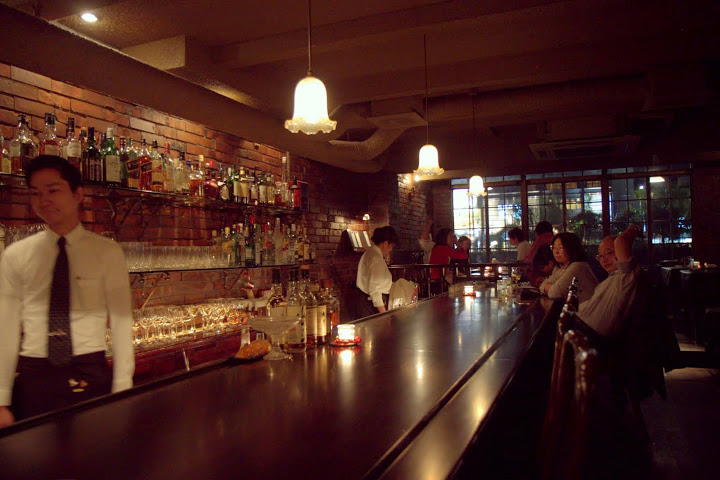
Low, precise lighting on wooden counters and exposed brick creates a warm, contemplative pharmacy-inspired atmosphere.