
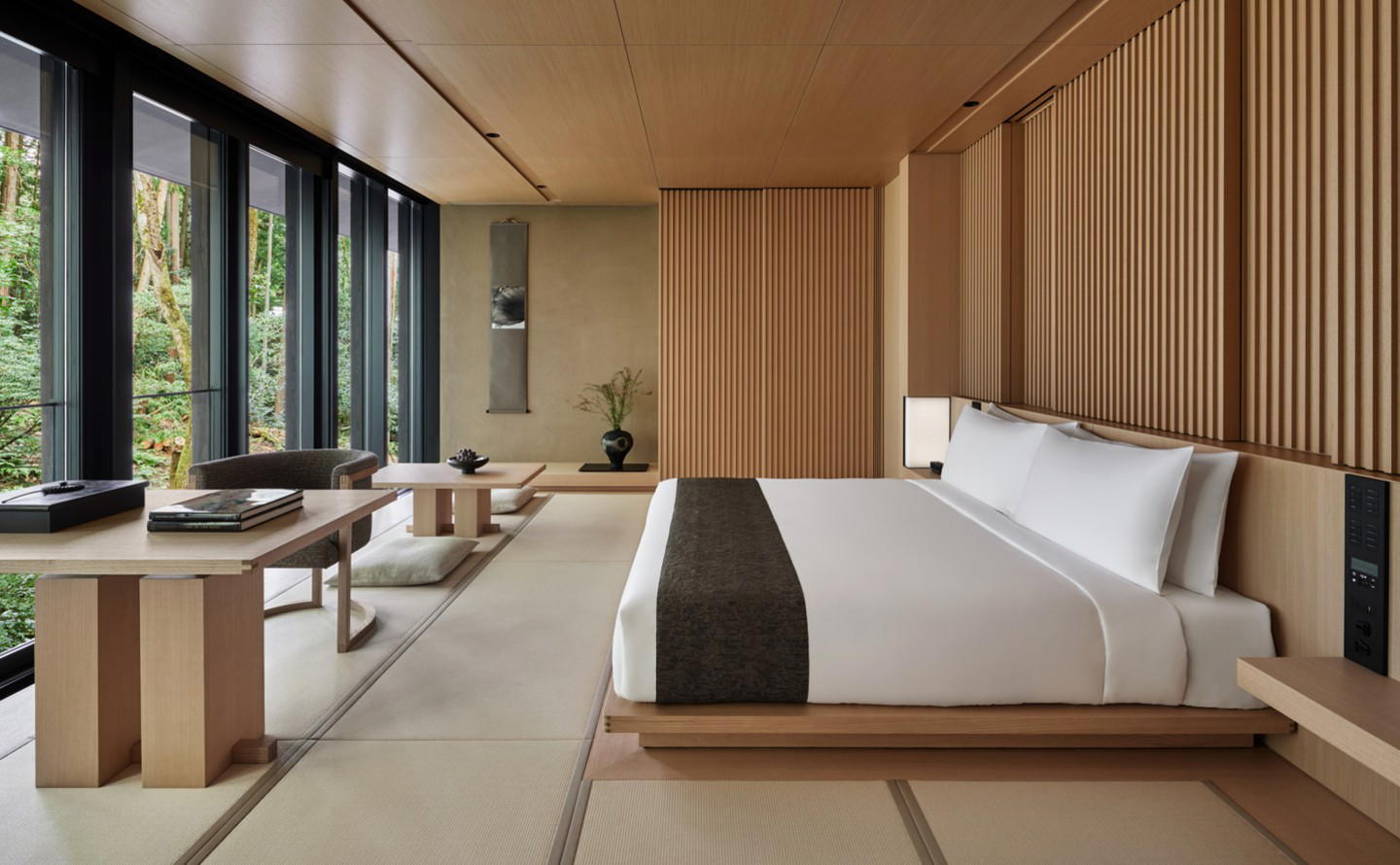
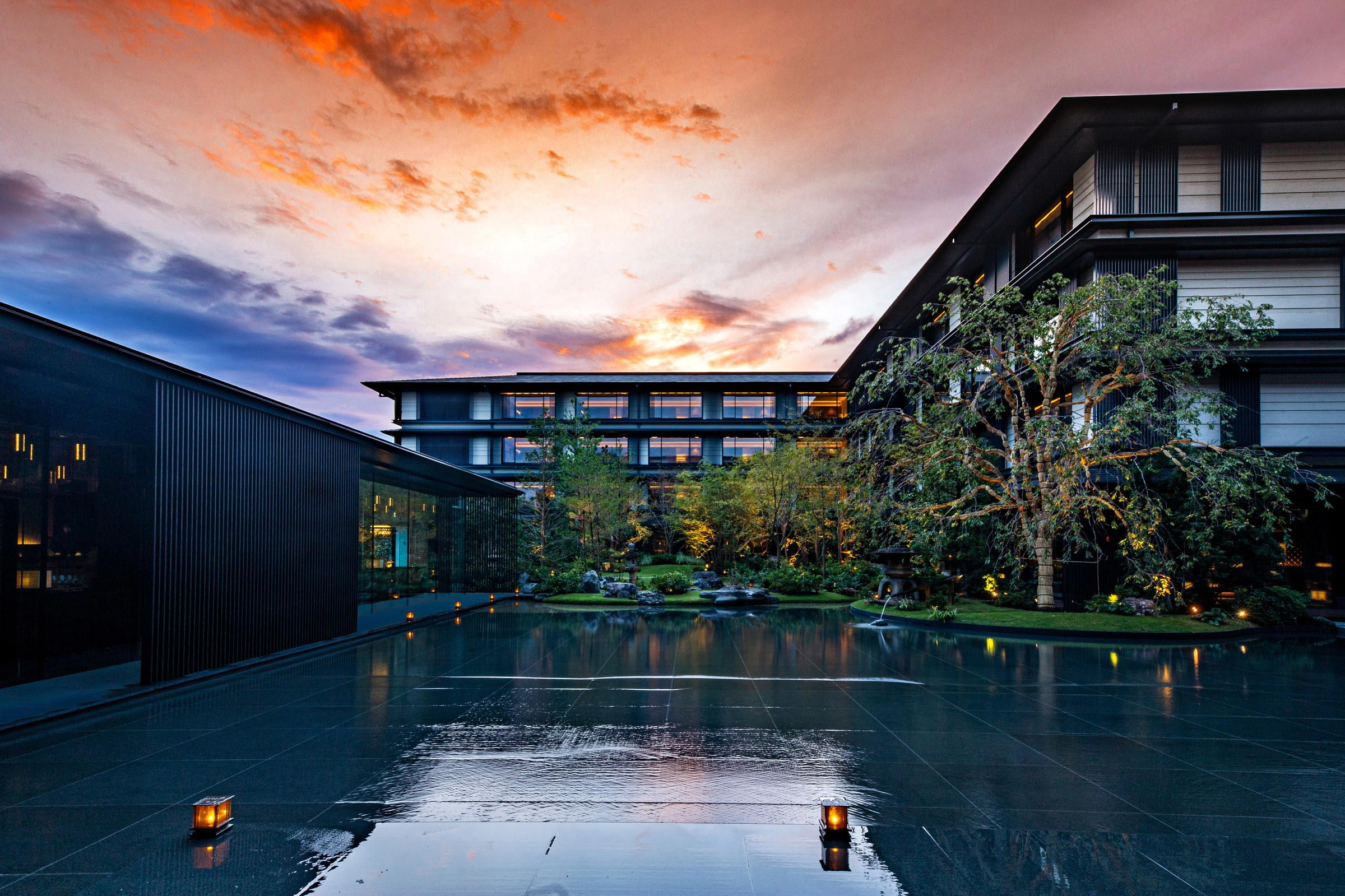
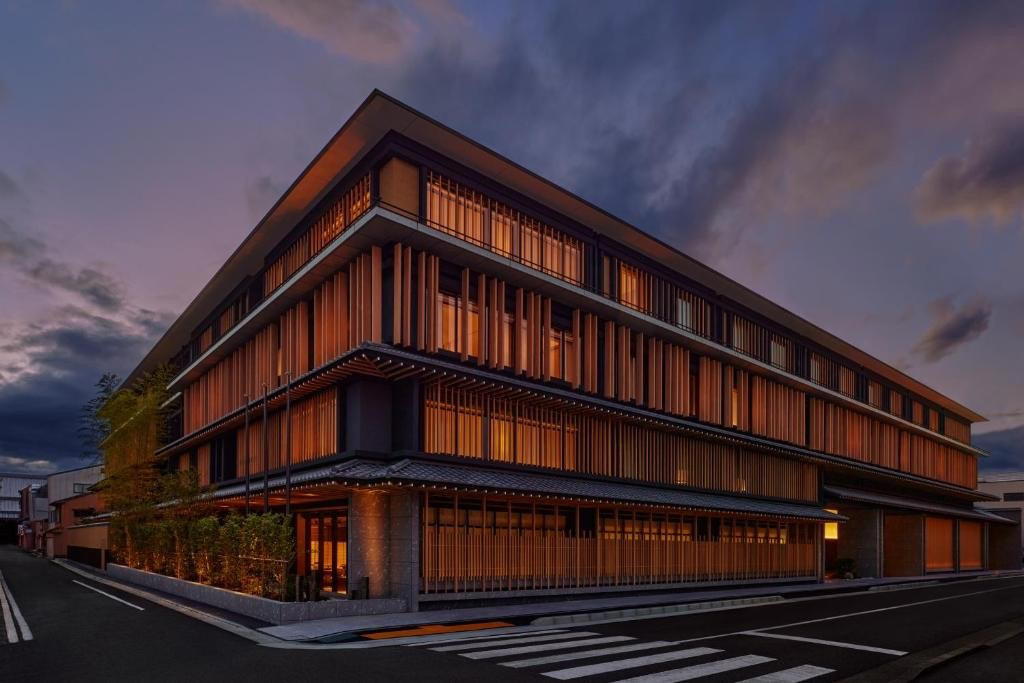
The Hoshinoya hotels, part ryokan, part luxury hotel, are all similar in their basic concept. But while the monumental Hoshinoya Tokyo stands in a skyscraper in the heart of the capital, Hoshinoya Kyoto could hardly be more different. It’s small, a mere 25 rooms, distributed among a collection of low-profile buildings. And despite its name, it’s set not in Kyoto proper, but a 15-minute ride up the river in a traditional wooden boat. The architecture is unmistakably Japanese but also unmistakably modern, and the interiors are a delightful update on ryokan convention, dressed in modern colors and subtle graphic patterns. The rooms are as comfortable as can be, though far from opulent, passing over high-tech diversions like televisions in favor of tranquil views through vast windows and, perhaps the most memorable feature, beautiful cypress soaking tubs. Spa treatments are available in-room, and a wide variety of traditional Japanese cultural experiences are on offer as well, from ikebana lessons to Zen meditation. Among the most venerable traditions in ryokan life, of course, is the local cuisine, Kyoto’s culinary heritage is a rich one, and here chef Ichiro Kubota applies techniques and knowledge from all around the world to a menu drawn from hyper-local, hyper-seasonal ingredients.
 Discover on Pearl
Pearl is the En Primeur Club membership app — saves, bookings, and concierge access live there. Same editors, same standards.
- Address
- 11-2 Arashiyama Genrokuzancho, Nishikyo Ward, Kyoto, 616-0007, Japan
- Phone
- +81 50-3134-8091
- Website
- hoshinoresorts.com
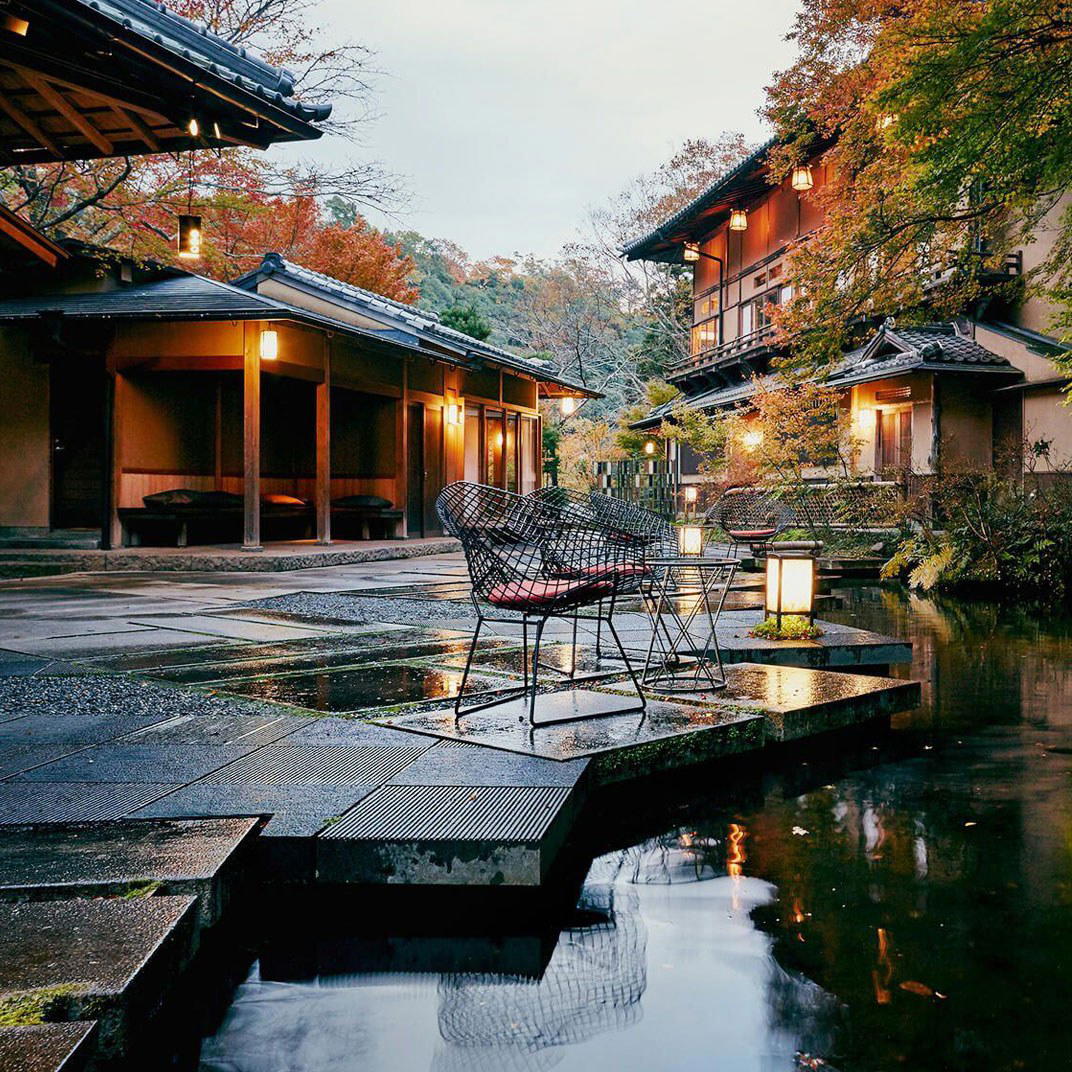
Arriving by Boat: The Oi River Approach to Hoshinoya Kyoto
There is a moment, a few minutes into the electric boat ride up the Oi River from Togetsu-kyo Bridge in Arashiyama, when the tourist infrastructure of western Kyoto drops away and the bamboo groves close in on both banks. That transit is not incidental to Hoshinoya Kyoto; it is structurally central to the experience. The property sits at the river's edge, accessible only by this boat service, and that physical separation shapes everything that follows. Hoshinoya Kyoto operates in a subset defined first by geography rather than amenity count or room size.
The Hoshino Resorts group has applied the same logic at other Japanese properties. Zaborin in Kutchan uses Hokkaido forest to create similar seclusion; Amanemu in Mie deploys the Ago Bay coast for comparable effect. At the Kyoto property, the device is river topography, and it works because Arashiyama is already one of the more seasonally legible parts of the city: cherry blossom in early April, deep green bamboo through summer, foliage colour in November. The site amplifies those cycles rather than insulating guests from them.
One Michelin Key and What It Signals for the Accommodation Category
Hoshinoya Kyoto holds a One Michelin Key in the 2025 Michelin guide, placing it in the evaluated tier of Japanese hotel stays. The Michelin Key distinction, introduced to Japan relatively recently as an extension of the guide's hospitality coverage, is awarded on the basis of architectural coherence, service quality, and the overall experience a property delivers beyond simple accommodation. Within the Kyoto market, holding any Michelin Key recognition positions a property within a select group, a group that in Kyoto spans everything from intimate ryokan in the Higashiyama hills to large-format city hotels near Gion. For comparison, Higashiyama Shikikaboku and Hotel Kanra Kyoto represent the smaller boutique ryokan-influenced end of that spectrum, while Hoshinoya Kyoto occupies a mid-to-larger format position with the operational depth of a group-backed property.
The award also matters in context of how Kyoto fits within Japan's broader luxury ryokan geography. Properties like Gora Kadan in Hakone, Asaba in Izu, and Nishimuraya Honkan in Kinosaki-cho each anchor a regional tradition of high-service onsen stays. Hoshinoya Kyoto's version of that format is river-adjacent rather than onsen-centric, drawing on Arashiyama's cultural weight rather than geothermal resources.
Dining and the Sake and Wine Framework at Arashiyama
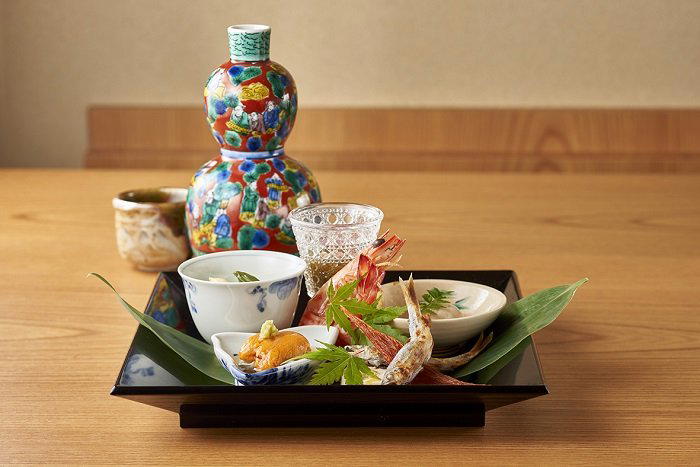
The editorial angle worth applying to Hoshinoya Kyoto's dining is less about a single signature dish and more about how properties in this bracket handle the intersection of kaiseki-style cooking and curated drinks programmes. Japan's leading ryokan-format hotels have spent the past decade building out drink lists that do justice to kaiseki's seasonal precision. That means navigating the relationship between the cuisine and sake on one side, and an increasingly considered wine list on the other.
At this level of the market, sake curation tends to prioritize junmai daiginjo and aged koshu expressions from regional breweries, selected to track the menu's progression from delicate dashi-based courses through richer simmered and grilled preparations. The wine side, where properties in this category have moved most aggressively, now commonly features Burgundian whites selected for acidity and restraint rather than weight, and a red selection biased toward lower-extraction styles that can work alongside umami-led Japanese cooking without overwhelming it. Whether Hoshinoya Kyoto's specific list follows this model precisely is not data we hold in verified form, but the broader category expectation, established by the property's comparable set and the cuisine tradition it operates within, points in that direction.
For reference, comparable Japanese luxury resort programmes, at properties like Kamenoi Besso in Yufu and Fufu Nikko in Nikko, have invested in staff who can bridge Japanese brewing tradition and European wine knowledge, often pairing specific sake with the earlier, lighter courses and introducing wine from the middle of the meal onward. That drinks architecture requires coordination with the kitchen and a sommelier or sake specialist capable of managing both categories, which becomes a meaningful differentiator at properties targeting international guests alongside Japanese travelers.
Positioning Against the Kyoto comparable set
Kyoto's premium accommodation market has stratified clearly. At the internationally branded end, Aman Kyoto and Four Seasons Hotel Kyoto compete on service depth, design investment, and global brand recognition. At the boutique end, properties like eph KYOTO and Candeo Hotels Kyoto Karasuma Rokkaku operate at lower price points with strong design credentials but less service infrastructure. Hoshinoya Kyoto sits between those poles: group-operated with genuine service depth, but differentiated by a site that neither the international brands nor the boutique options can replicate. The Arashiyama location and river-access format are structural advantages that translate into a particular kind of booking rationale, one focused on immersive natural setting rather than urban proximity.
Internationally, the ryokan luxury resort model Hoshinoya Kyoto represents competes in the same consideration set as Benesse House in Naoshima, which uses art-island positioning for similar seclusion logic, or Halekulani Okinawa in Okinawa, which deploys coastal geography. Against urban alternatives with equivalent recognition, like Bvlgari Hotel Tokyo in Tokyo or globally recognised city properties such as Badrutt's Palace Hotel in St. Moritz and Hôtel de Paris Monte-Carlo in Monte Carlo, Hoshinoya Kyoto makes an entirely different claim: it is not a city hotel with nature views, it is a nature property that uses Kyoto's cultural gravity as context.
Planning a Stay
The property's Arashiyama address, at 11-2 Genrokuzancho, Nishikyo-ku, requires factoring in the boat transfer from Togetsu-kyo Bridge as part of arrival logistics. Arashiyama is reachable from central Kyoto by JR Sagano Line to Saga-Arashiyama Station, or by the Hankyu Arashiyama Line, both of which take roughly twenty to thirty minutes from central Kyoto stations. Advance reservation for cherry blossom season in late March and early April, and autumn foliage in November, is advisable well ahead. For the full scope of Kyoto Prefecture's accommodation options, EP Club's full Kyoto Prefecture restaurants and hotels guide covers the range from comparable ryokan stays to the Hyatt Regency Kyoto and GRANBELL HOTEL KYOTO at more accessible price points. Those planning Japan's broader ryokan circuit alongside this stay may also consider Sekitei in Hatsukaichi-shi or Jusandi in Ishigaki for regional contrast. Booking through Hoshino Resorts official channels is the direct route.
A Minimal comparable set
Comparable venues nearby, for context on price, style, and recognition.
| Venue | Price | Notes |
|---|---|---|
| Hoshinoya KyotoThis venue — the venue you are viewing | $$$$ | |
| Kifune Ugenta | $$$$ | Kibune, traditional ryokan with modern designer touches |
| Regent Kyoto | $$$$ | Okazaki, An upper-luxury urban retreat that integrates a historic Kyoto garden and century-old ryotei into a small-scale, heritage-rich estate in the Okazaki cultural district. |
| Nanzenji sando Kikusui | $$$$ | Sakyo Ward, Culinary inn combining ryokan tradition with modern refinement |
| Sora Niwa Terrace Kyoto Bettei | $$$$ | Shimogyō, Luxurious onsen ryokan-style villa in downtown Kyoto |
| Seikoro Ryokan | $$$$ | Higashiyama, Traditional Japanese ryokan with historic architecture and modern comforts. |
Continue exploring
More in Kyoto
Hotels in Kyoto
Browse all →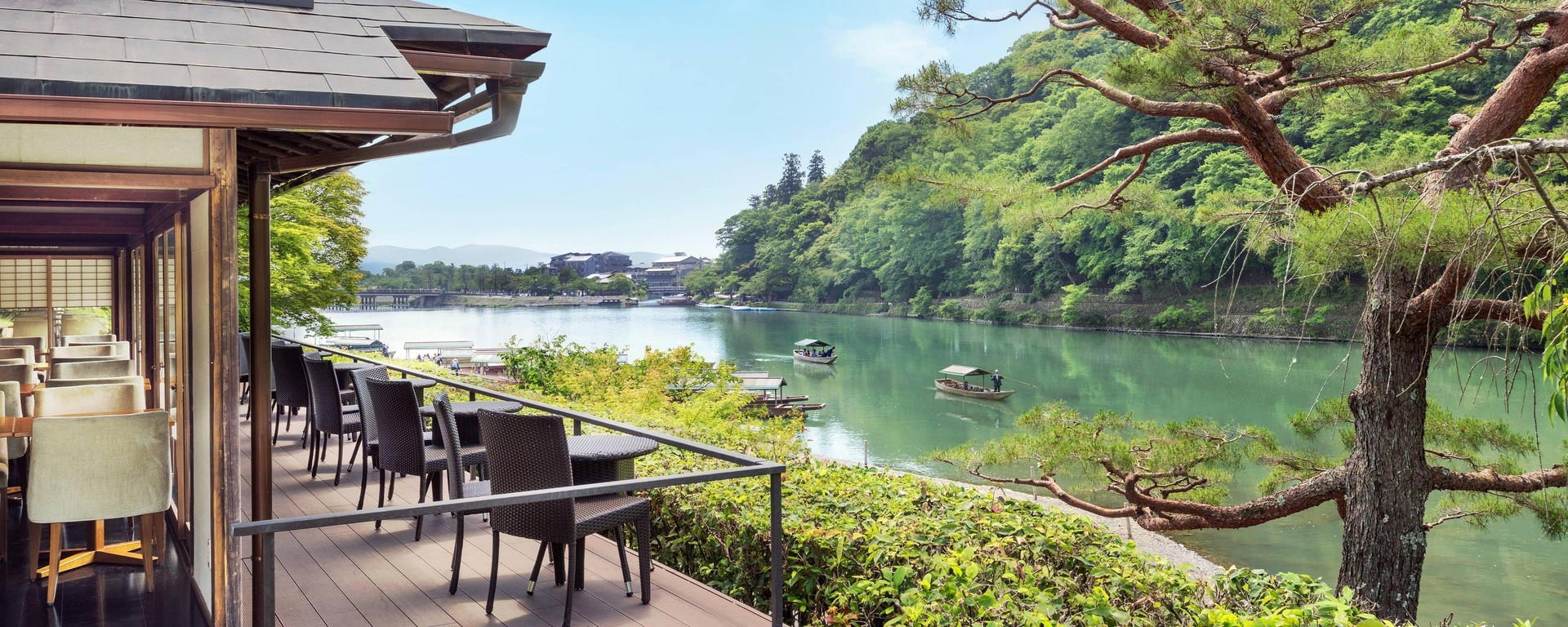

Restaurants in Kyoto
Browse all →
Wineries in Kyoto
Browse all →
At a Glance
- Quiet
- Elegant
- Scenic
- Intimate
- Sophisticated
- Minimalist
- Honeymoon
- Romantic Getaway
- Wellness Retreat
- Anniversary
- Weekend Escape
- Waterfront
- Garden
- Historic Building
- Panoramic View
- Concierge
- Room Service
- Garden
- Mountain
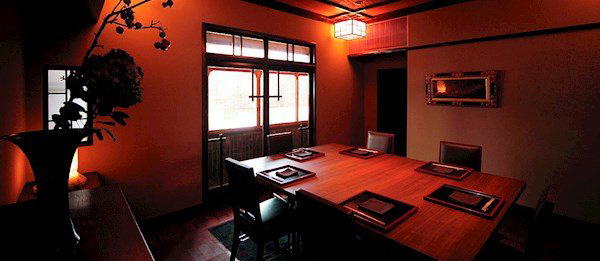
Tranquil and meditative with natural light through shoji screens, tatami mats, hinoki wood elements, and serene river and garden views evoking timeless Japanese elegance.