
Michelin Selected
The Karasuma corridor address puts Nishiki Market, Rokkaku-do, and the main subway spine within walking distance.

Pearl is the En Primeur Club membership app — saves, bookings, and concierge access live there. Same editors, same standards.
- Address
- 149 Honeyacho, Nakagagyo-ku, Kyoto Prefecture, Japan
- Phone
- +81 75-366-2377
- Directions
- Get directions
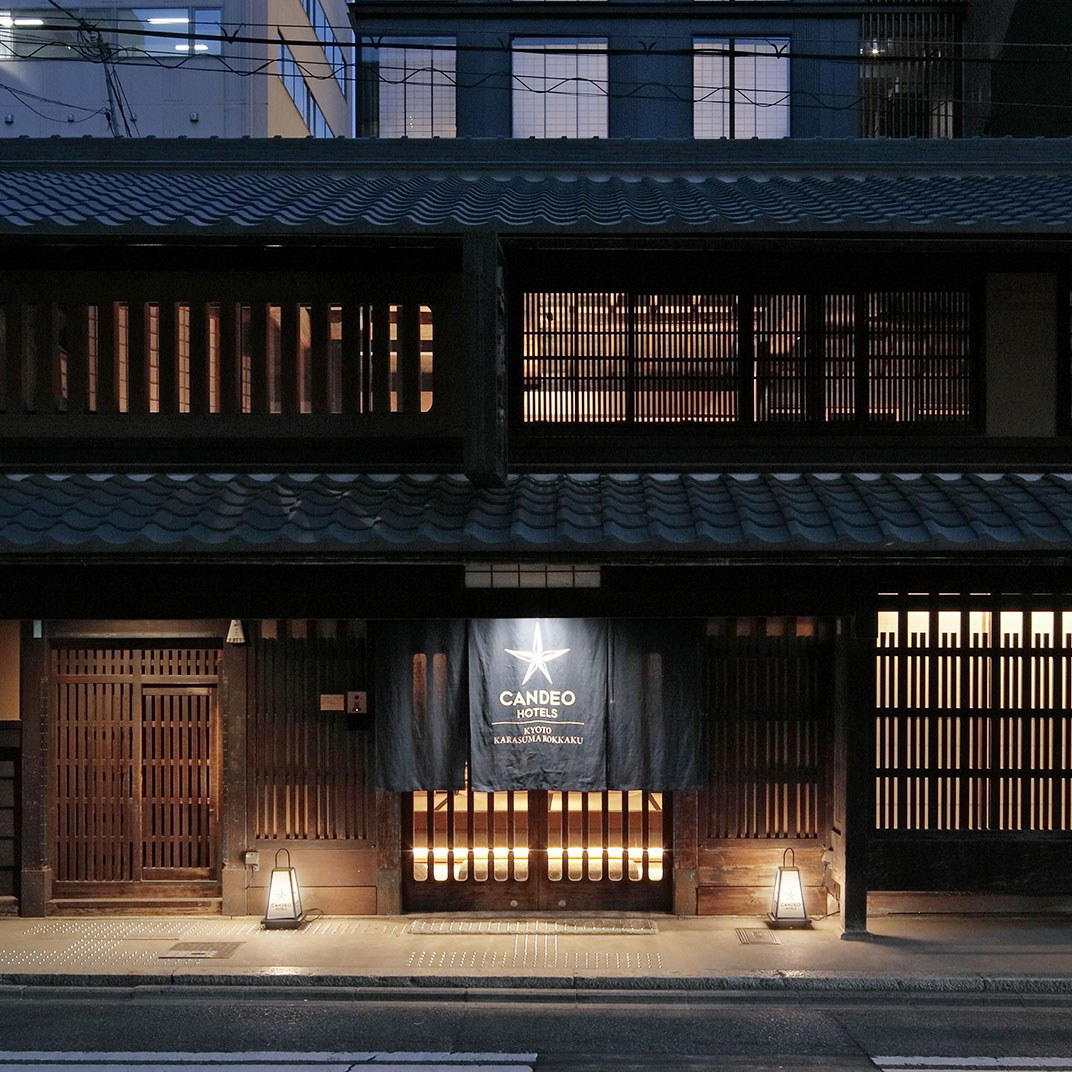
Central Kyoto, on Its Own Terms
Kyoto's hotel market has divided sharply over the past decade. On one side sit the forest-retreat properties, where remoteness and ryokan tradition are the entire product: places like Hoshinoya Kyoto, accessible only by boat, or the hillside enclave of Aman Kyoto. On the other sit city-embedded properties that treat Kyoto's walkable central grid as the amenity itself. Candeo Hotels Kyoto Karasuma Rokkaku belongs firmly to the second category, and the address at 149 Honeyacho, Nakagyo-ku is the argument for staying here.
Nakagyo-ku is the ward that sits between the tourist-heavy southern districts and the quieter residential north, and it contains more of what makes Kyoto legible on foot than almost any other single zone. The Karasuma subway line runs directly beneath the neighbourhood, connecting Shijo in minutes and the city's main Shinkansen terminus at Kyoto Station beyond that. The street-level geography is equally practical: Nishiki Market, the covered food arcade that traces back to the Edo period, is a short walk east; Rokkaku-do, the sixth-century tendai temple whose flower-arranging lineage predates the imperial court's arrival in the city, is effectively at the front door.
What a Central Address Actually Delivers
The editorial case for a centrally-placed hotel in Kyoto is stronger than in most Japanese cities, because Kyoto's most significant sites are distributed across a wide north-south axis. Staying near Karasuma-Oike or Shijo-Karasuma means that the Fushimi Inari shrine complex to the south, the Philosopher's Path and Ginkaku-ji to the northeast, and the Arashiyama bamboo district to the west are all reachable by subway, bus, or a combination of both without the taxi dependency that affects guests at the outer retreats. The Michelin Selected distinction awarded to Candeo Hotels Kyoto Karasuma Rokkaku for 2025 signals that the property clears a baseline quality threshold, but it is the address that defines the offering's logic.
That Michelin Selected status, current as of the 2025 guide cycle, places this property alongside a cohort of Kyoto hotels that the guide's inspectors consider worth recommending on merit. For context, the same 2025 cycle includes properties across a wide range of formats and price points in Kyoto Prefecture, from the intimate machiya conversions of properties like Higashiyama Shikikaboku and Hotel Kanra Kyoto to the internationally-branded full-service hotels such as Four Seasons Hotel Kyoto and Hyatt Regency Kyoto. Candeo's inclusion in that selection reflects recognised standards rather than category leadership, which is an honest position for a hotel that competes on location efficiency rather than on design spectacle or room-count scale.
The Neighbourhood in Detail
Karasuma-Rokkaku as a neighbourhood address rewards guests who read Kyoto as a city of accumulated layers rather than a list of headline shrines. The immediate streets contain workshop-front galleries, centuries-old wagashi confectionery makers, and the kind of tea-house-adjacent cafe culture that has developed in Kyoto's machiya townhouses over the last twenty years. Walking north along Karasuma toward Oike takes you past the Kyoto City Hall and into the gallery-dense Sanjo and Nijo zones. Walking east reaches Teramachi, the covered arcade shopping street, and then the Kamo River embankment, where the city opens up laterally and the eastern hills come into sight.
This access geography contrasts with the situation at design-led retreats positioned further from the city centre. Properties like eph KYOTO and GRANBELL HOTEL KYOTO occupy different neighbourhood positions and attract guests with different priorities. The Candeo address suits the traveller who wants to construct a multi-day itinerary across Kyoto's geographic spread, using the hotel as a logistics base rather than as a destination in itself.
Seasonal Timing and the Central Advantage
The case for a central Nakagyo-ku address intensifies during Kyoto's peak seasons. In late March and early April, when sakura crowds compress the city's most famous viewing sites into a few intense weeks, proximity to the Kamo River embankment and the Okazaki park area becomes genuinely practical rather than merely convenient. The Karasuma subway line fills quickly from peripheral stations during these periods, and guests who board near the Karasuma-Oike hub gain a structural advantage over those commuting from the city's outer accommodation zones.
The same logic applies in November, when koyo foliage draws the year's second major visitor peak. The temples of central and eastern Kyoto, including Chion-in and the Okazaki cluster, are accessible on foot from this address in a way they are not from the southern hotel districts near Toji or from the Arashiyama-area properties. For off-peak travel, the winter months between January and mid-February offer the city's quietest streets and the lowest competition for early-morning entry at sites like Fushimi Inari, reachable in under twenty minutes from Shijo Station a short walk from the hotel.
Placing Candeo in the Broader Japan Context
Within the wider Japanese hotel picture, a Michelin Selected urban business-format property in Kyoto occupies a distinct position from both the high-end ryokan tier and the international luxury tier. For comparison, the design-led onsen retreats that define Japan's premium rural accommodation, places like Gora Kadan in Hakone, Zaborin in Kutchan, or Asaba in Izu, are built around a fundamentally different proposition: the property itself is the experience, and the surrounding landscape is the draw. Urban central properties like Candeo compete on a different axis entirely, where the surrounding city does the work and the hotel functions as a well-positioned, Michelin-validated base. In that narrower competitive frame, the Karasuma Rokkaku address carries weight.
Travellers combining Kyoto with other Japanese destinations will find the Shinkansen access from Kyoto Station, reachable by subway from Karasuma-Oike, puts cities like Osaka, Nara, and Hiroshima within day-trip range. Those building broader Japan itineraries might pair this kind of city-centre Kyoto stay with contrasting accommodation formats elsewhere, whether that means a coastal retreat like Halekulani Okinawa, an art-island property like Benesse House in Naoshima, or the mountain onsen context of Nishimuraya Honkan in Kinosaki-cho.
Planning Your Stay
The hotel sits at 149 Honeyacho in Nakagyo-ku, within walking distance of the Karasuma-Oike and Shijo subway stations on the Karasuma Line. Kyoto Station, the city's main Shinkansen hub, is three stops south on the same line. Booking during peak foliage and sakura windows requires lead time, as the central neighbourhood fills across all hotel categories well in advance of those periods. For the broader Kyoto hotel picture, see our full Kyoto Prefecture guide.
Peers Worth Knowing
Comparable venues nearby, for context on price, style, and recognition.
| Venue | Cuisine | Price | Awards | Notes |
|---|---|---|---|---|
| Candeo Hotels Kyoto Karasuma RokkakuThis venue — the venue you are viewing | Modern ryokan-inspired heritage hotel | $1–100 | Michelin Selected | Not listed |
| Sakura Terrace The Gallery | Contemporary urban retreat blending slow travel philosophy with artistic public spaces | $1–100 | Michelin Selected | Higashikujo |
| Rakuro Kyoto by THE SHARE HOTELS | Contemporary lifestyle hotel sharing with locals | $200–300 | Michelin Selected | Nakagyo-ku |
| GRANBELL HOTEL KYOTO | Modern designer hotel infused with authentic Kyoto Gion charm through collaborations with traditional craft creators. | Not listed | Michelin Selected | Higashiyama |
| Kyo no Ondokoro Kamanza Nijo #2 | Renovated traditional machiya townhouse | Not listed | Michelin Selected | Nakagyo |
| Node Hotel | Contemporary boutique hotel inspired by a private art collector's residence, blending hospitality with curated contemporary art. | $100–200 | Michelin Selected | Shijo Nishinotoin, Nakagyo-ku |
Recognition history
Dated appearances from independent guides and award organizations, with the underlying list record or original source where available.
Michelin Selected
Michelin
Continue exploring
More in Kyoto
Hotels in Kyoto
Browse all →
Bars in Kyoto
Browse all →


Restaurants in Kyoto
Browse all →


Wineries in Kyoto
Browse all →
Details
- Modern
- Elegant
- Cozy
- Sophisticated
- Romantic Getaway
- Business Trip
- Weekend Escape
- Historic Building
- Wi Fi
- Public Bath
- Elevator
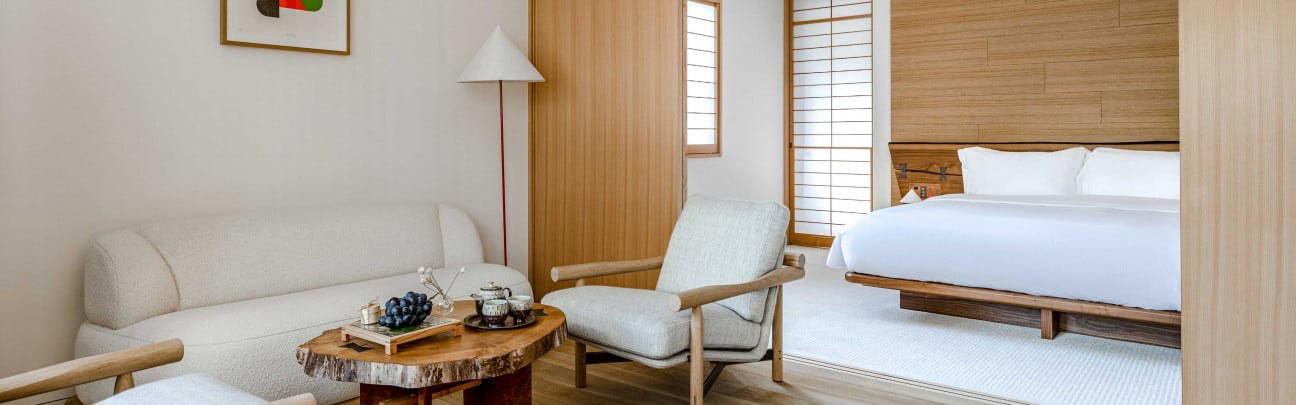
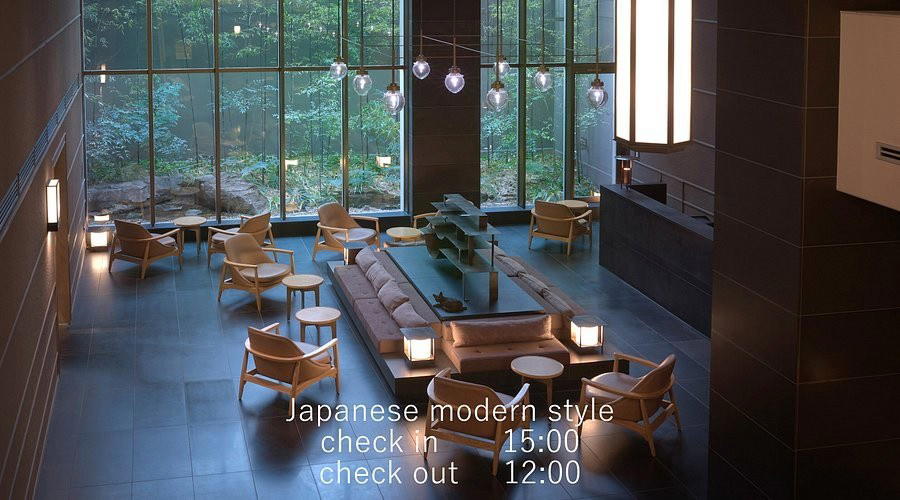
Organic warmth in contemporary-luxe rooms with preserved Meiji-era details in common spaces, featuring a polished marble onsen bath and tatami breakfast room.