


1 Michelin Key · La Liste Top Hotels · Forbes 4-Star
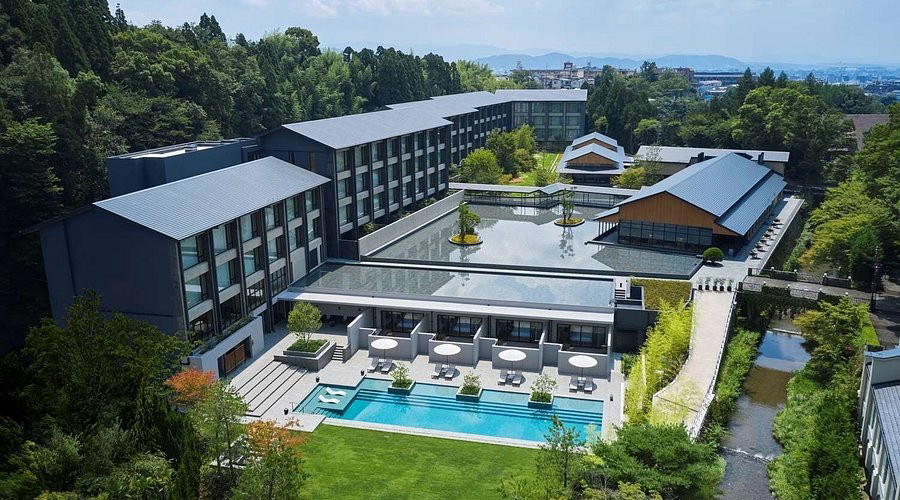
Set on the Hozu River at the foot of Arashiyama, Suiran is a 39-room ryokan-influenced property earning a Michelin 1 Key (2024) and 92.5 points on the La Liste Top Hotels 2026 ranking. Two open-air onsen, a 19th-century dining pavilion, and a teppanyaki restaurant frame an address that puts UNESCO-listed temples and the Sagano Bamboo Forest within walking distance. Complimentary transfers from Kyoto Station ease access to this otherwise quietly positioned western district.

Pearl is the En Primeur Club membership app — saves, bookings, and concierge access live there. Same editors, same standards.
- Address
- 〒616-8385 Kyoto, Ukyo Ward, Sagatenryūji Susukinobabachō, 翠嵐ラグジュアリーコレクションホテル京都
- Phone
- +81 75-872-0101
- Website
- marriott.com
- Directions
- Get directions
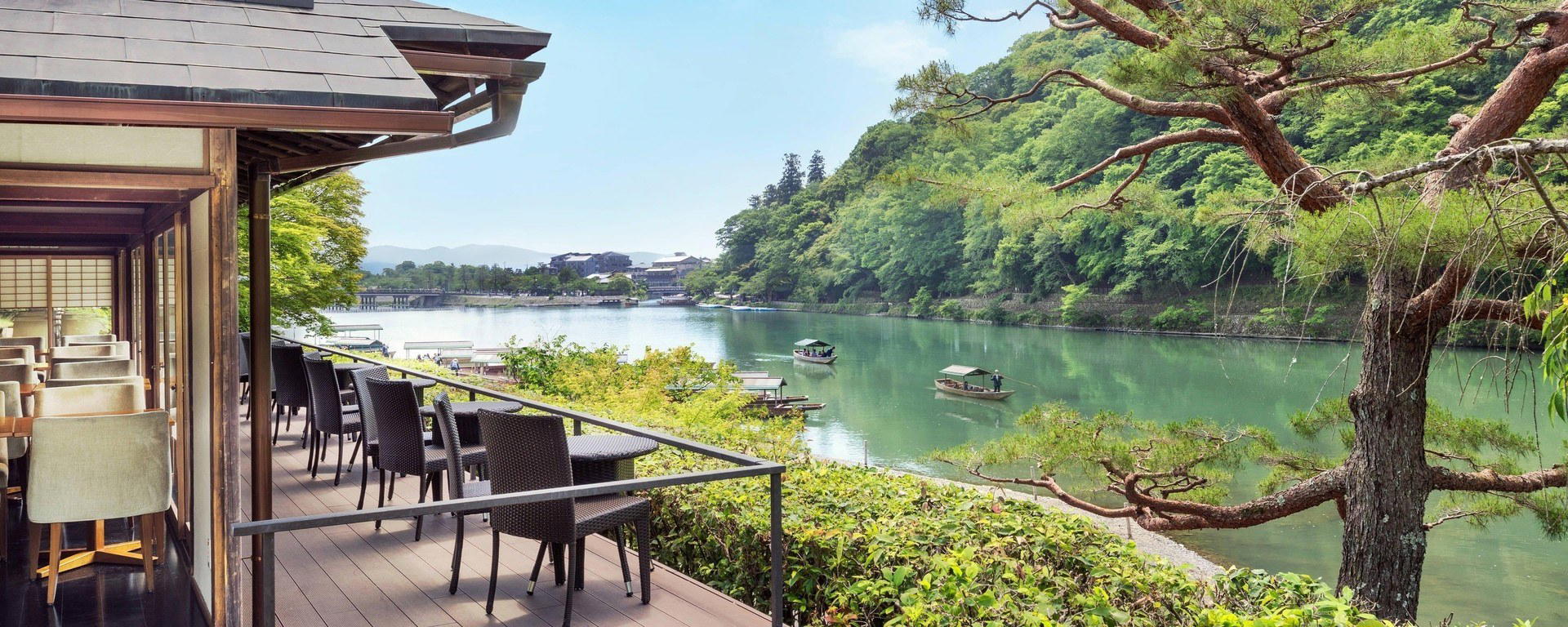
Where the City's West Answers a Different Frequency
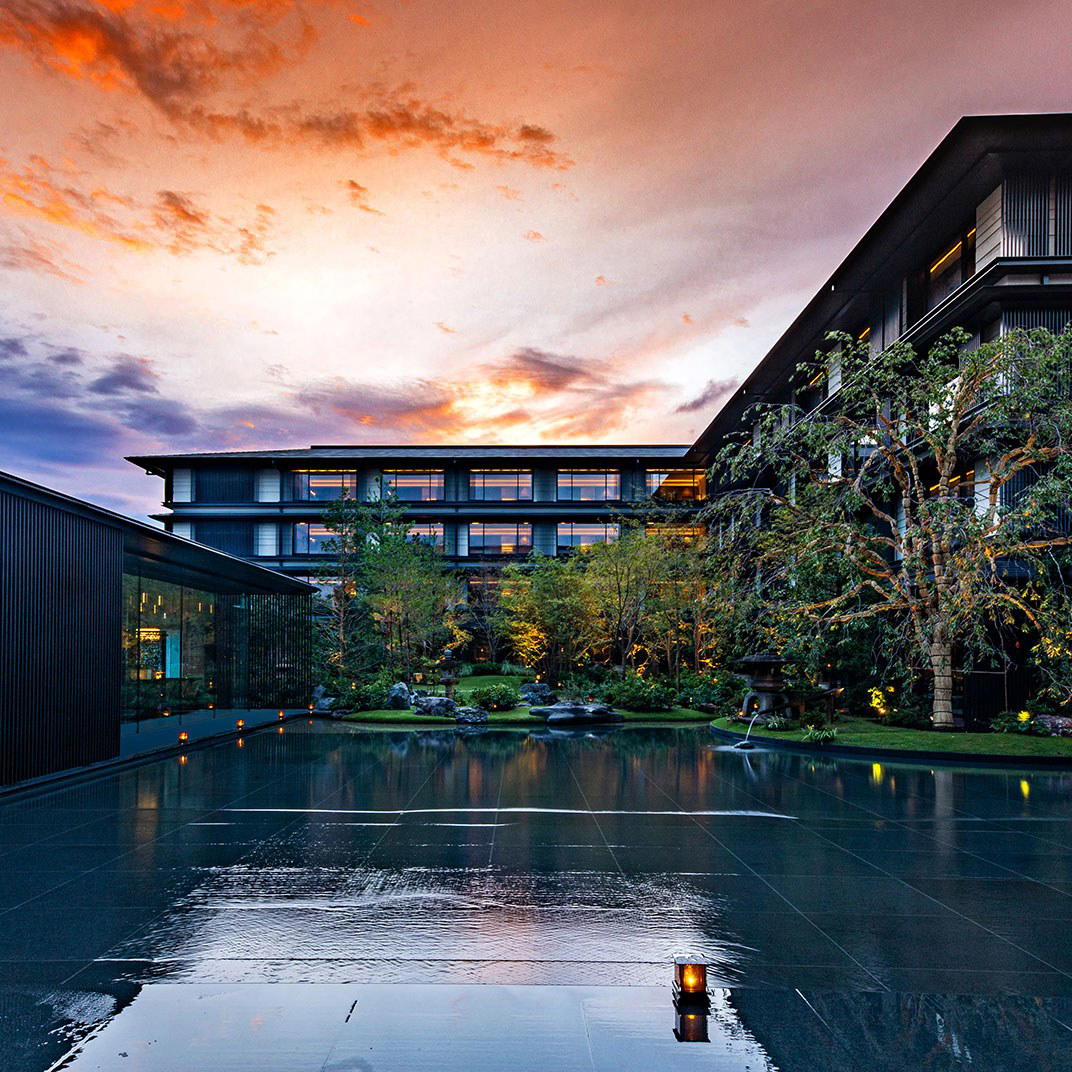
The approach sets the tone before you reach the front desk. A narrow cobbled path runs alongside the Hozu River, old wooden boats moored at its bank, and a thatched gate marks the threshold between Arashiyama's busy tourist circuit and the manicured gardens beyond. Japan's premium ryokan tradition has always understood that arrival is part of the experience, and Suiran — part of Marriott International's Luxury Collection and holder of a Michelin 1 Key (2024) — positions its entrance as the first argument for why location, not room specification, is the primary product here.
Arashiyama sits at Kyoto's western edge, separated from the dense hotel cluster around Higashiyama and Gion by a 30-to-40-minute bus or train ride. That distance is the trade. What the address provides in exchange is direct, walking-level access to a concentration of UNESCO-listed temples, the Hozu River gorge, and the Sagano Bamboo Forest, one of central Japan's most photographed natural corridors. The La Liste Leading Hotels 2026 ranking placed Suiran at 92.5 points, a score that reflects both the quality of the physical product and the pull of its setting.
Arashiyama's Timing Calculus
The Sagano Bamboo Forest is the district's headline draw and its most logistically complicated attraction. Midday visits in spring cherry blossom season or November's koyo (autumn foliage) period bring a density of visitors that works against the quietude the forest is supposed to offer. Suiran's position, essentially on the forest's doorstep, converts what is a crowded experience for most visitors into an early-morning or late-dusk walk before tour groups arrive. That timing access is a structural advantage the hotel's address provides and cannot be replicated by properties in central Kyoto regardless of their category or price.
Autumn and spring mark Arashiyama's two peak windows. Cherry blossoms along the Hozu River and maple canopies framing Tenryu-ji in November attract the highest demand, and Suiran's 39 rooms fill accordingly. Travellers targeting either season should account for the lead time required; the property's limited inventory relative to the district's broader appeal means rooms at peak periods move quickly. Suiran offers complimentary transfers to and from Kyoto Station on arrival and departure, though reservations for this service are required in advance.
Onsen Architecture and the Logic of the Outdoor Bath
Japan's onsen hotel category has a long-standing internal hierarchy: properties with outdoor baths fed by natural spring water sit above those offering only indoor hot spring facilities. Suiran operates two open-air communal onsen drawing on Arashiyama spring water, with views toward the wooded hillside that forms the backdrop of the entire district. A portion of the suites also include private outdoor baths, an amenity that shifts the calculus when choosing a room type.
The room portfolio covers nine distinct configurations. Ground-floor rooms open to private gardens; upper-floor rooms deliver balcony views across the mountain and garden elevation. The Suigetsu rooms carry a deep blue motif referencing a moonlit river, while the Yuzunoha accommodations use neutral tones and tatami floors to create a more classically restrained Japanese interior. All rooms include standard high-specification amenities, flat-screen TVs, fast Wi-Fi, minibars, full air conditioning, and bathrooms are fitted with Japanese-style fixtures and dedicated shower systems. When choosing between room tiers, the delta between standard and suite-level stays is most pronounced in the private onsen access: it changes how the bathing ritual integrates into each day rather than operating as a shared facility on a schedule.
Dining Inside a 19th-Century Summer Home
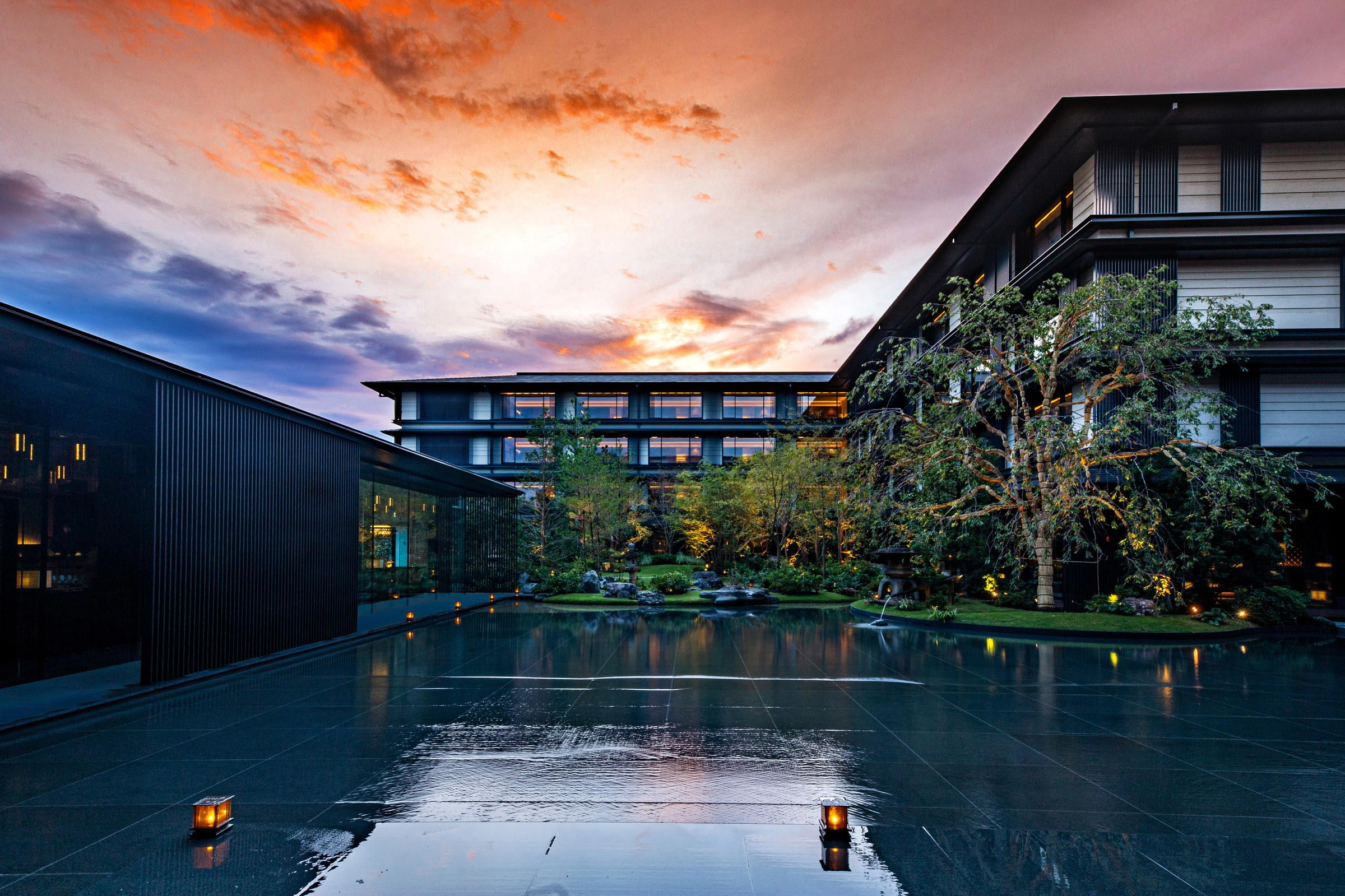
Suiran's dining split between Kyo-Suiran and Kansan maps onto a familiar division in Japanese luxury hospitality: kaiseki-adjacent Japanese cuisine on one axis and teppanyaki on the other. Kyo-Suiran operates in a 19th-century summer home on the property's grounds, a setting that frames traditional Japanese fare with a measured Continental sensibility. The physical space, older than most of Kyoto's luxury hotel stock by decades, carries the kind of atmospheric density that newer purpose-built dining rooms cannot approximate. Kansan's teppanyaki format is built around tableside preparation of premium beef and seafood, with views across the estate grounds providing the backdrop to the counter performance.
Neither restaurant trades on a named chef with an external profile in the way that standalone destination restaurants do. The dining offer here is embedded in the stay, not positioned as the primary reason to visit. That integration is characteristic of the top tier of Japan's ryokan-influenced hotel category, where the meal is one element in a sequenced daily rhythm rather than a standalone reservation.
Where Suiran Sits in Kyoto's Premium Hotel Set
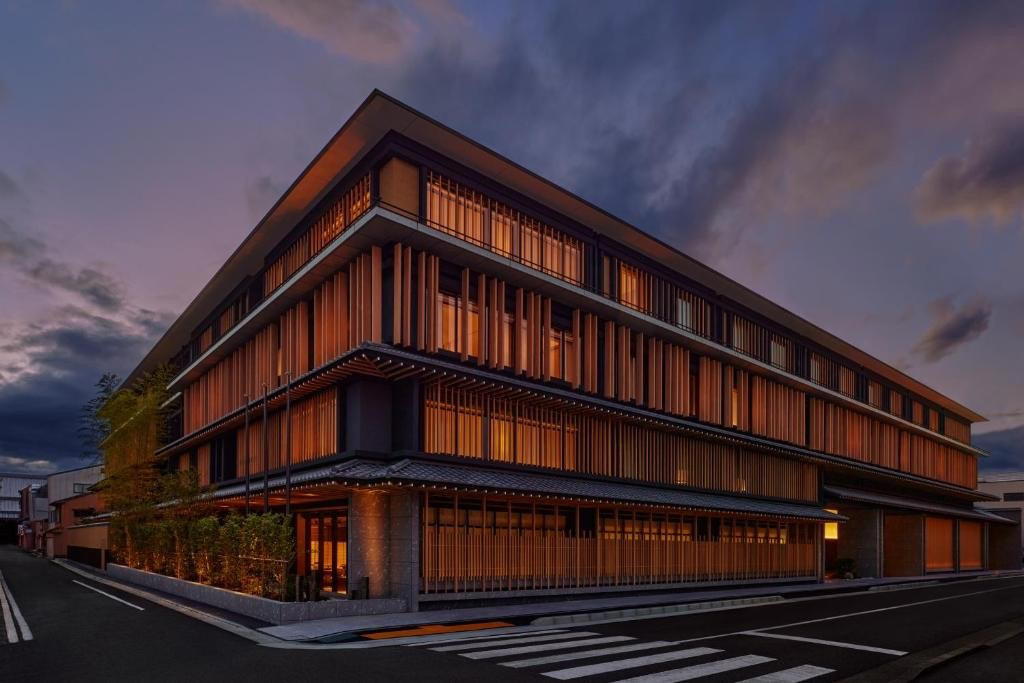
Kyoto's upper bracket of accommodation has split along geographic lines as clearly as it has along brand lines. Properties in the Higashiyama corridor, among them Park Hyatt Kyoto, HOTEL THE MITSUI KYOTO, The Shinmonzen, and SOWAKA, trade on proximity to Gion, the Philosopher's Path, and the eastern shrine circuit. Aman Kyoto, set in a private garden behind Kinkaku-ji, occupies its own distinct northern position. Suiran's Arashiyama placement is the western outlier in that group, and the trade-off is explicit: less access to central Kyoto's restaurant and nightlife density, direct adjacency to what many regard as the city's most atmospheric natural district.
For stays oriented primarily around temple circuits, garden visits, and bamboo forest access, the western location functions as a feature. For guests who want Kyoto's dining scene within walking distance, the 30-to-40-minute transit gap to central areas like Kawaramachi or Pontocho is a practical consideration. Taxis close the time difference significantly. Ace Hotel Kyoto, Four Seasons Hotel Kyoto, and Dusit Thani Kyoto all sit closer to that central infrastructure for comparison. See our full Kyoto restaurants guide for dining context across the city's districts.
Within Japan's broader luxury ryokan-influenced hotel category, Suiran belongs to a cohort that includes properties like Gora Kadan in Hakone, Asaba in Izu, Nishimuraya Honkan in Kinosaki-cho, and Zaborin in Kutchan, each anchored by onsen access and a setting where the natural environment is the principal draw. Internationally branded alternatives in the onsen-adjacent space include Amanemu in Mie and ENOWA Yufu in Yufu. Suiran's Luxury Collection affiliation places it inside an internationally recognised framework while retaining a property character that reads closer to the independent ryokan tier than to the standard international luxury hotel format.
Planning a Stay
Rates start from approximately $886 per night. The 39-room inventory, combined with a scored La Liste ranking and Michelin recognition, means the property operates with limited availability during Kyoto's peak seasonal windows. Guests should reserve rooms with private outdoor onsen well in advance if that amenity is a priority, and note that room-tier differences are meaningful enough to justify reading the specific configuration details at booking. Ground-floor rooms with private gardens and upper-floor rooms with mountain-and-garden balconies represent two structurally different stays within the same property. Complimentary Kyoto Station transfers require advance reservation and apply to arrival and departure only. Beyond the property, public buses and trains connect Arashiyama to central Kyoto in 30 to 40 minutes; taxis reduce that time substantially.
For reference across Japan's luxury hotel range, comparable properties worth considering include Benesse House in Naoshima, Fufu Kawaguchiko in Fujikawaguchiko, Fufu Nikko in Nikko, Sekitei in Hatsukaichi-shi, Halekulani Okinawa, Jusandi in Ishigaki, and Bvlgari Hotel Tokyo. For those extending travel internationally, Aman New York, The Fifth Avenue Hotel in New York City, and Aman Venice occupy a comparable tier in their respective cities.
Comparable Venues
Comparable venues nearby, for context on price, style, and recognition.
| Venue | Cuisine | Price | Awards | Notes |
|---|---|---|---|---|
| Suiran, a Luxury Collection Hotel, KyotoThis venue — the venue you are viewing | Traditional Japanese luxury ryokan blended with modern amenities | Not listed | 1 Michelin Key · La Liste Top Hotels | Not listed |
| Six Senses Kyoto | Modern luxury ryokan-inspired with Heian period reinterpretations and Tale of Genji folklore. | $1,000–1,500 | 1 Michelin Key · Mr & Mrs Smith Seal of Approval | Higashiyama |
| The Ritz-Carlton, Kyoto | Japanese-inspired urban resort | $500–750 | 1 Michelin Key · La Liste Top Hotels | Nakagyō |
| Hoshinoya Kyoto | luxury hybrid ryokan blending traditional Japanese architecture with modern comforts | $750–1,000 | 1 Michelin Key · Tatler Listed in Best Hotels Asia-Pacific | Nishikyō |
| Banyan Tree Higashiyama Kyoto | Contemporary Japanese luxury ryokan with natural hot springs | Not listed | 1 Michelin Key · Mr & Mrs Smith Seal of Approval | Higashiyama |
| MUNI KYOTO by Onko Chishin | Contemporary luxury riverside retreat blending Japanese tranquility with modern design | Not listed | 1 Michelin Key · Michelin Guide New Hotels New Hotel | Ukyō |
Recognition history
Dated appearances from independent guides and award organizations, with the underlying list record or original source where available.
Michelin 1 Key
Michelin
La Liste Top Hotels
La Liste
Forbes 4-Star
Forbes
Full recognition history (6 entries)
Forbes 4-Star
Forbes
Michelin 1 Key
Michelin
Michelin 1 Key
Michelin
Continue exploring
More in Kyoto
Hotels in Kyoto
Browse all →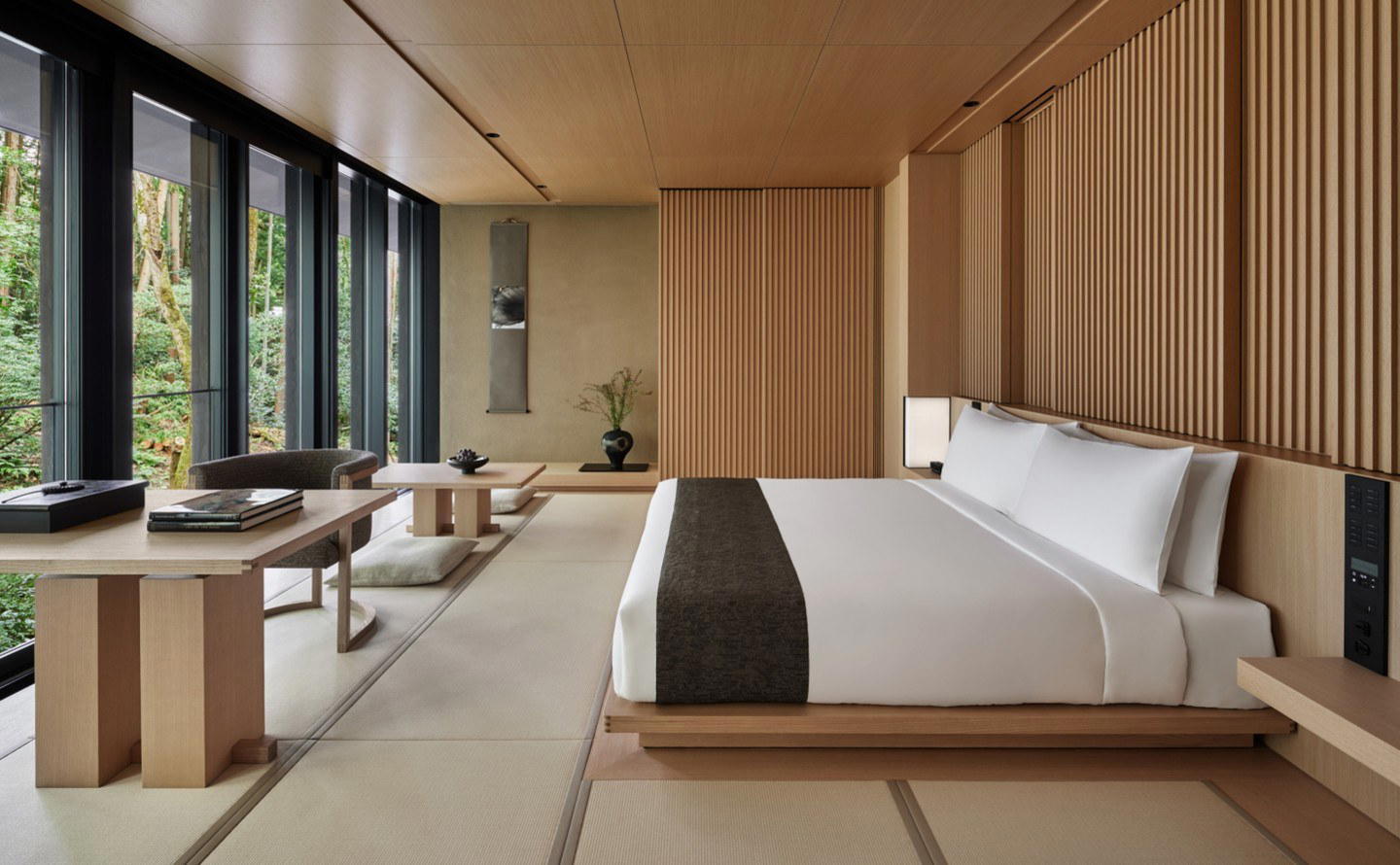
Bars in Kyoto
Browse all →
Restaurants in Kyoto
Browse all →
Wineries in Kyoto
Browse all →
Details
- Elegant
- Quiet
- Scenic
- Sophisticated
- Ornate
- Honeymoon
- Romantic Getaway
- Wellness Retreat
- Anniversary
- Garden
- Historic Building
- Panoramic View
- Spa
- Pool
- Wi Fi
- Room Service
- Concierge
- Restaurant
- Fitness Center
- Garden
- Mountain
- Wheelchair Accessible
- Elevator
- Accessible Parking
- Step Free Entrance
Serene and restful with minimalist Japanese decor, peaceful garden and river views, and tranquil hot spring atmosphere.