


1 Michelin Key · La Liste Top Hotels · Forbes 5-Star
Positioned at the northern edge of Kyoto where the city gives way to forested mountain slopes, ROKU KYOTO, LXR Hotels & Resorts holds a Michelin One Key and a La Liste Top Hotels score of 91.5 points (2026). Its 114 rooms synthesise ryokan discipline with resort-scale facilities, including a hot-spring-heated pool and cultural programming that runs from the tea ceremony to pottery. The restaurant and chef's table bridge French and Japanese culinary traditions.

Pearl is the En Primeur Club membership app — saves, bookings, and concierge access live there. Same editors, same standards.
- Address
- 44-1 Kinugasa Kagamiishichō, Kita Ward, Kyoto, 603-8451
- Phone
- +81 75-320-0111
- Website
- hilton.com
- Directions
- Get directions
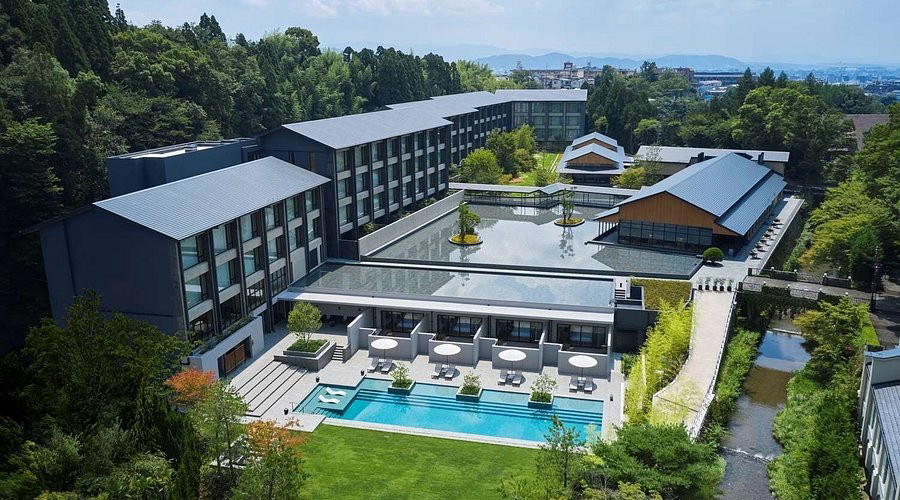
Mountain Edge, Ancient City: The Setting That Defines the Property
Kyoto's premium hotel market has split decisively between two geographic camps: central properties that trade on walkable proximity to Higashiyama temples and the Gion entertainment district, and northern fringe properties that offer something harder to price — quiet, forest adjacency, and the sense of departure from the city's tourist infrastructure. ROKU KYOTO, LXR Hotels & Resorts belongs firmly to the second camp. Its address in Kita Ward, at 44-1 Kinugasa Kagamiishichō, places it at the threshold where Kyoto's urban fabric dissolves into the wooded slopes of the Kitayama mountains, the same terrain that frames Ryoanji and Kinkakuji to the south. The approach matters here: arriving from central Kyoto, the density of the city loosens noticeably, replaced by the cedar and bamboo that line the roads into Kita Ward.
That geography is not incidental to the property's design identity — it is the design's primary argument. Where Park Hyatt Kyoto positions itself against the layered historical density of the Higashiyama hills and Four Seasons Hotel Kyoto draws on a 800-year-old inner garden, ROKU KYOTO anchors its aesthetic in the living forest that surrounds it. The LXR Hotels & Resorts framework, part of the Hilton group's upper-luxury tier, typically signals properties where locational identity takes precedence over brand uniformity, and this Kyoto outpost fits that brief.
Where Ryokan Discipline Meets Resort Infrastructure
Japan's premium accommodation market has been working through a productive tension for roughly two decades: international travellers want hot-spring access, refined kaiseki-adjacent dining, and tatami-floor aesthetics, but they also want all-day room service, fitness facilities, and the booking legibility of a globally recognised brand. Traditional ryokan operators, including properties like Nishimuraya Honkan in Kinosaki-cho and Asaba in Izu, serve the former without compromise. International hotel groups typically cover the latter. ROKU KYOTO attempts the synthesis across 114 rooms.
The facilities reflect both sides of that equation. A swimming pool heated by a natural hot spring occupies a category that few Kyoto hotels can match, geothermal water access in a city hotel is rarer than in the onsen resort towns of Hakone or Beppu, where properties like Gora Kadan and ENOWA Yufu have direct access to volcanic water sources. In Kyoto, it is a genuine amenity distinction. The cultural programming, pottery, paper-making, and the tea ceremony among the listed offerings, represents a different kind of facility: structured access to craft traditions that are, in the surrounding neighbourhood, still practiced in active workshops rather than staged for visitors.
The Design Logic: Framing the Forest
The editorial angle that most clearly separates ROKU KYOTO from its Kyoto competitors is architectural positioning. The property's design language engages with the forested setting through a materiality that corresponds to the natural environment rather than contrasting with it. This approach has parallels elsewhere in Japan's landscape-anchored luxury tier: Aman Kyoto deploys a similar strategy with its moss garden and stone architecture absorbed into the Okitayama forest, and Benesse House in Naoshima takes the premise further still, integrating contemporary art into an island landscape. ROKU KYOTO operates at a different scale and with different institutional backing, but the underlying logic, that the natural setting is the primary design element, and architecture serves to frame rather than dominate it, connects it to a coherent tradition of Japanese resort design.
Michelin One Key awarded in 2024 recognises hotels that meet Michelin's criteria for quality of welcome, service, and overall experience, a different measure from the restaurant star system, but one that carries comparable institutional weight in travel circles. La Liste's 91.5-point score in its 2026 Leading Hotels ranking places ROKU KYOTO in a bracket where peer comparison includes properties across Japan's premium mountain and forest resort segment, from Zaborin in Hokkaido to Fufu Kawaguchiko near Mount Fuji. The score signals consistent service execution across the criteria La Liste uses, an important marker in a city where Kyoto's hotel quality range runs from heritage machiya guesthouses to full international luxury operations.
Food and Drink: The French-Japanese Axis
Dining program across ROKU KYOTO's restaurant, bar, and chef's table works within a Franco-Japanese framework that has become more legible as a category in Japan over the past decade. This is not fusion in its original, imprecise meaning, it is a specific culinary tradition with deep roots in Kyoto itself, where French-trained Japanese chefs have been producing this register of cooking since the late twentieth century. The chef's table format, as deployed across Japan's premium hotel tier, tends to serve a different function than the main restaurant: it is where seasonal produce and technique specificity are pushed further, and where the cooking becomes closer to the kaiseki philosophy of small, sequenced courses built around what is available and correct for the time of year.
For context on Kyoto's dining character more broadly, see our full Kyoto restaurants guide.
Situating ROKU KYOTO in Kyoto's Competitive Field
Kyoto's top-tier hotel market now includes a range of properties that each occupy a distinct position. HOTEL THE MITSUI KYOTO operates at the intersection of heritage architecture and contemporary luxury within the city centre. SOWAKA and The Shinmonzen work the intimate, curated-design end of the market with lower key counts and boutique-level personalisation. Ace Hotel Kyoto and Dusit Thani Kyoto serve different international brand identities. ROKU KYOTO's position, with 114 rooms, full resort facilities, an LXR/Hilton affiliation, two independent quality awards, and a mountain-edge location, puts it in a tier where the relevant comparisons are not other Kyoto city-centre hotels but rather Japan's broader landscape-positioned luxury properties.
Among those, properties like Amanemu in Mie and Halekulani Okinawa demonstrate how the Japanese market has developed a coherent luxury segment built on natural-environment access combined with exacting service standards. ROKU KYOTO delivers that proposition in a city context, which is a meaningful distinction: guests gain onsen pool access and forest proximity without sacrificing the cultural density that makes Kyoto worth visiting over Japan's more remote resort destinations. The temples of Ryoanji and Kinkakuji are accessible from the northern address without requiring a full city transit crossing.
Planning Your Stay
ROKU KYOTO sits in Kita Ward in northern Kyoto, around fifteen minutes by taxi from Kyoto Station. The property operates under the LXR Hotels & Resorts framework within the Hilton portfolio, so Hilton Honors members can book and earn points through standard Hilton channels. Cultural programming, tea ceremony, pottery, paper-making, is available on-property, reducing the need to arrange those experiences independently in the city.
What It’s Closest To
Comparable venues nearby, for context on price, style, and recognition.
| Venue | Cuisine | Price | Awards | Notes |
|---|---|---|---|---|
| ROKU KYOTO, LXR Hotels & ResortsThis venue — the venue you are viewing | Mountain resort blending Japanese artisanship with modern luxury | Not listed | 1 Michelin Key · La Liste Top Hotels | Not listed |
| Six Senses Kyoto | Modern luxury ryokan-inspired with Heian period reinterpretations and Tale of Genji folklore. | $1,000–1,500 | 1 Michelin Key · Mr & Mrs Smith Seal of Approval | Higashiyama |
| MUNI KYOTO by Onko Chishin | Contemporary luxury riverside retreat blending Japanese tranquility with modern design | Not listed | 1 Michelin Key · Michelin Guide New Hotels New Hotel | Ukyō |
| Garrya Nijo Castle Kyoto | Modern Japanese luxury boutique blending tradition and contemporary design | Not listed | 1 Michelin Key | Nakagyō |
| The Ritz-Carlton, Kyoto | Japanese-inspired urban resort | $500–750 | 1 Michelin Key · La Liste Top Hotels | Nakagyō |
| Genji Kyoto | Contemporary Japanese sanctuary inspired by the Tale of Genji | $500–750 | 1 Michelin Key · Design Hotels Member | Shimogyō |
Recognition history
Dated appearances from independent guides and award organizations, with the underlying list record or original source where available.
Michelin 1 Key
Michelin
La Liste Top Hotels
La Liste
Forbes 5-Star
Forbes
Full recognition history (5 entries)
Michelin 1 Key
Michelin
Michelin 1 Key
Michelin
Continue exploring
More in Kyoto
Hotels in Kyoto
Browse all →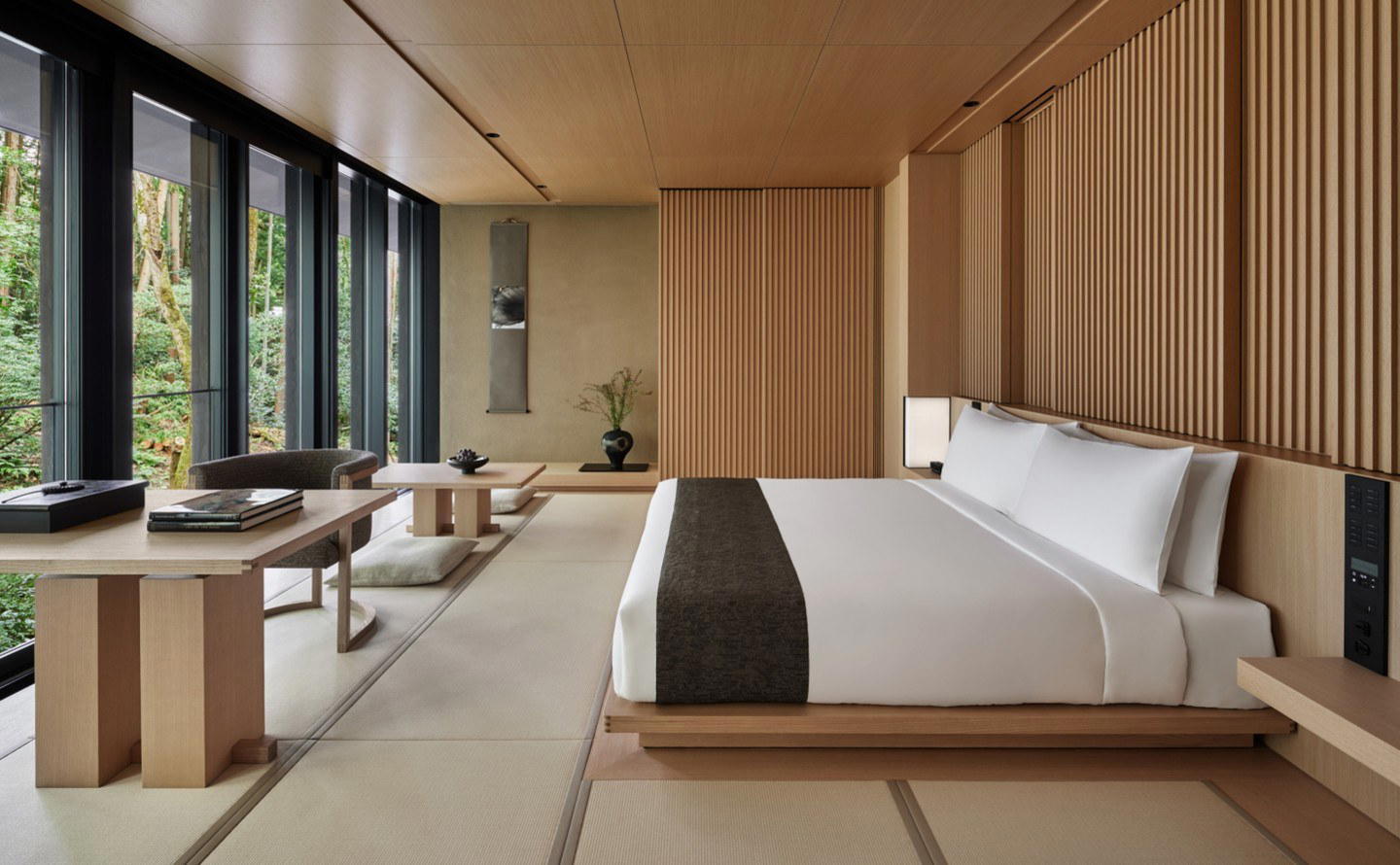
Bars in Kyoto
Browse all →
Restaurants in Kyoto
Browse all →
Wineries in Kyoto
Browse all →
Details
- Quiet
- Elegant
- Scenic
- Sophisticated
- Minimalist
- Honeymoon
- Romantic Getaway
- Wellness Retreat
- Anniversary
- Garden
- Panoramic View
- Pool
- Spa
- Fitness Center
- Room Service
- Concierge
- Wi Fi
- Garden
- Mountain
- Garden
- Wheelchair Accessible
- Elevator
- Step Free Entrance
- Accessible Parking
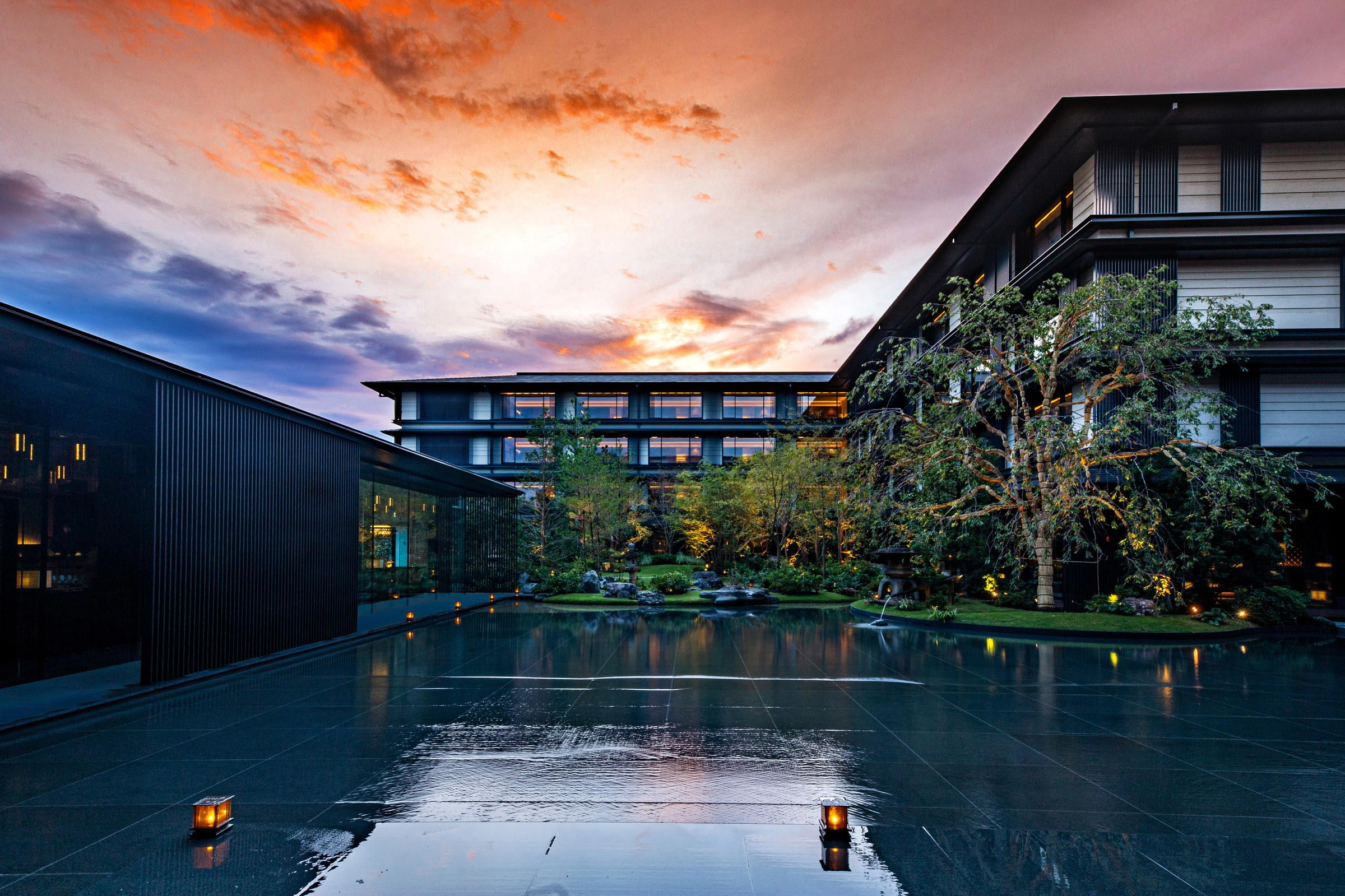
Calm and restorative with natural light from reflecting pools, light woods, subtle lighting, and serene mountain views creating understated luxury.