





2 Michelin Keys · World's 50 Best #74 · La Liste Top Hotels
Set against the forested northeastern hills of Kyoto, Aman Kyoto occupies a former garden site tied to the Rinpa school of painting, with 26 suites designed by the late Kerry Hill in black timber pavilions. Awarded Michelin 2 Keys (2024), ranked #74 on World's 50 Best Hotels (2025), and priced from $3,675 per night, it sits at the quieter, more austere end of Kyoto's luxury accommodation market.

Pearl is the En Primeur Club membership app — saves, bookings, and concierge access live there. Same editors, same standards.
- Address
- 1 Okitayama Washimine-cho, 大北山鷲峯町 北区 京都市 京都府 603-8458
- Phone
- +81 75-496-1333
- Website
- aman.com
- Directions
- Get directions
Forest First: Arriving at the Northeastern Edge of Kyoto
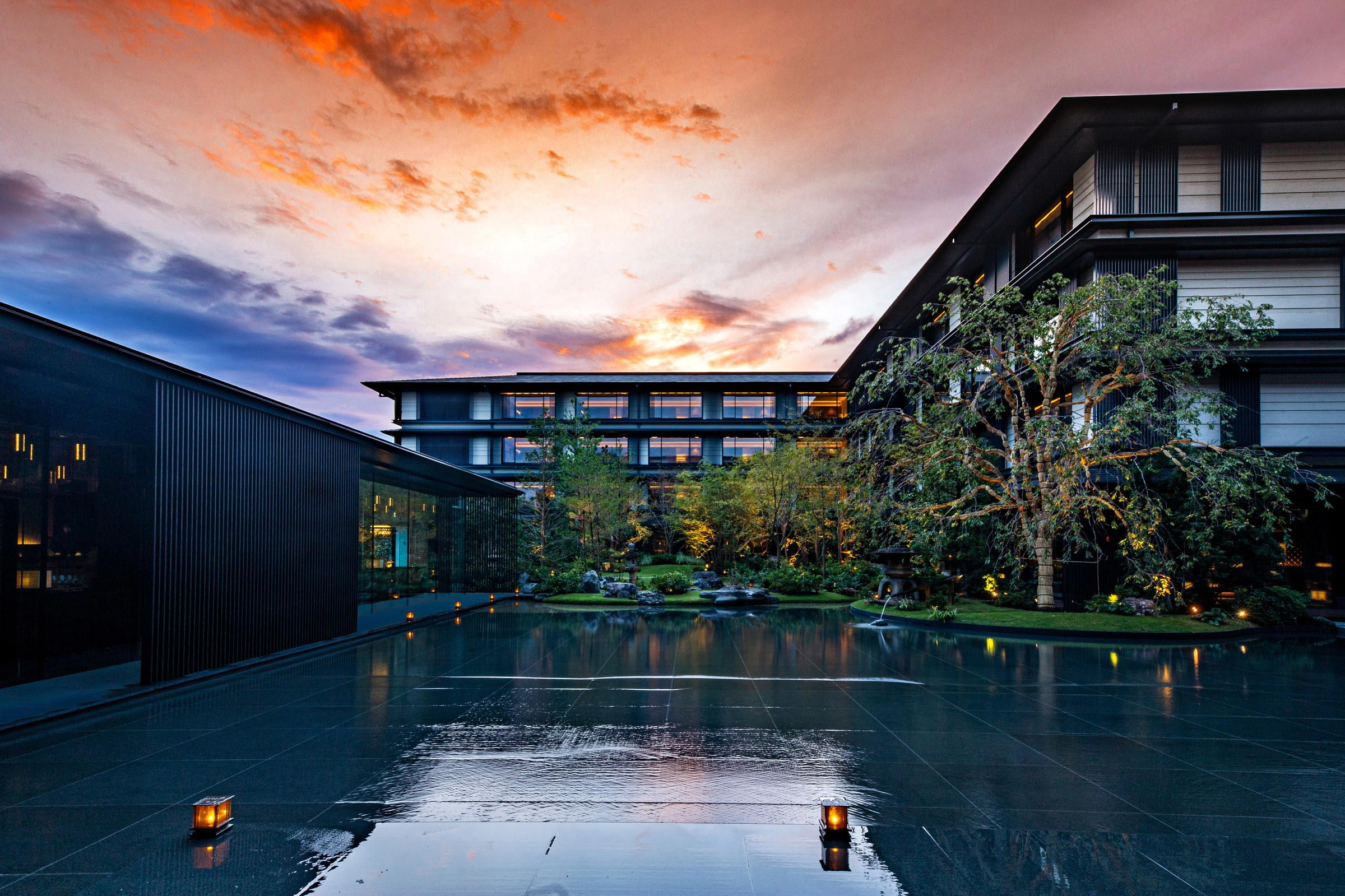
The approach tells you what kind of property this is before you reach reception. The northeastern corner of Kyoto, where the city gives way to wild mountain forest above the Kinkaku-ji district, has always operated on a different tempo from the crowded Higashiyama slopes or the canal-lined streets of Gion. Here, the ambient noise drops, the canopy thickens, and the sense of the city receding is not theatrical — it is simply geographical. Aman Kyoto sits at the foot of that shift, on grounds first conceived as the garden of a textile museum, on land historically connected to the Rinpa school of painting that flourished some four centuries ago. The site carries that lineage quietly: moss-covered stone slabs, whimsical pathways that curve along the forest floor, a garden that wavers between cultivated and genuinely wild.
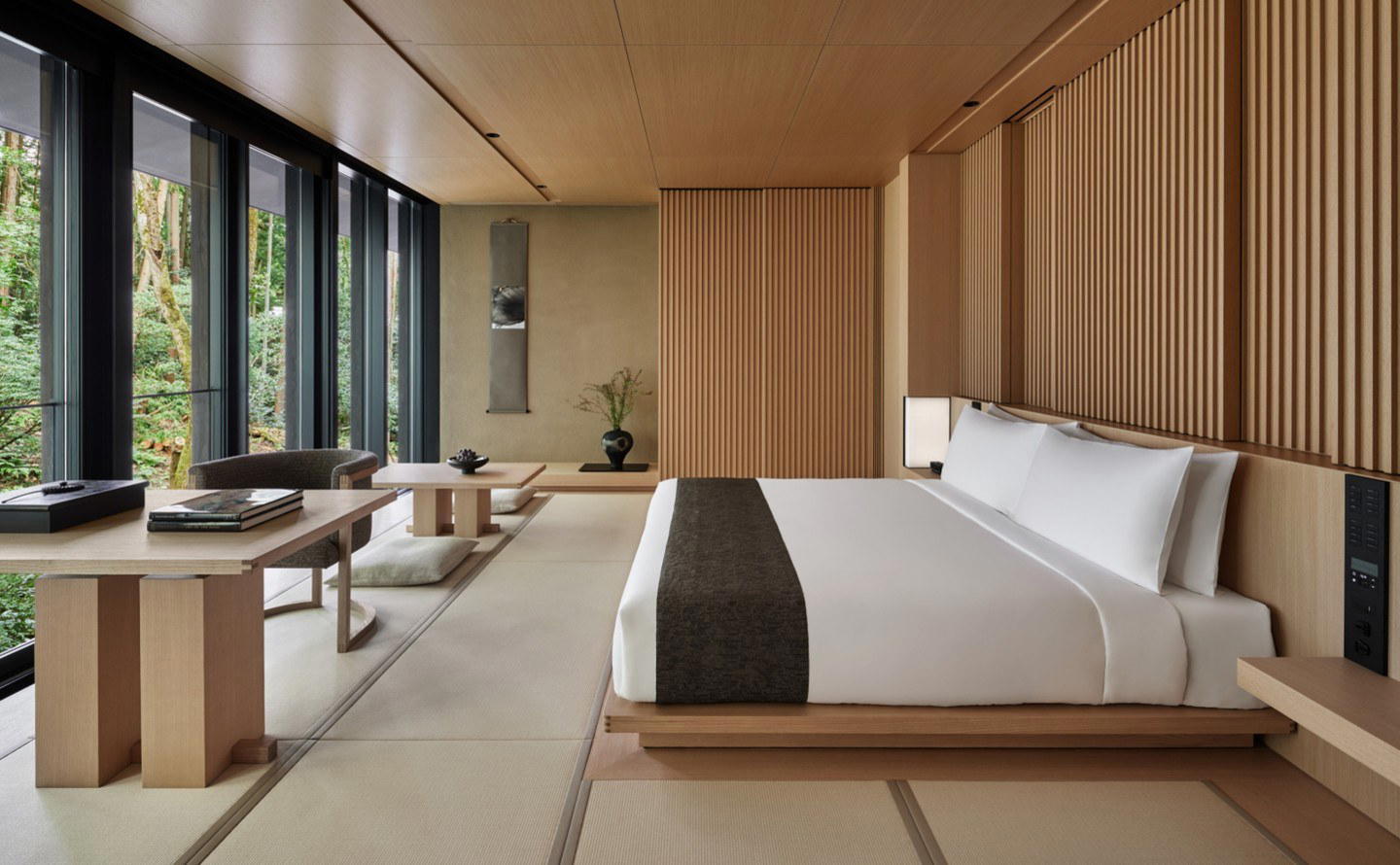
Kerry Hill's architecture, the late architect's signature haute-minimalist vocabulary, reads as an extension of the terrain rather than an imposition on it. Black timber pavilions sit low and deliberately unshowy against the tree line. The 26 suites — some with tatami floors and hinoki cypress bathtubs, some in a Western furniture configuration, are oriented toward garden, mountain, or city views, and the freestanding pavilions occupy the property's most refined positions.
How Aman Kyoto Sits in Kyoto's Luxury Hotel Market
Kyoto's upper tier of international hotels has expanded considerably in recent years. Four Seasons Hotel Kyoto operates on a larger footprint near Sanjusangen-do, with a substantial pool and full-service proposition pitched at families and larger groups. Park Hyatt Kyoto anchors itself in the Higashiyama hills, closer to the traditional craft shops and temple circuits of the eastern ward. HOTEL THE MITSUI KYOTO draws on its historic site near Nijo Castle. Each operates within a different set of priorities. Aman Kyoto's competitive set is deliberately smaller: 26 keys, a remote garden setting, and an operating philosophy that treats the absence of pool and large lobby as features rather than omissions. The spring-fed onsen alongside the spa, the mindfulness sessions, the understated omotenashi of the staff, these are positioned as the substance, not the supplement. The property holds Michelin 2 Keys (2024), ranks #74 on the World's 50 Best Hotels list (2025), and scored 97.5 points on La Liste's Leading Hotels ranking for 2026, credentials that place it in a peer conversation with properties like Amanemu in Mie, Aman's own ryokan-inflected property on the Shima Peninsula, rather than with the larger international brands operating in central Kyoto.
Smaller boutique properties in Kyoto, such as SOWAKA in Gion and The Shinmonzen, offer a different version of intimacy, one embedded in the urban fabric of the old city rather than removed from it. Both directions have their logic. Aman Kyoto's argument is that the forest and the garden are the point, not the setting.
Daytime at Aman Kyoto: The Garden as Program
The editorial angle of a stay here shifts depending on when you engage with the property most actively. During daylight hours, the grounds themselves function as the primary experience. The moss-covered pathways and stone garden, set on land connected to the Rinpa artistic tradition, repay slow, repeated attention across different weather conditions and seasons. Kyoto's autumn foliage season, running roughly from mid-November through early December, draws significant visitor pressure across the city's temples and shrine circuits, but the Aman grounds operate on a private, low-density schedule that the broader temple circuit cannot replicate. Spring cherry blossom timing, typically late March to mid-April in this part of Honshu, has a different effect: the forest light changes and the garden reads differently again. The property surrounds guests with seventeen UNESCO World Heritage Sites within the immediate area, Kinkaku-ji among the closest, which means daytime excursions require almost no transit time. Guests returning to a quiet private garden after the crowds of Kinkaku-ji is part of the property's practical logic, not just its aesthetic one.
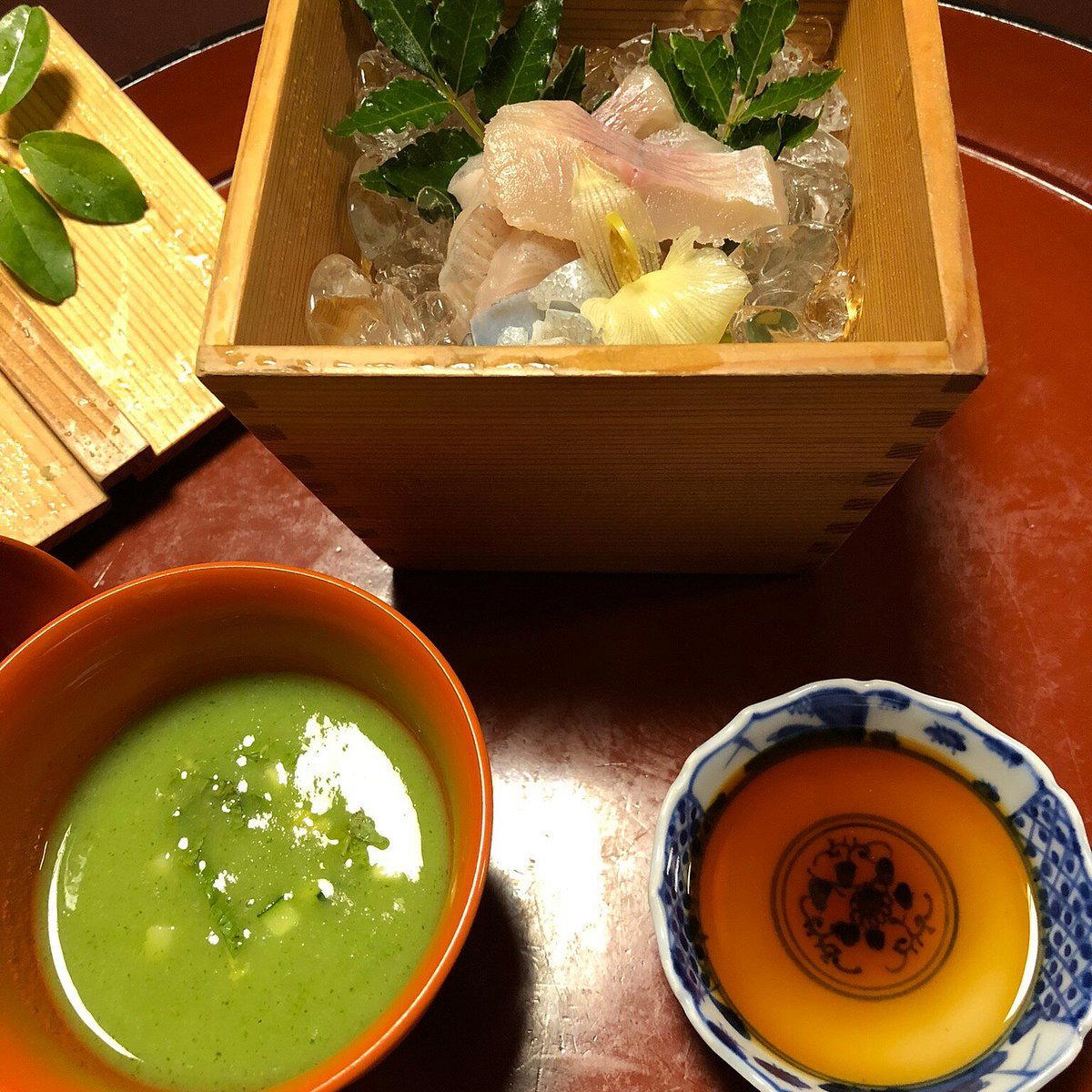
The Living Pavilion by Aman, the property's main restaurant, serves Kyoto-style cuisine sourced from local purveyors, and its daytime configuration, lighter meals, garden adjacency, sits in a different register from the kaiseki formality of Taka-an, where meticulous multi-course craft anchors the evening program. This split between the two restaurants reflects a broader pattern in serious Kyoto hospitality: daytime is for movement and observation; evening is when the formal culinary tradition comes forward. The kaiseki format at Taka-an aligns with the classical structure of Kyoto's ryokan dining tradition, where the meal is paced over several hours and each course responds to the season in ingredient and presentation. Guests who engage with both spaces across a multi-night stay will find the daytime ease of the Living Pavilion and the evening deliberateness of Taka-an function as distinct registers of the same overall philosophy.
Evening at Aman Kyoto: The Formal Turn
Japanese luxury hospitality has a long tradition of evening as arrival, the point at which the full domestic ritual of the ryokan, the kaiseki meal, the onsen sequence, comes into focus. Aman Kyoto operates within that tradition while housing it in a contemporary framework. The hinoki bathtubs in the suites, the spring-fed onsen alongside the spa, and the formal kaiseki service at Taka-an together constitute an evening program that is closer to a structured cultural experience than a hotel amenity checklist. This is not unusual at the top of Japan's inn and hotel spectrum, Gora Kadan in Hakone, Asaba in Izu, and Zaborin in Hokkaido all operate on similar evening-centered logic, but Aman Kyoto delivers it within a framework of Kerry Hill's minimalist architecture rather than the traditional machiya or ryokan vernacular.
For guests arriving in autumn or during winter, when Kyoto's days are short and the mountain forest behind the property carries a particular stillness, the evening program has a different weight than it does in the busier spring season. The spa's mindfulness sessions and the onsen become primary rather than supplementary. The World Travel Awards named Aman Kyoto Japan's Leading Boutique Hotel for 2025, a designation that reflects the property's positioning as a specialist offering rather than a full-service resort.
Getting There and Planning the Stay
Aman Kyoto is approximately 30 minutes by car from Kyoto Station, placing it at the practical edge of convenient reach for guests arriving by Shinkansen from Tokyo or Osaka. From Kansai International Airport, the journey runs to approximately two hours by car or 90 minutes by express train; from Osaka's Itami Airport, it is approximately one hour by car. The northeastern location, close to Kinkaku-ji and within reach of the broader Kitayama and Kita ward temple circuits, means the property works well as a base for guests whose Kyoto priorities run toward the quieter, less trafficked northern and northwestern sites rather than the dense eastern wards around Gion and Higashiyama. Guests who need both can combine a night or two here with a property closer to the old city, such as Fufu Kyoto or Dusit Thani Kyoto, though the contrast in pace and density between the two types of property is considerable.
Within the broader Aman portfolio in Japan, Kyoto is the most forest-immersive of the three domestic properties. Amanemu in Mie operates in a ryokan-style idiom on the Shima Peninsula, while Aman Tokyo is a high-rise urban property. Guests comparing approaches across the Japanese network will find the three occupy genuinely distinct positions. For a broader view of how Aman operates globally, the Aman New York and Aman Venice properties provide useful points of comparison at very different scales and urban contexts.
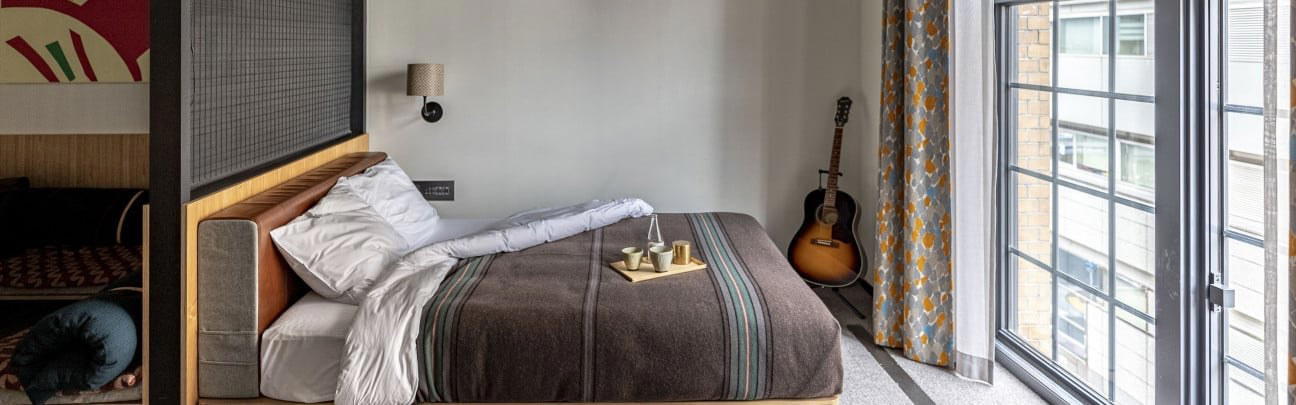
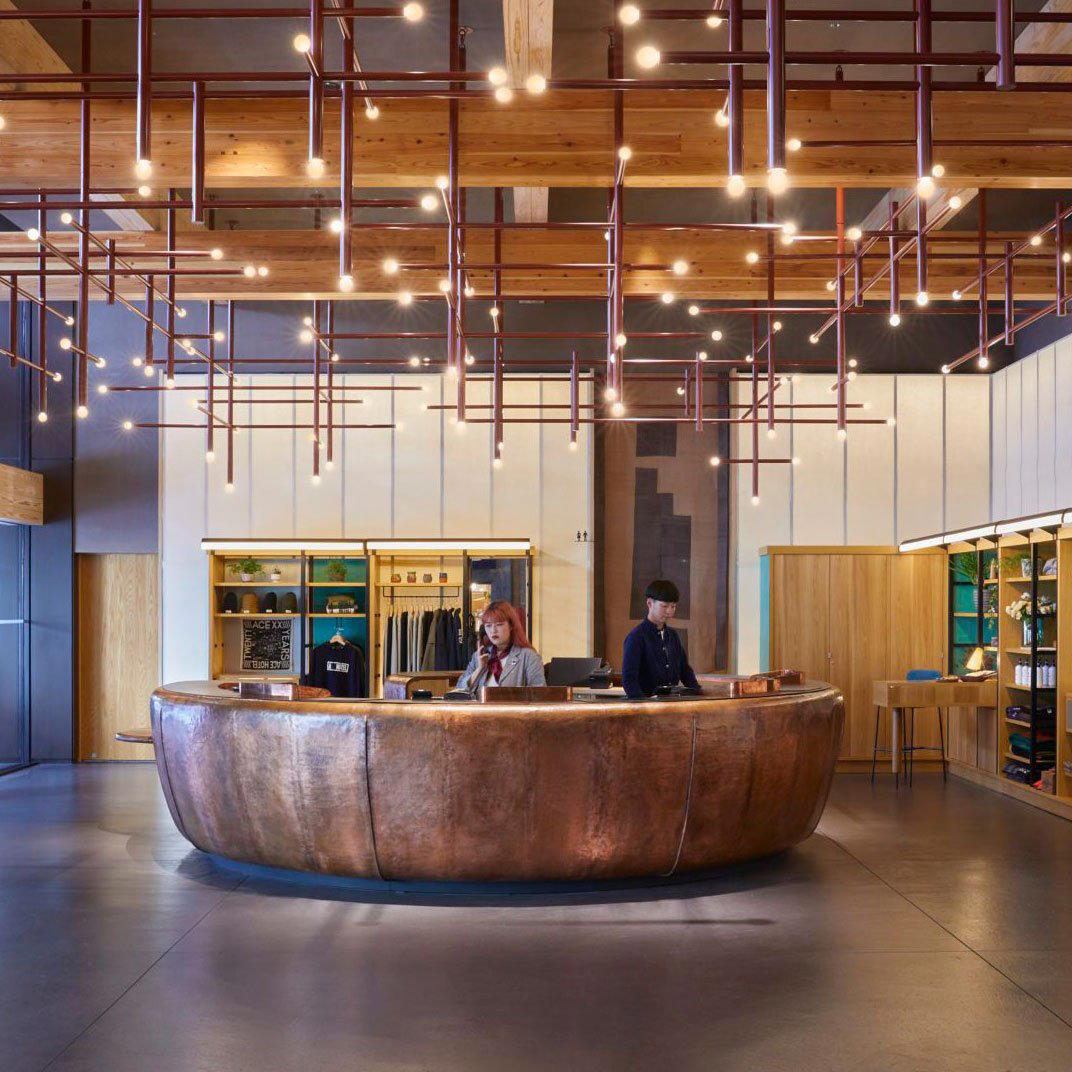
Our full Kyoto restaurants and hotels guide covers the broader city in more detail, including properties at different price points and in different neighbourhoods. Other design-led properties worth considering in the Japan luxury circuit include Benesse House in Naoshima, ENOWA Yufu in Yufu, and Ace Hotel Kyoto for those seeking a lower price point within the city itself.
Same-City Peers
Comparable venues nearby, for context on price, style, and recognition.
| Venue | Cuisine | Price | Awards | Notes |
|---|---|---|---|---|
| Aman KyotoThis venue — the venue you are viewing | Contemporary homage to traditional ryokan inns with latticed pavilions | Not listed | 2 Michelin Keys · World's 50 Best #74 | Not listed |
| Park Hyatt Kyoto | Contemporary Japanese luxury integrated with historic estate | $500–750 | 1 Michelin Key · World's 50 Best #37 | Higashiyama |
| HOTEL THE MITSUI KYOTO | Blends traditional Japanese aesthetics with contemporary elegance on the historic site of the Mitsui family residence facing Nijo Castle. | $1,000–1,500 | 3 Michelin Keys · World's 50 Best #79 | Nakagyō |
| The Shinmonzen | Contemporary minimalist design inspired by traditional Japanese ryokan aesthetics, blending Tadao Ando's architectural vision with cosmopolitan luxury and curated contemporary art. | $1,000–1,500 | 2 Michelin Keys · Mr & Mrs Smith Seal of Approval | Higashiyama |
| The Ritz-Carlton, Kyoto | Japanese-inspired urban resort | $500–750 | 1 Michelin Key · La Liste Top Hotels | Nakagyō |
| MUNI KYOTO by Onko Chishin | Contemporary luxury riverside retreat blending Japanese tranquility with modern design | Not listed | 1 Michelin Key · Michelin Guide New Hotels New Hotel | Ukyō |
Recognition history
Dated appearances from independent guides and award organizations, with the underlying list record or original source where available.
Michelin 2 Keys
Michelin
World's 50 Best Hotels 51-100 #74
World's 50 Best
La Liste Top Hotels
La Liste
Virtuoso Luxury Hotel Partner
Virtuoso
Conde Nast Gold List
Conde Nast
Full recognition history (8 entries)
Michelin 2 Keys
Michelin
World Travel Awards
World Travel Awards
Michelin 2 Keys
Michelin
Continue exploring
More in Kyoto
Hotels in Kyoto
Browse all →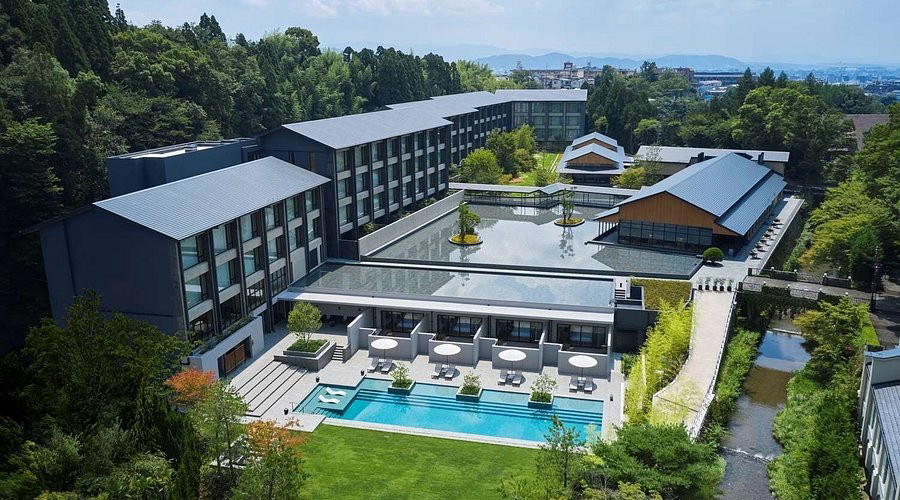
Bars in Kyoto
Browse all →
Restaurants in Kyoto
Browse all →
Wineries in Kyoto
Browse all →
Details
- Quiet
- Elegant
- Minimalist
- Sophisticated
- Scenic
- Honeymoon
- Romantic Getaway
- Wellness Retreat
- Anniversary
- Private Villa
- Destination Spa
- Garden
- Historic Building
- Wi Fi
- Spa
- Room Service
- Concierge
- Garden
- Mountain
- Step Free Entrance
Peaceful and light-filled interiors with natural wood, tatami flooring, cozy fireplaces, and serene garden surroundings fostering relaxation and contemplation.