
Our verdict
Located in Haneda's Innovation City complex, Tonkatsu Aoki brings the focused discipline of Tokyo's serious tonkatsu tradition to one of the city's busiest transit hubs. The menu centres on the classical structure of Japan's breaded pork cutlet tradition, executed with consistency that earns repeat visits from travellers and locals alike.

Pearl is the En Primeur Club membership app, where members save venues, book tables and use the concierge.
The menu
What to order
- Mixed Cutlet Set Meal
- Top Loin Cutlet
- Pork Fillet Cutlet
Tonkatsu at the Airport's Edge: What the Menu Tells You
Tokyo's tonkatsu scene has always operated on a narrower range of variables than the city's sushi or kaiseki circuits. The category's discipline is structural: a short menu, a defined cut hierarchy, frying temperatures that leave almost no room for improvisation, and a kitchen logic built around the quality of the pork rather than the creativity of the cook. That compression is the point. At Tonkatsu Aoki, positioned inside Haneda Innovation City's Zone J2-2, the menu architecture reflects exactly this tradition, a format that reveals quality through what it refuses to add, not what it piles on.
This is worth understanding before you walk in. Aoki's placement at Haneda airport puts it in an unusual position for a ranked tonkatsu house: accessible to international arrivals and domestic transit passengers, yet assessed by Tokyo's dining community alongside neighbourhood specialists. Holding a position at #111 from an airport-adjacent location is a different kind of achievement than accumulating it from a postcode with built-in foot traffic of committed diners.
Menu Architecture and What It Signals
The classical tonkatsu menu is built around two cuts: rosu (loin) and hire (fillet). The loin carries more fat and delivers a richer, more assertive flavour; the fillet is leaner, with a finer texture that rewards careful frying. This cut distinction is the primary decision a diner makes, and in a properly structured tonkatsu house, everything downstream of that choice (breading coarseness, oil temperature, resting time after frying) is calibrated to that specific cut rather than applied uniformly. Menus that collapse the distinction, serving both cuts with identical technique, signal a kitchen more concerned with throughput than craft.
Beyond the cut choice, the structural markers of a serious tonkatsu menu include the sourcing designation of the pork (regional or breed-specific pork commands a premium tier in many Tokyo tonkatsu-ya), the accompaniments (shredded cabbage, rice, miso soup, and pickles in the classical format), and the condiment selection, which typically includes house tonkatsu sauce alongside karashi mustard. These are not decorative details, they're the calibration points that regulars use to read a kitchen's priorities. The narrowness of the menu is deliberate: a five-item card in a tonkatsu house is not a limitation, it is a position statement.
For context on how Tokyo's specialist tonkatsu houses are structured at different price tiers, Butagumi operates at the premium end of the category with a focus on heritage pork breeds, while Ginza Katsukami and Katsuyoshi represent the Ginza tier where price brackets align with location costs as much as ingredient sourcing. Katsusen and Fry-ya represent the more accessible registers. Aoki's OAD casual ranking places it in a different category entirely, assessed not against white-tablecloth format but against the broader casual dining tradition, where consistency and execution at volume carry more weight than premium sourcing narratives.
The Haneda Context: Why Location Matters Here
Haneda Innovation City opened as a mixed-use development designed to activate the airport's international terminal zone beyond transit. The food and beverage component of the complex draws on recognisable names from Tokyo's dining circuit, and Tonkatsu Aoki's presence there reflects a specific strategy: delivering category-representative quality in a setting that serves both the departing traveller with forty minutes before boarding and the Ota City office worker on a lunch break. These are not identical customers, but a well-structured menu with fast execution serves both.
This positioning has implications for timing. Airport-adjacent dining at a recognised venue can mean queues during peak transit windows, domestic departures in the morning and evening, international check-in surges, and shorter waits during mid-afternoon slots. Arriving outside the conventional lunch window (roughly 11:30 to 13:30) or in the mid-afternoon period typically reduces wait times at venues operating on a walk-in format. Booking arrangements for the complex should be checked directly through Haneda Innovation City's dining reservation infrastructure, as individual venue booking methods within airport commercial zones often differ from standalone restaurant practice.
Tonkatsu in the Wider Japanese Context
For visitors building an itinerary across Japan's cities, the tonkatsu tradition appears in different configurations depending on the region. In Kyoto, Jukuseibuta Kawamura takes an aged-pork approach that reflects Kyoto's preference for applying kaiseki-adjacent precision to even casual formats. In Osaka, Kyomachibori Nakamura operates within a city that tends to judge katsu by the ratio of filling to breading in its kushikatsu tradition rather than the freestanding cutlet format. Tokyo's versions are generally assessed by the quality of the pork, the temperament of the fry, and the structural integrity of the panko crust after resting.
For wider dining across Japan's cities, EP Club covers HAJIME in Osaka, Gion Sasaki in Kyoto, akordu in Nara, Goh in Fukuoka, 1000 in Yokohama, and 6 in Okinawa for those moving across the country.
Planning a Visit
Tonkatsu Aoki is located at 1 Chome-1-4 Hanedakuko, Ota City, within Haneda Innovation City Zone J2-2, directly accessible from Haneda Airport's domestic and international terminals via the complex's pedestrian connections. No specific dress code applies to the tonkatsu format at this positioning in the market, the category is casual by design and classification.
For the full picture of Tokyo's dining, drinking, and accommodation options, EP Club's editorial covers hotels, bars, wineries, and experiences across the city.
Frequently asked questions
Would Tonkatsu Aoki be comfortable for families with children?
The tonkatsu format is broadly family-friendly by category: a short menu, fast service, and a casual setting without the formality of Tokyo's omakase or kaiseki tiers. At this price positioning (casual, airport-adjacent), the format is designed for efficient, comfortable dining rather than extended tasting experiences. Tonkatsu is a recognisable format for children familiar with breaded pork or chicken dishes, and the accompaniments (rice, shredded cabbage, miso soup) are direct. The airport location also means the venue is sized and staffed for relatively high turnover, which typically means practical, low-friction service.
What is the atmosphere like at Tonkatsu Aoki?
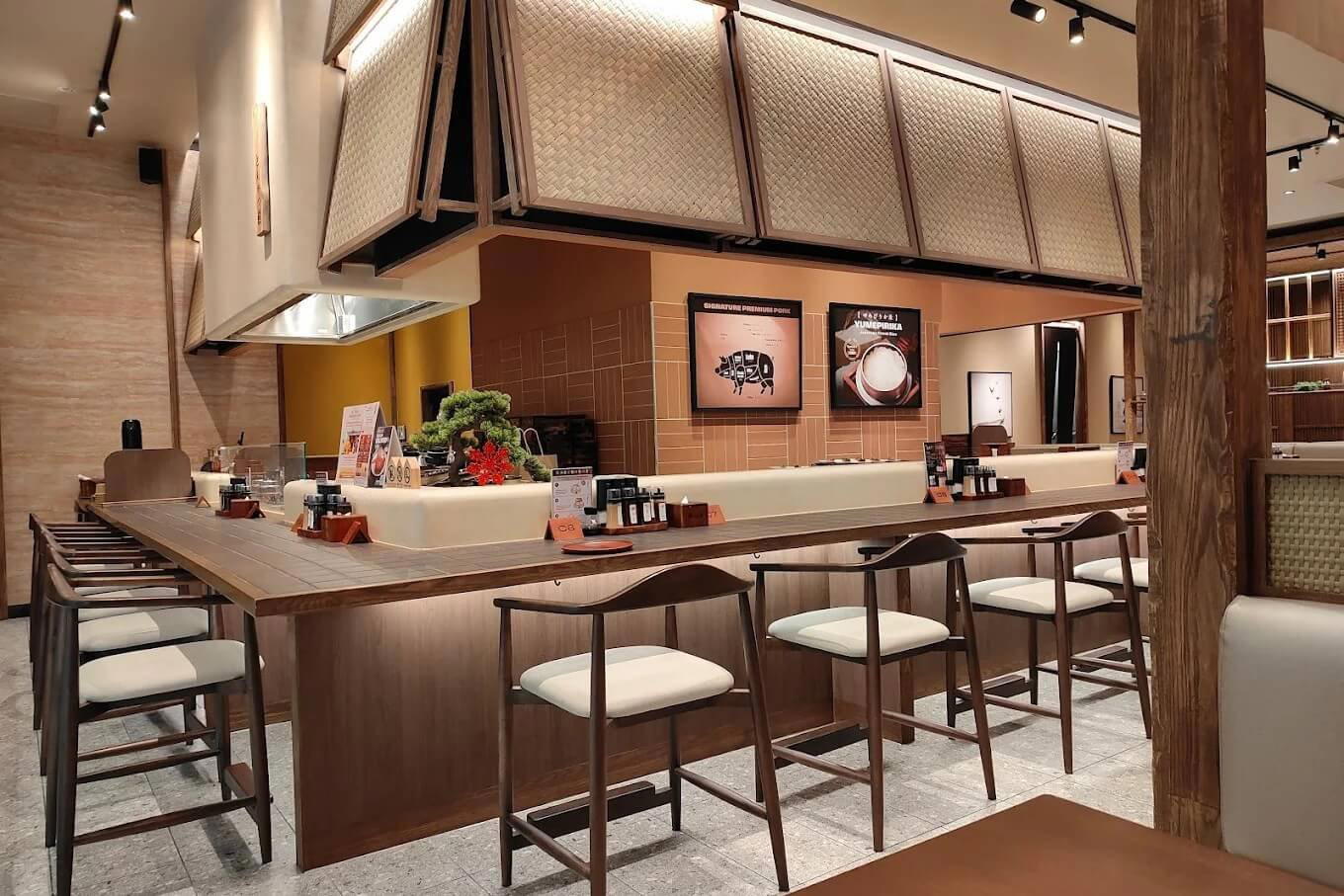
Tonkatsu-ya at the casual ranking tier, Aoki sits at #111 on the 2025 OAD Casual in Japan list, tend toward functional and focused rather than atmospheric in the experiential sense. The setting is inside a modern commercial development, which means the room design serves the Innovation City complex's contemporary aesthetic rather than a specific restaurant identity. Expect a practical tonkatsu-ya format inside a contemporary transit-hub setting.
What do regulars order at Tonkatsu Aoki?
In the tonkatsu tradition broadly, the rosu (loin) cutlet is the standard order for first visits, it shows a kitchen's fat management and frying temperature control most clearly. The hire (fillet) is the choice for those who prefer leaner pork and a tighter texture. Serious tonkatsu-ya regulars typically move between the two cuts depending on appetite. The category's OAD casual ranking at #111 signals consistent execution rather than a signature dish that separates the venue from its peers, so the cut choice itself, ordered with rice, cabbage, and miso in the classical set format, is the primary decision.
Pricing, Compared
Comparable venues nearby, for context on price, style, and recognition.
| Venue | Cuisine | Price | Awards | Notes |
|---|---|---|---|---|
| Tonkatsu AokiThis venue (the venue you are viewing) | Traditional Tonkatsu | $10–20 | Not listed | Not listed |
| Soranoiro | Modern Vegetable Ramen | $10–20 | Not listed | Chiyoda, Modern Vegetable Ramen |
| Yu | Vegan Gyoza Cafe | $10–20 | Tabelog Bronze | Chiyoda, Vegan Gyoza Cafe |
| Raa Menya Shima | Modern Shoyu Ramen | $20–30 | Tabelog Bronze #399 | Shibuya, Modern Shoyu Ramen |
| Kaneko Hannosuke (金子半之助) | Edo-style Tempura Rice Bowls (Tendon) | $10–20 | Not listed | Nihonbashi, Edo-style Tempura Rice Bowls (Tendon) |
| Okonomiyaki Fukutake | Kansai-style okonomiyaki | $30–50 | Tabelog 100 #43 | Ōta, Kansai-style okonomiyaki |
Recognition history
Dated appearances from independent guides and award organizations, with the underlying list record or original source where available.
Opinionated About Dining Casual in Japan Ranked #18
Opinionated About Dining
Full recognition history (2 entries)
Opinionated About Dining Casual in Japan Ranked #111
Opinionated About Dining
Continue exploring
More in Tokyo
More from Chef Various
Browse all →
Restaurants in Tokyo
All restaurants in Tokyo →



Bars in Tokyo
All bars in Tokyo →




Details
- Well Known
- Intimate
- Solo
- Casual Hangout
- Open Kitchen
- Chefs Counter
- Beer Program
- Local Sourcing
- Counter Dining
- Set Menu
- Beer
Current opening hours
- Monday
- Closed
- Tuesday
- 11 AM–3 PM, 5–8 PM
- Wednesday
- 11 AM–3 PM, 5–8 PM
- Thursday
- 11 AM–3 PM, 5–8 PM
- Friday
- 11 AM–3 PM, 5–8 PM
- Saturday
- 11 AM–3 PM, 5–8 PM
- Sunday
- 11 AM–3 PM, 5–8 PM
Hours can change for holidays and private events. Hours as of .
Bright, intimate counter setting with open kitchen; minimal decor focused entirely on the cooking process; energetic but focused atmosphere with diners seated closely together.