

Tabelog Bronze #104
Our verdict
A Kyoto kaiseki counter in the Kamigyo district, Oryori Hayashi has earned Tabelog Silver recognition from 2019 through 2025 and a place on the Tabelog Japanese Cuisine WEST Top 100 list in 2021, 2023, and 2025. With 23 seats across a seven-seat counter and three private tatami rooms, the format rewards those who book ahead and arrive ready to follow the kitchen's pace.

Pearl is the En Primeur Club membership app, where members save venues, book tables and use the concierge.
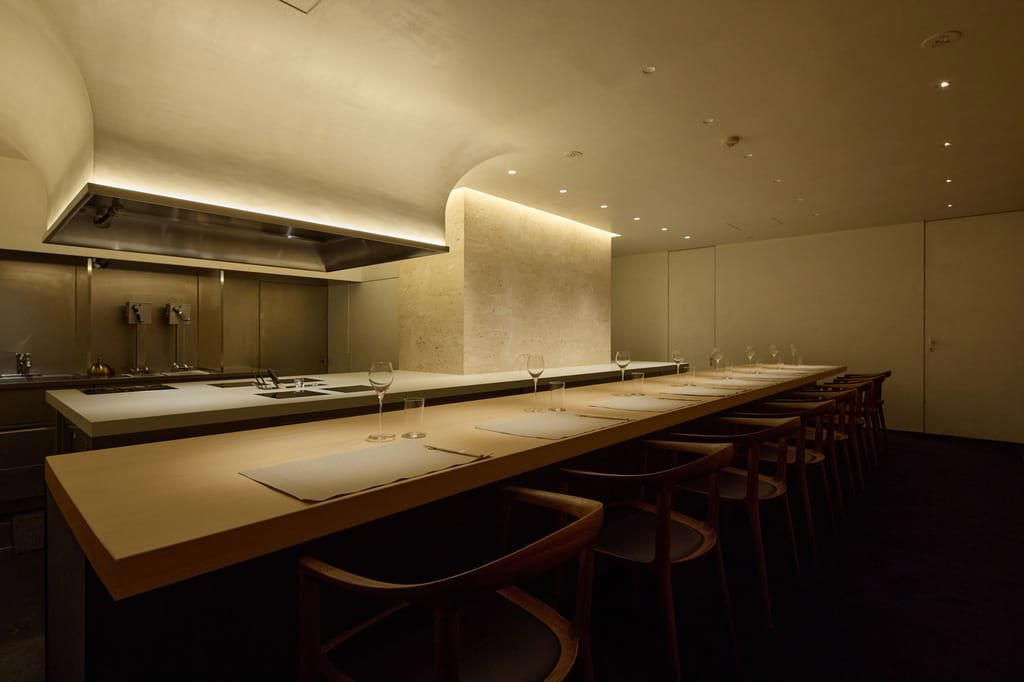
A Counter in Kyoto's Quiet North
Kyoto's dining geography splits along predictable lines: the tourist-facing restaurants around Gion and Higashiyama, and the smaller, resident-facing rooms scattered through the upper wards that attract a different kind of attention. Oryori Hayashi sits in the latter category, on a residential stretch of Kamigyo-ku near Demachiyanagi, about seven minutes on foot from the station. The address is not a statement. The room is not designed to signal ambition from the street. That understatement is, in itself, a position, one that a consistent run of Tabelog recognition has done nothing to disrupt.
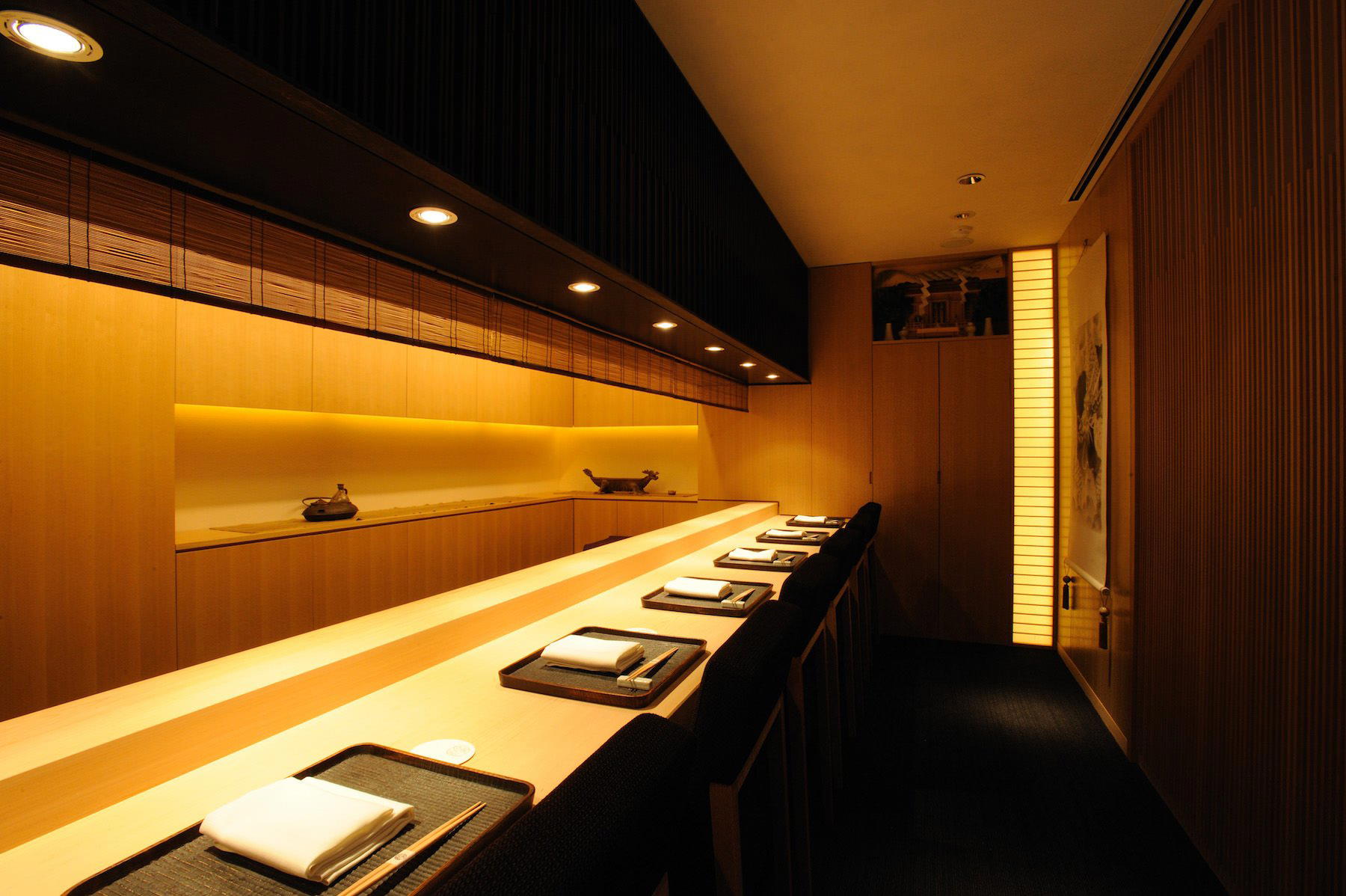
The format is a house restaurant, 23 seats total, divided between a seven-seat counter on the ground floor and three private tatami rooms upstairs. Private rooms accommodate parties of two to eight; the full space can be taken for events up to 20. The counter is where the kitchen's rhythm is most legible, and where the meal moves at a pace set by the kitchen rather than the table. In Kyoto, the counter is less a stage for chef performance and more a structure for pacing, the kitchen controls when courses arrive, what order they follow, and how much time separates each. The diner's role is to receive and attend, not to direct. Oryori Hayashi operates within that tradition. The meal here is not an interactive negotiation; it is a sequence with its own internal logic.
That logic begins with fish. The restaurant's Tabelog profile notes a particular emphasis on seafood sourcing, a detail that places it within a broader Kyoto kaiseki convention where the landlocked city's historical relationship with fish (preserved, river-caught, and later fresh-shipped) shapes the seasonal structure of the menu. What arrives on the counter is the kitchen's reading of what the season permits, not a fixed list. This is not unusual at this tier of Japanese dining; it is, in fact, the operating premise.
The drinks program runs to sake and shochu, which is consistent with a room that positions itself around Japanese culinary tradition rather than international wine lists. The pairing logic here is regional and seasonal by default.
What the Awards Record Says
Oryori Hayashi's Tabelog trajectory is worth reading carefully because it tells a story about consistency over a long arc. The restaurant held Tabelog Silver from 2019 through 2025, a six-year run interrupted by Bronze in 2020 and 2021 before returning to Silver, and carries a current score of 4.24 as of the 2026 cycle, where it received Bronze.
On Opinionated About Dining's Casual Japan list, it ranked 8th in 2025, 10th in 2023, and 14th in 2024. Those rankings position it within a competitive set that values precision and integrity over scale or spectacle.
For context, restaurants at this tier of Tabelog recognition in Kyoto sit in a peer group that includes rooms like Gion Sasaki in Kyoto and, across the Kansai region, rooms like HAJIME in Osaka. The competitive conversation is regional rather than city-specific, and the Tabelog WEST designation reflects that geography.
Pricing and What It Implies
The stated Tabelog budget range is JPY 8,000–9,999 at lunch and JPY 15,000–19,999 at dinner. Review-based spending data puts actual dinner spend closer to JPY 30,000–39,999 once service charge and tax are factored in. A 10% service charge is added to the bill, and consumption tax is applied to the total including that charge, so the effective cost of a dinner runs meaningfully above the headline range. It is a serious meal at a serious price, delivered in a room that does not compensate with visual spectacle or international marketing. The value calculation is made on the quality of what arrives on the counter.
Practical Planning
The restaurant is open Tuesday through Saturday for lunch (11:30–15:00) and dinner (17:30–22:00), with Wednesday and roughly two Thursdays per month closed. The lunch window at the counter runs 11:30–13:30 and dinner 17:30–19:30 per the OAD listing, suggesting seatings rather than continuous service.
Reservations: Required; changes after confirmation cannot be accommodated, so treat the booking as fixed. Contact by phone for party sizes with children or private room requests. Payment: JCB and AMEX credit cards accepted; electronic money and QR code payments are not. Budget: Lunch JPY 8,000–9,999 stated; dinner JPY 15,000–19,999 stated, with review-based actual spend at dinner reaching JPY 30,000–39,999 including service charge and tax. Dress: Not specified; the room's character suggests appropriate restraint. Getting there: Seven-minute walk from Demachiyanagi Station; two minutes from the Kawaramachi Imadegawa bus stop. No parking available.
Photography at the counter is not permitted, a policy that is both a practical instruction and a signal about what kind of attention the room expects. Rooms like akordu in Nara and Goh in Fukuoka represent adjacent points in a wider regional map. Further afield, 1000 in Yokohama and 6 in Okinawa extend that map in other directions. The ramen tradition has also crossed international lines: Afuri Ramen in Portland and Akahoshi Ramen in Chicago represent what that export looks like in practice.enprimeurclub.enprimeurclub.
Frequently asked questions
Where do I go for Hayashi?
Hayashi is located at 2 Chome-7-11 Koenjikita, Suginami City, Tokyo 166-0002, Japan, Tokyo.
What awards or recognition does Hayashi have?
Hayashi has received recognition including:
What's the signature at Hayashi?
No fixed signature dish is documented, which is consistent with how Tabelog Silver-tier kaiseki restaurants in Kyoto operate: the meal is defined by seasonal progression rather than a repeating anchor item. What the awards record does confirm is consistency, Tabelog Silver from 2019 through 2025 and selection for the Tabelog Japanese Cuisine WEST 100 in 2021, 2023, and 2025, with fish cookery cited as the kitchen's primary focus.
Booking and Cost Snapshot
Comparable venues nearby, for context on price, style, and recognition.
| Venue | Cuisine | Price | Awards | Notes |
|---|---|---|---|---|
| HayashiThis venue (the venue you are viewing) | Traditional Tonkotsu-Gyokai Ramen | $10–20 | Tabelog Bronze #104 | Not listed |
| Ginza Asami | Traditional Japanese Kaiseki | $20–30 | Michelin Plate | Chūō, Traditional Japanese Kaiseki |
| Ramen Yamaguchi | Modern Chicken Ramen | $10–20 | Tabelog 100 #28 | Shinjuku, Modern Chicken Ramen |
| Maisen | Tonkatsu | $20–30 | Not listed | Shibuya, Tonkatsu |
| Gyoza Bar Chaozu | Gyoza and Champagne Bar | $30–50 | Star Wine List | Minato, Gyoza and Champagne Bar |
| Fuunji | Rich Tsukemen Ramen | $10–20 | Tabelog 100 #10 | Shibuya, Rich Tsukemen Ramen |
Recognition history
Dated appearances from independent guides and award organizations, with the underlying list record or original source where available.
Opinionated About Dining Casual in Japan Ranked #7
Opinionated About Dining
Tabelog Bronze #104
Tabelog
Full recognition history (9 entries)
Opinionated About Dining Casual in Japan Ranked #8
Opinionated About Dining
Tabelog Silver
Tabelog
Tabelog 100 #57 · No. 57
Tabelog · Tabelog 100 - Sushi - TOKYO - 2025
Tabelog 100 #54 · No. 54
Tabelog · Tabelog 100 - Japanese cuisine - WEST - 2025
Tabelog 100 #8 · No. 8
Tabelog · Tabelog 100 - Ramen - TOKYO - 2025
Opinionated About Dining Casual in Japan Ranked #14
Opinionated About Dining
Opinionated About Dining Casual in Japan Ranked #10
Opinionated About Dining
Continue exploring
More in Tokyo
More from Chef Various
Browse all →
Restaurants in Tokyo
All restaurants in Tokyo →


Bars in Tokyo
All bars in Tokyo →


Details
- Intimate
- Classic
- Quiet
- Casual Hangout
- Solo
- Open Kitchen
- Local Sourcing
- Counter Dining
- A La Carte
Current opening hours
- Monday
- 5:30–9 PM
- Tuesday
- 12–2 PM, 5–9:30 PM
- Wednesday
- 5:30–9 PM
- Thursday
- 5:30–9 PM
- Friday
- 12–2 PM, 5–9:30 PM
- Saturday
- 12–2 PM, 5–9:30 PM
- Sunday
- 3–9 PM
Hours can change for holidays and private events. Hours as of .
Small, quaint shop with counter seating for 10, minimalist aesthetic focused on the ramen experience with strict no-photography rules during meal preparation.