

A Tabelog Silver Award holder (2025, 2026) with a score of 4.48, Hiyama sits in Saitama's Higashi-Kawaguchi but competes against Tokyo's premier sukiyaki and Japanese cuisine houses on both price and recognition. The restaurant holds 20 seats across private tatami rooms, prices dinner at JPY 50,000 to 59,999 per person, and has appeared on the Tabelog Japanese Cuisine EAST 100 list in 2021, 2023, and 2025.
Pearl is the En Primeur Club membership app — saves, bookings, and concierge access live there. Same editors, same standards.
- Address
- 2 Chome-5-1 Nihonbashiningyocho, Chuo City, Tokyo 103-0013, Japan
- Phone
- +81 3-3666-2901
- Website
- hiyama-gr.com
- Directions
- Get directions
 Saves & bookings on Pearl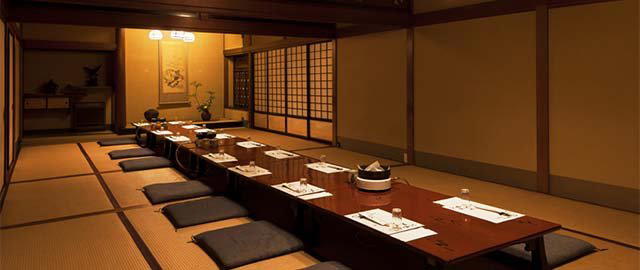
Where Sukiyaki Becomes a Serious Discipline
At the upper tier of Japan's sukiyaki tradition, the format has quietly evolved from a convivial tableside ritual into something closer to a precision exercise in sourcing and controlled heat. The leading rooms in this category now compete on the quality of a single variable above all others: the beef. Around that central fact, the ritual of egg, broth, and vegetable either coheres or collapses. Hiyama, located five minutes on foot from Higashi-Kawaguchi Station in Saitama, operates inside that upper bracket, holding a Tabelog score of 4.48 and Silver recognition from the Tabelog Award in both 2025 and 2026.
That score and award trajectory put Hiyama in the same conversation as the more centrally located Tokyo sukiyaki houses that draw most of the international attention. The question worth asking is not whether Hiyama belongs in that tier, but what it means that a room of 20 seats outside the Yamanote loop has accumulated five consecutive years of Tabelog Award recognition, including three appearances on the Tabelog Japanese Cuisine EAST 100 list (2021, 2023, 2025) and a ranking of 174th among all restaurants in Japan on the Opinionated About Dining 2025 index.
The Sukiyaki Format at High Price Points
Sukiyaki at the JPY 50,000 to 59,999 dinner tier (with review-based averages suggesting actual spend closer to JPY 100,000) demands a different frame than the format most visitors first encounter at casual chain restaurants. At this level, the dish is not primarily about the sauce or the ritual: it is about beef provenance, the cut selection, and the kitchen's ability to source cattle that express regional character in the fat and texture. The dedicated sukiyaki house, as a category, sits apart from kaiseki or omakase in that the format itself is fixed and ancient. The differentiation happens entirely in raw material quality and the knowledge required to procure and present it consistently.
This is the context in which Hiyama should be placed. Comparable Tokyo sukiyaki operations like Imafuku, Imahan, and SUKIYAKI ASAI occupy overlapping price brackets and draw from the same pool of premium wagyu suppliers. What separates these houses is not technique in the modernist sense, but judgment: the choice of cattle lineage, the selection of seasonal accompaniments, and the discipline to let the ingredient remain the central subject of the meal.
Matsutake as the Editorial Point
The venue's own description foregrounds Matsutake mushrooms from across Japan, and that detail is worth pausing on. In the architecture of a premium sukiyaki meal, Matsutake is not decoration. The mushroom's short, weather-dependent season, its sharp pine-and-earth character, and its price point (which can rival the beef itself in peak years) make it one of the clearest signals that a kitchen is sourcing at the summit of the Japanese ingredient market. A sukiyaki house that leads with Matsutake as part of its identity is making a claim about sourcing priority, not just menu variety.
This is the EA-GN-15 lens in practical terms: there is no imported technique at work here in the Western sense, but there is a rigorous indigenism at play. The discipline is to find the leading expression of a domestic product, from multiple prefectures, and to bring that into dialogue with wagyu in a format that has not fundamentally changed in over a century. The result is not fusion and it is not innovation. It is mastery of a closed system, measured by sourcing depth rather than creative departure. In that sense, Hiyama operates according to a logic closer to a leading natural wine producer than to a restaurant in the French-influence tradition.
The Room and the Experience
The physical format matters in sukiyaki houses because the meal is, at its core, a room event. Hiyama operates 20 seats across private tatami rooms configured for two to six guests, with full private hire available for groups up to 20. The tatami room format is the dominant mode for this price tier in Japan: it creates the acoustic and visual separation that allows the tableside cooking ritual to be the focus without the ambient noise of an open dining room pulling attention elsewhere.
Private tatami dining at this level means the service team is working in close proximity throughout the meal, managing the pot, adjusting heat, and pacing the progression of the beef through its cooking stages. That level of service attention is what justifies the price differential between this category and mid-market sukiyaki, and it is what makes room capacity a meaningful signal. Twenty seats total, in private configuration, means the kitchen and service floor are not stretching across a large operation. The ratio of attention to guest is high by structural necessity.
Location, Access, and the Saitama Factor
Higashi-Kawaguchi sits on the border between Saitama Prefecture and northeastern Tokyo. It is accessible via the JR Musashino Line and the Saitama Rapid Railway, with Higashi-Kawaguchi Station a five-minute walk from the restaurant. For visitors staying in central Tokyo, the journey adds time but not complexity: no transfers are required from the Saitama Rapid Railway's connection into the Tokyo Metro Namboku Line corridor, and the overall transit time from central areas like Roppongi or Shinjuku is manageable within an evening.
The location does, however, recalibrate expectations in one important way. Dining at this price point in Saitama rather than Ginza or Minami-Aoyama strips away the social performance layer that often inflates the bill at centrally located luxury restaurants. There is no neighbourhood premium built into the price here. What you are paying for is the ingredient, the room, and the service, without the surrounding real estate context that adds weight to comparable bills in Marunouchi or Nishi-Azabu. That is, depending on your perspective, either an argument for or against making the journey.
For reference, the Saitama restaurant scene as a whole produces fewer internationally discussed names than central Tokyo, which makes Hiyama's sustained Tabelog recognition across six consecutive award cycles a meaningful signal about the room's standing within its regional context. For comparison, other Japan-based restaurants that have achieved comparable multi-year Tabelog recognition include Gion Sasaki in Kyoto and HAJIME in Osaka, though those operate in different format categories entirely.
How Hiyama Sits Within the Broader Premium Dining Map
At JPY 50,000 to 59,999 per person (with actual spend potentially doubling that figure based on review data), Hiyama prices at the level of Tokyo's three-Michelin-star houses. Harutaka in the sushi category and L'Effervescence in French hold three Michelin stars and operate at comparable price points. The difference is format: those counters and dining rooms are selling time with a specific chef's creative output. A dedicated sukiyaki house is selling something more elemental, the annual expression of the leading cattle and mushrooms available in Japan, served in a format defined by its fidelity to tradition rather than its departure from it.
That distinction matters for how readers should position the decision to visit. This is not the place to come looking for creative risk or a changing tasting menu that reflects a chef's current thinking. It is a room where the discipline is sourcing, the format is fixed, and the variation from visit to visit is tied to the season and the available supply of premium ingredients. Compared to Wadakin in Mie, which operates a sukiyaki tradition built around its own Matsusaka cattle breeding program, Hiyama works as a multi-source curator rather than a single-origin estate. Both approaches have rigorous precedents in Japanese food culture.
Visitors planning a broader Japan itinerary can also consider the format in relation to akordu in Nara, Goh in Fukuoka, 1000 in Yokohama, or 6 in Okinawa as part of a multi-city program. For a global comparison of what high-price-point format discipline looks like in Western kitchens, Le Bernardin in New York City applies an analogous logic to seafood: a fixed format defined entirely by raw material quality and restraint rather than creative elaboration.
Planning Your Visit
Hiyama is open Monday through Saturday, with dinner service from 18:00 and a last order at 21:00. The restaurant is closed on Sundays and public holidays. Reservations are available and advised at this price tier. The room accepts major credit cards (Visa, Mastercard, JCB, AMEX, Diners) but does not accept electronic money or QR code payments. Parking is available via three affiliated coin parking lots nearby, with service vouchers provided by the restaurant. The room is non-smoking throughout, with an outdoor smoking area. Private tatami rooms can be booked for parties of two to six, and full private hire is available for groups up to 20.
For broader planning across the city and region, see our full Tokyo restaurants guide, our full Tokyo hotels guide, our full Tokyo bars guide, our full Tokyo wineries guide, and our full Tokyo experiences guide.
Quick reference: Hiyama, Higashi-Kawaguchi, Saitama. Dinner JPY 50,000 to 59,999 (listed); actual spend per reviews closer to JPY 100,000. 20 seats, private tatami rooms. Mon–Sat, 18:00 to 23:00, last order 21:00. Closed Sundays and public holidays. Reservations available. 5 minutes on foot from Higashi-Kawaguchi Station (JR Musashino Line / Saitama Rapid Railway, south exit).
Just the Basics
Comparable venues nearby, for context on price, style, and recognition.
| Venue | Cuisine | Price | Notes |
|---|---|---|---|
| HiyamaThis venue — the venue you are viewing | Sukiyaki | $$$ | Not listed |
| Takahashi | Taitō, Kaiseki Japanese Cuisine | $$$ | Not listed |
| Daikanyama Issai Kassai | Shibuya, Modern Japanese Izakaya | $$$ | Not listed |
| Shimbashi Shimizu | Minato, Authentic Edomae Omakase | $$$ | Not listed |
| Kyuu | Not listed | $$$ | Minato, Modern Japanese Omakase and Robatayaki |
| Tonkatsu Sugita | Taitō, Tonkatsu | $$$ | Not listed |
Recognition history
Dated appearances from independent guides and award organizations, with the underlying list record or original source where available.
Opinionated About Dining Top Restaurants in Japan Recommended
Opinionated About Dining
Tabelog Silver #39
Tabelog
Opinionated About Dining Top Restaurants in Japan Ranked #174
Opinionated About Dining
Tabelog Silver
Tabelog
Tabelog 100 #78 · No. 78
Tabelog · Tabelog 100 - Japanese cuisine - EAST - 2025
Opinionated About Dining Top Restaurants in Japan Ranked #288
Opinionated About Dining
Tabelog 100 #65 · No. 65
Tabelog · Tabelog 100 - Hot Pot - 2024
Opinionated About Dining Top Restaurants in Japan Highly Recommended
Opinionated About Dining
Continue exploring
More in Tokyo
More from Chef Various
Browse all →
Restaurants in Tokyo
Browse all →



Bars in Tokyo
Browse all →




At a Glance
- Elegant
- Classic
- Intimate
- Business Dinner
- Special Occasion
- Date Night
- Private Dining
- Sake Program
Current opening hours
- Monday
- 11:30 AM–2:30 PM, 5–9:30 PM
- Tuesday
- 11:30 AM–2:30 PM, 5–9:30 PM
- Wednesday
- 11:30 AM–2:30 PM, 5–9:30 PM
- Thursday
- 11:30 AM–2:30 PM, 5–9:30 PM
- Friday
- 11:30 AM–2:30 PM, 5–9:30 PM
- Saturday
- 11:30 AM–2:30 PM, 5–9:30 PM
- Sunday
- 11:30 AM–2:30 PM, 5–9:30 PM
Hours can change for holidays and private events. Last verified .
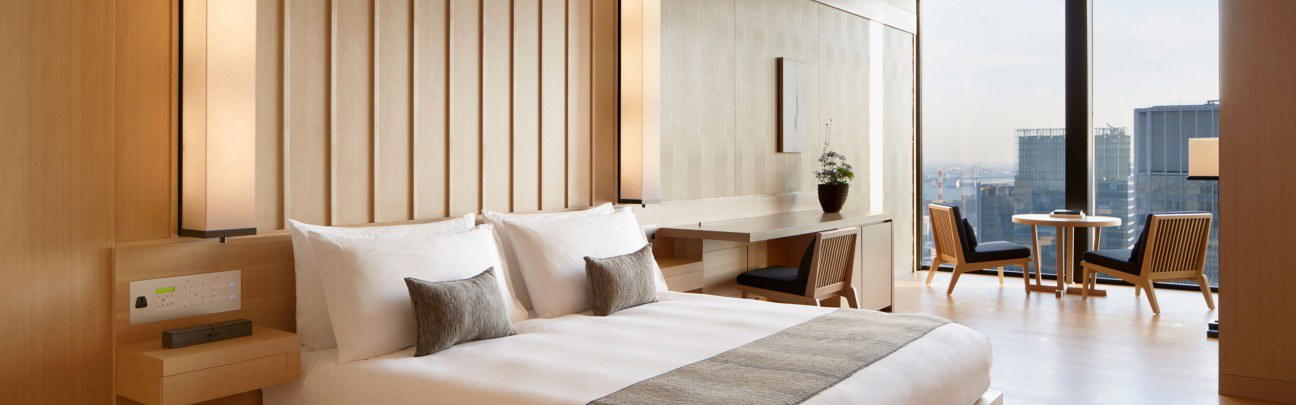
Warm traditional Japanese atmosphere with antique charm, tatami private rooms, and a tranquil, sophisticated setting reminiscent of old Japan.