Tabelog Bronze
Our verdict
Yu is a Tabelog Bronze Award-winning sushi counter in Roppongi, operating Thursday and Monday evenings only, a scheduling discipline that signals serious intent in a city where omakase scarcity is half the proposition.

Pearl is the En Primeur Club membership app, where members save venues, book tables and use the concierge.
If You Book One Counter in Roppongi This Season, Make It This One
Tokyo's sushi scene has been stratifying for years. At the leading end, three-star omakase counters in Ginza and Minami-Aoyama price against each other and against international demand. Below that tier sits a more interesting layer: Tabelog-recognised rooms that earn their scores through consistency and craft rather than Michelin cachet or social media velocity. Yu, operating out of a basement space in Roppongi's Rando Roppongi Building, occupies that layer, and does so with the kind of scheduling restraint that tells you something before you've tasted a single piece.
Two evenings per week. Monday and Thursday, 17:30 to 22:00. That's the operating window. In a neighbourhood where restaurants stay open six or seven nights to capture foot traffic from the embassies, galleries, and corporate towers clustered around Roppongi 4-chome, running a two-night-per-week sushi counter is a deliberate compression of volume. The result, in practice, is a room where every seat matters and the pace of the meal is shaped by the counter's own logic rather than a full-house turnover schedule.
Roppongi as a Sushi Address
Roppongi doesn't carry the same sushi mythology as Ginza or Shimbashi, but that's partly what makes it worth paying attention to. The neighbourhood's dining scene has historically been shaped by its international character, high-end French and contemporary Japanese rooms dominate the area's critical reputation, with RyuGin and L'Effervescence among the names that defined it over the past two decades. Sushi at this level in Roppongi tends to fly lower than its Ginza counterparts, which creates a different kind of discovery dynamic for visitors who already know the canonical addresses.
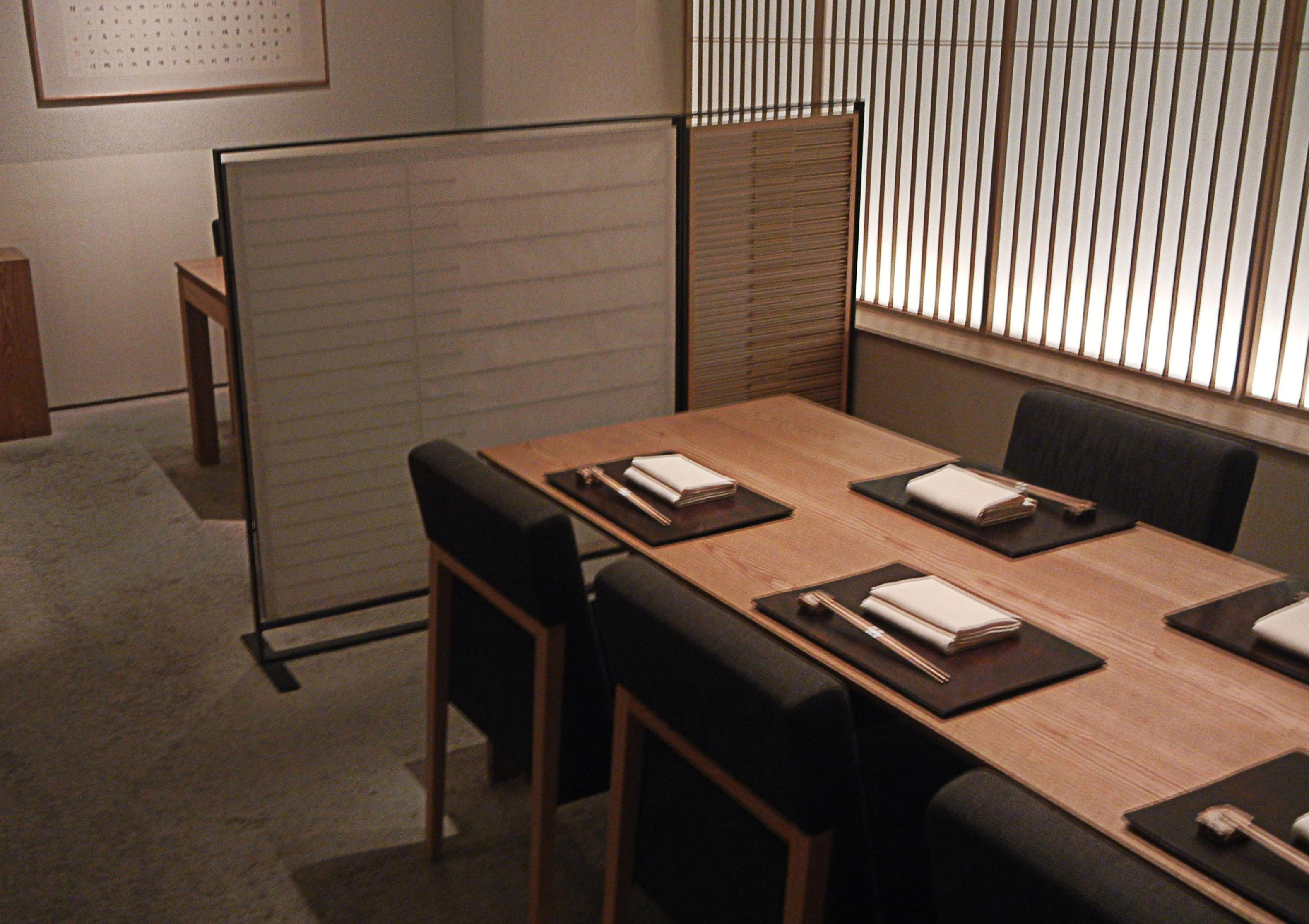
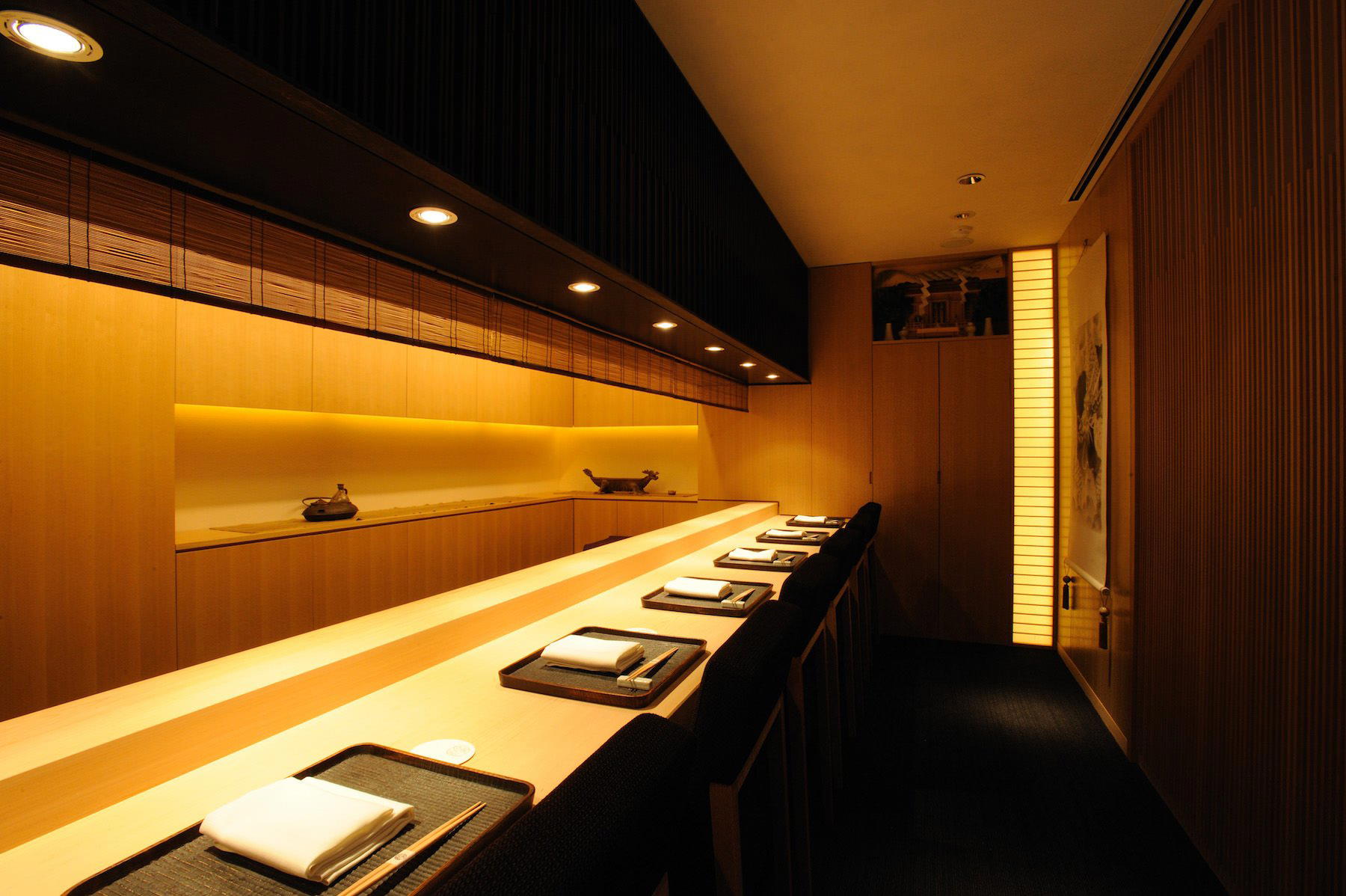
The basement location in Rando Roppongi Building reinforces that quality. B1 sushi counters in Tokyo follow a particular grammar: remove the street-level distraction, compress the sightlines, and the meal becomes the room's only event. Sound drops. Light focuses. The counter format, which remains the standard for serious omakase in Japan regardless of address, frames the chef's work as the sole visual anchor, which is exactly where it belongs.
The Sensory Geometry of a Counter Seat
There is a reason the great sushi counters in Tokyo resist the move to dining-room tables. The counter is not just a practical arrangement; it's an information-dense environment. You watch rice temperature managed with hand pressure. You observe the sequencing decisions, when fatty tuna appears in the progression, how shellfish is paced, whether the vinegar balance in the shari shifts across the meal. None of that is legible from a table six feet away.
At the level Yu operates, a Tabelog score of 4.18, with Bronze Award recognition in 2025, that counter intimacy is the product. The score places it above the broad midfield of Tokyo sushi and within range of counters that attract serious repeat business from both domestic diners and the city's international community. For context, Tabelog's scoring curve is famously compressed; the gap between 3.8 and 4.2 represents a meaningful jump in peer standing, and 4.18 sits within a cohort of perhaps a few hundred restaurants across all of Tokyo rather than several thousand.
For comparison, Harutaka in Ginza represents the tier immediately above, a room where lineage, press recognition, and allocation scarcity operate at a different intensity. Yu's position is distinct: it draws a score that signals craft and consistency without the full apparatus of Michelin star pursuit.
What the Score Tells You
A Tabelog Bronze Award in 2025 is a peer-reviewed credential in a system where domestic Japanese diners, not international guidebooks, do the grading. The platform's user base skews toward repeat, experienced restaurant-goers rather than tourists. That kind of convergence is more meaningful than a high score on a single platform.
Tokyo's sushi tier directly above Yu includes rooms that command ¥¥¥¥ pricing, multi-month booking lead times, and coverage in international food press. Yu's limited operating schedule and Roppongi address suggest a pricing and positioning model that sits slightly inside that bracket, accessible enough to reward research, serious enough to require it. Diners who have worked through the canonical Ginza omakase circuit, or who find that Sézanne and Crony cover their French side of Tokyo dining, often find this tier of sushi counter the most satisfying return on effort.
Tokyo in the Broader Japan Context
Tokyo is not the only city in Japan where serious sushi counters operate at this level of scrutiny. Goh in Fukuoka has demonstrated that the regional scene produces counters of national standing. HAJIME in Osaka represents a different expression of the same rigour, applied to a more technique-forward format. Gion Sasaki in Kyoto anchors the kaiseki tradition that provides the broader seasonal context within which Tokyo sushi counters operate. And for more unexpected regional cooking, akordu in Nara, 1000 in Yokohama, and 6 in Okinawa show how far Japan's serious dining culture extends beyond its capital.
But Tokyo's density remains unmatched. The concentration of Tabelog-recognised sushi counters within a single city means that Yu competes not just with nearby rooms but with an entire category of venues that a visitor could reasonably consider on the same trip. The two-nights-per-week discipline narrows the booking window considerably, Thursday and Monday evenings only, which makes advance planning essential.
International Reference Points
For readers who place their Tokyo dining in global context: the counter-seat omakase format at this tier has no real equivalent in most Western cities. The closest analogues in terms of format intensity and scoring seriousness are chef's-table programs at rooms like Le Bernardin in New York City or tasting-menu counters like Atomix, but neither maps cleanly onto the sushi counter tradition, where the format itself is the discipline rather than a departure from it.
Planning Your Visit
Yu operates on Monday and Thursday evenings only, from 17:30 to 22:00, at 1 Chome-9-5 Iidabashi, though the Tabelog record places it in Roppongi's Rando Roppongi Building, B1 floor. Confirm the address directly before booking. No phone or website is listed in public records at time of writing; reservations likely run through Tabelog's booking system or a direct inquiry channel. Given the two-evening-per-week format, availability in any given month is limited, and advance planning of at least several weeks is prudent.
For a wider picture of where Yu sits in Tokyo's dining calendar, see our full Tokyo restaurants guide. If you're building a full visit around the city, our Tokyo hotels guide, bars guide, wineries guide, and experiences guide cover the rest of the picture.
Quick reference: Roppongi, Rando Roppongi Building B1 / Mon and Thu, 17:30–22:00 / Tabelog Bronze Award 2025, score 4.18 / Book via Tabelog or direct inquiry.
Frequently asked questions
What awards or recognition does Yu have?
Yu has received recognition including: Tabelog Bronze Award 2025 Score: 4.18 Cuisine: Sushi / Tokyo Hours: Mon, Thu 17:30 - 22:00 Address: Tokyo Minato Ward Roppongi4511 randoRoppongibiru B1 Tabelog:.
What are Yu's hours?
Hours at Yu: Mon, Thu 17:30 - 22:00.
What's the best thing to order at Yu?
Yu operates as a sushi counter with an omakase format, meaning the chef determines the sequence and selection. Specific menu items are not published in advance. The Tabelog score of 4.18 and Bronze Award for 2025 reflect consistent peer approval of the overall counter experience rather than any single dish.
How do I find Yu?
Yu is located at 1 Chome-9-5 Iidabashi, Chiyoda City, Tokyo 102-0072, Japan, Tokyo.
What's the defining dish or idea at Yu?
The defining idea at Yu is the omakase counter itself: a format where progression and proportion are set by the chef, not the diner. Earning a Tabelog Bronze Award with a 4.18 score places Yu in a tier where Japanese domestic diners, who grade against Tokyo's full competitive field, have repeatedly returned positive verdicts.
Do they accommodate allergies at Yu?
Given the counter format and limited seatings on Monday and Thursday evenings, communicating dietary requirements directly at the time of reservation is the standard approach at counters of this type in Tokyo. Check the venue's official channels for the latest details.
Same-City Peers
A quick peer reference to anchor this venue in its category.
| Venue | Cuisine | Price | Awards | Notes |
|---|---|---|---|---|
| YuThis venue (the venue you are viewing) | Vegan Gyoza Cafe | $10–20 | Tabelog Bronze | Not listed |
| Harutaka | Edo-Style Omakase Sushi | $200–300 | 3 Michelin Stars · World's 50 Best #76 | Sushi |
| RyuGin | Modern Kaiseki | $500+ | 3 Michelin Stars · World's 50 Best #41 | Kaiseki, Japanese |
| L'Effervescence | Modern French with Japanese Influences | $200–300 | 3 Michelin Stars · World's 50 Best #69 | French |
| HOMMAGE | Modern French with Japanese Influences | $150–200 | 2 Michelin Stars · World's 50 Best #78 | Innovtive French, French |
| MAZ | Innovative Peruvian-Japanese Fusion | $150–200 | 2 Michelin Stars · World's 50 Best #28 | Innovative |
Recognition history
Dated appearances from independent guides and award organizations, with the underlying list record or original source where available.
Tabelog Bronze
Tabelog