
Our verdict
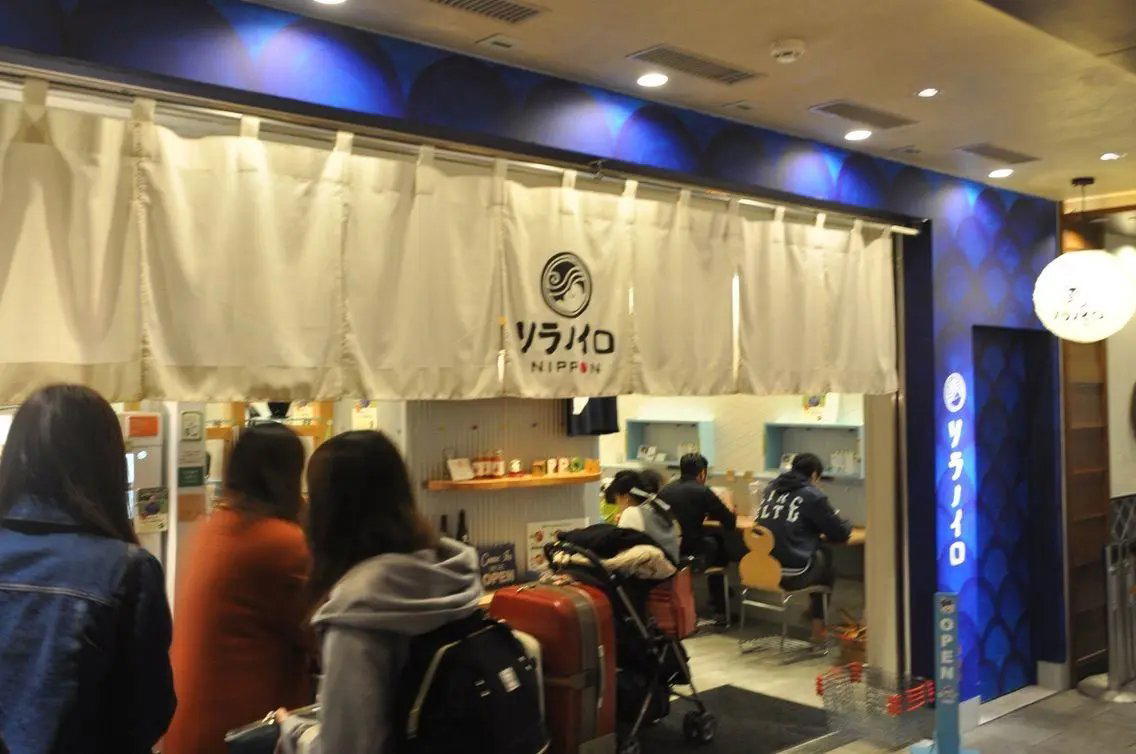
Soranoiro operates out of Chiyoda's Hirakawachō district, holding a place in the Opinionated About Dining Casual Japan rankings for 2025 at #95, a signal that it competes within Tokyo's serious ramen tier rather than its tourist-facing one. The bowl here is a reference point for how metropolitan ramen continues to evolve: technically precise, consciously urban, and pitched at a city that treats noodle craft as a legitimate culinary discipline.

Pearl is the En Primeur Club membership app, where members save venues, book tables and use the concierge.
The menu
What to order
- Veggie Soba
- Shoyu Ramen
- Vegan Tantanmen
Metropolitan Ramen and the Tokyo Standard
Tokyo ramen does not operate on a single frequency. The city hosts everything from hyper-regional broths imported by chefs from Kyushu and Hokkaido to counter-led operations that approach their craft with the seriousness more commonly associated with kaiseki. This density of competition shapes what it means to rank in Tokyo at all. When Afuri built its reputation around yuzu-inflected shio, it did so within a city where dozens of other operations were simultaneously pushing the category's technical ceiling. Soranoiro, located in Chiyoda City's Hirakawachō district and ranked #95 in Opinionated About Dining's Casual Japan list for 2025, sits inside that competitive tier rather than above or below it.
The OAD Casual Japan ranking is a useful coordinate. It represents peer-reviewed recognition among a circuit of serious eaters, and a place in the top 100 of that list in any given year places a ramen shop in direct comparison with operations in Osaka, Fukuoka, and Kyoto, not just within Tokyo's own internal hierarchy. For context, the same culinary geography that produces kaiseki refinement at Gion Sasaki in Kyoto also informs how regional Japanese cities approach their bowl cultures. Tokyo's answer tends to be faster, more iterative, and less bound by local convention.
Chiyoda as a Dining Address
Hirakawachō is not the first neighbourhood that comes to mind when mapping Tokyo's ramen geography. The district sits between the governmental corridors of Nagatacho and the commercial density of Marunouchi, making it a lunch and early-evening address rather than a destination for late-night eating. This context matters for understanding the operation's likely format: the surrounding area draws a professional daytime crowd, and ramen shops in this zone typically calibrate their output for volume efficiency and speed without sacrificing the technical precision that earns rankings in the first place.
That combination, throughput discipline alongside craft credentials, is more Tokyo than it is Kyoto. Kyoto's ramen tradition, while present, tends to read as a quieter expression: lighter broths, deliberate pacing, a frame inherited partly from the city's broader hospitality culture. Tokyo operates differently. Speed and precision coexist because they have to. The city's lunch economy is unforgiving, and a shop that cannot move efficiently loses its window. Soranoiro's Chiyoda address places it squarely inside that metropolitan logic.
Where This Bowl Sits in the Wider Ramen Conversation
The 2025 OAD Casual Japan ranking at #95 positions Soranoiro within a cohort that includes operations spread across Japan's main dining cities. For comparative context within Tokyo specifically, Chukasoba Ginza Hachigou and Chukasoba KOTETSU represent the city's chukasoba lineage, where lighter soy-based broths and thin noodles carry the weight of the Tokyo old-style tradition. Fuunji pushes tsukemen into a different register entirely. Each of these addresses occupies its own niche within a category that Tokyo has, over the past two decades, treated as a serious technical discipline rather than a street-food afterthought.
The vegetable-forward ramen that Soranoiro has become associated with in Tokyo's food press places it in a smaller sub-tier of the city's ramen ecosystem. While tonkotsu and shoyu remain the dominant registers across the OAD-ranked field, operations that approach the bowl through a plant-forward or lighter broth framework serve a distinct audience. This is less common in the Kyoto mold of delicate refinement and more a conscious metropolitan intervention: a Tokyo ramen shop making a decision to operate differently within a city that provides the density of competition to reward that kind of specificity.
The Tokyo vs. Kyoto Frame
The comparison between Tokyo and Kyoto dining cultures is most useful not as a hierarchy but as a map of different instincts. Kyoto's premium dining corridor, anchored by kaiseki traditions and a hospitality philosophy rooted in restraint, produces a set of values that travel across categories. Even Kyoto's more casual registers tend toward precision in a different register: measured, rooted, legible as an expression of place. The kaiseki precision at Gion Sasaki is the high-end expression of that value system. Tokyo operates under different pressures. Innovation is expected. Format experimentation is rewarded. And the city's ramen scene, from Afuri's yuzu shio to the chukasoba operations around Ginza, reflects that appetite for controlled reinvention.
Soranoiro positions itself within that innovative stream. A Chiyoda address, a top-100 OAD ranking, a Google profile that reflects high-volume consistent delivery, and a broth approach that diverges from the city's dominant tonkotsu and shoyu mainstream, these are the coordinates of a Tokyo ramen shop that knows its place in a crowded field and has found a productive lane within it.
For visitors building a broader Japan itinerary, the ramen category offers useful cross-city comparison points. Goh in Fukuoka sits at the other end of the ramen spectrum, where tonkotsu is a civic identity rather than a stylistic choice. 1000 in Yokohama reflects that city's own dining register. And internationally, Akahoshi Ramen in Chicago and Afuri Ramen in Portland represent how specific Tokyo and Japanese ramen signatures have translated to American cities. The original operations in Tokyo, Soranoiro among them, remain the reference points against which those exports are measured.
Planning Your Visit
Soranoiro is located at 1 Chome-3-10 Bluebell Building B1F, Hirakawachō, Chiyoda City, Tokyo 102-0093. Booking: Availability details are best confirmed directly; lunch periods in the Chiyoda business district tend to move quickly on weekdays, and arriving outside the peak noon-to-1pm window typically reduces wait time. Dress: Casual. When to visit: Weekday lunch remains the area's highest-traffic window; weekday late lunch or early dinner will give a calmer experience without compromising the bowl.
For broader Tokyo planning, see our full Tokyo restaurants guide, our full Tokyo hotels guide, our full Tokyo bars guide, our full Tokyo experiences guide, and our full Tokyo wineries guide. For wider Japan context, the EP Club covers HAJIME in Osaka, akordu in Nara, and 6 in Okinawa.
Comparable Spots, Quickly
Comparable venues nearby, for context on price, style, and recognition.
| Venue | Cuisine | Price | Awards | Notes |
|---|---|---|---|---|
| SoranoiroThis venue (the venue you are viewing) | Modern Vegetable Ramen | $10–20 | Not listed | Not listed |
| Yu | Vegan Gyoza Cafe | $10–20 | Tabelog Bronze | Chiyoda |
| Tonkatsu Aoki | Traditional Tonkatsu | $10–20 | Not listed | Ōta |
| Ogura (おぐ羅) | Traditional Oden and Yakitori Izakaya | $30–50 | Not listed | Nihonbashi |
| Yamacho (黒うどん 山長) | Black Udon (Kuro Udon) | $10–20 | Not listed | Harajuku |
| 鮨・四季創作 心陽 (こはる) | Fresh Sushi & Seafood Bowls | $10–20 | Not listed | Harajuku / Kita-Sando |
Recognition history
Dated appearances from independent guides and award organizations, with the underlying list record or original source where available.
Opinionated About Dining Casual in Japan Ranked #95
Opinionated About Dining
Continue exploring
More in Tokyo
More from Chef Various
Browse all →
Restaurants in Tokyo
All restaurants in Tokyo →

Bars in Tokyo
All bars in Tokyo →


Details
- Modern
- Trendy
- Casual Hangout
- Open Kitchen
- Sake Program
- Local Sourcing
- A La Carte
- Vegetarian Friendly
- Vegan Options
- Gluten Free Options
Current opening hours
- Monday
- 11 AM–2:30 PM, 5–9:15 PM
- Tuesday
- 11 AM–2:30 PM, 5–9:15 PM
- Wednesday
- 11 AM–2:30 PM, 5–9:15 PM
- Thursday
- 11 AM–2:30 PM, 5–9:15 PM
- Friday
- 11 AM–2:30 PM, 5–9:15 PM
- Saturday
- 11 AM–3 PM
- Sunday
- Closed
Hours can change for holidays and private events. Hours as of .
Clean, modern, and comfortable with a bustling station atmosphere; bright and airy design focused on healthy dining.