
Tabelog Silver #160
Our verdict
τρεῖς sits in Tokyo’s small-format innovative French tier, where Japanese seasonality, counter-service intimacy, and controlled access matter as much as technique. The Minato restaurant has Tabelog Silver recognition from 2022 through 2026 and a 2025 Tabelog 100 selection for Innovative / Creative cuisine, placing it in a serious bracket rather than a casual discovery lane.

Pearl is the En Primeur Club membership app, where members save venues, book tables and use the concierge.
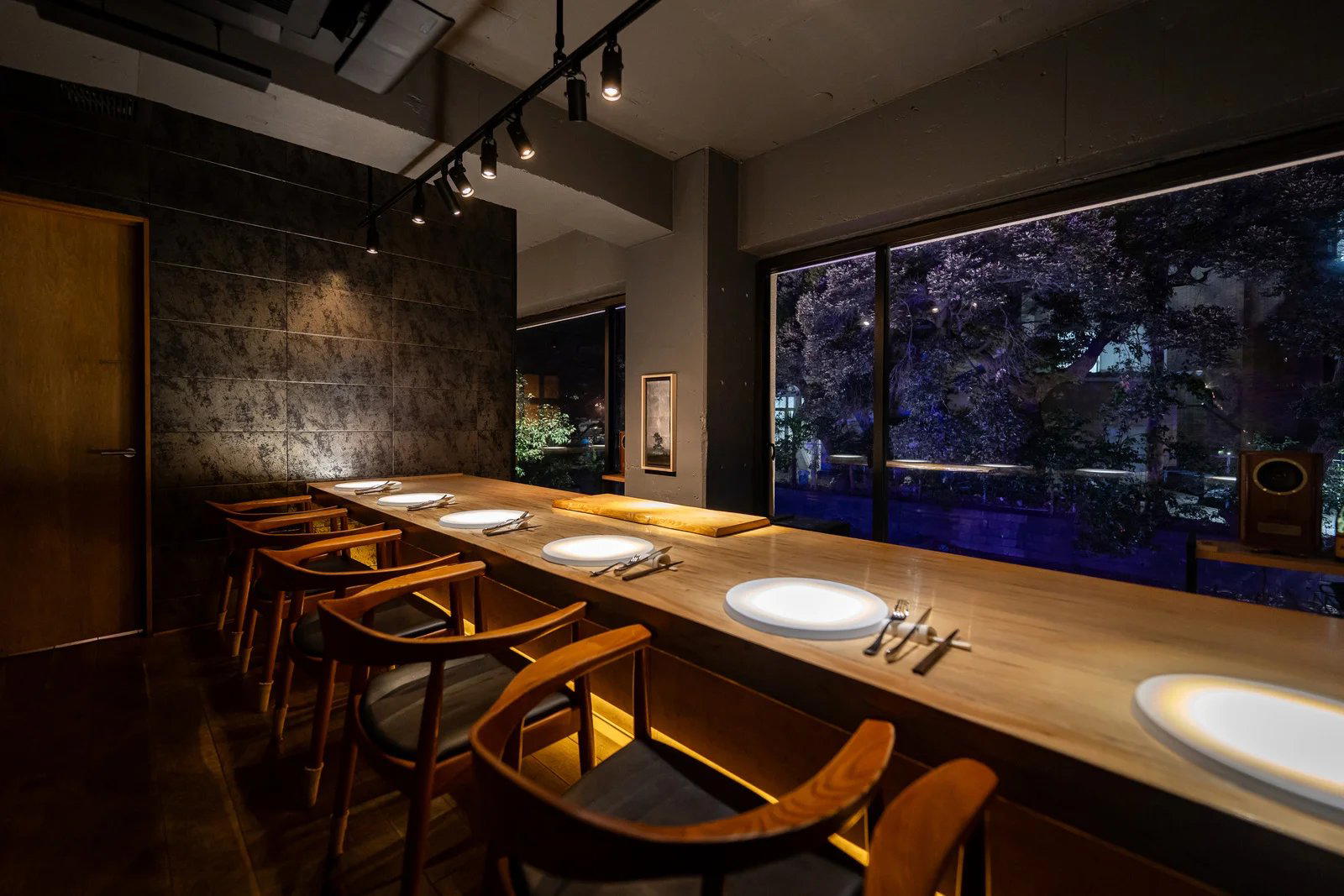
In Tokyo’s higher-register dining rooms, the first signal is often restraint: fewer seats, quieter pacing, a room arranged to make the meal feel observed rather than staged. τρεῖς belongs to that mode. The format is small, the cooking is listed in the innovative and French category, and the restaurant’s public identity leans toward privacy rather than spectacle. That matters in a city where luxury dining splits sharply between ceremonial Japanese forms, imported European grammar, and hybrid rooms that borrow from both without turning dinner into theatre.
Tokyo has long treated French technique as material rather than costume. Since the postwar growth of yoshoku, hotel French, and later chef-driven dégustation rooms, the city has absorbed sauces, reductions, pastry discipline, and wine service into a local way of thinking about seasonality and sequence. The current innovative-French category is the descendant of that exchange: less about reproducing Paris and more about using French structure to frame Japanese produce, temperature, texture, and service cadence. τρεῖς sits inside that cultural conversation, not outside it.
Innovative French in Tokyo has become a Japanese dining language
The useful way to read this restaurant is not as a genre label but as a Tokyo answer to French formality. A French category in Minato does not automatically mean heavy sauces, grand dining rooms, or a brasserie rhythm. At this level, the format tends to compress the room, narrow the number of guests, and make the course sequence carry the experience. The counter is often the decisive piece: it turns technique into something visible and makes timing part of the meal’s architecture.
That scale also changes the competitive set. Tokyo Niku Shabuya, with shabu shabu, sukiyaki, and beef dishes in a lower dinner band, belongs to a different pleasure system: ingredient focus, communal cooking, and Japanese hotpot ritual. Pizzeria LUMEN sits in a casual-price lane. Higashi Shinjuku Sanrasa operates at a far more everyday curry price point. τρεῖς is priced and recognized in a narrower luxury category, where the question is less “what cuisine is this?” than “how much control does the kitchen exert over the evening?”
The Tabelog signals are unusually clear. The restaurant carries The Tabelog Award Silver for 2022, 2023, 2024, 2025, and 2026, plus selection for Tabelog 100 Innovative / Creative cuisine in 2025. Those are not decorative details; in Japan, Tabelog’s user-driven scoring culture exerts real pressure on high-end dining, especially in Tokyo, where small counters and invitation-led rooms can become serious reference points without broad public visibility. A 2026 score of 4.58 places the room in a demanding tier of local attention.
The room favours concentration over social performance
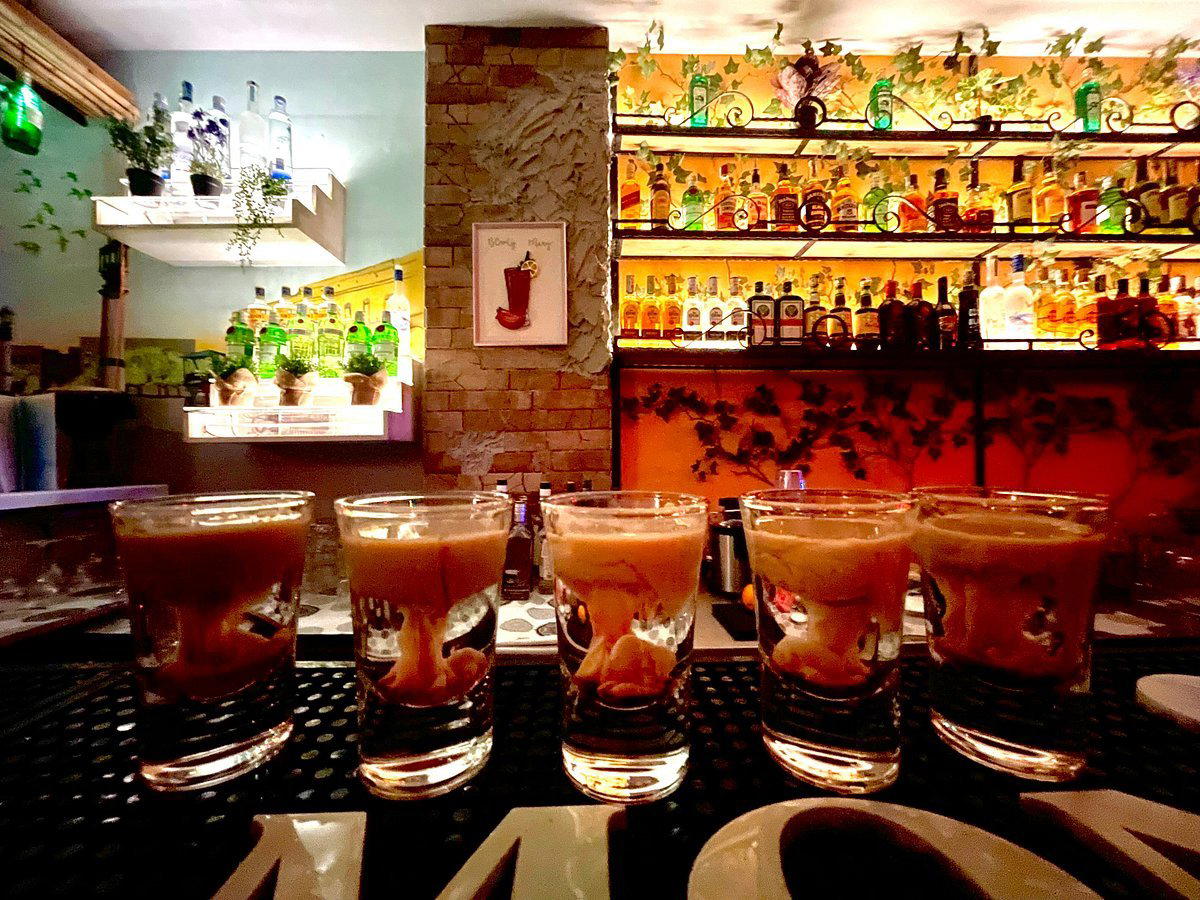
The restaurant’s public details point toward a low-capacity experience: ten seats in total, split between a six-seat counter and a four-person private room. That configuration changes the evening before a plate arrives. It reduces drift, discourages table-hopping energy, and makes the meal feel closer to a controlled salon than a conventional dining room. In Tokyo, where hospitality can be both exacting and almost invisible, this kind of scale usually rewards guests who want focus more than volume.
Membership-only, reservation-only model also belongs to a broader Tokyo pattern. At the upper end, access is often part of the format, not a gimmick. Small restaurants with high recognition protect rhythm, staffing, and purchasing by limiting the room. That can frustrate visitors who expect hotel-concierge simplicity, but it also explains why these addresses retain coherence. A ten-seat restaurant cannot behave like a public dining hall without losing the precision that gives the format its force.
There is a practical cultural point here as well. The stated approach to fragrance is not a fussy aside; it reflects a Japanese fine-dining norm in which aroma, proximity, and the experience of other guests are linked. In compact rooms, perfume and cologne become part of the shared environment. The guidance reads strict only if the restaurant is imagined as a private consumer transaction. In Tokyo’s counter culture, the room is a collective instrument.
How to place τρεῖς within a Tokyo itinerary
It belongs in the same itinerary logic as other compact, high-control rooms: schedule it as the evening’s centre of gravity, then keep the rest of the night light. The restaurant’s Minato address also positions it away from the louder late-night density of Shinjuku and Shibuya, which reinforces its role as a contained dinner rather than a rolling night out.
That contrast is useful when planning across the city. A broader Tokyo sweep might include casual curry, yakitori, café culture, and specialist counters before reaching this level of formality. For a lower-stakes Tokyo restaurant day, see 3 Chome no Curry Ya San, 124. KAGURAZAKA (Yakitori), 2D Cafe, 12/10 Shinjuku ten, and . 鮪と炭火焼き うお炭 秋葉原店. Those names map the city’s range: casual visual cafés, grilled seafood, yakitori, curry, and small urban dining formats.
The same logic applies beyond Tokyo. Japan’s dining culture is regional before it is national, which is why a Tokyo innovative-French meal reads differently from [ki:] in Kyoto.cafe in Osaka.know in Kumamoto, -Grilled beef Sukiyaki- KAMAKURA TANUKIAN 鎌倉 たぬき庵 in Kamakura, (Shoku) Vietnam in Kawasaki, or [Curry Senmon Ten] Maruyama Kyoju. in Sapporo. Even Japanese food abroad, from Jōdo Saké Bar in Los Angeles to Onigiri Time in Pasadena, underlines the same point: context changes the meaning of familiar forms.
The verdict is simple: τρεῖς is for travellers who understand that Tokyo’s serious dining culture is not only sushi, kappo, tempura, and kaiseki. Its reputation rests on small-scale control, innovative-French framing, wine-minded service, and sustained Tabelog recognition. Readers building a wider plan should use Our full Tokyo restaurants guide for the dining map, then pair it with Our full Tokyo hotels guide, Our full Tokyo bars guide, Our full Tokyo wineries guide, and Our full Tokyo experiences guide to keep the evening’s geography and pacing coherent.
Frequently asked questions
Is τρεῖς better for a quiet night or a lively one?
It is built for a quiet night. The room has 10 seats, split between a six-seat counter and a four-person private room, and it operates as a reservation-only, members-only restaurant in Tokyo’s Minato Ward.
What are the operating hours at τρεῖς?
Hours at τρεῖς: ■Business hoursFrom 18:00 onwards■Closed onThe day off varies each month.
How do I find τρεῖς?
τρεῖς is located in Tokyo.
What has τρεῖς built its reputation on?
Its reputation rests on consistency in the Tabelog system: Silver awards in 2022, 2023, 2024, 2025, and 2026, plus selection for Tabelog Innovative / Creative Cuisine "Tabelog 100" 2025. The format is also part of the appeal, with a small counter, private room, and a dinner service from 18:00 onwards.
Price Lens
Comparable venues in the metro at similar price points.
| Venue | Cuisine | Price | Awards | Notes |
|---|---|---|---|---|
| τρεῖςThis venue (the venue you are viewing) | French Fine Dining | Not listed | Tabelog Silver #160 | Not listed |
| BURDIGALA TOKYO | French Bakery-Cafe | $10–20 | Tabelog 100 #2 | Chiyoda, French Bakery-Cafe |
| Patisserie SOURIRE | Meguro, French Patisserie | $1–10 | Tabelog 100 #36 | Not listed |
| Le Pain Quotidien Toukyou middotaun ten | Belgian-Style French Bakery-Cafe | $10–20 | Tabelog 100 #44 | Minato, Belgian-Style French Bakery-Cafe |
| Avranches Guesnay | Modern French Patisserie | $10–20 | Tabelog 100 #51 | Bunkyō, Modern French Patisserie |
| ASTERISQUE | Modern French patisserie | $10–20 | Relais Desserts Member Boutique · Tabelog 100 #7 | Shibuya, Modern French patisserie |
Recognition history
Dated appearances from independent guides and award organizations, with the underlying list record or original source where available.
Tabelog Silver #160
Tabelog
Full recognition history (3 entries)
Tabelog 100 #71 · No. 71
Tabelog · Tabelog 100 - Innovative / Creative cuisine - 2025
Tabelog Silver
Tabelog
Continue exploring
More in Tokyo
Restaurants in Tokyo
All restaurants in Tokyo →


Bars in Tokyo
All bars in Tokyo →







Details
- Special Occasion
- Private Dining
- Extensive Wine List
- Tasting Menu
Elegant and sophisticated with ornate decor, attentive service, and an ornate atmosphere.