
A Michelin Plate-recognised counter in Kyoto's Shimogamo district, Sushi Kawano represents the city's quieter sushi tradition: technically disciplined nigiri formed from warm vinegared rice, served without spectacle. Chef Mitsutaka Kawano's guiding principle, that each day demands measurable improvement on the last, gives the counter a serious, practitioner-focused atmosphere that rewards guests who value craft over ceremony.
Pearl is the En Primeur Club membership app — saves, bookings, and concierge access live there. Same editors, same standards.
- Address
- Japan, 〒606-0824 Kyoto, Sakyo Ward, Shimogamo Higashihangicho, 72-8 下鴨ALLEY
- Phone
- +81 50-3503-4867
- Website
- tablecheck.com
- Directions
- Get directions
 Saves & bookings on Pearl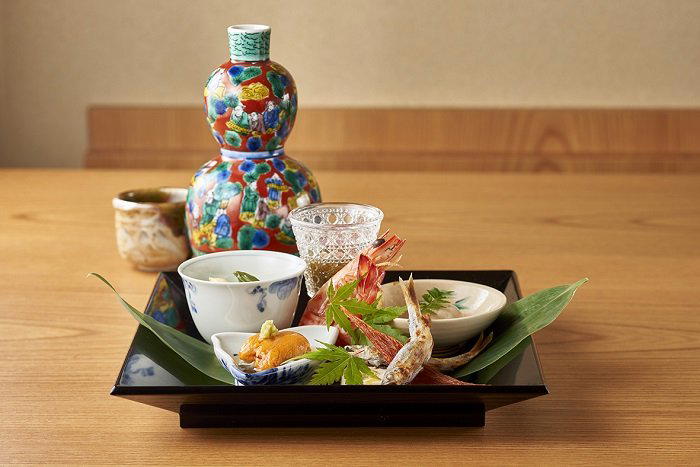
Kyoto Sushi on Its Own Terms
Kyoto has never been the city you go to for sushi the way you go to Tokyo's Ginza or Tsukiji-adjacent counters. The city's culinary identity is shaped by kaiseki discipline, by vegetables, tofu, and freshwater fish, and by an ingrained preference for restraint over showmanship. Within that context, a dedicated sushi counter that holds Michelin recognition operates as something of an anomaly, occupying a niche that sits apart from the kaiseki-dominant Kyoto restaurant scene and closer in spirit to the focused omakase model you'd find at a counter like Harutaka in Tokyo. The standards are set by fish sourcing, rice discipline, and the temperature of the hand that forms the nigiri, not by theatre or ceremony.
Sushi Kawano is a restaurant in Kyoto serving Edomae Omakase Sushi at about $150 per person. The Shimogamo area, north of central Kyoto near the confluence of the Kamo and Takano rivers, is a residential neighbourhood with a local rather than tourist-facing character. A counter operating there is, by the logic of its location, serving guests who arrive with intent.
The Rice Argument
In serious sushi circles, the rice question is never settled. Temperature, seasoning level, grain compression, and acidity ratios all shift by season and even by the fish being served that day. Particularly technically considered counters treat rice as a live variable, not a fixed base. At Sushi Kawano, the approach is documented: nigiri are formed from relatively warm vinegared rice with calibrated saltiness, and the pieces themselves are small by the standards of more casual sushi. That combination, warm rice, restrained size, reflects a precise set of choices about how fish and rice should integrate in the mouth.
This matters in the context of ingredient sourcing because warm rice accelerates the release of fat from fatty cuts, which changes how marbling registers on the palate. Small nigiri concentrate the ratio of fish to rice, shifting the flavour balance toward the protein. These are not cosmetic choices. They are technical decisions about what the sourced ingredient should taste like at the moment of consumption, which places the sourcing conversation at the centre of what the counter is doing.
Kyoto's sushi counters face a structural sourcing challenge that their Tokyo counterparts don't. The city has no significant port. Fish arrives by delivery from Osaka's markets, from the Sea of Japan coast via Maizuru or Obama, or through specialist wholesalers with Tsukiji and Toyosu relationships. What reaches Shimogamo has already travelled. The sushi chef's response to that constraint is technical: handle temperature precisely, work quickly, and form each piece at the right moment.
Where This Counter Sits in Kyoto's Dining Tiers
Kyoto's high-end dining is dominated by kaiseki, and its price architecture reflects that. Kaiseki restaurants like Gion Sasaki and Ifuki operate at ¥¥¥¥, as does Kyokaiseki Kichisen. Sushi Kawano prices at ¥¥¥, putting it alongside mid-tier competitors like cenci and Kyo Seika rather than at the summit of Kyoto's price bracket. For a restaurant at this price tier, that positioning makes the counter accessible relative to its recognition.
Within the Kyoto sushi category specifically, the comparable set is small. Sushi Rakumi and Kikunoi Sushi Ao occupy different parts of the same niche, with Kikunoi Sushi Ao carrying the Kikunoi house name and its kaiseki-adjacent identity. Counter sushi in Kyoto hasn't reached the volume or variety of Tokyo's omakase market, which means each practitioner at this level carries more representational weight for the category than they would in a denser scene. For a broader view of how Kyoto's dining tiers are structured, the full Kyoto restaurants guide maps the city's options across cuisine and price.
Sushi rooted in Kyoto's geography tends to include battera (pressed mackerel sushi) and other traditional formats shaped by the city's distance from the sea, a tradition kept by counters like Izuu. Kawano's focus on hand-formed nigiri positions the counter in a different lineage, closer to Edo-mae tradition than Kyoto's pressed or marinated styles, though the sourcing constraints of the location remain the same regardless of format.
The Discipline Behind the Counter
The Michelin Plate designation, held across two consecutive guide years, indicates a kitchen the inspectors consider worth a visit without awarding star recognition. In the current Michelin framework, the Plate signals a serious, consistent operation rather than a destination-tier experience. For a sushi counter operating outside Tokyo's high-density omakase market, consecutive Plate recognition is a meaningful signal of technical consistency, and it benchmarks Kawano against equivalent recognised counters in cities like Hong Kong and Singapore, where Edo-mae sushi has transplanted successfully into non-Japanese markets.
It maps to the iterative logic of craft-based disciplines, where marginal gains compound over years of repetition. The hurdling analogy is specific enough to be credible: both disciplines demand explosive precision within a compressed window. For sushi, that window is the seconds between forming a piece and placing it in front of a guest. Fish and rice behave differently at different temperatures, and the margin for error narrows the better the sourced ingredient is. A counter that operates on this logic is oriented toward the ingredient rather than the experience frame around it.
For visitors also exploring Kyoto's broader dining range, the city's noodle and tofu-based traditions are well-represented at counters like Izugen, while KASHIWAI offers a different reference point in the city's contemporary dining tier. Beyond Kyoto, Japan's regional counter dining scene extends through Goh in Fukuoka, HAJIME in Osaka, akordu in Nara, 1000 in Yokohama, and 6 in Okinawa.
Planning Your Visit
The restaurant is located at 72-8 下鴨ALLEY, Shimogamo Higashihangicho, Sakyo Ward, Kyoto 606-0824. Budget: ¥¥¥ (mid-to-upper range by Kyoto standards, accessible relative to the Michelin Plate recognition). Reservations: Booking in advance is advisable; no phone or booking platform details are currently listed, and the venue operates with limited public-facing online presence, approach through local reservation services or hotel concierge. Getting there: Shimogamo is accessible via the Karasuma subway line to Kitaoji Station, with the venue in the residential streets east of the Kamo River.
In Context: Similar Options
Comparable venues nearby, for context on price, style, and recognition.
| Venue | Cuisine | Price | Awards | Notes |
|---|---|---|---|---|
| Sushi KawanoThis venue — the venue you are viewing | Edomae Omakase Sushi | $$$$ | Michelin Plate | Not listed |
| Isoyama | Kaiseki Japanese | $$$$ | Michelin Plate | Nakagyō |
| Kappo Harada | Traditional Kyoto Kappo | $$$$ | Michelin Plate | Nakagyō |
| Tempura Mizuki | Michelin-Starred Tempura | $$$$ | Michelin Plate | Nakagyō |
| Ryoriya Kanemitsu | Modern Kaiseki with Charcoal Grilling | $$$$ | Michelin Plate | Shimogyō |
| Nishijin Hashimoto | Modern Japanese Kaiseki Omakase | $$$$ | Michelin Plate | Kamigyō |
Recognition history
Dated appearances from independent guides and award organizations, with the underlying list record or original source where available.
Michelin Plate
Michelin
Michelin Plate
Michelin
Michelin Plate
Michelin
Continue exploring
More in Kyoto
Restaurants in Kyoto
Browse all →
Bars in Kyoto
Browse all →
Hotels in Kyoto
Browse all →
Wineries in Kyoto
Browse all →
At a Glance
- Cozy
- Elegant
- Intimate
- Sophisticated
- Date Night
- Special Occasion
- Business Dinner
- Chefs Counter
- Sake Program
Current opening hours
- Monday
- Closed
- Tuesday
- 5:30–10 PM
- Wednesday
- 12–2 PM, 5:30–10 PM
- Thursday
- 12–2 PM, 5:30–10 PM
- Friday
- 12–2 PM, 5:30–10 PM
- Saturday
- 12–2 PM, 5:30–10 PM
- Sunday
- 12–2 PM, 5:30–10 PM
Hours can change for holidays and private events. Last verified .
Calm, refined counter seating for 9 with carefully selected tableware, creating a warm, cozy, and relaxing atmosphere.