


A Michelin-starred Chinese restaurant in Kyoto's Higashiyama district, Kyo Seika has held Tabelog Bronze recognition every year since 2017 and ranks among Japan's top 350 restaurants on Opinionated About Dining. Chef Shizuo Miyamoto draws on classical Chinese literature for recipe inspiration, working within a 16-seat room where counter positions face directly into the kitchen. Dinner runs ¥20,000–¥29,999 with a 10% service charge; open Wednesday through Sunday from 18:00.
Pearl is the En Primeur Club membership app — saves, bookings, and concierge access live there. Same editors, same standards.
- Address
- 455-2 Nishigomoncho, Higashiyama Ward, Kyoto, 605-0816, Japan
- Phone
- +81 75-744-6602
- Website
- kyoajiwa.my.canva.site
- Directions
- Get directions
 Saves & bookings on Pearl
Chinese Cooking in the Register of Kyoto
Kyoto's dining identity is defined almost entirely by kaiseki and its derivatives, the seasonal, restrained, multi-course format that shapes everything from three-Michelin-star rooms like Gion Sasaki down to neighbourhood kappo counters. Chinese cuisine occupies a distinct and more unusual position in this city. It is not the Cantonese or Sichuan mainstream of Tokyo or Osaka, nor the Yokohama Chinatown tradition. In Kyoto, the handful of Chinese restaurants that have earned sustained critical recognition tend to operate with the same seasonal attentiveness and formal pacing as their kaiseki neighbours, adapting classical Chinese technique to the rhythms and produce of the ancient capital. Kyo Seika sits at the centre of that small, serious group. It is a Michelin-starred restaurant in Kyoto serving Modern Chinese Fine Dining, with dinner priced at about ¥150 per person.
The restaurant is in Higashiyama Ward, Kyoto, on the second floor of a building at 455-2 Nishigomoncho. Since 2017 it has received the Tabelog Bronze Award without interruption. Michelin awarded it one star. For Chinese cuisine specifically in western Japan, that record is difficult to match among independently operated restaurants of this scale.
The Room and the Counter
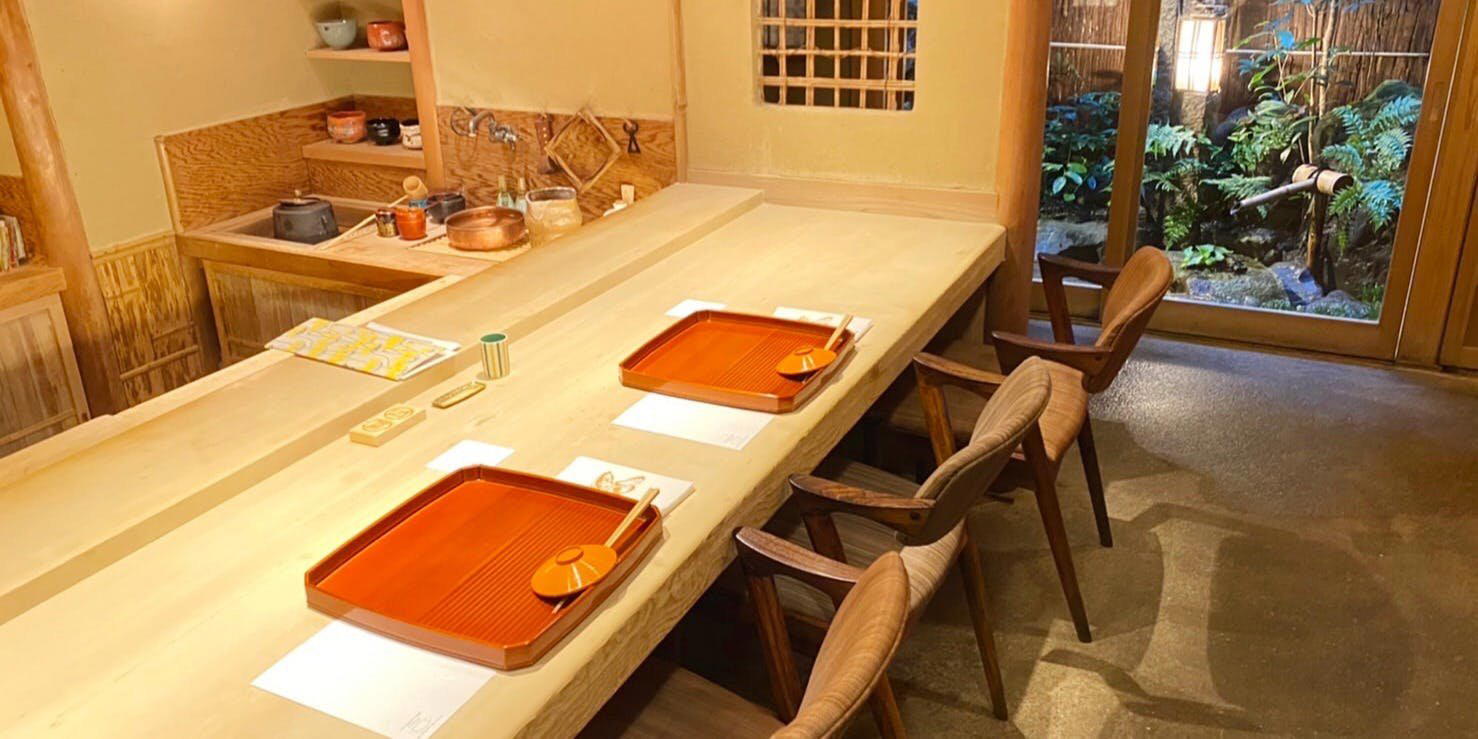
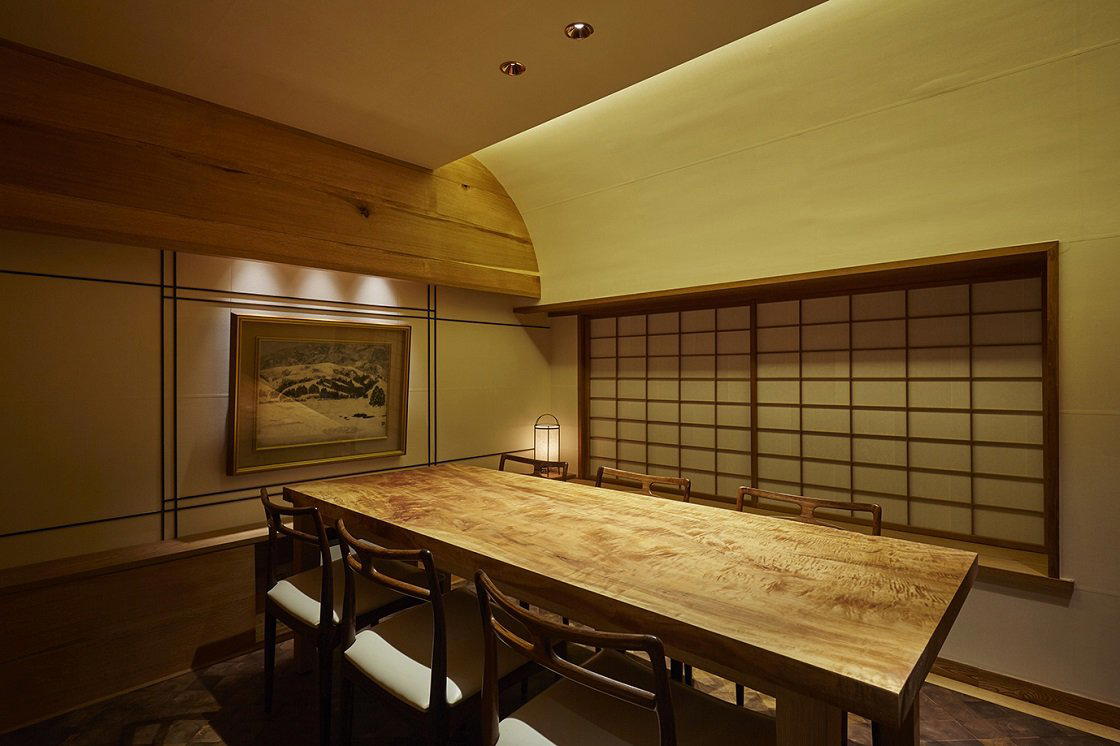
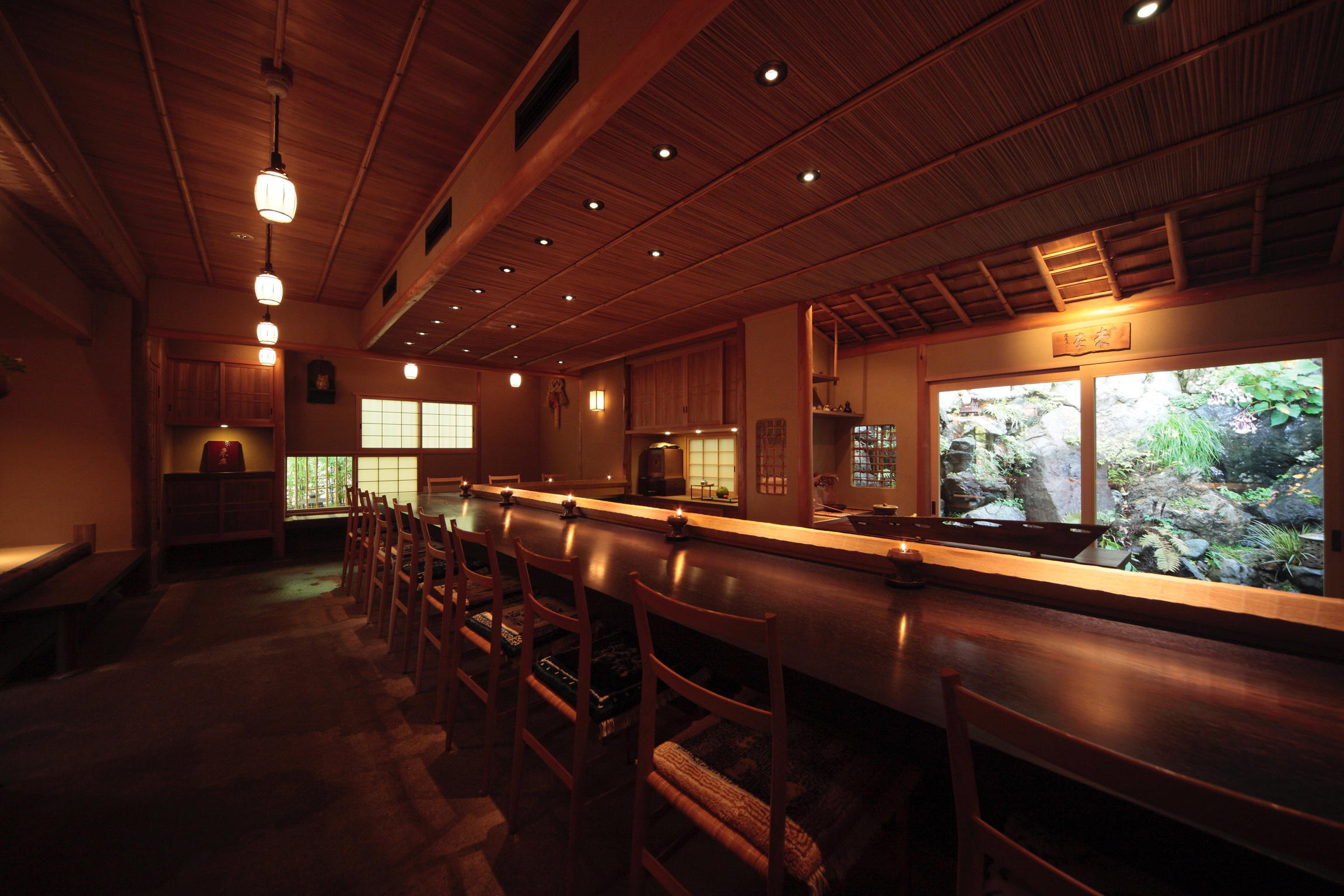
The physical format at Kyo Seika is structured around intimacy rather than volume. Total seating reaches 16 places, split between a ten-seat round table and two three-seat tables, with private rooms available for groups of four, six, eight, or between ten and twenty. The counter seating places diners directly in front of the kitchen, a configuration more common in Japanese omakase formats than in Chinese dining rooms, where the kitchen is conventionally out of sight. Here, the sounds and aromas of wok work are part of the experience rather than hidden from it. That arrangement is not coincidental: it shifts the dynamic toward something closer to a chef's table, where preparation and timing become visible rather than abstracted.
Service operates on a fixed evening-only schedule, with dinners from 5 to 10 PM daily. The room accepts credit cards, operates non-smoking throughout, and carries a 10% service charge. Wine is available. Private room hire for the full space is possible, and the restaurant has a noted reputation for business dining and celebrations. Parking is not available on site, though coin parking can be found nearby.
Classical Literature, Seasonal Fish, and the Logic of the Menu
The editorial angle that Tabelog's own description applies to Kyo Seika is specific: recipes inspired by classical Chinese literature, with a seasonal orientation and a particular emphasis on fish. That combination places the restaurant in an unusual interpretive position. Classical Chinese culinary texts, covering everything from Tang Dynasty court cooking to Qing-era household manuals, document techniques and flavour logic that predate the standardisation of regional Chinese cuisines as they exist today. Cooking from that archive, rather than from a regional template, allows for a kind of eclecticism that is neither fusion nor revisionism: it is, instead, a form of scholarship applied to the kitchen.
The seasonal fish focus connects that scholarly framework to Kyoto's own culinary logic. In kaiseki, the choice of fish is among the more precise expressions of seasonal awareness, certain species are associated with specific months, water temperatures, and preparation traditions. A Chinese kitchen working within Kyoto's produce culture, and with a stated emphasis on fish, is making a deliberate alignment with that local framework while retaining its own technique set. Stir-frying with chilli peppers, and spring rolls wrapped in three distinct ingredient types so that each mouthful varies from the last, suggest a kitchen interested in textural and flavour contrast rather than smooth uniformity, a sensibility that has more in common with northern Chinese approaches to variety than with the gentler Cantonese register most international diners associate with fine Chinese dining.
For readers accustomed to evaluating Chinese cooking through the lens of roast and char traditions, char siu, Peking duck, the precise control of Cantonese roasting, Kyo Seika operates on a different axis. The kitchen's signal is wok heat and seasonal timing, not slow roasting or lacquered finishes. That distinction matters when placing it in any comparative framework. The restaurant's fish focus and literary-classical framing suggest a menu organised around what the season dictates rather than around showcase preparations that depend on consistent year-round sourcing. Diners arriving with expectations shaped by Hong Kong roast houses or Beijing duck specialists will find a different set of priorities.
Positioning in Japan's Fine Dining Field
The sustained award record at the restaurant, seven consecutive Tabelog Bronze awards across 2017 through 2026, three Tabelog 100 inclusions, one Michelin star, and two consecutive OAD top-350 placements, is the clearest available signal of where the restaurant sits in the national hierarchy. In Kyoto specifically, where the dominant fine-dining comparable set is kaiseki-based (Ifuki at two Michelin stars, Kyokaiseki Kichisen at two stars, Gion Sasaki at three), a Chinese restaurant reaching Michelin recognition and consistent Tabelog Bronze status occupies a niche with few competitors operating at the same recognition level.
Across Japan more broadly, comparable Chinese cooking ambition at fine-dining prices can be found at addresses like Canton Shunsai Ikki in Kyoto itself. At the international level, the approach of anchoring premium Chinese cooking to a specific cultural or literary tradition rather than to regional authenticity has parallels at Restaurant Tim Raue in Berlin and Mister Jiu's in San Francisco, though both of those operate within entirely different culinary frameworks and price architectures. The Kyoto context makes the restaurant's positioning singular: it is a Chinese restaurant working with the seasonal and aesthetic logic of a kaiseki city, recognised by the same critical apparatus that evaluates that city's most serious Japanese kitchens.
For those building a broader itinerary around Kyoto's serious dining scene, the city's other recognised tables span a range of formats and price tiers. VELROSIER, Akihana, Hachiraku, and hakubi each represent different aspects of the city's dining range. Outside Kyoto, Japan's fine-dining field includes HAJIME in Osaka, Harutaka in Tokyo, akordu in Nara, Goh in Fukuoka, 1000 in Yokohama, and 6 in Okinawa, each anchored in its own regional and culinary logic.
For a full view of Kyoto's dining, drinking, and accommodation options, EP Club maintains guides to Kyoto restaurants, Kyoto hotels, Kyoto bars, Kyoto wineries, and Kyoto experiences.
Know Before You Go
- Address: Okazaki Enshojicho 36-3, 2F, Sakyo Ward, Kyoto (approximately 277 metres from Higashiyama Station, Tozai Line; also accessible via city bus stop Higashiyama Nio-mon, 2 minutes on foot)
- Hours: Wednesday to Sunday, from 18:00; closed Monday and Tuesday (closure days not fixed, confirm directly before visiting)
- Price: ¥20,000–¥29,999 per person at dinner; some reviews indicate spend up to ¥30,000–¥39,999
- Service charge: 10%
- Reservations: Available; recommended well in advance given the 16-seat capacity
- Payment: Credit cards accepted; electronic money and QR code payments not accepted
- Private rooms: Available for 4, 6, 8, or 10 to 20 guests; full private hire available
- Seating: 16 total (10 at round table; two tables of 3); counter seating faces the kitchen
- Smoking: Non-smoking throughout
- Parking: Not available on site; coin parking nearby
- Phone: +81-75-752-8521
- Website: kyoseika.com
What Should I Order at Kyo Seika?
What the available record makes clear is that the kitchen prioritises seasonal fish, with stir-fried preparations using chilli peppers noted as a signal technique, and spring rolls constructed across three ingredient types for deliberate textural variation. The menu draws from classical Chinese literary sources rather than adhering to a single regional cuisine, which means the selection changes with season and availability rather than remaining static. Given the 16-seat format and the counter configuration, the pacing and selection are effectively in the hands of chef Shizuo Miyamoto, the format rewards diners who arrive open to what the kitchen is working with rather than arriving with a fixed request.
Budget Reality Check
Comparable venues nearby, for context on price, style, and recognition.
| Venue | Cuisine | Price | Awards | Notes |
|---|---|---|---|---|
| Kyo SeikaThis venue — the venue you are viewing | Higashiyama, Modern Chinese Fine Dining | $$$$ | Michelin 1 Star | Not listed |
| Kiyama | Nakagyō, Traditional Kaiseki Washoku | $$$$ | Michelin 1 Star | Not listed |
| VELROSIER | Shimogyō, Modern Chinese Fusion | $$$$ | Michelin 2 Star | Not listed |
| Higashiyama Tsukasa | Higashiyama, Modern Kaiseki Omakase | $$$$ | Michelin 1 Star | Not listed |
| Yuyu | Not listed | $$$ | Michelin 1 Star | Shimogyō, Modern Kaiseki with Creative Japanese Touches |
| Uozuya | Nakagyō, Modern Kaiseki | $$$$ | Michelin 1 Star | Not listed |
Recognition history
Dated appearances from independent guides and award organizations, with the underlying list record or original source where available.
Michelin 1 Star
Michelin
Opinionated About Dining Top Restaurants in Japan Recommended
Opinionated About Dining
Tabelog Bronze #216
Tabelog
Tabelog 100 #76 · No. 76
Tabelog · Tabelog 100 - Chinese cuisine - WEST - 2026
Opinionated About Dining Top Restaurants in Japan Ranked #326
Opinionated About Dining
Tabelog Bronze
Tabelog
Michelin 1 Star
Michelin
Opinionated About Dining Top Restaurants in Japan Ranked #304
Opinionated About Dining
Opinionated About Dining Top Restaurants in Japan Highly Recommended
Opinionated About Dining
Continue exploring
More in Kyoto
Restaurants in Kyoto
Browse all →

Bars in Kyoto
Browse all →

Hotels in Kyoto
Browse all →

Wineries in Kyoto
Browse all →
At a Glance
- Elegant
- Relaxed
- Intimate
- Sophisticated
- Special Occasion
- Celebration
- Date Night
- Private Dining
- Sake Program
- Local Sourcing
Current opening hours
- Monday
- 5–10 PM
- Tuesday
- 5–10 PM
- Wednesday
- 5–10 PM
- Thursday
- 5–10 PM
- Friday
- 5–10 PM
- Saturday
- 5–10 PM
- Sunday
- 5–10 PM
Hours can change for holidays and private events. Last verified .
Stylish and relaxing space with elegant, beautifully crafted dishes in a hideout location.