




1 Michelin Key · La Liste Top Hotels · Virtuoso Luxury Hotel Partner
On the west bank of the Kamogawa River at Nijo Bridge, The Ritz-Carlton, Kyoto holds a Forbes Travel Guide Five-Star rating for five consecutive years and a Michelin Key, with Tempura Mizuki earning a Michelin star in 2023. Rates from $1,148 per night across 134 rooms blend ryokan sensibility with international-standard facilities, placing the property at the top of Kyoto's full-service luxury tier.

Pearl is the En Primeur Club membership app — saves, bookings, and concierge access live there. Same editors, same standards.
- Address
- 〒604-0902 Kyoto, Nakagyo Ward, Hokodenchō, 543 鴨川二条大橋畔
- Phone
- +81 75-746-5555
- Website
- ritzcarlton.com
- Directions
- Get directions
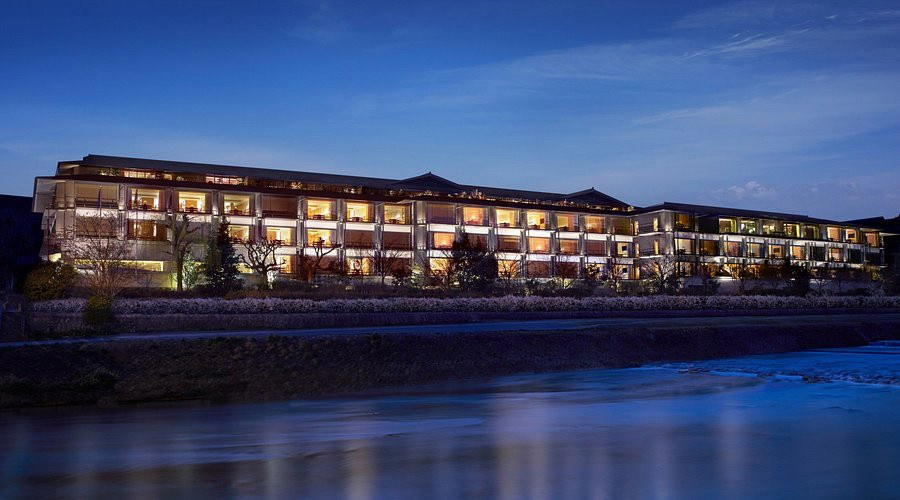
A Riverbank Site With Centuries of Precedent
The stretch of the Kamogawa River between Sanjo and Nijo bridges has drawn Kyoto's nobility since at least the seventeenth century. The refined ground along this corridor offered commanding views of the Higashiyama mountains and a degree of remove from the commercial activity of the old city centre. When The Ritz-Carlton, Kyoto opened in 2014, it occupied precisely this bank, at what its records describe as a location favoured by Japanese noblemen, and in doing so entered a site with a cultural memory longer than most international hotel groups care to acknowledge. That kind of geographical inheritance creates a specific editorial responsibility: does the property earn its position in the landscape, or does it simply rent it?
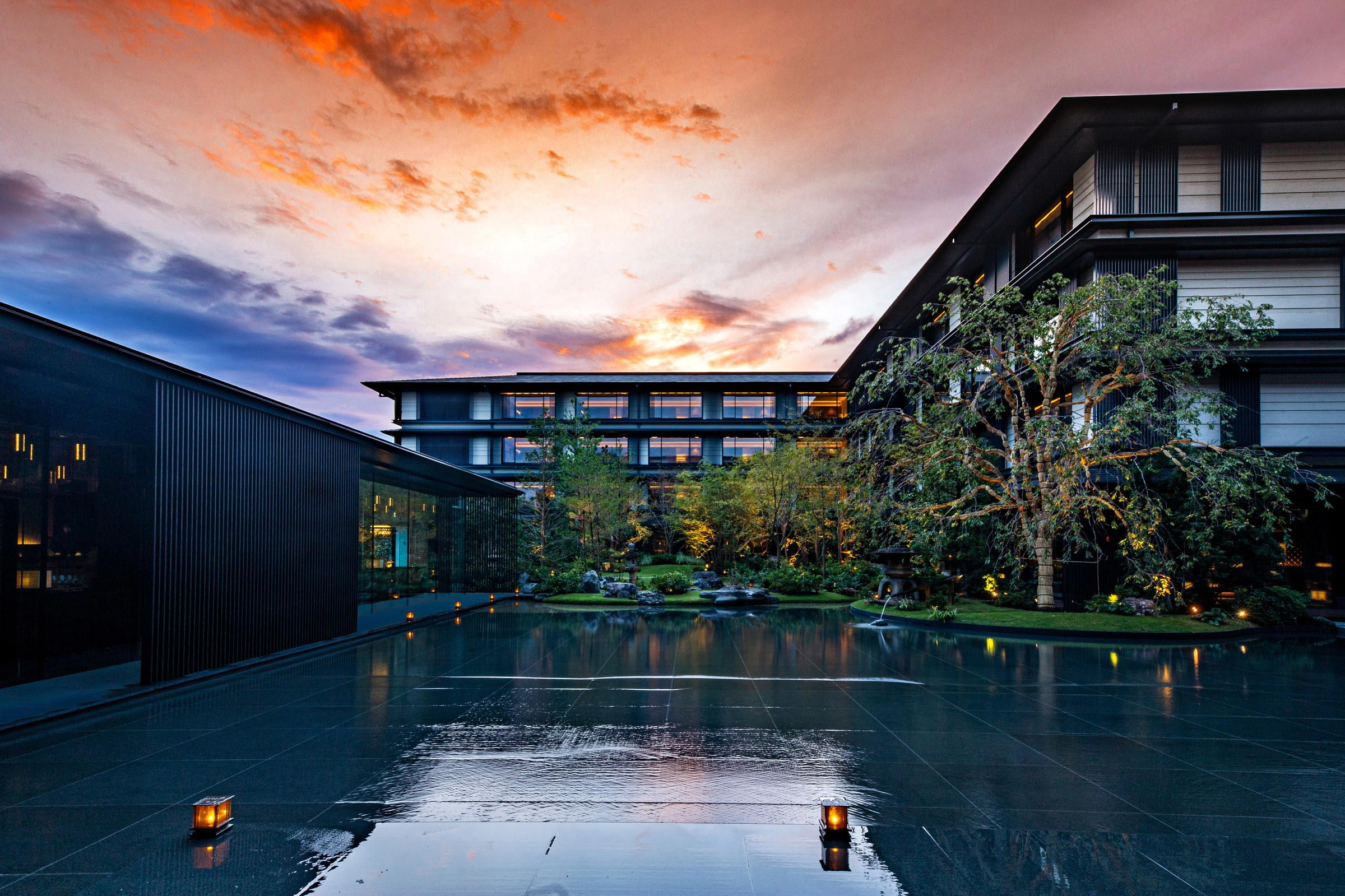
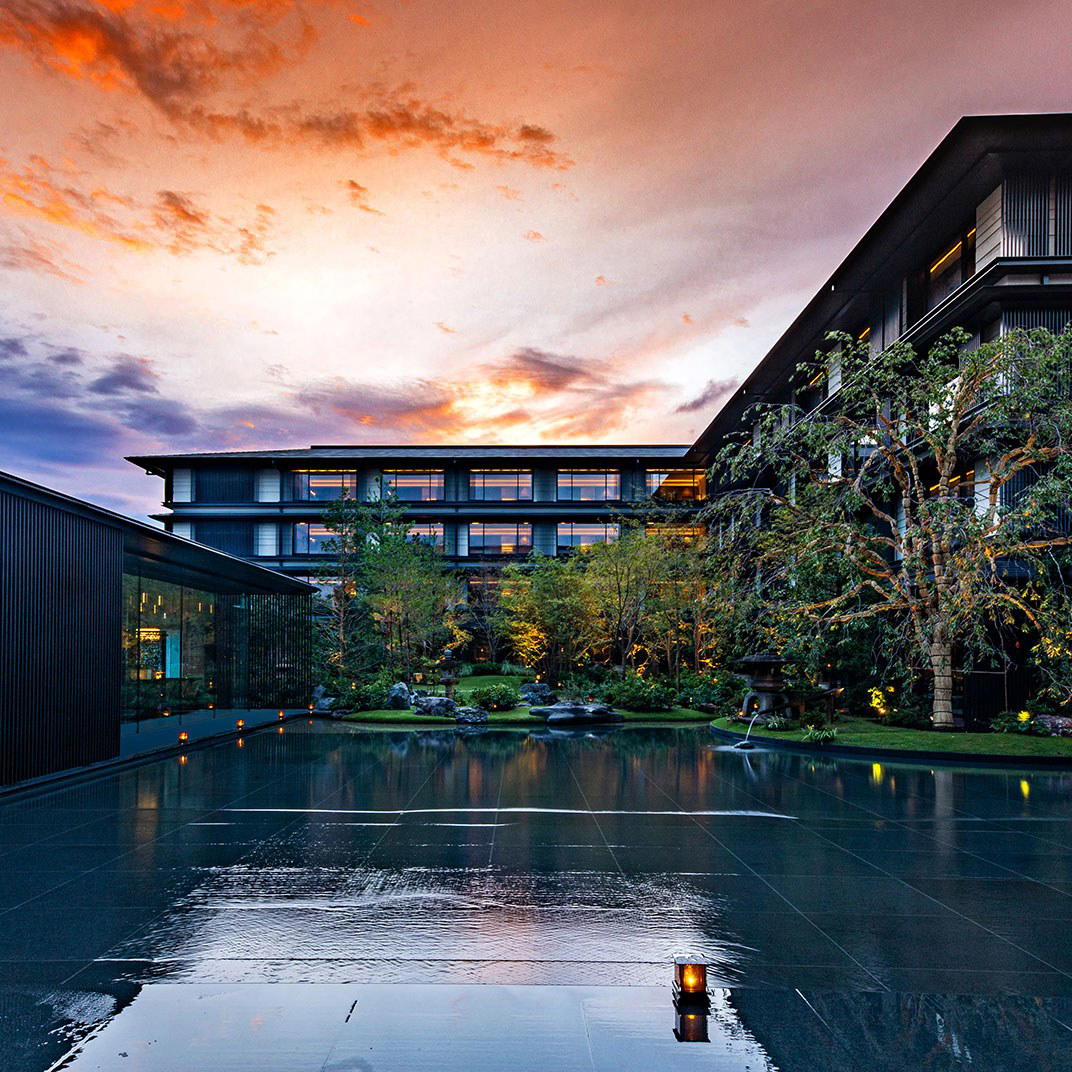
The architectural answer is considered. Rather than imposing a neoclassical European palace format on a city where rooflines carry deliberate meaning, the building keeps low and horizontal, drawing on Meiji-era detailing and natural materials to read, from the river, as a continuation of the surrounding fabric rather than a rupture of it. Kyoto's planning culture is more protective of its visual character than most Japanese cities, and properties that ignore that reality tend to feel stranded. The Ritz-Carlton's decision to stay close to the ground is not a stylistic preference but a practical reading of the city it entered.
What Kyoto Lacked Before 2014
For decades, Kyoto's accommodation offer at the premium end was almost entirely controlled by the ryokan tradition. Properties like long-established Higashiyama inns delivered kaiseki meals, tatami rooms, and highly ritualised hospitality formats that attracted guests prepared to participate in that tradition. What was absent, until 2014, was a full-service luxury hotel capable of handling international business travel, multi-generational family groups, and guests who wanted a spa, a fitness centre, and a full-length pool alongside a culturally coherent room. Condé Nast Traveler's Readers' Choice Awards ranked the property first among Japan's leading ten hotels in 2017; Travel and Leisure's World's Leading Awards placed it first in Kyoto in 2018 and in their leading fifteen Asia city hotels in 2020. Those recognitions came because the category it filled was genuinely vacant, not because competition was soft.
Four Seasons Hotel Kyoto opened in 2016 to the south in Higashiyama; Park Hyatt Kyoto followed in 2019 with a smaller, more architecturally specific property on the Higashiyama slope itself. More recently, Aman Kyoto established a garden-retreat format in a northern forest setting, while HOTEL THE MITSUI KYOTO repurposed a historic Mitsui family estate near Nijo Castle. Each property occupies a distinct position: Aman at the contemplative and secluded end, Park Hyatt at the design-specific hillside tier, and the Ritz-Carlton at the full-service riverbank position with the broadest range of facilities. SOWAKA and The Shinmonzen operate in the Gion district at smaller scale. For a broader read of where these properties fit, the EP Club Kyoto guide maps the full landscape.
The Rooms and the Ryokan Parallel
The 134-room count places the property in boutique territory by international luxury standards, though it is larger than most Kyoto ryokans. A number of tatami-style suites offer the closest approximation to the ryokan format within the Ritz-Carlton framework, with floor seating, shoji-style screens, and the spatial logic that Japanese interior design applies to low furniture. The so-called western-style rooms are not, however, a simple concession to international preference: the design vocabulary across both categories draws on natural materials, minimal surface decoration, and oversized windows oriented toward either the hotel's interior Japanese garden or the river itself. Yukata, high-specification bathrobes, and Kyoto Shabon-ya handmade soap and bath salts are consistent across room types, keeping the sensory register anchored to the city. Rates from $1,148 per night reflect the property's position in the upper tier of Kyoto's market, where the Forbes Travel Guide has awarded Five-Star status for five consecutive years through at least 2022, and where the La Liste Leading Hotels 2026 rankings assign a score of 96.5 points.
The Dining Operation
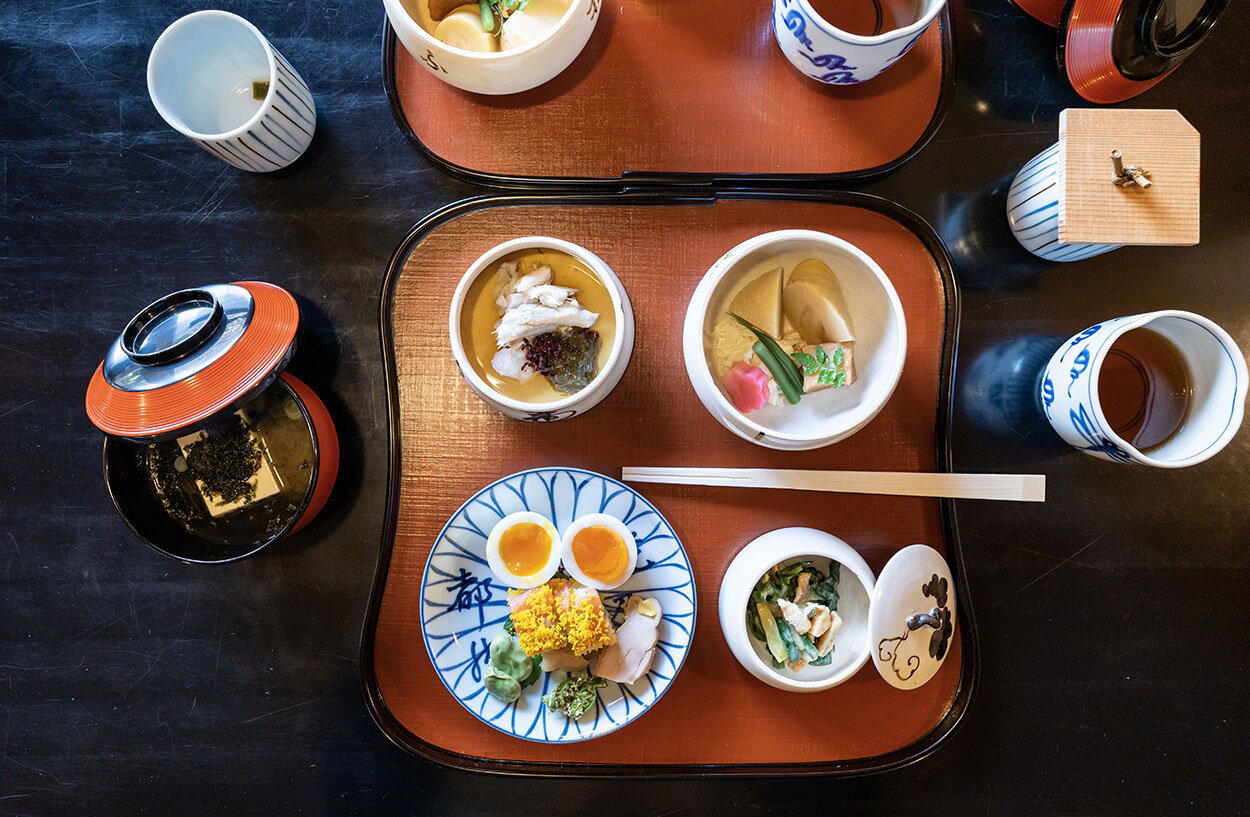
In Kyoto, the kaiseki tradition sets a high competitive bar for hotel dining. The city's independent kaiseki restaurants include some of the most decorated in Japan, and a hotel restaurant operating in that category cannot rely on convenience alone. Tempura Mizuki, the property's flagship Japanese restaurant, earned a one-star rating in the Michelin Guide Kyoto Osaka 2023, which places it among Kyoto's credentialled dining addresses rather than simply among hotel restaurants. Tempura as a Michelin-starred format is less common than kaiseki in Kyoto's recognition record, which makes the specificity of the recognition noteworthy. The property also operates La Locanda, an Italian dining room, and a lobby lounge offering Pierre Hermé pastry collaborations. The Ritz-Carlton holds a Michelin Key recognition in the 2024 Guide, a hotel-specific distinction that assesses the broader guest experience beyond the restaurant alone.
Facilities and the Case for Full-Service
The argument for a full-service property in Kyoto, as opposed to a ryokan, comes down to what a ryokan cannot provide at scale. A traditional onsen experience is available across many Kyoto accommodations; what is harder to source in a single property is a 20-metre indoor pool alongside that water culture, or a full-service spa with fitness facilities. Walking distance to Gion, one of Kyoto's most concentrated areas for dining, nightlife, and traditional entertainment, is a practical asset: the property's address at the Kamogawa Nijo bridge puts major dining corridors within a short walk without requiring a taxi or a transit plan. Guests arriving in Kyoto by Shinkansen from Tokyo (approximately two hours and fifteen minutes from Tokyo Station to Kyoto Station) can reach the property by taxi from the station in under fifteen minutes depending on traffic.
Kyoto in Context: Japan's Luxury Hotel Circuit
The Ritz-Carlton, Kyoto sits within a broader Japan luxury hotel circuit that extends to properties with significantly different orientations. Gora Kadan in Hakone and Amanemu in Mie represent the traditional onsen resort model at the upper tier; Asaba in Izu and Nishimuraya Honkan in Kinosaki-cho anchor the ryokan tradition at its most refined. For contemporary design with an art focus, Benesse House in Naoshima operates in a category of its own. In Japan's major urban centres, Bvlgari Hotel Tokyo represents the ultra-luxury branded entrant in Tokyo. The Ritz-Carlton, Kyoto is the full-service city-hotel option for guests who want cultural immersion through architecture and dining without surrendering international hotel infrastructure. Those prioritising the most secluded forest setting should consider Zaborin in Kutchan or ENOWA Yufu in Yufu; those prioritising subtropical settings might look to Halekulani Okinawa or Jusandi in Ishigaki. Other properties like Fufu Kawaguchiko and Fufu Nikko occupy the mid-scale ryokan-hybrid tier that the Ritz-Carlton is deliberately not competing with. For international comparison, the full-service luxury urban model plays out differently at Aman New York and The Fifth Avenue Hotel, or in Europe at Aman Venice.
Planning Your Stay
Kyoto operates on two distinct peak seasons: late March to early April for cherry blossom and mid-November for autumn foliage. During those windows, room availability compresses significantly across the entire city and rates across all full-service properties reflect the demand. Booking three to four months ahead for spring or autumn travel is a reasonable working assumption at this tier. The Ritz-Carlton, Kyoto is a Marriott International property, so Bonvoy members can access the reservation system through that programme's standard channels. The Ace Hotel Kyoto and Dusit Thani Kyoto offer alternative price points for those looking at different budget thresholds in the city. For guests focused primarily on temple access and garden culture, Sekitei in Hatsukaichi-shi operates near Hiroshima as a day-trip extension from Kyoto by Shinkansen.
Booking and Cost Snapshot
Comparable venues nearby, for context on price, style, and recognition.
| Venue | Cuisine | Price | Awards | Notes |
|---|---|---|---|---|
| The Ritz-Carlton, KyotoThis venue — the venue you are viewing | Nakagyō, Japanese-inspired urban resort | $500–750 | 1 Michelin Key · La Liste Top Hotels | Not listed |
| Hiiragiya | Not listed | $500–750 | 1 Michelin Key | Nakagyō, Traditional Japanese ryokan blending Edo-Meiji heritage with modern comforts |
| Dusit Thani Kyoto | Not listed | $1,000–1,500 | 1 Michelin Key · La Liste Top Hotels | Shimogyō, Urban luxury sanctuary fusing Thai and Japanese design |
| MUNI KYOTO by Onko Chishin | Not listed | Not listed | 1 Michelin Key · Michelin Guide New Hotels New Hotel | Ukyō, Contemporary luxury riverside retreat blending Japanese tranquility with modern design |
| Garrya Nijo Castle Kyoto | Not listed | Not listed | 1 Michelin Key | Nakagyō, Modern Japanese luxury boutique blending tradition and contemporary design |
| Hoshinoya Kyoto | Not listed | $750–1,000 | 1 Michelin Key · Tatler Listed in Best Hotels Asia-Pacific | Nishikyō, luxury hybrid ryokan blending traditional Japanese architecture with modern comforts |
Recognition history
Dated appearances from independent guides and award organizations, with the underlying list record or original source where available.
Michelin 1 Key
Michelin
La Liste Top Hotels
La Liste
Conde Nast Gold List
Conde Nast
Forbes 5-Star
Forbes
Virtuoso Luxury Hotel Partner
Virtuoso
Full recognition history (7 entries)
Michelin 1 Key
Michelin
Michelin 1 Key
Michelin
Continue exploring
More in Kyoto
Hotels in Kyoto
Browse all →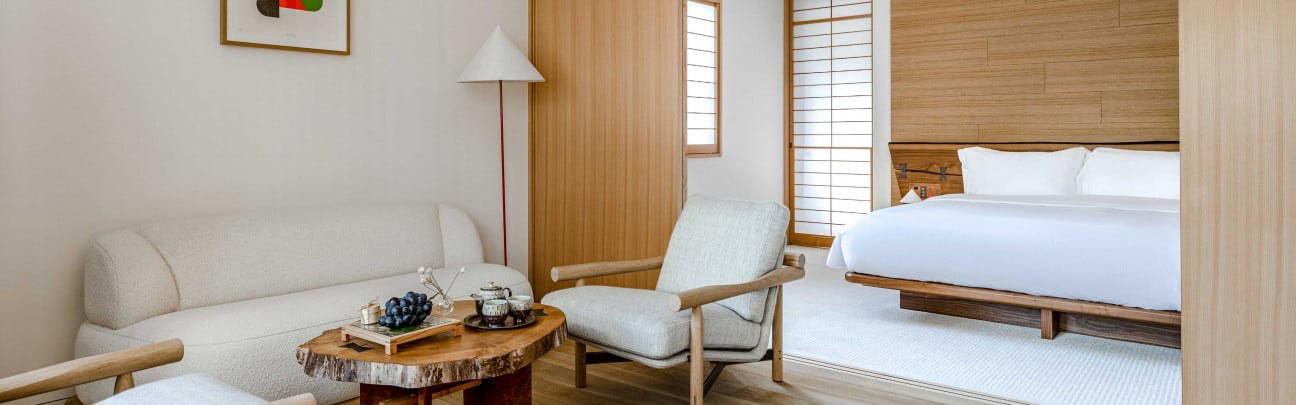
Bars in Kyoto
Browse all →
Restaurants in Kyoto
Browse all →
Wineries in Kyoto
Browse all →
Details
- Elegant
- Sophisticated
- Quiet
- Ornate
- Romantic Getaway
- Honeymoon
- Anniversary
- Historic Building
- Panoramic View
- Spa
- Pool
- Fitness Center
- Room Service
- Concierge
- Valet Parking
- Wi Fi
- Mountain
- Garden
- Wheelchair Accessible
- Elevator
- Step Free Entrance
Calm and refined with soft lighting, water features, tatami scents, and serene river and mountain views fostering deep relaxation.