1 Michelin Star
Our verdict
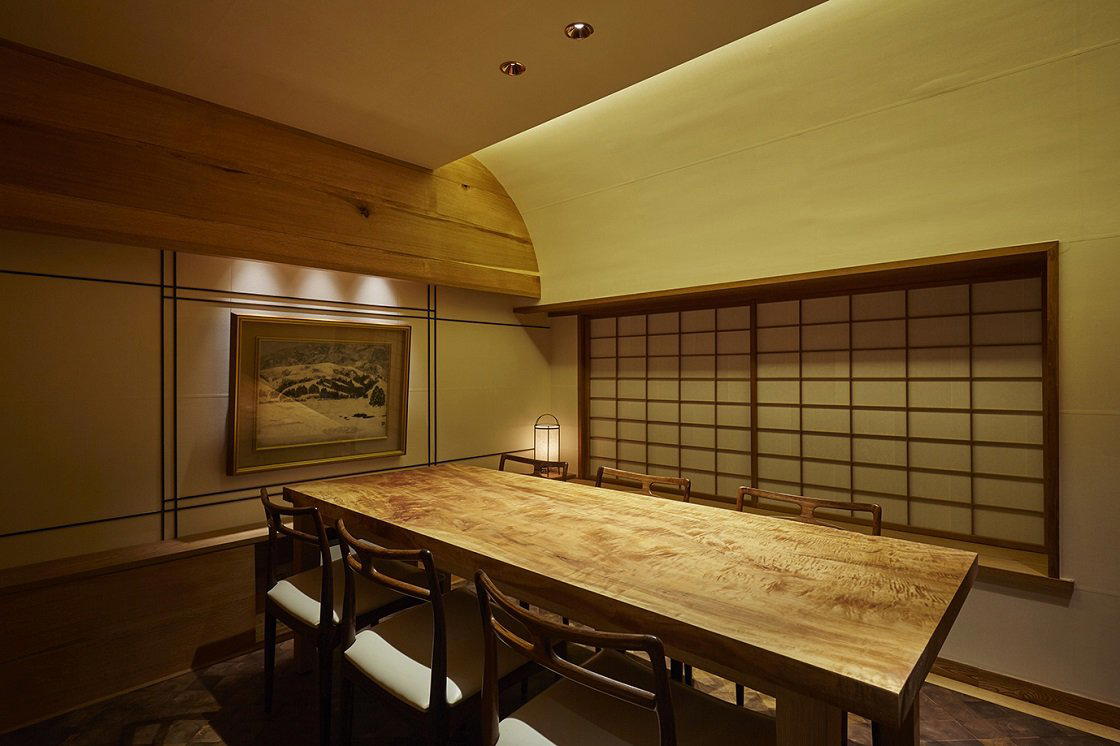
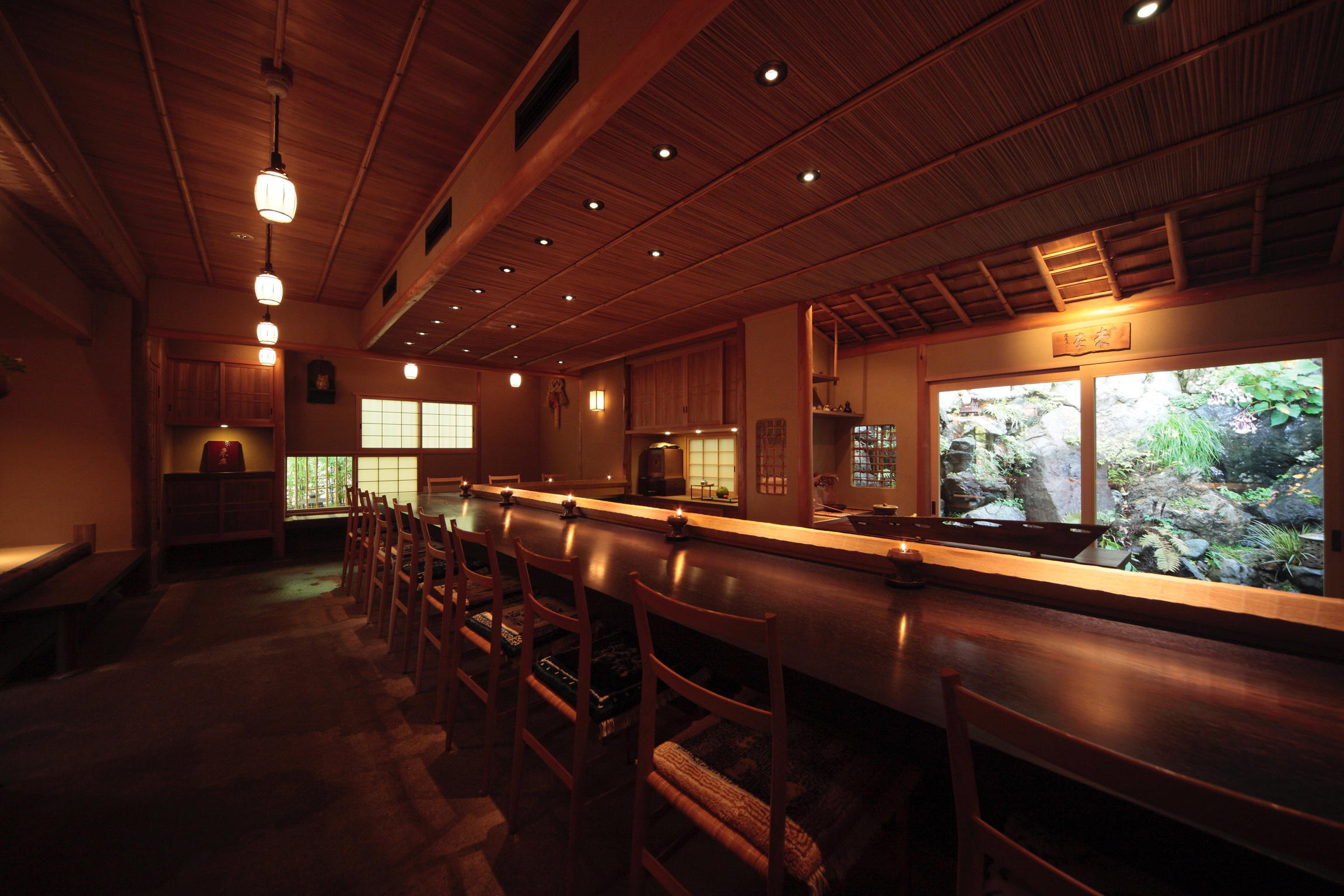
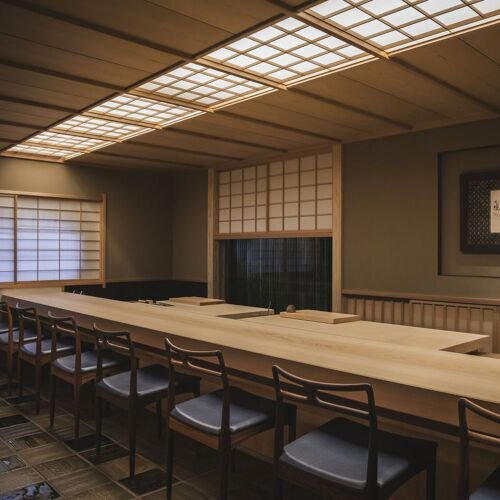
Kikunoi Sushi Ao is the sushi offshoot of Kyoto's storied Kikunoi ryotei, operating in the '¥¥¥¥' tier with a kappo-style format that weaves nigiri through a progression of appetisers, sashimi and soup. Ingredients receive unusually direct treatment, tiger prawn char-grilled in the shell, conger eel finished with black seven-spices, while Rosanjin ceramics add a layer of material culture few sushi counters in Japan can match.

Pearl is the En Primeur Club membership app, where members save venues, book tables and use the concierge.
The menu
What to order
- Warm hamo sashimi
- Chutoro nigiri
- Conger eel tofu soup
Where Kaiseki Logic Meets the Sushi Counter
Kyoto's premium dining scene operates on a different axis from Tokyo's. Where the capital concentrates its leading sushi in Ginza and Azabu counter rooms built around tightly sequenced omakase, Kyoto's high-end eating has always been shaped by kaiseki's seasonal, course-driven logic. The city's ¥¥¥¥-tier restaurants, including kaiseki houses like Gion Sasaki at three Michelin stars and Ifuki at two, treat the meal as an orchestrated progression, not a showcase of individual cuts. Kikunoi Sushi Ao sits precisely at the intersection of those two traditions: a sushi counter conceived by the Kikunoi ryotei, one of Kyoto's most closely watched kaiseki institutions, and structured around the kappo format rather than conventional omakase.
The result is a format that exists in a narrow space within Japanese dining. Kappo, which means roughly 'to cut and to cook', places skilled preparation visibly in front of the guest but allows considerably more latitude in pacing and sequence than a kaiseki multi-room service. At Kikunoi Sushi Ao, nigiri do not arrive as a separate event or an afterthought. They are interspersed through a flow that includes appetisers, sashimi and soup, the meal's architecture is borrowed from kaiseki, but the sushi counter is its spine. For a diner deciding between Kyoto's top-tier options, that distinction matters when weighing what kind of experience to pursue at the ¥¥¥¥ price point.
What the Ingredients Tell You
High-end sushi in Japan is frequently evaluated through restraint: how little is done to the fish, how precise the rice temperature, how clean the transitions between courses. Kikunoi Sushi Ao takes a different position. The preparation notes on record here are not about subtraction but about deliberate addition and technique. Japanese tiger prawn is char-grilled and scorched in the shell, a process that layers smoke and caramelised shell aromatics into an ingredient that most counters serve raw or briefly poached. Conger eel is seasoned with black seven-spices and buds of the pepper tree, a combination that introduces botanical complexity rarely applied to eel in sushi formats.
These are not casual flourishes. They reflect the ryotei kitchen's confidence in applying heat and seasoning with intention, applied now to sushi's core ingredients. Compared to peers like Sushi Rakumi in Kyoto, or to the more strictly classical formats found at counters like Harutaka in Tokyo or Shoukouwa in Singapore, the approach here is kitchen-forward rather than counter-minimalist. Whether that suits a given diner depends on what they are seeking from the format, but it marks Kikunoi Sushi Ao clearly within the range of Japan's high-end sushi options.
The Rosanjin Dimension
In Japan's ceramics history, Kitaoji Rosanjin occupies a singular position. An early twentieth-century artist, calligrapher, and dedicated epicure, Rosanjin believed that vessels were inseparable from the food served in them, he created his own tableware for his Taishō-era restaurant Hoshigaoka Saryo and produced work that now commands substantial sums at auction. His ceramics carry a cultural weight in Japanese gastronomy that has few equivalents in Western fine dining.
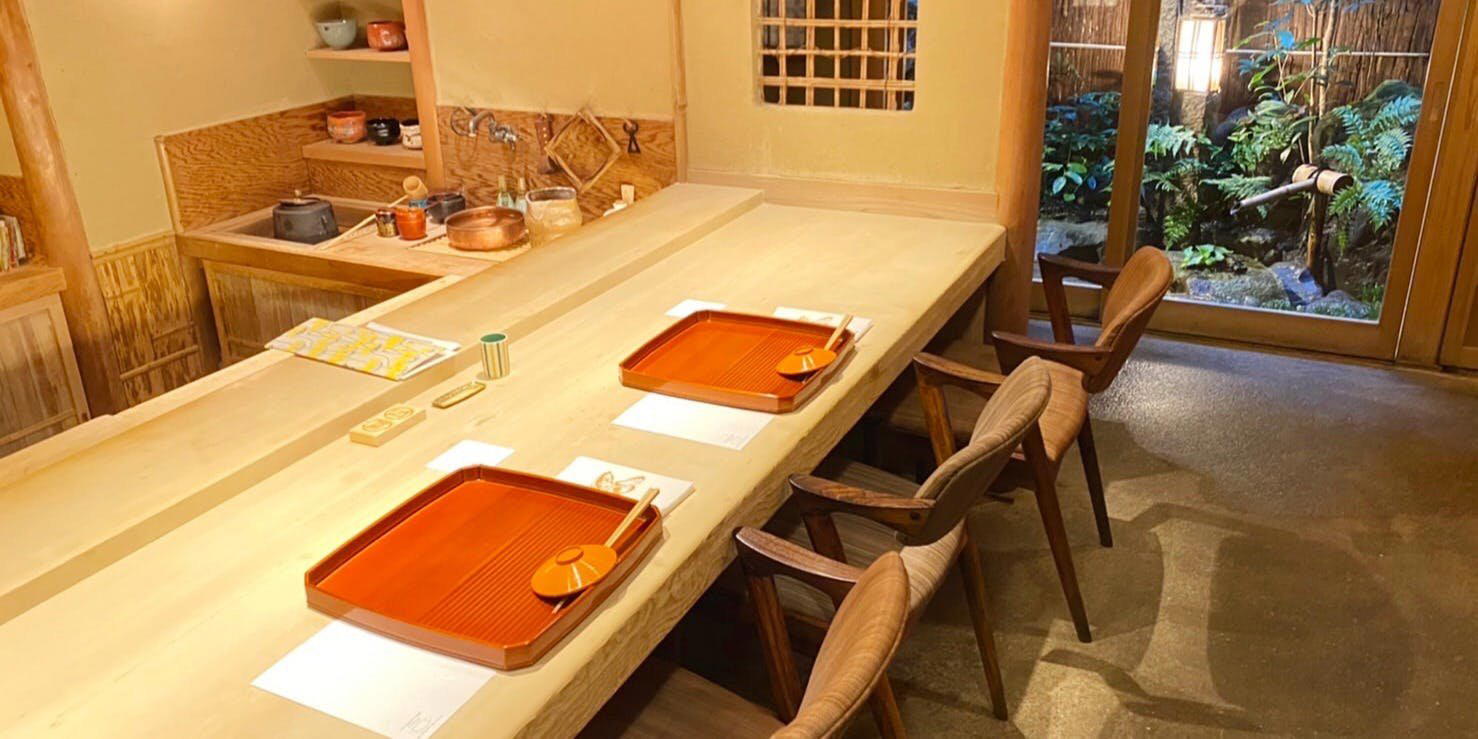
At Kikunoi Sushi Ao, guests are offered a choice of serving ware and sake decanters from Rosanjin's work. This is not a display cabinet or a historical footnote, it is part of the meal's material experience. The practice of choosing one's vessel before a course arrives is itself rooted in kaiseki custom, where the seasonal alignment of tableware and food is considered as carefully as the menu. Applying that logic to a sushi counter format, with Rosanjin pieces in active use rather than behind glass, places Kikunoi Sushi Ao in a category of one within its price tier.
Value at the ¥¥¥¥ Tier: What the Price Point Actually Buys
Kyoto's ¥¥¥¥ restaurant tier covers a range of formats and experiences. At the kaiseki end, houses like Kyokaiseki Kichisen at two Michelin stars represent a centuries-deep tradition of seasonal Japanese cuisine where every element, from lacquerware to soup temperature, is considered within a formal framework. At the sushi end, the ¥¥¥¥ designation elsewhere in Japan typically signals premium omakase counters with chef pedigrees from major sushi schools and heavily sourced Tsukiji or Toyosu fish.
What Kikunoi Sushi Ao offers within this tier is something different in composition: the institutional authority of the Kikunoi ryotei, a format that crosses genre boundaries deliberately, active use of historically significant ceramics, and an ingredient treatment philosophy that reflects a full kitchen rather than a purity-focused counter. For a reader comparing options, that proposition sits differently against a classical omakase room or a kaiseki progression. It is not a lesser version of either; it is a distinct format that carries its own criteria for assessment. Nearby alternatives worth considering include Izugen, Izuu, and KASHIWAI, each operating in adjacent Kyoto dining traditions with their own format logic. Kiu is another point of reference for those exploring Kyoto's upper-tier options.
Elsewhere in Japan's premium circuit, the format contrast sharpens further: HAJIME in Osaka operates a French-Japanese fine dining model, akordu in Nara brings a European framework to local ingredients, Goh in Fukuoka works through Hakata kaiseki traditions, and 1000 in Yokohama and 6 in Okinawa represent regional fine dining at the outer edges of Japan's premium scene. Sushi Shikon in Hong Kong extends the comparison across borders, offering a point of calibration for how top-tier Japanese sushi performs when transplanted. Against all of these, Kikunoi Sushi Ao's kappo-sushi hybrid reads as a format specific to Kyoto's institutional dining culture.
Know Before You Go
Know Before You Go
- Address: Shimokawaracho 459, Higashiyama Ward, Kyoto 605-0825, Japan
- Cuisine: Sushi kappo (sushi integrated into a kaiseki-style progression)
- Price range: ¥¥¥¥ (premium tier)
- Chef: Tony Pastor
- Booking: Contact details not publicly listed; approach via the Kikunoi ryotei directly or through a concierge service
- Practical note: Higashiyama Ward is walkable from Gion-Shijo station and accessible by taxi from central Kyoto; the area is busiest during cherry blossom and autumn foliage seasons, when advance planning is advisable
Frequently asked questions
Does Kikunoi Sushi Ao have a Michelin star or similar recognition?
Kikunoi Sushi Ao has received recognition including: A ‘sushi kappo’ opened by the ryotei Kikunoi. Sushi is Japanese food, after all, so inventive steps are taken to incorporate sushi into the proceedings, interspersing nigiri into the flow of appetisers, sashimi and soup. Treatment of ingred….
What's the price range at Kikunoi Sushi Ao?
Pricing at Kikunoi Sushi Ao is listed as ¥¥¥¥.
What should I order at Kikunoi Sushi Ao?
The sushi kappo format means no à la carte selection: the kitchen controls the sequence, weaving nigiri through appetisers, sashimi, and soup. Standout preparations documented at the venue include Japanese tiger prawn char-grilled and scorched in the shell, and conger eel seasoned with black seven-spices and buds of the pepper tree. Arriving with dietary restrictions flagged in advance is advisable given the fixed flow of the meal.
What style of cooking does Kikunoi Sushi Ao do?
A Lean Comparison
| Venue | Cuisine | Price | Awards | Notes |
|---|---|---|---|---|
| Kikunoi Sushi AoThis venue (the venue you are viewing) | Kyoto-Style Sushi Omakase with Kaiseki | $300–500 | 1 Michelin Star | Not listed |
| Gion Sasaki | Modern Kaiseki | $300–500 | 3 Michelin Stars · La Liste Top Restaurants | Kaiseki, Japanese |
| cenci | Innovative Italian-Japanese Fusion | $100–150 | 1 Michelin Star · World's 50 Best #76 | Italian |
| Ifuki | Sumibi Kappo Kaiseki | $200–300 | 2 Michelin Stars · La Liste Top Restaurants | Kaiseki |
| Kyokaiseki Kichisen | Kyoto Kaiseki | $200–300 | 2 Michelin Stars · La Liste Top Restaurants | Japanese |
| Kyo Seika | Modern Chinese Fine Dining | $150–200 | 1 Michelin Star · Tabelog Bronze #216 | Chinese |
Recognition history
Dated appearances from independent guides and award organizations, with the underlying list record or original source where available.
Michelin 1 Star
Michelin
Opinionated About Dining Top Restaurants in Japan Highly Recommended
Opinionated About Dining
Full recognition history (3 entries)
Michelin Plate
Michelin