
Michelin Plate
Our verdict
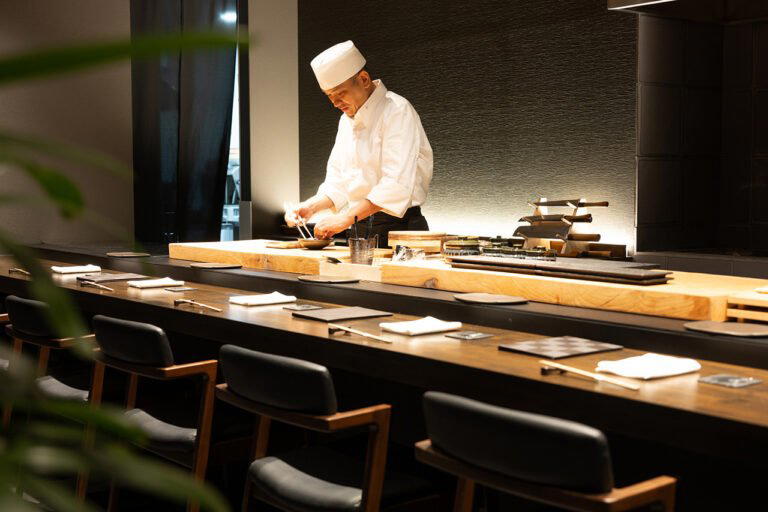
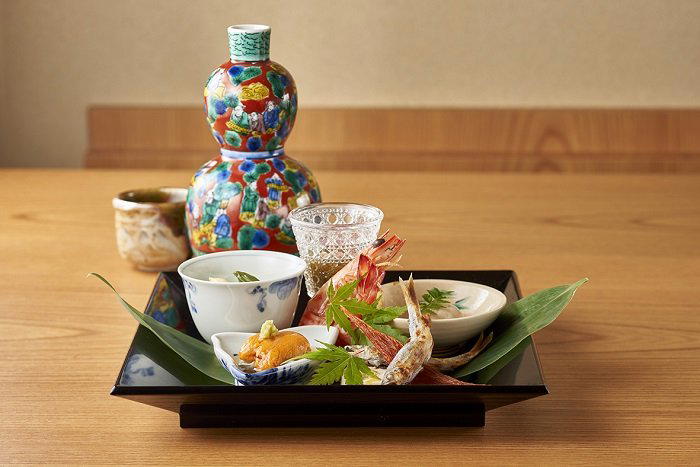
A Michelin Plate recipient in Pontocho's back alleys, Isoyama blends izakaya and kappo traditions into an omakase format built around sake pairings. Small plates of vinegared mackerel, simmered octopus, and char-grilled fish arrive alongside shuto and konowata pastes, all set to Showa-era music in a pub-style interior that sits at odds with Kyoto's more ceremonial dining rooms.

Pearl is the En Primeur Club membership app, where members save venues, book tables and use the concierge.
A Back Alley in Pontocho, and What It Says About Kyoto Dining
Pontocho is one of Kyoto's most compressed hospitality corridors: a single narrow lane running parallel to the Kamo River, lined with restaurants at every price point from standing ramen bars to formal kaiseki rooms that require introduction. But the lane itself is only the beginning. Behind it, a network of even narrower side alleys branches off into residential quiet, and it is in one of these, alley 25, off the main Pontocho stretch, that a small sign emits a faint light after dark. This is the approach to Isoyama, and the approach itself frames the entire experience. Kyoto has trained diners to expect ceremony and formality; this alley walks that back before you've even opened the door.
The city's higher-tier dining rooms, places like Isshisoden Nakamura or Gion Matayoshi, operate in a register of deliberate restraint: hushed interiors, considered service rhythms, menus that move through seasonal kaiseki logic with careful pacing. Isoyama works from a different premise entirely. The interior is described as cozy in the pub sense, and Showa-era popular music fills the room, a detail that signals intent. This is not a venue performing casualness while secretly asking for formal behaviour. The pub atmosphere is the atmosphere.
Two Training Traditions, One Omakase Menu
What makes Isoyama worth the alley navigation is the kitchen's compositional range. The omakase format here draws from two distinct professional lineages: izakaya training, which prizes accessibility and the logic of food that pairs directly with drink, and kappo experience, a more technically rigorous Japanese cooking discipline that involves precise knife work, careful stock construction, and a broader repertoire of cooking methods including steaming, simmering, and char-grilling.
These two traditions don't typically share a menu. Izakaya cooking is vernacular and convivial; kappo sits closer to the formal end of the spectrum without quite reaching kaiseki's ritualism. Putting them into dialogue produces something that Kyoto's more categorically minded dining scene doesn't often deliver: a meal that reads as casual while the kitchen is operating at a considered technical level. This is the genuine tension that Isoyama sits inside, and the Michelin Plate recognition it has received in both 2024 and 2025 registers that tension as a real achievement rather than a category confusion.
The small-plates format extends the menu across numerous courses, each relatively modest in scale, which keeps the pacing lively and the variety high. Vinegared mackerel and simmered octopus are products of the izakaya side of the house; soups and char-grilled items carry the kappo influence. The pairing logic is built around sake rather than wine, and the kitchen demonstrates this most specifically through the use of shuto (pickled and seasoned fish entrails) and konowata (salted sea cucumber entrails) paste alongside grilled fish, two intensely flavoured, umami-forward condiments chosen for their affinity with sake. These are not decorative gestures toward Japanese tradition. They are functional, specific flavour decisions that only make sense if the meal is understood as a sake-drinking occasion first and a food occasion second.
Where Isoyama Sits in Kyoto's ¥¥¥ Tier
At the ¥¥¥ price level, Kyoto's options are more varied than the city's kaiseki reputation suggests. There are Italian rooms like cenci, which holds a Michelin star and operates at the same price point, and Chinese kitchens like Kyo Seika, also starred. Isoyama holds the Michelin Plate rather than a star, which positions it correctly: this is not a room chasing the formal recognition ladder, and the Plate signals quality preparation without the ceremony that typically accompanies Michelin-starred service in this city.
For comparison, the kaiseki rooms at the ¥¥¥¥ level, Kenninji Gion Maruyama, Kikunoi Roan, and Kodaiji Jugyuan among them, ask for longer dining windows, more structured service, and a different behavioural contract from the diner. Isoyama operates in a register where the Showa soundtrack and the pub-adjacent atmosphere are features, not compromises. That positioning is relatively rare in a city where even mid-range restaurants tend to apply formality as a default.
Elsewhere in Japan, izakaya-adjacent omakase formats appear at various price points: Harutaka in Tokyo represents the capital's counter culture at the higher end, while Goh in Fukuoka shows how regional cities have developed their own technically serious small-plate traditions. In Kyoto specifically, Isoyama's izakaya-kappo hybrid is doing something that the city's more famous dining tier doesn't address: feeding people well in a room where you can relax completely, while still serving dishes that required real skill to produce. For those interested in the broader Kansai dining scene, HAJIME in Osaka and akordu in Nara offer useful points of comparison across different registers and price levels.
The Pontocho Address and What It Requires
Nabeyacho 212-3, Pontocho alley 25 in Nakagyo Ward is a specific address that Google Maps will locate, but the actual navigation involves reading the alley numbering system, which is not immediately intuitive for first-time visitors to the area. The broader Pontocho lane runs between Sanjo and Shijo streets and is walkable from central Kyoto hotels. Evening is the operative visit window; this is not a lunch destination by character. The Showa music, the sake pairings, and the pub atmosphere are all elements that belong to Kyoto after dark.
Pontocho's geography also means you are within walking distance of Gion, which expands post-dinner options considerably, the bar and drinking culture in both districts is dense enough to extend an evening well beyond the meal. See our full Kyoto bars guide for the options closest to this address.
For those building a wider Kyoto itinerary, our full Kyoto restaurants guide maps the city's dining tiers and neighbourhoods in detail, and our full Kyoto hotels guide covers accommodation options across the central wards. Those with time to extend beyond dining might also consult our full Kyoto experiences guide and our full Kyoto wineries guide.
If the sake-forward, small-plates format appeals and you want a Tokyo equivalent to compare, Myojaku and Azabu Kadowaki both operate in the Japanese omakase register in the capital, at different price and formality levels. And for a more unusual Japanese dining comparison at a different scale, 6 in Okinawa and 1000 in Yokohama show how the country's smaller, focused formats continue to develop outside the major metropolitan centres.
Know Before You Go
- Address: Nabeyacho 212-3, Pontocho alley 25, Nakagyo Ward, Kyoto
- Price range: ¥¥¥
- Recognition: Michelin Plate 2024 and 2025
- Format: Omakase, multiple small plates and bowls
- Drink focus: Sake pairings, the menu is structured around sake affinity
- Booking: Reservation details not publicly listed; approach through local concierge or direct inquiry
- Getting there: Walking distance from Sanjo or Shijo stations; Pontocho main lane, then alley 25
Frequently asked questions
Do I need a reservation for Isoyama?
The cozy interior and omakase format are reliable indicators of a small-capacity room, and Pontocho venues at the ¥¥¥ tier with Michelin recognition, Isoyama has held a Michelin Plate in both 2024 and 2025, fill quickly. Booking ahead is strongly advisable; walk-ins at omakase counters of this scale carry real risk of being turned away.
Accolades, Compared
| Venue | Cuisine | Price | Awards | Notes |
|---|---|---|---|---|
| IsoyamaThis venue (the venue you are viewing) | Kaiseki Japanese | $100–150 | Michelin Plate | Not listed |
| Gion Sasaki | Modern Kaiseki | $300–500 | 3 Michelin Stars · La Liste Top Restaurants | Kaiseki, Japanese |
| cenci | Innovative Italian-Japanese Fusion | $100–150 | 1 Michelin Star · World's 50 Best #76 | Italian |
| Ifuki | Sumibi Kappo Kaiseki | $200–300 | 2 Michelin Stars · La Liste Top Restaurants | Kaiseki |
| Kyokaiseki Kichisen | Kyoto Kaiseki | $200–300 | 2 Michelin Stars · La Liste Top Restaurants | Japanese |
| Kyo Seika | Modern Chinese Fine Dining | $150–200 | 1 Michelin Star · Tabelog Bronze #216 | Chinese |
Recognition history
Dated appearances from independent guides and award organizations, with the underlying list record or original source where available.
Michelin Plate
Michelin
Full recognition history (3 entries)
Michelin Plate
Michelin
Michelin Plate
Michelin
Continue exploring
More in Kyoto
Restaurants in Kyoto
All restaurants in Kyoto →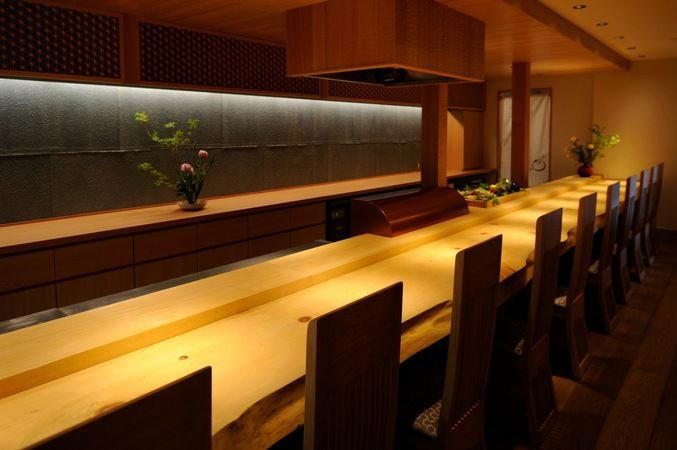
Bars in Kyoto
All bars in Kyoto →
Hotels in Kyoto
All hotels in Kyoto →
Wineries in Kyoto
Browse all →
Details
- Cozy
- Intimate
- Date Night
- Solo
- Special Occasion
- Chefs Counter
- Sake Program
- Local Sourcing
- Omakase
- A La Carte
- Sake
Current opening hours
- Monday
- 6 PM–12 AM
- Tuesday
- 6 PM–12 AM
- Wednesday
- Closed
- Thursday
- 6 PM–12 AM
- Friday
- 6 PM–12 AM
- Saturday
- 6 PM–12 AM
- Sunday
- 6 PM–12 AM
Hours can change for holidays and private events. Hours as of .
Cozy counter seating with Showa-era music creating a nostalgic bar-like atmosphere.