Michelin Plate
Our verdict
In Kyoto's Nishijin weaving district, Hashimoto earns consecutive Michelin Plates (2024–2025) with a format that blends sushi, soba, and the house gomadofu into a meal shaped by genuine hospitality. The chef's seasonal vegetable soups and the proprietress's handmade sweets give the counter an intimacy that separates it from the city's grander kaiseki establishments. A strong choice for a considered, occasion-worthy dinner in Kamigyo Ward.

Pearl is the En Primeur Club membership app, where members save venues, book tables and use the concierge.
The menu
What to order
- Omakase Kaiseki
- Gomadofu with Pureed Vegetable Soup
- Chargrilled Sweetfish
- Clay Pot Rice
- Sashimi Platter
Where Kamigyo Hospitality Becomes a Meal
Kyoto's dining geography divides fairly cleanly between two districts and two registers. Gion and Higashiyama carry the prestige kaiseki addresses, the multi-starred rooms where ceremony is part of the price. North of the Imperial Palace, in Kamigyo Ward and the old Nishijin weaving neighbourhood, the register drops in formality without dropping in seriousness. The streets here were built around the loom, not the tourist, and the restaurants that have lasted in them tend to reflect that: personal, precise, and difficult to shortcut into without local knowledge or patient research.
The Physical Fact of the Place
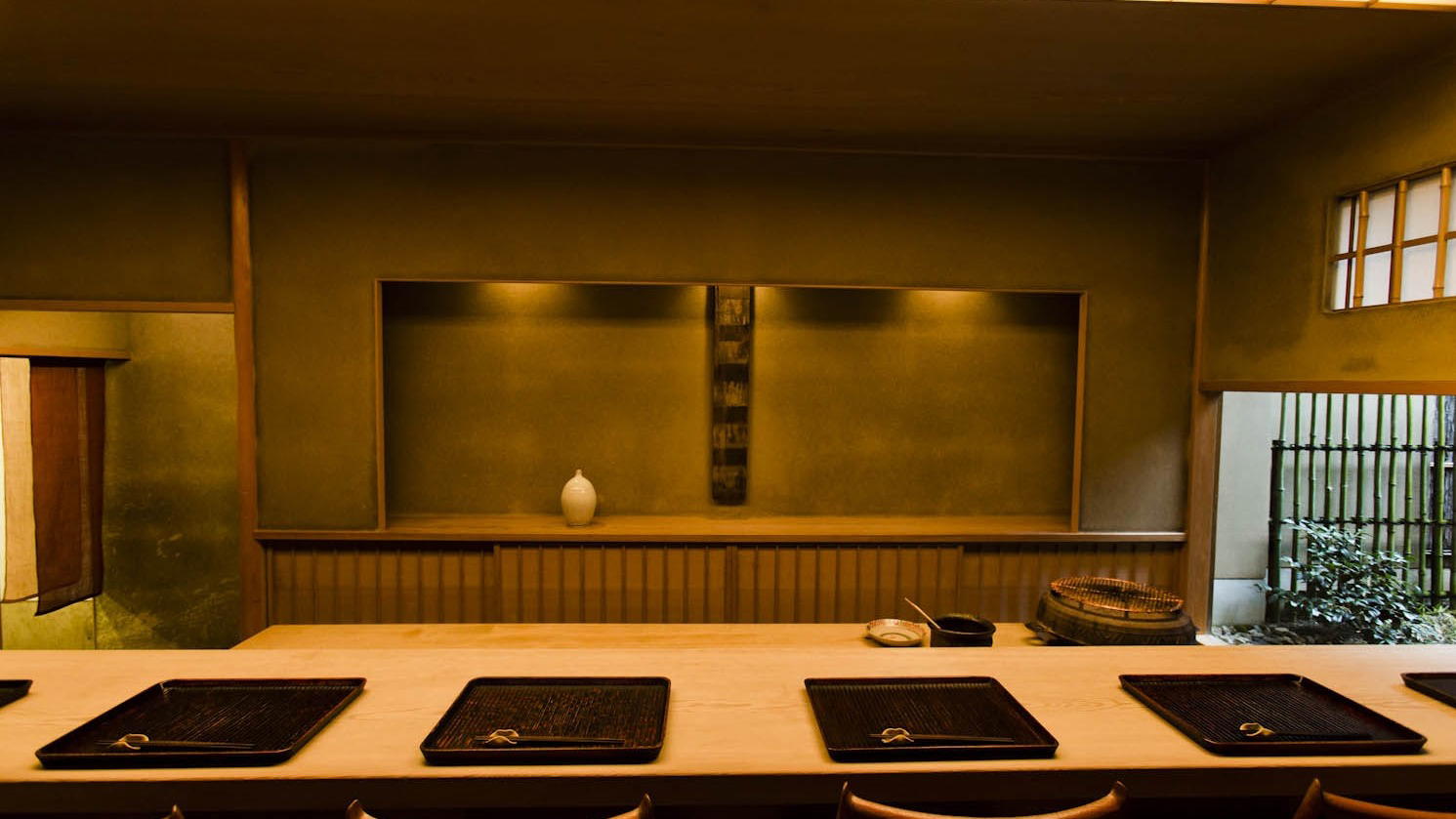
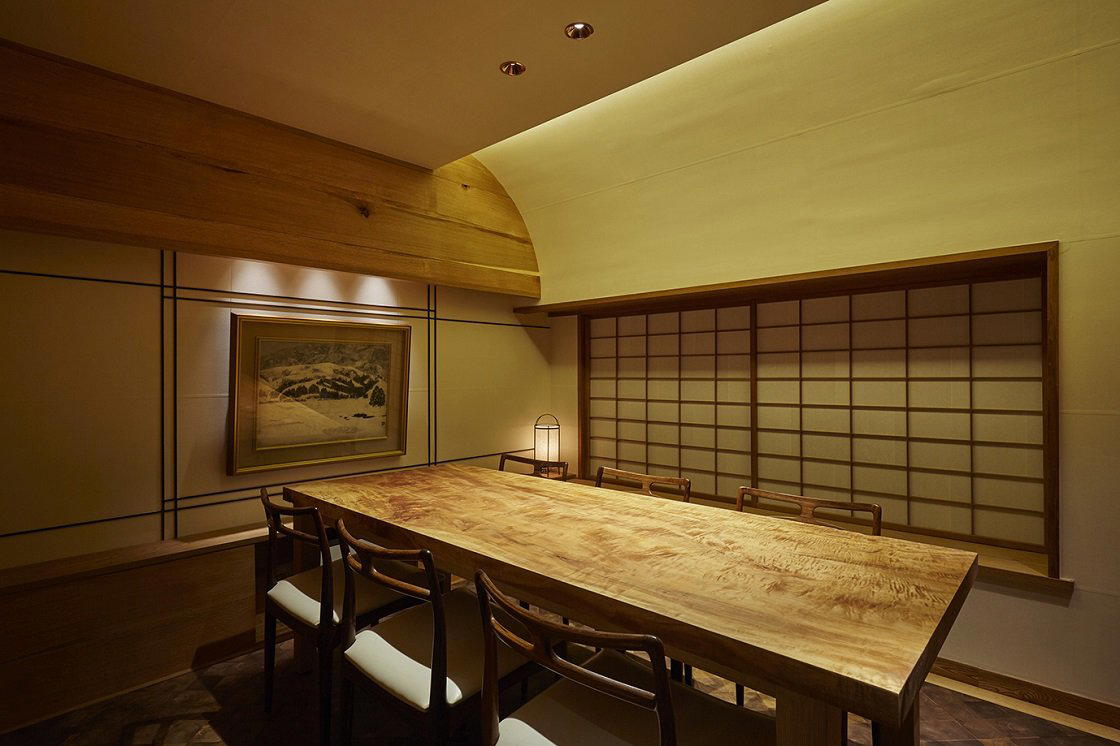
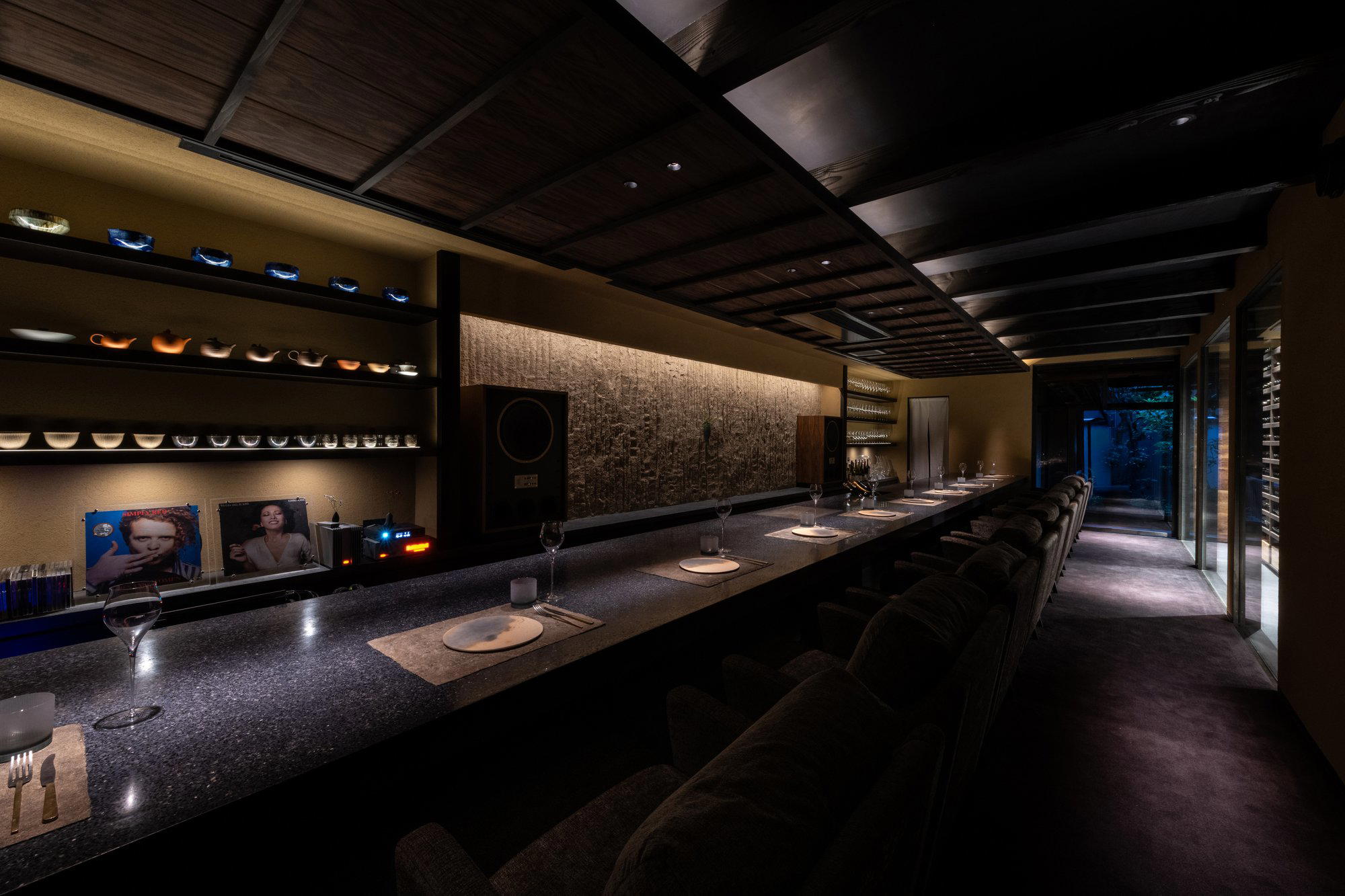
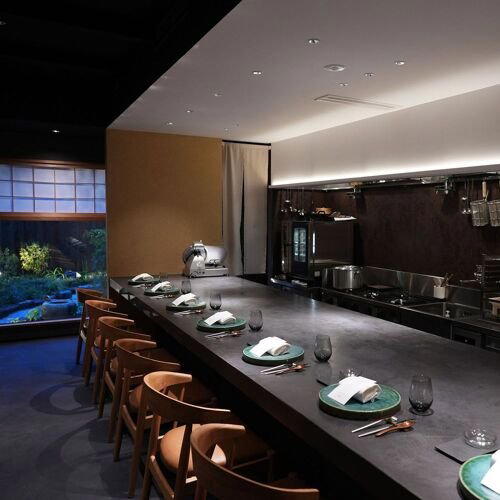
Counter restaurants in Kyoto's residential wards occupy a specific architectural type: modest frontage, a warm interior that reveals itself only after entry, the transition from street to room functioning almost as a pause before the meal begins. Nishijin Hashimoto fits this pattern. The approach through Kamigyo's low-rise streets, textile workshops and machiya townhouses still marking the district's weaving past, sets an expectation of restraint that the interior does not contradict. This is not a room designed to signal wealth. It is designed to hold a meal that earns the occasion on its own terms.
For diners choosing between Kyoto's counter formats, this matters. The grander kaiseki rooms at venues like Isshisoden Nakamura or Gion Matayoshi price at ¥¥¥¥ and carry the formal weight those rooms demand. Hashimoto sits at ¥¥¥, a tier where occasion dining is still serious but the atmosphere allows a different kind of ease. The table does not ask you to perform; it asks you to pay attention.
What the Menu Actually Does
Kyoto's counter restaurants at this price tier often specialise tightly: sushi only, or soba only, or a kaiseki progression with no deviation. Hashimoto takes a wider approach. The chef prepares both sushi and soba, extending the menu in a way that is unusual at this format level and reflects a deliberate attempt to offer range within a single sitting. This is not eclecticism for its own sake, the disciplines share an attention to technique and to the quality of base ingredients that makes the combination coherent rather than scattered.
The gomadofu is the dish most consistently noted in connection with this address. Sesame tofu is a standard of Kyoto cuisine, appearing across vegetarian temple cooking and kaiseki both, but the version here is paired with a pureed soup of vegetables in season, creating a course that shifts with the calendar. Seasonal vegetable soups as a pairing choice signal a kitchen committed to the rhythm of local produce rather than a fixed luxury ingredient list. In early spring, that means different things than it does in autumn, which is precisely the point.
The proprietress's handmade sweets close the meal. In Kyoto's counter culture, house-made confectionery at the end of a meal is a signal of something beyond ingredient procurement: it is a claim on the full arc of the experience. When those sweets are made by the same household running the room, the gesture carries more weight than when they are sourced from an outside wagashi maker, however accomplished. The couple's visible investment in each guest's experience, noted consistently in the Michelin citation language, is a quality that cannot be replicated by a larger operation.
Occasion Dining in Nishijin: The Case for This Tier
Kyoto attracts milestone dining decisions. Anniversaries, significant birthdays, the kind of travel where a single meal is planned months in advance: the city holds a density of options at this level that few places outside Tokyo match. The question is rarely whether to dine well, but how to match the formality of the room to the nature of the occasion.
For celebrations that call for genuine attention without the weight of a full kaiseki progression, the ¥¥¥ counter format has specific advantages. The meal moves at human pace. The counter positions guests close to the preparation, making the cooking visible in a way that formal seated rooms do not. At Hashimoto, the chef's working philosophy, the expression ikkyu nyukon, meaning to pour complete effort into each action, a principle drawn from years of competitive baseball, translates directly into how the counter operates. Every course receives the same concentration. There is no coasting on a signature dish or a famous lineage.
Compare this to the ¥¥¥¥ tier in Kyoto: Kenninji Gion Maruyama, Kikunoi Roan, and Kodaiji Jugyuan all operate in the formal kaiseki register where ceremony is structural. For some occasions, that register is exactly right. For others, a ¥¥¥ counter in a quiet residential district, run by a couple who make their own sweets and treat every guest as the evening's guest of honour, is the more appropriate choice, and the harder one to research.
Kyoto Counter Dining: A Brief Peer Map
| Venue | Cuisine Type | Price Tier | Recognition |
|---|---|---|---|
| Nishijin Hashimoto | Japanese (sushi, soba, seasonal) | ¥¥¥ | Michelin Plate 2024–2025 |
| Gion Sasaki | Kaiseki | ¥¥¥¥ | Michelin-recognised |
| Ifuki | Kaiseki | ¥¥¥¥ | Michelin-recognised |
| cenci | Italian | ¥¥¥ | Michelin-recognised |
| Kyo Seika | Chinese | ¥¥¥ | Michelin-recognised |
Among Michelin-recognised Kyoto restaurants at the ¥¥¥ tier, Hashimoto is one of the few Japanese counter formats combining sushi and soba under the same hand, rather than operating as a single-discipline specialist. That distinction matters when building an itinerary across multiple meals: it occupies a different slot than a pure kaiseki room.
Placing This in the Wider Japan Circuit
Kyoto sits at the centre of a Kansai dining triangle alongside Osaka and Nara, with each city offering a distinct register. HAJIME in Osaka and akordu in Nara represent different points on that circuit, Osaka's technique-forward creativity, Nara's quieter seasonal approach. Within Kyoto itself, the counter format at this price tier competes primarily on warmth and precision rather than innovation. Hashimoto's Michelin Plate in consecutive years, combined with a 4.7 score across its review base, suggests the balance is holding.
For Japan itineraries that extend to Tokyo, the comparable counter register includes Harutaka, Myojaku, and Azabu Kadowaki. Beyond the main islands, Goh in Fukuoka, 1000 in Yokohama, and 6 in Okinawa each represent how Japan's regional dining culture produces serious counter operations well outside the major city circuits.
For everything else in Kyoto, see our full Kyoto restaurants guide, our full Kyoto hotels guide, our full Kyoto bars guide, our full Kyoto wineries guide, and our full Kyoto experiences guide.
Planning Details
The address is 109 Kanzecho, Kamigyo Ward, Kyoto 602-8441. Kamigyo sits north of Nijo Castle and within reach of the Nishijin textile district. The ¥¥¥ price tier in Kyoto typically represents a per-person spend in the mid-range between the city's casual and formal registers; verify current pricing at time of booking.
Frequently asked questions
Would Nishijin Hashimoto be comfortable with kids?
Nishijin Hashimoto is a small counter restaurant in a residential Kyoto ward where the chef and proprietress direct close personal attention to every guest. That intimate format works best with diners who can engage quietly with a meal; younger children who need space to move or distraction between courses would likely find the setting constraining. Families with older children who eat adventurously and sit comfortably through a multi-course progression would be better placed here than families with toddlers.
What's the vibe at Nishijin Hashimoto?
The atmosphere is shaped by the couple running it: the chef's focus at the counter and the proprietress's handmade sweets communicate genuine hospitality rather than formal distance. Nishijin sits outside Kyoto's prestige kaiseki belt, which means the room carries neighbourhood quiet rather than ceremony. The Michelin Plate recognition in both 2024 and 2025 confirms the kitchen's seriousness without the white-tablecloth tension that attaches to starred venues.
Is Nishijin Hashimoto award-winning?
Nishijin Hashimoto has received recognition including: A baseball fanatic since his youth, behind the counter the chef demonstrates the strength of will he developed on the baseball diamond. His favourite expression, then and now, is ikkyu nyukon: pour your heart and soul into every pitch. To b….
What should I order at Nishijin Hashimoto?
The menu covers more ground than most Kyoto counters at this price tier: the chef prepares both sushi and soba alongside kitchen courses, which makes the seasonal gomadofu paired with pureed vegetable soup a useful through-line for the meal's overall direction. Finishing with the proprietress's handmade sweets is documented as part of the experience. Given the ¥¥¥ price range, expect a structured sequence rather than à la carte selection.
How would you describe the cuisine at Nishijin Hashimoto?
Is Nishijin Hashimoto more mid-range or high-end?
Pricing at Nishijin Hashimoto is listed as ¥¥¥.
How do I find Nishijin Hashimoto?
Nishijin Hashimoto is located at 109 Kanzecho, Kamigyo Ward, Kyoto, 602-8441, Japan, Kyoto.
At-a-Glance Comparison
A quick peer list to put this venue’s basics in context.
| Venue | Cuisine | Price | Awards | Notes |
|---|---|---|---|---|
| Nishijin HashimotoThis venue (the venue you are viewing) | Modern Japanese Kaiseki Omakase | $100–150 | Michelin Plate | Not listed |
| Gion Sasaki | Modern Kaiseki | $300–500 | 3 Michelin Stars · La Liste Top Restaurants | Kaiseki, Japanese |
| cenci | Innovative Italian-Japanese Fusion | $100–150 | 1 Michelin Star · World's 50 Best #76 | Italian |
| Ifuki | Sumibi Kappo Kaiseki | $200–300 | 2 Michelin Stars · La Liste Top Restaurants | Kaiseki |
| Kyokaiseki Kichisen | Kyoto Kaiseki | $200–300 | 2 Michelin Stars · La Liste Top Restaurants | Japanese |
| Kyo Seika | Modern Chinese Fine Dining | $150–200 | 1 Michelin Star · Tabelog Bronze #216 | Chinese |
Recognition history
Dated appearances from independent guides and award organizations, with the underlying list record or original source where available.
Michelin Plate
Michelin
Full recognition history (3 entries)
Michelin Plate
Michelin
Michelin Plate
Michelin