Michelin Plate
Our verdict
A Michelin Plate-recognised kappo in Nakagyo Ward, Kappo Harada operates quietly in a residential pocket of Kyoto, offering both omakase and à la carte formats at a mid-to-upper price point. The kitchen leads with first-draught dashi in its wanmono course and a wide range of drinking snacks built around seasonal produce. The proprietor's summer ayu, grilled whole in salt, signals a direct line from river to counter.

Pearl is the En Primeur Club membership app, where members save venues, book tables and use the concierge.
The menu
What to order
- Karasumi Gohan
- Renkon Manju
Counter Cooking in the Residential Grain of Kyoto
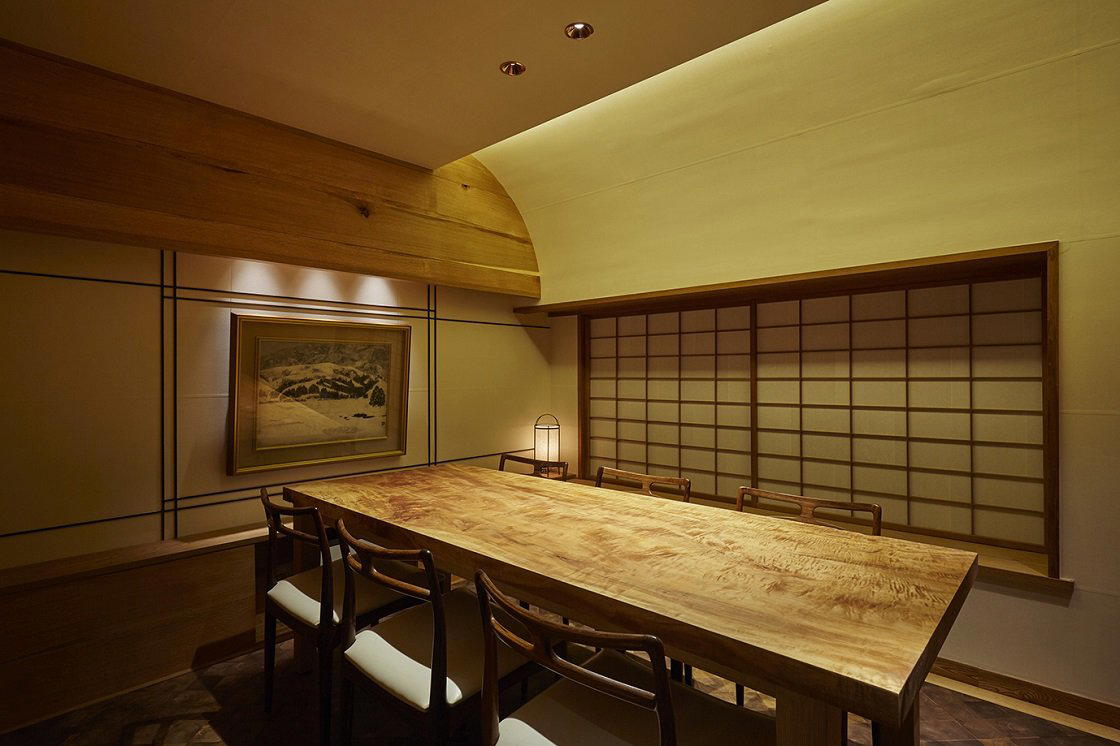
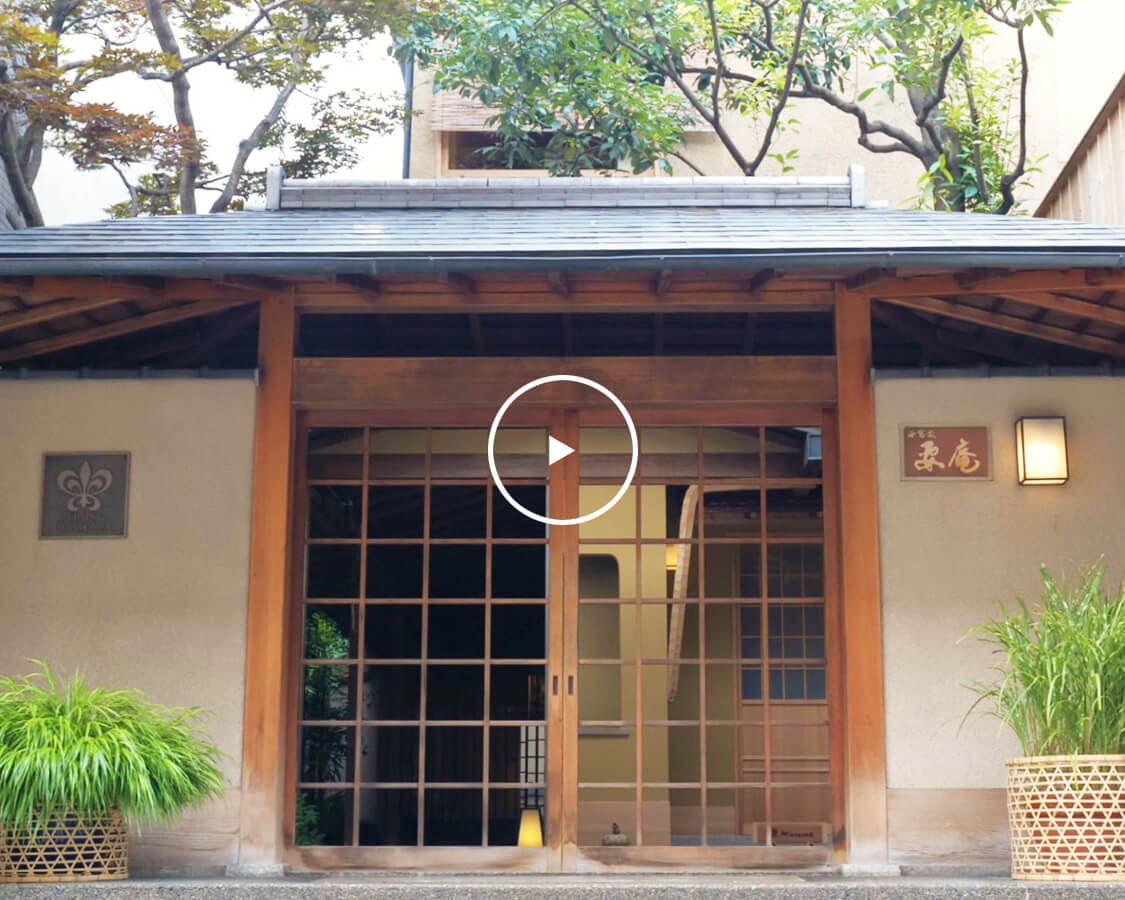
The approach matters in kappo dining. Unlike the grand machiya facades that signal kaiseki houses in Gion or Higashiyama, kappo restaurants in Kyoto's residential wards announce themselves quietly, a暖簾 hung low, a narrow door, the faint smell of charcoal or dashi reaching the street before any signage does. Kappo Harada, in the Hokodencho district of Nakagyo Ward, sits firmly in this tradition. It is not positioned on the tourist circuit, and that is part of its logic. The restaurants that hold the room to cook without concession tend to operate in exactly these conditions.
Kappo as a format belongs to a different register than kaiseki. Where kaiseki imposes a fixed architecture of courses and seasonal grammar, kappo preserves the chef's right to respond, to the ingredients that came in that morning, to the preferences a diner signals, to the pace at which a table is eating and drinking. At Kappo Harada, both omakase and à la carte are available, a flexibility that places it at the more accessible end of the kappo spectrum without abandoning the format's responsive discipline. For diners who want the counter experience without the locked sequence of a full omakase, this matters.
The Counter as Stage: Preparation in Plain Sight
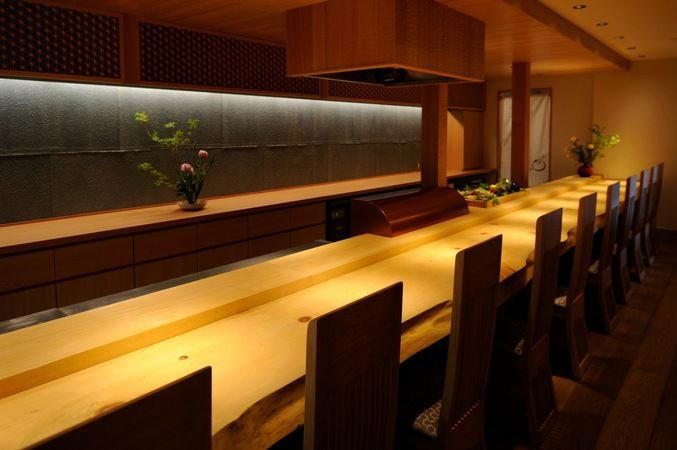
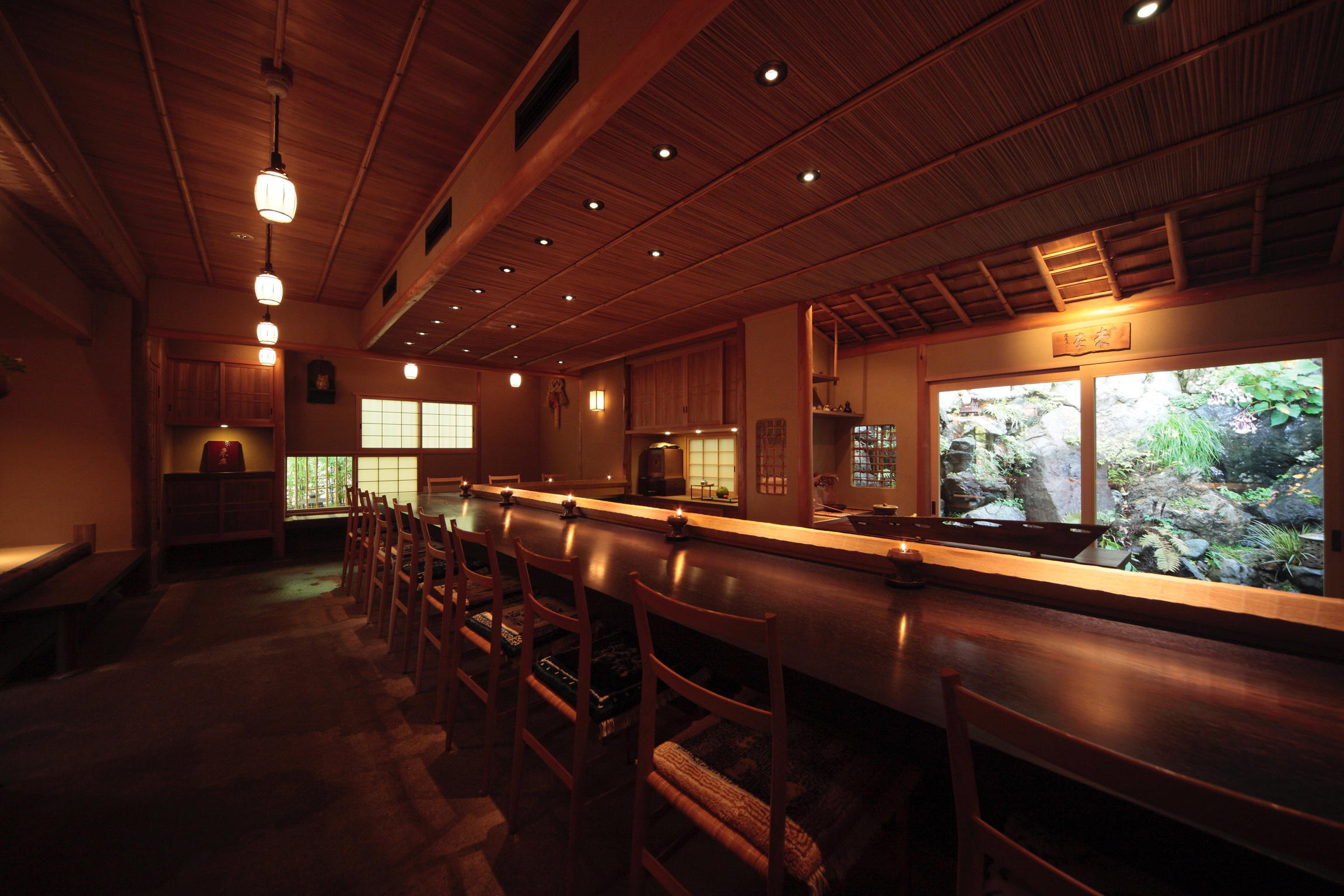
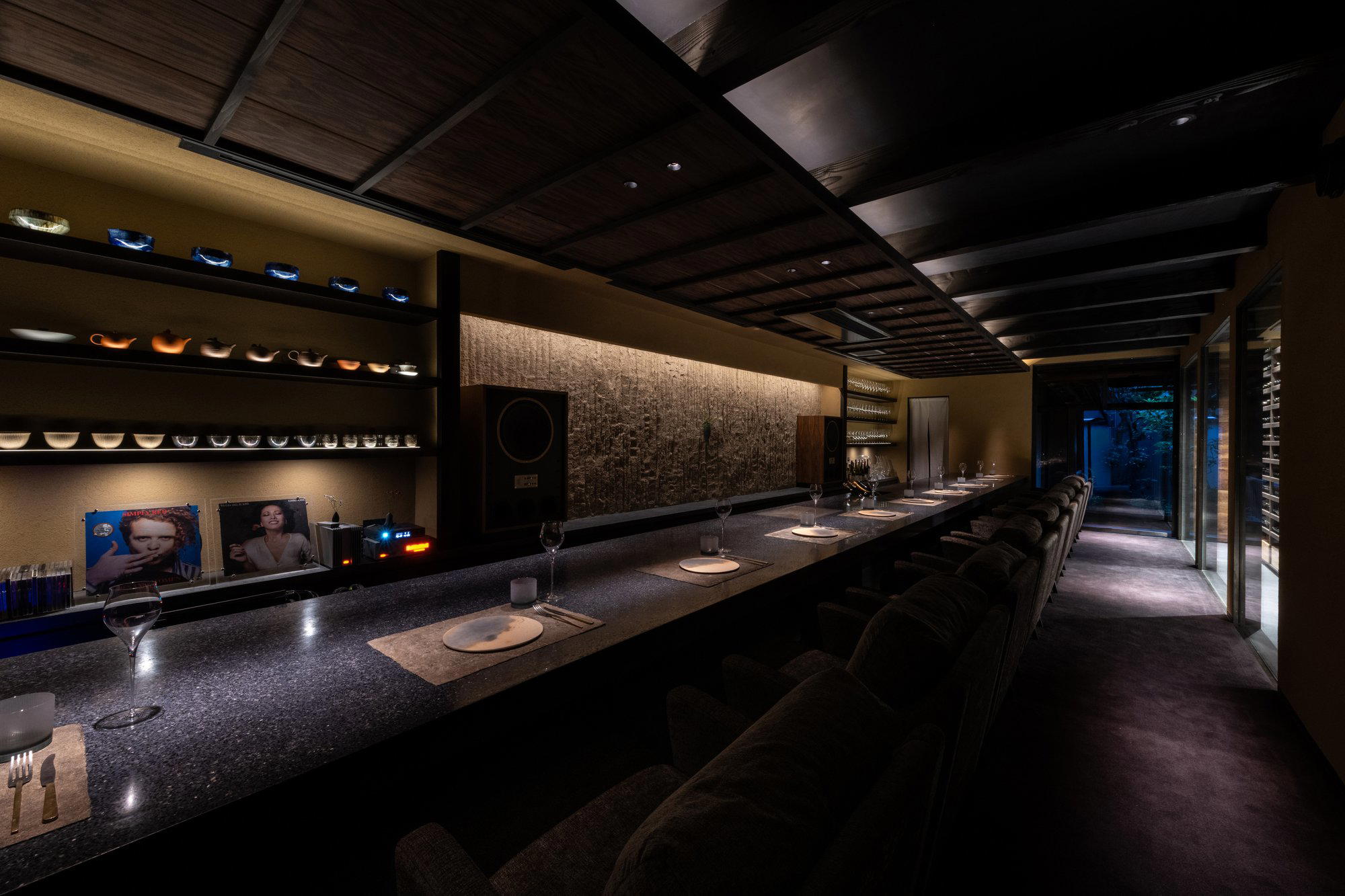
The philosophy of kappo cooking is built on visibility. The word itself, a compound of 割 (to cut) and 烹 (to cook), describes a practice where preparation is not concealed in a back kitchen but performed in front of the guest. This is not spectacle in the teppanyaki sense, with theatrical flames and percussion from the spatula. Kappo's version of live cooking is quieter: the knife through a piece of seasonal fish, the ladling of dashi, the adjustment of heat on a simmering pot. The performance is in the precision, and the counter seat is the place from which to read it.
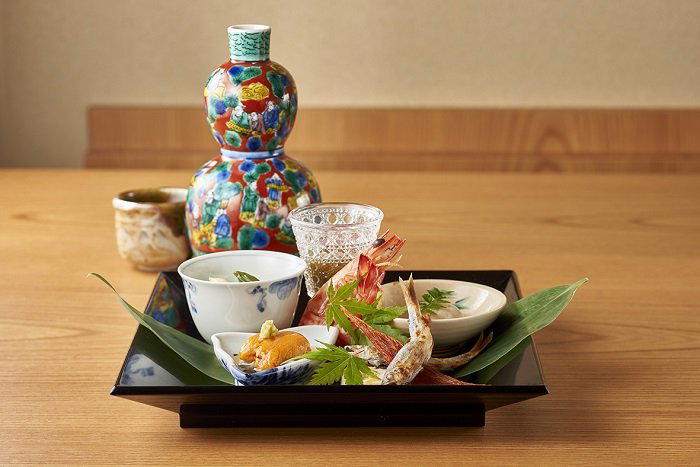
At Kappo Harada, the counter-side approach shapes how the meal is sequenced. The service opens with appetisers, a deliberate plural, meaning the pacing begins with variety rather than a single establishing bite. What follows includes a range of drinking snacks built around seasonal flavours, a component that reflects kappo's roots in sake-bar culture as much as in formal cooking. These are not decorative additions. The drinking snack tradition in kappo requires genuine technical engagement: small preparations that hold their flavour through the duration of a glass, that complement without competing. Producing a wide variety of them, as Kappo Harada evidently does, is more demanding than it looks.
Dashi as the Kitchen's Argument
If there is one technical signal worth reading carefully in any Japanese kitchen's description, it is how the kitchen talks about dashi. At Kappo Harada, the wanmono course, a lidded soup course that sits near the structural heart of a traditional Japanese meal, is specifically oriented around the aroma and flavour of first-draught dashi (ichiban dashi). First-draught dashi is pulled once, briefly, from kombu and katsuobushi; it is lighter and more aromatic than the second extraction used in everyday cooking, and it is noticeably more perishable in flavour. Centring the soup course around it signals that the kitchen is making dashi to order or in very small batches, and that the course is designed to let that freshness show rather than burying it under heavily reduced sauces or complex garnish.
This is a technical choice that places Kappo Harada in dialogue with the broader Kyoto cooking tradition, where dashi clarity is treated as primary evidence of kitchen quality. The comparison set matters here. Kyoto's leading kaiseki houses, including three-starred Gion Sasaki and two-starred operations such as Ifuki and Kyokaiseki Kichisen at the ¥¥¥¥ tier, all prioritise dashi work as a baseline. Kappo Harada, operating at ¥¥¥ with a Michelin Plate recognition in both 2024 and 2025, makes a comparable technical argument at a more accessible price point. For diners working through our full Kyoto restaurants guide, the Michelin Plate signals a kitchen the Guide's inspectors found worth flagging, a kitchen cooking to a consistent standard without the full star apparatus.
Ayu: Seasonality Made Literal
In Japanese cooking, ayu (sweetfish) is one of the clearest seasonal markers. The fish runs from late spring through late summer, and the practice of salt-grilling whole ayu, shioyaki, is one of the most direct preparations in the Japanese repertoire. Salt, heat, fish: the technique exists to transfer what is in the river onto the plate with as little interference as possible. The quality of the fish determines almost everything about the outcome.
At Kappo Harada, the proprietor fishes for ayu personally in summer. This is not incidental colour. It establishes a direct provenance chain, from a specific body of water, caught by the same person who will cook it, that no supply relationship, however good, fully replicates. The fish arrives at the kitchen on the same day it left the river. In a city where seasonal ingredient sourcing is treated as a competitive point by restaurants at every price level, a kitchen that closes that gap between source and preparation entirely is making a distinct claim. The shioyaki ayu, in season, is the clearest expression of what this kitchen is doing and why it operates in the way it does.
Where Kappo Harada Sits in Kyoto's Dining Order
Kyoto's restaurant structure is not flat. At the top tier, kaiseki houses with multi-star recognition command prices that put them outside most travellers' regular rotation. Below that, a middle tier of one-star and Michelin Plate venues, many of them kappo, many of them operating in residential or semi-residential districts, offers the technical seriousness of Kyoto cooking at prices that allow for repeat visits. Kappo Harada's ¥¥¥ positioning puts it in that cohort.
Diners considering comparable experiences in Kyoto's broader scene might look at Isshisoden Nakamura and Gion Matayoshi for kaiseki formats at differing price points, or Kikunoi Roan and Kenninji Gion Maruyama for dining rooms with stronger tourist accessibility. Kodaiji Jugyuan represents another point on the mid-range Kyoto map. For those travelling beyond Kyoto and comparing the kappo and counter-cooking tier more broadly, Harutaka in Tokyo, Myojaku in Tokyo, and Azabu Kadowaki in Tokyo offer useful reference points, as does HAJIME in Osaka for a different kind of precision cooking in the Kansai region. Further afield, akordu in Nara, Goh in Fukuoka, 1000 in Yokohama, and 6 in Okinawa each represent the Michelin-recognised tier in their respective cities.
For those planning beyond the plate, our full Kyoto hotels guide, our full Kyoto bars guide, our full Kyoto wineries guide, and our full Kyoto experiences guide cover the rest of the city at the same editorial register.
Know Before You Go
- Location: Hokodencho 290, Nakagyo Ward, Kyoto, a residential district away from the main tourist corridors
- Price range: ¥¥¥ (mid-to-upper tier)
- Format: Both omakase and à la carte available
- Recognition: Michelin Plate 2024 and 2025
- Seasonal note: Salt-grilled ayu is a summer feature, dependent on the proprietor's catch
Frequently asked questions
Is Kappo Harada award-winning?
Kappo Harada has received recognition including: Operating inconspicuously in a residential district, this kappo offers both omakase and a la carte, responding to diners’ preferences. Service begins with a selection of appetisers and great effort is expended on the wide variety of drinkin….
What's the cuisine at Kappo Harada?
What should I order at Kappo Harada?
The wanmono is the kitchen's clearest technical statement, a soup course built around first-draught dashi, where the kitchen prizes freshness and light aromatic clarity over richness. If visiting in summer, the salt-grilled ayu is the seasonal centrepiece: the proprietor fishes for sweetfish personally, and the preparation is deliberately minimal to preserve the fish's natural character. Both omakase and à la carte are available, so you can let the kitchen set the sequence or anchor your meal around these two courses specifically.
What's the price range at Kappo Harada?
Pricing at Kappo Harada is listed as ¥¥¥.
How do I find Kappo Harada?
Kappo Harada is located at Japan, 〒604-0902 Kyoto, Nakagyo Ward, Hokodencho, 290, Kyoto.
Do they take walk-ins at Kappo Harada?
At the ¥¥¥ price tier with Michelin Plate recognition in 2024 and 2025, Kyoto kappo houses of this standing typically operate on pre-booked covers, and the residential Nakagyo Ward address, away from tourist corridors, means the room size is almost certainly small. Advance booking through a hotel concierge or local reservation service is the practical approach.
Budget and Context
| Venue | Cuisine | Price | Awards | Notes |
|---|---|---|---|---|
| Kappo HaradaThis venue (the venue you are viewing) | Traditional Kyoto Kappo | Not listed | Michelin Plate | Not listed |
| Gion Sasaki | Modern Kaiseki | $300–500 | 3 Michelin Stars · La Liste Top Restaurants | Kaiseki, Japanese |
| cenci | Innovative Italian-Japanese Fusion | $100–150 | 1 Michelin Star · World's 50 Best #76 | Italian |
| Ifuki | Sumibi Kappo Kaiseki | $200–300 | 2 Michelin Stars · La Liste Top Restaurants | Kaiseki |
| Kyokaiseki Kichisen | Kyoto Kaiseki | $200–300 | 2 Michelin Stars · La Liste Top Restaurants | Japanese |
| Kyo Seika | Modern Chinese Fine Dining | $150–200 | 1 Michelin Star · Tabelog Bronze #216 | Chinese |
Recognition history
Dated appearances from independent guides and award organizations, with the underlying list record or original source where available.
Michelin Plate
Michelin
Full recognition history (3 entries)
Michelin Plate
Michelin
Michelin Plate
Michelin