Michelin Plate · Tabelog 100 #52
Our verdict
A prix fixe Italian restaurant in Minami-Aoyama with Venetian seafood influence, misola holds consecutive Michelin Plate recognition (2024, 2025). The menu moves from salt cod paste to delicate meat courses, with vegetables sourced each morning. It occupies the quieter, independent end of Tokyo's mid-tier Italian scene.

Pearl is the En Primeur Club membership app, where members save venues, book tables and use the concierge.
The menu
What to order
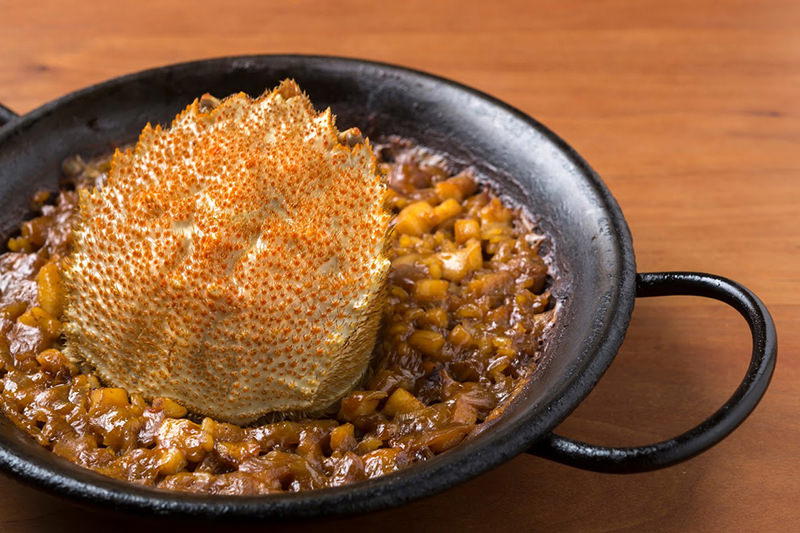
- Tagliolini with crab uni sauce
- Pan-fried scallop
Minami-Aoyama and the Case for Neighbourhood Italian
Tokyo's Italian dining scene divides along a clear fault line. On one side sit the grand-hotel flagships and the Michelin-starred rooms commanding five-figure omakase-style bills, venues like Aroma Fresca and Gucci Osteria da Massimo Bottura Tokyo that price against the international luxury tier. On the other sits a quieter cohort: independent restaurants with clear culinary points of view, priced accessibly within the ¥¥¥ bracket, drawing a neighbourhood clientele rather than a destination crowd. Misola belongs to that second category, and its address in Minami-Aoyama is part of what defines it.
Minami-Aoyama is not a dining district in the way that Ginza or Nishi-Azabu are dining districts. It is a residential and creative quarter, home to galleries, ateliers, and the kind of low-profile restaurants that reward locals more than tourists. The 3-chome end of the neighbourhood, where misola sits along Minamiaoyama, carries that character particularly strongly. Dining here tends to mean smaller rooms, fixed menus, and a more considered pace than the high-rotation restaurant strips further east. Misola fits that pattern precisely.
The Venetian Thread Running Through a Tokyo Kitchen
Italian cooking in Japan has its own evolutionary history. The country began importing Italian technique seriously in the 1980s, and by the 1990s a generation of Japanese chefs had staged in northern Italy, bringing back not just recipes but a rigour about seasonal produce and regional specificity that has since become a hallmark of the Tokyo Italian style. The result is a body of restaurants that often know Italian culinary grammar more precisely than many restaurants in Italy itself.
Misola sits inside that tradition, but with a narrower geographic reference point: Venice, and the Venetian culinary inheritance of seafood, preserved fish, and lagoon produce. Salt cod, or baccalà, functions as a foundational ingredient in Venetian cooking, prepared there in ways that have no close equivalent elsewhere in Italy. At misola, a paste of salt cod appears as an opening course in the prix fixe, a direct citation of that Venetian lineage and a signal of where the kitchen's instincts lie. For diners familiar with the original, it reads as an argument about cooking heritage. For those who are not, it is simply a sophisticated way to begin a meal.
Seafood continues as the kitchen's primary focus through the menu. The logic is consistent with the Venetian frame: fish preparations tend toward precision over elaboration, textures preserved rather than transformed. Meat courses, when they appear, are described as light and delicate rather than centrepiece-heavy, which keeps the menu's internal balance tilted toward the sea. Vegetables are sourced each morning, a procurement discipline that is common among serious Tokyo kitchens regardless of cuisine and that places supply-chain integrity above menu convenience.
Prix Fixe as Format and Statement
The prix fixe format carries implications beyond structure. In Tokyo's mid-range Italian tier, it tends to signal a kitchen confident enough in its menu direction to decline the à la carte compromise. Restaurants at the ¥¥¥ price point that still operate prix fixe are making a statement about the sequencing of a meal, insisting that the order of dishes matters. Misola's consecutive Michelin Plate awards in 2024 and 2025 provide external validation of that approach: the Michelin Plate denotes a restaurant considered worth a visit, a meaningful credential at a price point where the Michelin inspectors are evaluating precision and intent rather than luxury of materials.
For comparison against peers at higher price points, PRISMA and Principio occupy adjacent territory in Tokyo's Italian scene, while AlCeppo represents the longer-established end of the city's Italian tradition.
The Room and Its Register
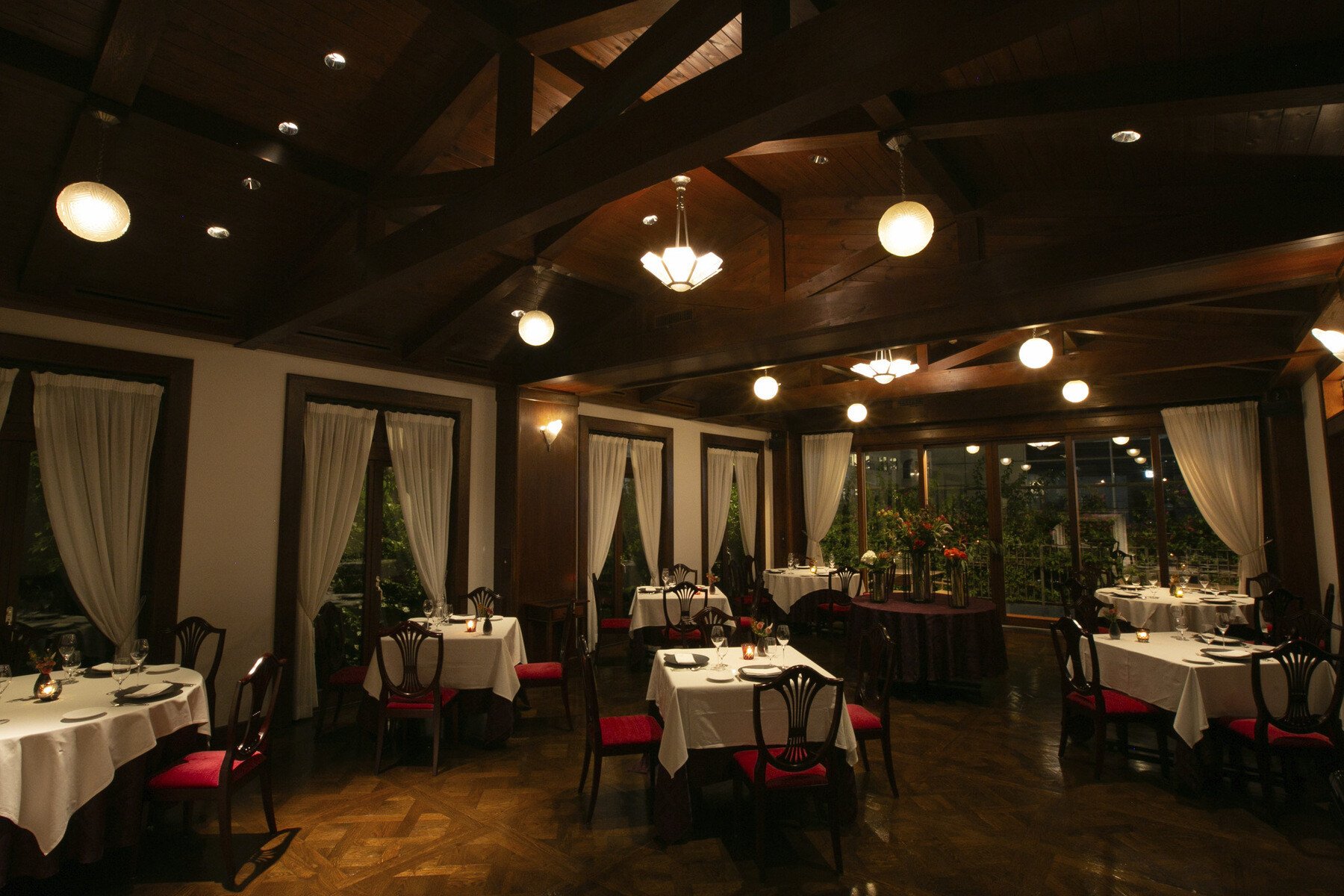
The interior at misola is organised around a sky-blue colour theme, with azure walls and sculptural objects depicting birds in flight. The visual language is considered rather than minimal: it gives the room a specific atmosphere without demanding that diners engage with it consciously. This is a relevant distinction in a neighbourhood like Minami-Aoyama, where design-aware interiors are common enough that gratuitous decoration reads as effort rather than confidence. The bird motifs have a lightness that mirrors the kitchen's approach to the plate, and that consistency between space and food is worth noting.
Italian cooking in Japan rarely travels without acquiring something local in the process. The leading examples of the Tokyo Italian genre, whether in Kyoto with cenci or at the three-star level in Hong Kong with 8½ Otto e Mezzo Bombana, share a commitment to precision that comes from working in high-expectation dining cultures. Misola operates at a different scale but within the same tradition of taking Italian source material seriously while adapting to Japanese procurement rhythms and service norms.
For travellers using Tokyo as a base and curious about the broader regional Italian-influenced dining circuit, akordu in Nara and HAJIME in Osaka offer reference points at different price tiers and with different European culinary traditions in play. Gion Sasaki in Kyoto, Goh in Fukuoka, 1000 in Yokohama, and 6 in Okinawa round out a map of serious Japanese dining for those moving beyond the capital.
See also our full Tokyo restaurants guide, along with EP Club's coverage of Tokyo hotels, Tokyo bars, Tokyo wineries, and Tokyo experiences.
Know Before You Go
- Address: 3 Chome-10-38 Minamiaoyama, Minato City, Tokyo 107-0062, Japan
- Cuisine: Italian (Venetian-influenced, seafood focus)
- Price range: ¥¥¥
- Format: Prix fixe
- Awards: Michelin Plate 2024, Michelin Plate 2025
- Neighbourhood: Minami-Aoyama, Minato City
- Nearest area: Accessible from Omotesando or Gaienmae stations
Frequently asked questions
Is misola good for families?
The prix fixe format and refined, seafood-led menu are better suited to adults or older children comfortable with a structured multi-course dinner. The intimate room, with its sky-blue walls and sculptural décor, sets a composed tone that leans toward couples or small groups rather than families with young children.
How would you describe the vibe at misola?
Calm and considered. The room is organised around a sky-blue colour theme, azure walls, and bird-in-flight sculptures that give it the feel of a curated interior rather than a conventional restaurant. The prix fixe format reinforces that register: this is a kitchen running on its own terms, not adapting to the room.
Has misola won any awards?
misola has received recognition including: Sky blue is the colour theme of misola. Framed by azure wall, objets d’art of birds take flight. Seafood is the chef’s forte, owing to his experience in Venice. A prix fixe presentation begins with paste of salt cod, a famed local dish from….
What should I eat at misola?
The prix fixe menu opens with a paste of salt cod, a direct reference to the Venetian baccalà tradition that informs the chef's approach. Seafood runs as the dominant thread throughout, with vegetables sourced fresh each morning and meat dishes kept light. Ordering à la carte is not the format here; the full sequence is the point.
What cuisine category does misola fall under?
What does dinner at misola typically cost?
Pricing at misola is listed as ¥¥¥.
Where exactly is misola?
misola is located at 3 Chome-10-38 Minamiaoyama, Minato City, Tokyo 107-0062, Japan, Tokyo.
Cuisine and Recognition
| Venue | Cuisine | Price | Awards | Notes |
|---|---|---|---|---|
| misolaThis venue (the venue you are viewing) | Modern Italian | $150–200 | Michelin Plate · Tabelog 100 #52 | Not listed |
| Harutaka | Edo-Style Omakase Sushi | $200–300 | 3 Michelin Stars · World's 50 Best #76 | Sushi |
| RyuGin | Modern Kaiseki | $500+ | 3 Michelin Stars · World's 50 Best #41 | Kaiseki, Japanese |
| L'Effervescence | Modern French with Japanese Influences | $200–300 | 3 Michelin Stars · World's 50 Best #69 | French |
| HOMMAGE | Modern French with Japanese Influences | $150–200 | 2 Michelin Stars · World's 50 Best #78 | Innovtive French, French |
| MAZ | Innovative Peruvian-Japanese Fusion | $150–200 | 2 Michelin Stars · World's 50 Best #28 | Innovative |
Recognition history
Dated appearances from independent guides and award organizations, with the underlying list record or original source where available.
Michelin Plate
Michelin
Tabelog 100 #52 · No. 52
Tabelog · Tabelog 100 - Italian - TOKYO - 2025
Full recognition history (4 entries)
Michelin Plate
Michelin
Michelin Plate
Michelin