


World's 50 Best #65 · Top 500 Bars Best Bars #109 · Tatler Listed in Best Bars Asia-Pacific
Ranked #65 in the World's 50 Best Bars 2025 and a fixture on the Asia's Best Bars list since 2019, The SG Club in Shibuya operates across two distinct floors with a program rooted in Japanese ingredient logic and international technique. Located in Jinnan, a quieter pocket above the Shibuya crossing noise, it draws a consistent crowd of serious drinkers and has held a place in the global top 25 as recently as 2021.

Pearl is the En Primeur Club membership app — saves, bookings, and concierge access live there. Same editors, same standards.
- Address
- 1-chōme-7-8 Jinnan, Shibuya, Tokyo 150-0041
- Phone
- +81 50-3138-2618
- Website
- instagram.com
- Directions
- Get directions

Where Shibuya's Quieter Side Meets a Serious Drinking Program
The block of Jinnan that holds The SG Club sits above the commercial roar of Shibuya crossing — close enough to feel the district's energy, far enough removed that the street outside is walkable and unhurried. That positioning is not accidental. Much of Tokyo's most credible bar work happens in transitional neighbourhoods like this: areas that carry the footfall of a major district without being consumed by it. In Shibuya, that means Jinnan and the streets feeding into it, where independent operators and design-led spaces have quietly accumulated over the past decade.
The bar itself occupies a split-level format. The ground floor, known as Guzzle, runs a more accessible programme — shorter drinks, faster pacing, a lower barrier to entry. Upstairs, Sip operates as the considered counterpart: longer drinks, deeper sourcing, the kind of menu that rewards attention. This two-tier architecture reflects a broader pattern in the upper bracket of Tokyo cocktail culture, where bars increasingly design for both the walk-in and the destination drinker within the same address. It is a format that other cities have attempted with mixed results; in Tokyo, the discipline required to execute both registers simultaneously tends to be better observed.
The Award Trail and What It Signals
SG Club's ranking history across the World's 50 Best Bars programme offers a useful calibration tool. The bar entered the global list at #24 in 2019, climbed to #10 in 2020, and peaked at #18 in 2021, the same year it ranked #3 in Asia. It has appeared on every Asia's Leading Bars list since 2019 and currently sits at #65 globally and #99 in Asia for 2025, with an additional placement at #109 in the Top 500 Bars ranking. Tatler Asia also included it in its Leading Bars Asia-Pacific 2025 selection.
A trajectory that moves from a global top-10 placement down to the mid-60s over four years is worth reading carefully. It does not signal decline in the usual sense. The World's 50 Best voting pool has expanded substantially, with more bars from Southeast Asia, the Middle East, and Latin America entering credible contention. A bar that held a top-10 position in 2020 and maintains a top-100 position in 2025 has held its level while the competition around it has grown. That is a different story from one that simply slipped.
Bar Orchard Ginza and Bar Libre round out a group of Tokyo bars that compete in the globally recognised tier. Each has a distinct methodology; The SG Club's particular position is shaped by its Shibuya address, its two-floor format, and a programme that pulls Japanese ingredient logic into an international cocktail framework.
Japanese Ingredient Logic as a Structural Framework
The editorial angle that most clearly distinguishes the upper tier of Tokyo cocktail bars from their international peers is sourcing specificity. Where London or New York bars might identify a Japanese ingredient as a category, yuzu, shiso, Japanese whisky, Tokyo's serious operators tend to work at a more granular level: which prefecture, which producer, which harvest window. This is not aesthetic preference. It reflects the structure of Japanese food and drink supply chains, where regional specialisation is deep and traceability is culturally assumed.
At The SG Club, this approach informs the Sip programme in particular. The bar's reputation, built through successive appearances on the World's 50 Best list, is partly a function of how consistently it has applied Japanese ingredient sourcing to a format, the craft cocktail, that originated elsewhere. The technique vocabulary is international; the raw material logic is thoroughly local. That synthesis, executed at a high level over several years, is what separates the venue from Tokyo bars that use Japanese ingredients as decoration rather than architecture.
Shingo Gokan, the bartender whose name is attached to the SG Management group that operates this venue, trained internationally before returning to Japan, which gives the programme a fluency in both registers. His name functions here as a credential for the programme's ambition rather than as a biographical subject. What matters for the drinker is that the bar has maintained a consistent standard across multiple years and multiple ranking cycles, something that requires institutional knowledge and supply chain relationships, not just individual talent.
Tokyo's Bar Scene in Wider Context
Tokyo's leading bars sit within a national drinking culture that takes the craft seriously across all price points and formats. The same rigour that produces a precise whisky highball in a train-station bar surfaces, at greater complexity, in places like The SG Club. Japan's broader bar geography is worth understanding: Bar Nayuta in Osaka, Bee's Knees in Kyoto, and Lamp Bar in Nara all operate within the same general tradition of technical precision and ingredient attentiveness, but each carries the character of its own city. Yakoboku in Kumamoto and anchovy butter in Osaka show how far that culture extends beyond the major tourist corridors. Even internationally, the influence is traceable: Bar Leather Apron in Honolulu draws explicitly on Japanese bar technique adapted for a different context.
For visitors building a Tokyo itinerary that includes serious drinking, the city rewards a degree of planning. Kyoto Tower Sando offers a different register entirely if the trip extends beyond Tokyo. Our full Tokyo restaurants and bars guide maps the city's drinking culture by neighbourhood and format, which is the most useful framework for building an itinerary rather than chasing individual names.
Who Goes and When
The SG Club draws a mixed crowd: Tokyo regulars who treat Sip as a destination, visiting industry professionals who add it to a bar circuit that typically includes Ginza and Shinjuku stops, and international travellers whose reference point is the World's 50 Best list. Weekend evenings fill earlier than the casual visitor might expect for a Shibuya address, the bar's profile means it operates more like a reservation-driven destination than a drop-in neighbourhood spot, particularly for the Sip floor.
Shibuya itself has undergone significant infrastructure development around the station precinct over the past several years, which has altered foot-traffic patterns in the surrounding streets. Jinnan, being slightly set back from the redevelopment zone, has retained more of its pre-renovation character. That stability is part of what makes it a workable address for a bar that depends on a specific atmosphere rather than passing trade.
Know Before You Go
- Address: 1-7-8 Jinnan, Shibuya-ku, Tokyo 150-0041
- Phone: +81 50-3138-2618
- Instagram: @the_sg_club
- Website: sg-management.jp/en
- Format: Two floors, Guzzle (ground, accessible) and Sip (upper, reservations advised)
- Recognition: World's 50 Best Bars #65 (2025); Asia's Leading Bars #99 (2025); Tatler Leading Bars Asia-Pacific 2025
- Getting there: A short walk from Shibuya Station; Jinnan is leading approached via the Hachiko exit heading toward Koen-dori
- Parmigiano Sour
- Drunken Grandma’s Apple Pie
- Tom Yum
- Whisky Sawa
- Lemon Sour
- No. 1 Cup
Side-by-Side Snapshot
Comparable venues nearby, for context on price, style, and recognition.
| Venue | Cuisine | Price | Awards | Notes |
|---|---|---|---|---|
| The SG ClubThis venue — the venue you are viewing | cocktail_bar | $20–30 | World's 50 Best #65 · Top 500 Bars Best Bars #109 | Not listed |
| Bar Benfiddich | cocktail_bar | $20–30 | World's 50 Best #62 · Tatler Listed in Best Bars Asia-Pacific | Shinjuku |
| Bar Trench | speakeasy | $30–50 | World's 50 Best #53 · Top 500 Bars Best Bars #185 | Shibuya |
| Bar High Five | cocktail_bar | $50–100 | World's 50 Best #87 · Top 500 Bars Best Bars #226 | Chūō |
| Star Bar Ginza | cocktail_bar | Not listed | World's 50 Best #31 | Chūō |
| Bar Orchard Ginza | cocktail_bar | $30–50 | World's 50 Best #41 · Food & Wine Top 10 Global Bars #2 | Chūō |
Recognition history
Dated appearances from independent guides and award organizations, with the underlying list record or original source where available.
World's 50 Best Bars #65
World's 50 Best
Tatler Listed in Best Bars Asia-Pacific
Tatler
Top 500 Bars Best Bars #109
Top 500 Bars
Full recognition history (15 entries)
World's 50 Best Asia's Best Bars #99
World's 50 Best
World's 50 Best Bars #54
World's 50 Best
World's 50 Best Asia's Best Bars #23
World's 50 Best
World's 50 Best Asia's Best Bars #14
World's 50 Best
World's 50 Best Bars #36
World's 50 Best
World's 50 Best Asia's Best Bars #21
World's 50 Best
World's 50 Best Asia's Best Bars #3
World's 50 Best
World's 50 Best Bars #18
World's 50 Best
World's 50 Best Asia's Best Bars #9
World's 50 Best
World's 50 Best Bars #10
World's 50 Best
World's 50 Best Asia's Best Bars #13
World's 50 Best
World's 50 Best Bars #24
World's 50 Best













Details
- Trendy
- Sophisticated
- Cozy
- Intimate
- Date Night
- Late Night
- Special Occasion
- Speakeasy
- Seated Bar
- Lounge Seating
- Craft Cocktails
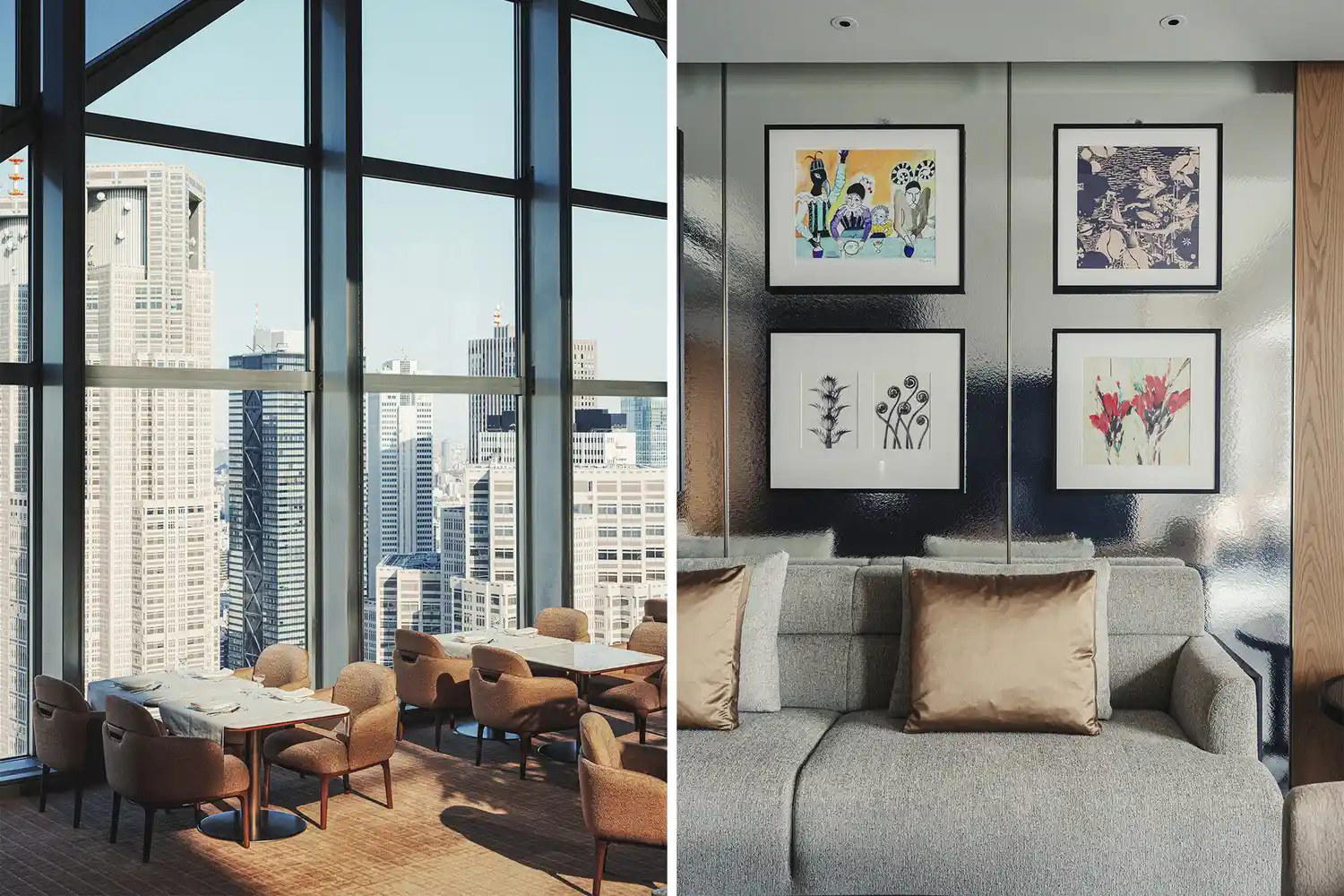
Upstairs Guzzle is casual, loud, and energetic with blasting music; basement is moody, refined 19th-century New York-style with dim lighting and intimate atmosphere.