




1 Michelin Key · La Liste Top Hotels · Forbes 5-Star
Occupying floors 11 and 12 of the Hotel New Otani's Main tower, Executive House Zen operates as a self-contained luxury tier within one of Tokyo's largest hotel complexes. The 87-room enclave earned a Forbes Travel Guide Five-Star rating in 2020, and sits in Chiyoda's government and palace quarter with access to a 400-year-old garden, 37 on-site restaurants, and a Pierre Hermé-supplied executive lounge. Rates from approximately $761 per night.

Pearl is the En Primeur Club membership app — saves, bookings, and concierge access live there. Same editors, same standards.
- Address
- 11F-12F, The Main, Hotel New Otani Tokyo, 4-1 Kioicho, Chiyoda City, Tokyo 102-8578, Japan
- Phone
- +81 3-3265-1111
- Website
- newotani.co.jp
- Directions
- Get directions
A Hotel Inside a Hotel, in a City That Takes Both Seriously
Tokyo's top-tier hotel market has bifurcated over the past decade. On one side sit the newer design-led entrants: the stone-and-timber restraint of Aman Tokyo, the Italian house credentials of Bvlgari Hotel Tokyo, the Otemachi tower presence of the Four Seasons Hotel Tokyo at Otemachi. On the other sit properties with institutional depth: decades of summit-level diplomacy, embedded gardens, and culinary ecosystems that newer arrivals simply cannot replicate in a single opening. Hotel New Otani Tokyo Executive House Zen belongs firmly to the second group, and it uses that depth to its advantage.
The hotel complex itself opened in September 1964, constructed under a direct mandate from the Japanese government to house international visitors for the Tokyo Olympic Games. The Executive House Zen floors, 11 and 12 of the Main tower, came later, following a major renovation that reopened in 2007 with higher seismic performance and a hotel-in-a-hotel configuration modelled on the club-level model familiar from East Asian luxury hospitality. The La Liste Leading Hotels ranking for 2026 places it at 97.5 points. These are not decorative numbers; they indicate a property that has maintained elite service standards across successive rating cycles, not one that opened into them.
The Dining Programme: Scale as a Feature, Not a Compromise
The editorial case for Executive House Zen rests substantially on its food and drink infrastructure — specifically the contrast between the intimacy of the Zen floors and the scale of what guests can access below them. Thirty-seven restaurants and bars operating within the New Otani complex is a figure that has no real parallel among Tokyo's luxury hotel competitors. Andaz Tokyo and JANU Tokyo each offer curated dining programmes; the New Otani offers a dining city.
Spread covers Japanese and international cuisines across multiple price points and formats, from formal kaiseki to casual garden-facing dining, meaning Executive House Zen guests are not locked into the hotel's own culinary identity in the way that smaller properties require. This matters in Tokyo, where the dining scene outside hotel walls operates at the highest density of Michelin-starred restaurants of any city on earth. The hotel's internal programme effectively competes on breadth rather than depth, which suits the profile of a large international complex with a genuinely diverse guest base.
Executive Lounge anchors the Zen experience with six daily culinary presentations: complimentary breakfast each morning, followed by light meals, afternoon snacks, coffee, and an evening service that runs through to a nightcap selection that includes chocolates. The lounge is also the primary venue for the hotel's own-label Drappier Champagne, a co-branded bottling available across the property's restaurants. Pierre Hermé, whose Aoyama boutique draws queues on release days, supplies pastries to the Executive Lounge directly, a partnership initiated by the hotel ownership that gives the lounge a patisserie credential that few club floors anywhere can match. Hermé also operates a standalone shop on the lobby level, making the connection available to non-resident visitors.
For guests who want to move beyond the complex, our full Tokyo restaurants guide maps the neighbourhood-by-neighbourhood dining architecture of the city, including the Akasaka corridor within which the New Otani operates.
One seasonal detail worth scheduling around: an exclusive breakfast for two in the hotel's rooftop rose garden, offered only during early summer and autumn when the 30,000-bloom garden peaks. The format seats a single couple per day, with fresh fruit and pastries served in complete privacy. The booking window for this is narrow and the availability genuinely limited, it is the kind of detail that separates the New Otani's long-term institutional knowledge from properties still building their seasonal programming.
The Garden and the Location: Context That Can't Be Built
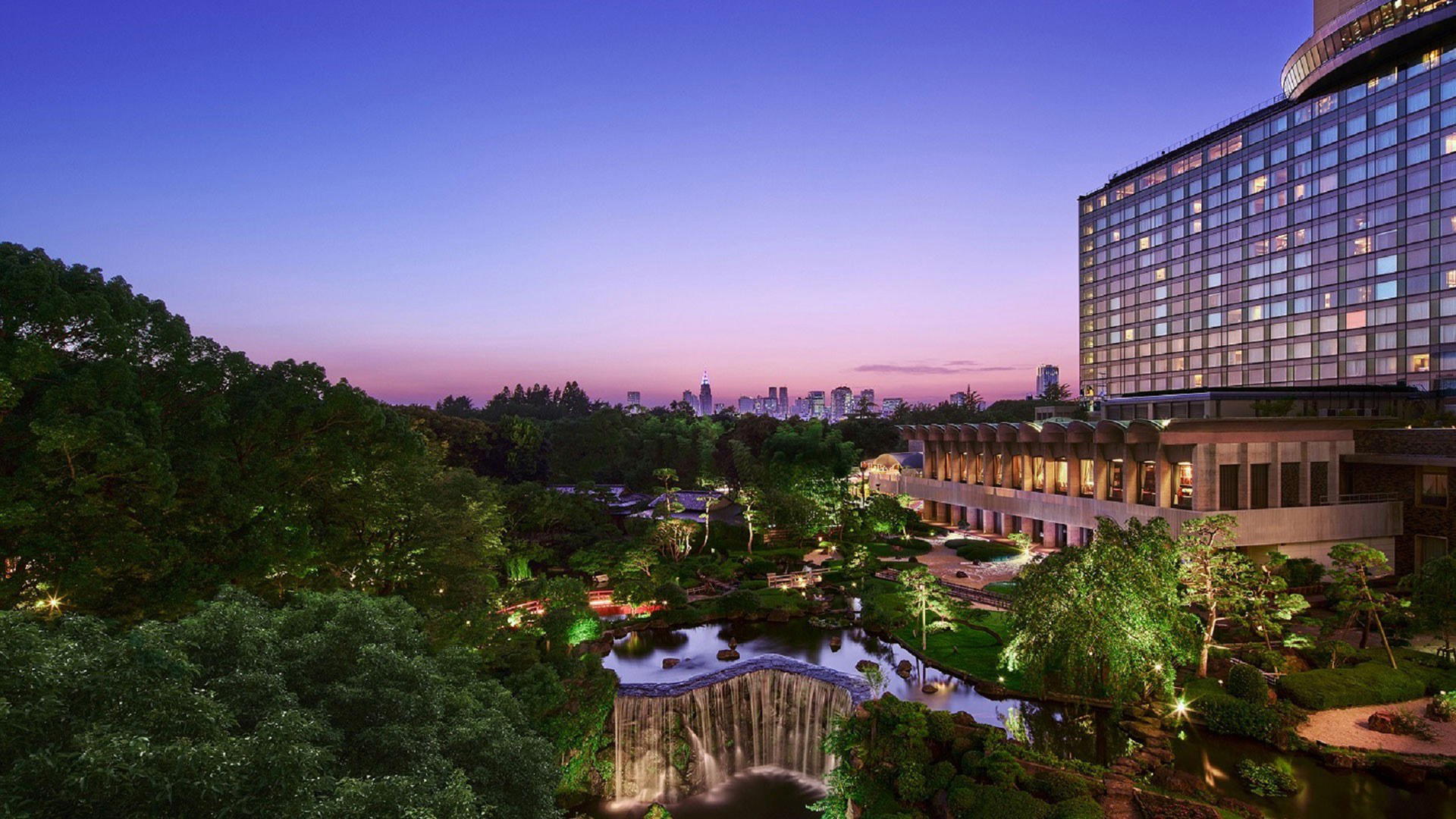
The 400-year-old Japanese garden occupying ten acres of the New Otani grounds is the property's most irreplaceable asset. The garden preserves the landscape and stone walls of an Edo-period daimyo mansion, the same historical fabric that Yonetaro Otani committed to retaining when he agreed to build the hotel in 1962. Koi ponds, waterfalls, lacquered red bridges, and quiet reading alcoves within the garden perimeter make it a functioning amenity rather than decorative backdrop. No comparable garden exists within the grounds of Tokyo's newer luxury openings; the city's density ensures that this kind of ten-acre breathing space is a fixed, non-reproducible advantage.
The Chiyoda location places Executive House Zen within walking distance of Akasaka Palace and adjacent to Tokyo's government quarter. This positions it differently from the high-rise commercial corridors where Bellustar Tokyo and newer Shinjuku-adjacent properties operate. The Roppongi nightlife district is close enough to be accessible without being close enough to intrude on the immediate surroundings. Executive Lounge windows provide unobstructed sightlines toward Mount Fuji, Akasaka Palace, and the city skyline, a viewing axis that has been part of the hotel's design intent since the original 1964 construction.
The Rooms and Amenities
87 accommodations across floors 11 and 12 include eight suites. Room design draws from Japanese calligraphy as a visual language: black accents, carpets patterned to evoke ink on paper, and calligraphy-influenced wall art. Natural elements, bonsai, miniature rock gardens, bamboo, antique Asian earthenware, appear throughout rather than as token gestures. Bathrooms are stocked with custom natural bath salts and Salvatore Ferragamo amenities; Imabari towels and robes, sourced from Japan's premium cotton-weaving tradition in Ehime Prefecture, complete the bathroom specification. Suites include massage tables for in-room therapy.
Executive House Zen guests receive complimentary access to the Golden Spa, the property's exclusive sports club with sauna, pool, and gym. The broader New Otani complex adds hair salons, florists, wine stores, indoor and outdoor pools, medical facilities, and banquet halls to what is effectively a self-contained precinct. The rate referenced in available data sits at approximately $761 per night, placing it at a price point below several of the newer five-star entrants in the Tokyo market while delivering a service infrastructure that is substantially larger in scope.
Planning a Stay
The hotel address is 4-1 Kioi-cho, Chiyoda-ku, Tokyo, positioning it between Akasaka and the Hanzomon area, with direct access to the Tokyo Metro network. The executive lounge's six daily service windows mean that guests who time their movements around the complimentary food and drink programme can extract meaningful value from the rate. The seasonal rooftop rose garden breakfast warrants early planning: early summer (late May through June) and autumn are the recommended windows, and one-couple-per-day availability makes it a booking priority rather than an on-arrival request.
For travellers building a broader Japan itinerary, the New Otani's Chiyoda base pairs naturally with ryokan or resort stays outside the capital. Properties such as Gora Kadan in Hakone, Asaba in Izu, or Fufu Kawaguchiko in Fujikawaguchiko offer the ryokan format that contrasts usefully with the New Otani's urban scale. For those extending to Kyoto, HOTEL THE MITSUI KYOTO occupies a comparable position of historical site and institutional credibility. Further afield, Amanemu in Mie, Benesse House in Naoshima, ENOWA Yufu in Yufu, Halekulani Okinawa, Jusandi in Ishigaki, Nishimuraya Honkan in Kinosaki-cho, Sekitei in Hatsukaichi-shi, Zaborin in Kutchan, and Fufu Nikko in Nikko each represent distinct regional formats for travellers willing to build an extended Japan programme around contrasting property types. International comparisons that share the institutional-luxury register include The Fifth Avenue Hotel in New York City, Aman New York, and Aman Venice.
Just the Basics
Comparable venues nearby, for context on price, style, and recognition.
| Venue | Price | Awards | Notes |
|---|---|---|---|
| Hotel New Otani Tokyo Executive House ZenThis venue — the venue you are viewing | Not listed | 1 Michelin Key · La Liste Top Hotels | Not listed |
| The Prince Gallery Tokyo Kioicho, a Luxury Collection Hotel | $500–750 | 1 Michelin Key · La Liste Top Hotels | Chiyoda, Contemporary luxury high-rise integrated into a mixed-use development with emphasis on modern design and panoramic urban views. |
| Shangri-La Tokyo | $500–750 | 1 Michelin Key · La Liste Top Hotels | Chiyoda, Luxury high-rise hotel blending Japanese tradition with contemporary elegance. |
| The Aoyama Grand Hotel | $1–100 | 1 Michelin Key · World Luxury Hotel Awards WLHA Country Winner | Minato, Mid-century modern boutique landmark |
| Bellustar Tokyo, A Pan Pacific Hotel | Not listed | 1 Michelin Key · World Luxury Hotel Awards WLHA Regional Winner | Shinjuku, luxury urban skyscraper hotel blending Japanese tradition with modern design |
| The Okura Tokyo | $500–750 | 1 Michelin Key · World's 50 Best #69 | Minato, Dual-wing luxury property combining contemporary Prestige Tower and preserved Heritage Wing. |
Recognition history
Dated appearances from independent guides and award organizations, with the underlying list record or original source where available.
Michelin 1 Key
Michelin
La Liste Top Hotels
La Liste
Forbes 5-Star
Forbes
Virtuoso Luxury Hotel Partner
Virtuoso
Preferred Hotels Member
Preferred Hotels
Full recognition history (7 entries)
Forbes 5-Star
Forbes
Michelin 1 Key
Michelin
Continue exploring
More in Tokyo
Hotels in Tokyo
Browse all →



Bars in Tokyo
Browse all →


Restaurants in Tokyo
Browse all →



Details
- Quiet
- Elegant
- Sophisticated
- Business Trip
- Romantic Getaway
- Panoramic View
- Garden
- Wi Fi
- Pool
- Spa
- Fitness Center
- Room Service
- Concierge
- Business Center
- Garden
- Skyline
- Wheelchair Accessible
- Elevator
Serene and sophisticated with soft ambient lighting, neutral-toned textiles, walnut wood accents, and soundproofed rooms creating a peaceful retreat amid city bustle.