









Tokyo’s French dining scene has a serious Japanese inflection, and L’Effervescence sits in the high-formal end of that conversation. Chef Shinobu Namae’s kitchen is framed by sustainable sourcing, prix fixe structure, and a tea-ceremony cadence, with recognition from Tabelog, Opinionated About Dining, La Liste, and Asia’s 50 Best Restaurants reinforcing its place among the city’s destination rooms.
 Discover on Pearl
Pearl is the En Primeur Club membership app — saves, bookings, and concierge access live there. Same editors, same standards.
- Address
- 2 Chome-26-4 Nishiazabu, Minato City, Tokyo 106-0031, Japan
- Phone
- +81 3-5766-9500
- Website
- leffervescence.jp

The approach to L’Effervescence has the quiet tension suited to Tokyo’s most composed dining rooms: the city falls away, voices drop, and the meal unfolds less as restaurant theatre than as a controlled sequence. This is not a transplanted idea of luxury. It belongs to a local category that lets Tokyo’s sense of season, ceremony, and service rhythm set the accent.
Tokyo has long absorbed ambitious dining with unusual seriousness, supporting grand rooms, chef-led tasting menus, European-influenced dining, and a luxury tier where distinction rests not on imported signals alone, but on making technique feel native. L’Effervescence sits in that conversation. Its recognition profile includes Black Restaurant Guide 2026 two-diamond status. In Tokyo’s crowded dining category, reputation is earned across guide systems with different audiences.
Global form, Japanese pacing, and a room built around restraint
The restaurant’s character is clearest through format. Formal dining in Tokyo rewards patience: pacing, temperature, tableware, and sequence can matter as much as luxury ingredients. Here, the framework shapes a meal that draws on the city’s broader culture of precision and seasonality. The restaurant’s own language frames its mission as sublimating the richness of local flavours by marrying them with those from the four corners of the globe. That is a more useful description than a narrow cuisine label.
The kitchen’s role is best read through discipline rather than personality myth. Tokyo’s high-end dining rooms often divide between classic richness, precision, and produce-led modernism. L’Effervescence belongs to the camp where restraint and range matter as much as overt luxury. Ingredients become material for technique and sequence. The point is not abstinence, but control.
That matters in a city where seasonality is already a shared language across many dining traditions. A formal restaurant in Tokyo cannot rely on category as novelty; it must show why its structure helps local ingredients speak more sharply. Here, the restaurant’s cross-cultural premise gives the meal a long arc, while Japanese references supply cadence and finish.
Where it sits among Tokyo's serious dining rooms
Among comparable Tokyo addresses, distinctions are practical as much as culinary. abysse also operates in the city’s serious dining conversation, while Takumi, NéMo, LE BOURGUIGNON, and Benoit sit in adjacent conversations with different degrees of formality and tone. The useful comparison is not a ranking exercise, but a question of what kind of meal in Tokyo is being sought: bistro lineage, seafood emphasis, classic comfort, or a tasting-menu format where Japanese ceremonial references are built into the meal’s architecture.
L’Effervescence is strongest for diners who want the last of those. The setting is formal without generic grandiosity, and its Black Restaurant Guide 2026 two-diamond recognition places it inside the city’s international dining circuit. That signal can cut both ways: it attracts guide-conscious travelers, but the meal is more interesting when approached as a Tokyo restaurant first.
The restaurant’s stated mission gives the experience a clear center: local flavours are not treated as decoration, but as material to be shaped through global technique and perspective. In a city where luxury dining can default to rarity and spectacle, that produces a different claim about prestige. It is not austere; it makes the kitchen’s priorities visible.
How to place it within a Tokyo itinerary
Schedule this dinner with space around it, not between appointments. The formal cadence, attentive service, and composed room suit an evening where the restaurant is the event. Travelers building a broader food itinerary should use it as a polished anchor, then contrast it with other Tokyo dining on surrounding days. For Tokyo dining, it pairs well as a counterpoint to abysse, or with other smaller-format dining rooms elsewhere in the city.
For planning beyond this table, Our full Tokyo restaurants guide gives the citywide frame: Tokyo is not one dining scene, but overlapping specialist cultures. The same trip can move from formal tasting menus to counter dining, then cocktail bars and hotel dining rooms without repeating a mood. For that wider map, see Our full Tokyo hotels guide, Our full Tokyo bars guide, Our full Tokyo wineries guide, and Our full Tokyo experiences guide.
Japan’s broader dining map also rewards side trips and category shifts. A Tokyo-based itinerary can stretch to regional contrasts in other cities and styles, without needing to turn every meal into the same kind of occasion. For dining outside Japan, compare the category against other international rooms where technique meets different regional pressures.
The editorial case for L’Effervescence is not that it offers luxury in Tokyo; plenty of rooms can. Its value is a disciplined argument for local seasonality and social ritual shaped through a global lens, with enough external recognition to justify attention and enough internal coherence to avoid feeling like a guide-chasing production.
Peer Set Snapshot
Comparable venues nearby, for context on price, style, and recognition.
| Venue | Cuisine | Price | Awards | Notes |
|---|---|---|---|---|
| L'EffervescenceThis venue — the venue you are viewing | Modern French with Japanese Influences | $$$$ | Michelin 3 Star | |
| Den | Modern Japanese Kaiseki | $$$$ | Michelin 2 Star | Shibuya |
| Narisawa | Modern Japanese Satoyama Fine Dining | $$$$ | Michelin 2 Star | Minato |
| Harutaka | Edo-Style Omakase Sushi | $$$$ | Michelin 3 Star | Chūō |
| Crony | Modern French with Japanese Influences | $$$$ | Michelin 2 Star | Minato |
| Sazenka | Modern Chinese Fine Dining | $$$$ | Michelin 3 Star | Minato |











At a Glance
- Elegant
- Serene
- Sophisticated
- Minimalist
- Date Night
- Special Occasion
- Business Dinner
- Open Kitchen
- Extensive Wine List
- Sake Program
- Sommelier Led
- Local Sourcing
- Garden
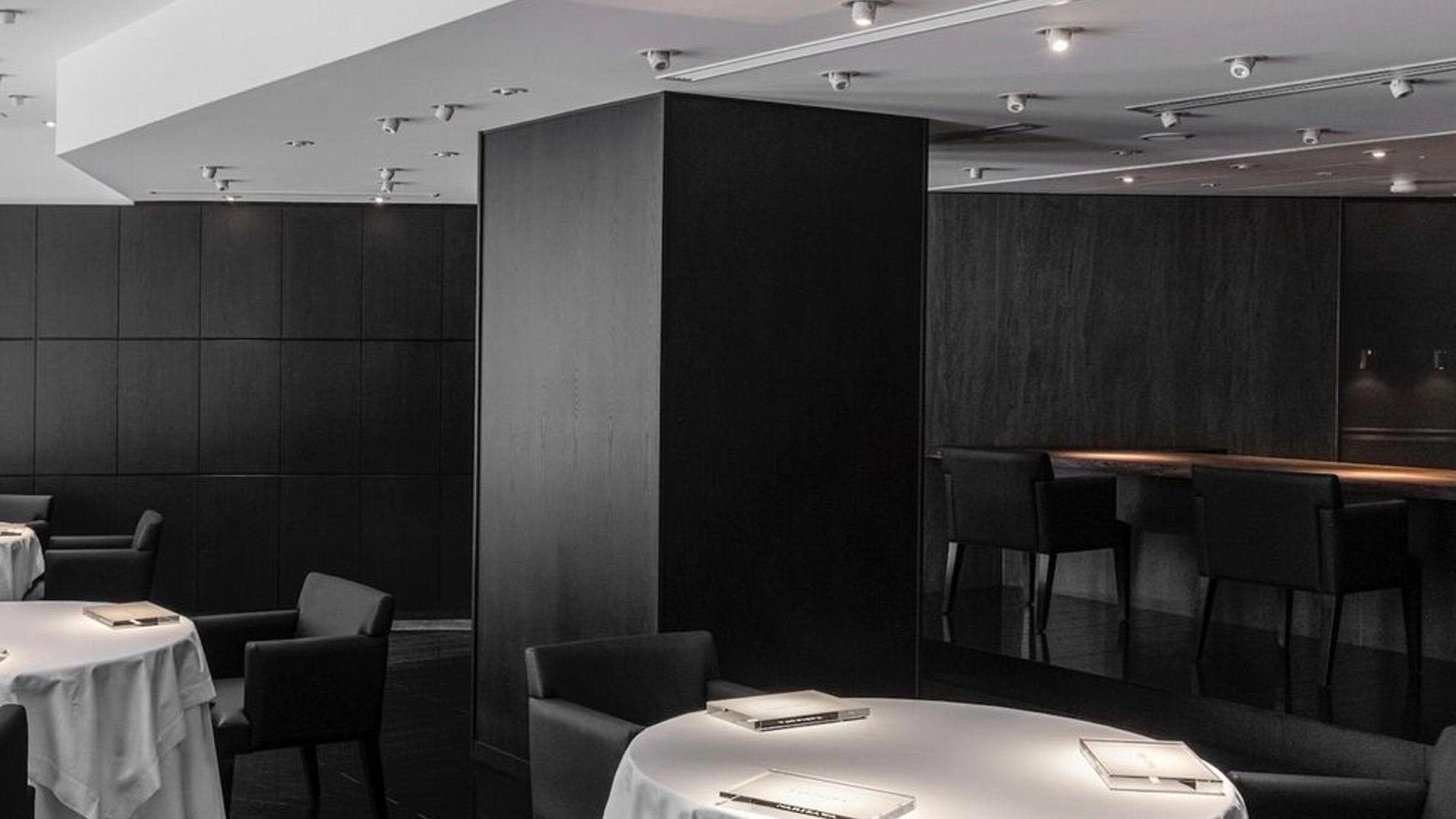
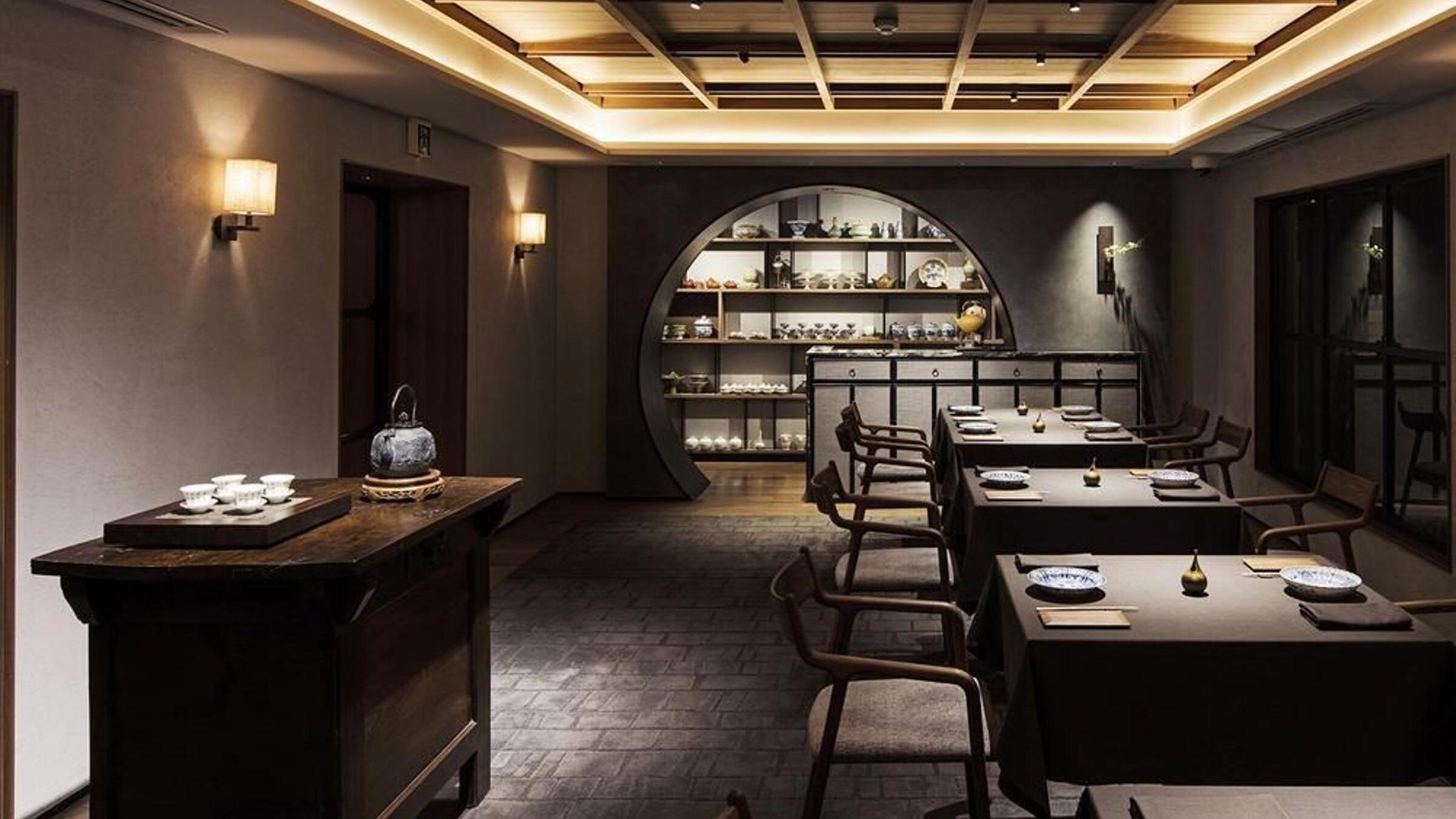
Serene and elegant with minimalist design, dark woods, earthy tones, and garden views creating a calm escape from Tokyo's bustle.