







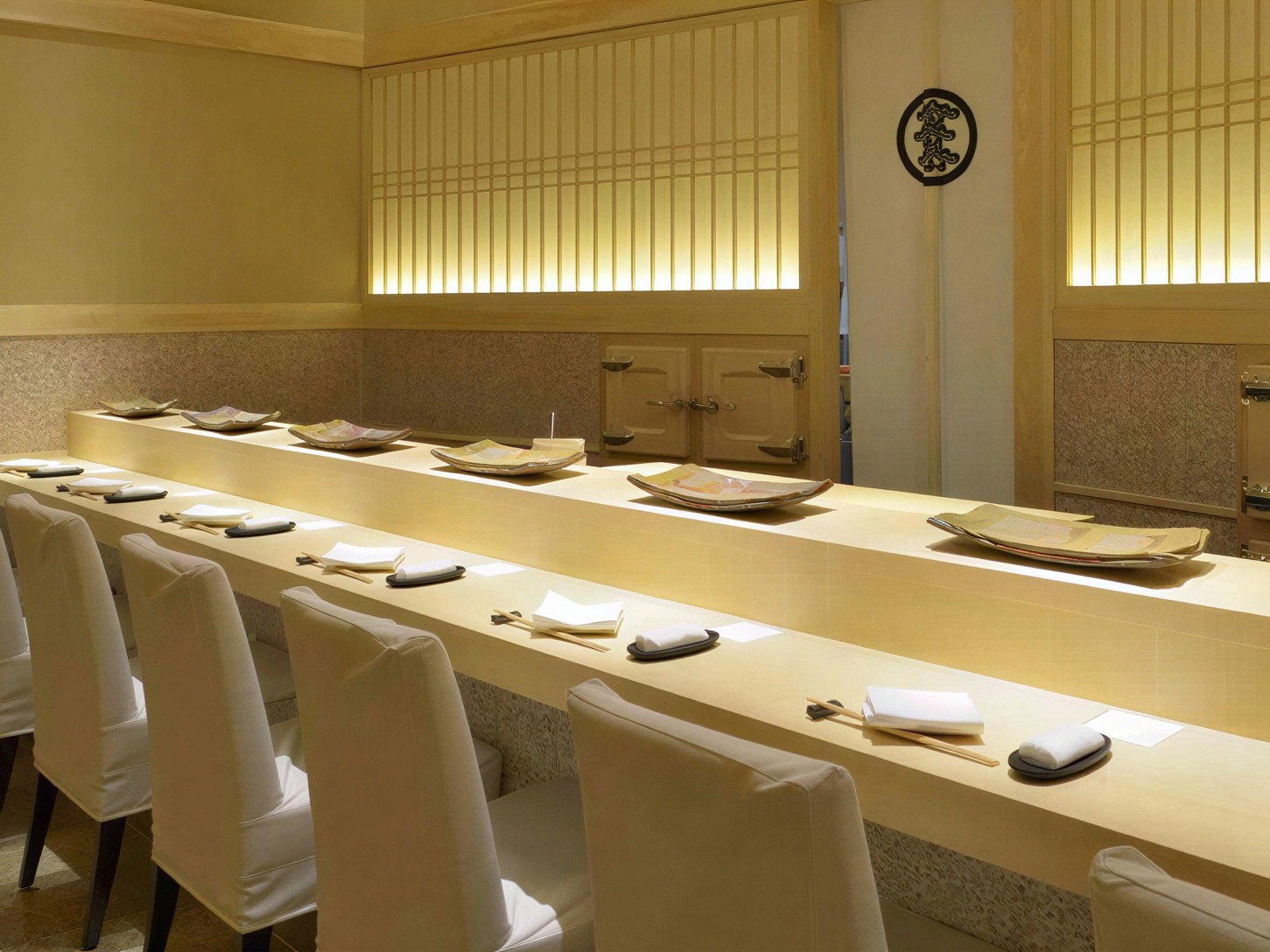
Narisawa is Tokyo's long-running argument for Japanese terroir through a French-informed lens: satoyama thinking, disciplined technique, and a room built for serious dining rather than spectacle. The 15-seat restaurant carries Michelin two-star recognition, Tabelog Silver status for 2026, La Liste scoring, and a history on the World's 50 Best Restaurants rankings, with pricing in the JPY 80,000–99,999 bracket for lunch and dinner.
Pearl is the En Primeur Club membership app — saves, bookings, and concierge access live there. Same editors, same standards.
- Address
- 2 Chome-6-15 Minamiaoyama, Minato City, Tokyo 107-0062, Japan
- Phone
- +81 3-5785-0799
- Website
- narisawa-yoshihiro.com
- Directions
- Get directions
 Saves & bookings on Pearl
Narisawa is a Tokyo restaurant associated with French and Innovative cuisine under chef-owner Yoshihiro Narisawa.
French and Innovative cooking in Tokyo
The useful comparison is not with a casual Paris bistro, despite the French category. Narisawa sits in a premium Tokyo dining context, where the confirmed details point to French and Innovative cuisine rather than a casual format.
This also helps place it alongside other serious Tokyo dining options without overstating the comparison. Sushi Ryujiro and Sushi Masashi represent a different kind of high-end Japanese meal, while Hakuun, Nogizaka Shin, and JULIA offer other ways to think about refined dining in the city. Narisawa's position is distinct because its verified category is French and Innovative, rather than sushi or a purely traditional Japanese format.
The available recognition data includes a matched import from Opinionated About Dining for 2026, but the information provided here does not include a confirmed rank or detailed accolade that should be used as a headline claim. For that reason, it is better not to build the page around awards, scores, stars, or list placements. Narisawa can be presented without relying on unverified distinctions.
Tokyo has many expensive restaurants; the verified categories of French and Innovative are one reliable guide to Narisawa here. They suggest a restaurant operating beyond casual dining, but they do not by themselves verify the precise rhythm of the meal, the number of courses, or the physical layout of the dining room.
The confirmed ¥¥¥¥ price tier makes Narisawa a considered booking rather than an everyday stop. Diners should approach it as a premium Tokyo restaurant and dress smart casual. Beyond that, practical details such as exact hours, reservations, seating, dietary accommodations, and policies should be checked directly with the restaurant or its current booking channel before planning around them.
That gives the restaurant a clear authorship: this is not an anonymous luxury dining room, but a named chef-led venue in Tokyo.
How to place it in a Tokyo dining itinerary
For travellers building a Tokyo restaurant plan, Narisawa is a different decision from choosing counter sushi or a casual neighborhood meal. It suits diners looking for a premium French and Innovative restaurant in Tokyo, with Yoshihiro Narisawa identified as chef-owner and ¥¥¥¥ pricing setting expectations.
Tokyo rewards contrast, so the smarter itinerary does not need to stack several similar high-end meals in a row. Consider Narisawa alongside other refined but different options such as Hakuun, JULIA, Nogizaka Shin, Sushi Masashi, and Sushi Ryujiro, or balance it with more casual unnamed dining elsewhere in the city.
For broader planning, use Our full Tokyo restaurants guide alongside Our full Tokyo hotels guide, Our full Tokyo bars guide, Our full Tokyo wineries guide, and Our full Tokyo experiences guide. Travellers extending the route through Japan can also compare Tokyo's premium dining scene with other dining in Japan more generally, without assuming that every notable restaurant follows the same format or price structure.
The critical point is that Narisawa does not need inflated detail to be interesting. That is the grounded basis for considering it in a serious Tokyo dining itinerary.
Price and Positioning
Comparable venues by cuisine and price in the same metro.
| Venue | Cuisine | Price | Awards |
|---|---|---|---|
| NarisawaThis venue — the venue you are viewing | French, Innovative | ¥¥¥¥ | This venue |
| Sushi Ryujiro | Not listed | ¥¥¥¥ | Sushi, ¥¥¥¥ |
| Hakuun | Not listed | ¥¥¥¥ | Japanese, ¥¥¥¥ |
| Nogizaka Shin | Not listed | ¥¥¥¥ | Italian, Japanese, ¥¥¥¥ |
| JULIA | Not listed | ¥¥¥¥ | Contemporary, ¥¥¥¥ |
| Sushi Masashi | Not listed | ¥¥¥¥ | Sushi, ¥¥¥¥ |
Recognition history
Dated appearances from independent guides and award organizations, with the underlying list record or original source where available.
La Liste Top Restaurants
La Liste
Michelin 2 Stars
Michelin
Opinionated About Dining Top Restaurants in Japan Ranked #115
Opinionated About Dining
Tabelog Silver #87
Tabelog
World's 50 Best Asia's Best Restaurants #37
World's 50 Best
La Liste Top Restaurants
La Liste
Michelin 2 Stars
Michelin
Opinionated About Dining Top Restaurants in Japan Ranked #97
Opinionated About Dining
Tabelog 100 #30 · No. 30
Tabelog · Tabelog 100 - Innovative / Creative cuisine - 2025
Tabelog Silver
Tabelog
Tatler Listed in Best Restaurants Asia-Pacific
Tatler
The Best Chef Three Knives
The Best Chef
We're Smart World 4 Radishes
We're Smart World
World's 50 Best Best Restaurants #21
World's 50 Best
World's 50 Best Asia's Best Restaurants #12
World's 50 Best
Michelin 2 Stars
Michelin
Opinionated About Dining Top Restaurants in Japan Ranked #95
Opinionated About Dining
World's 50 Best Best Restaurants #56
World's 50 Best
Opinionated About Dining Top Restaurants in Japan Ranked #91
Opinionated About Dining
World's 50 Best Best Restaurants #51
World's 50 Best
World's 50 Best Best Restaurants #45
World's 50 Best
World's 50 Best Best Restaurants #19
World's 50 Best
World's 50 Best Best Restaurants #22
World's 50 Best
World's 50 Best Best Restaurants #22
World's 50 Best
World's 50 Best Best Restaurants #18
World's 50 Best
World's 50 Best Best Restaurants #8
World's 50 Best
World's 50 Best Best Restaurants #8
World's 50 Best
World's 50 Best Best Restaurants #14
World's 50 Best
World's 50 Best Best Restaurants #20
World's 50 Best
World's 50 Best Best Restaurants #27
World's 50 Best
World's 50 Best Best Restaurants #12
World's 50 Best
World's 50 Best Best Restaurants #24
World's 50 Best
World's 50 Best Best Restaurants #20
World's 50 Best














At a Glance
- Elegant
- Modern
- Minimalist
- Sophisticated
- Intimate
- Special Occasion
- Date Night
- Business Dinner
- Open Kitchen
- Extensive Wine List
- Sake Program
- Farm To Table
- Local Sourcing
- Sustainable Seafood
Current opening hours
- Monday
- Closed
- Tuesday
- 12–2:30 PM, 5:30–8 PM
- Wednesday
- 12–2:30 PM, 5:30–8 PM
- Thursday
- 12–2:30 PM, 5:30–8 PM
- Friday
- 12–2:30 PM, 5:30–8 PM
- Saturday
- 12–2:30 PM, 5:30–8 PM
- Sunday
- Closed
Hours can change for holidays and private events. Last verified .
Minimalist interior with downlights illuminating tables for privacy, no background music or scents, focusing entirely on the cuisine in a serene, elegant atmosphere.