L'Effervescence has anchored Nishiazabu's upper tier of French dining since its opening, operating within a compact field of Tokyo restaurants that translate classical European technique into a Japanese seasonal idiom. The room, the pacing, and the format place it squarely in the city's high-commitment tasting-menu bracket, where reservations require planning and the experience expects full attention from the diner.
Pearl is the En Primeur Club membership app — saves, bookings, and concierge access live there. Same editors, same standards.
- Address
- 2 Chome-26-4 Nishiazabu, Minato City, Tokyo 106-0031, Japan
- Phone
- +81357669500
- Website
- leffervescence.jp
- Directions
- Get directions
 Saves & bookings on Pearl
Where French Technique Meets Tokyo's Seasonal Discipline
Tokyo's French fine-dining scene occupies a position that has no direct European equivalent. The city absorbed classical French cooking decades ago, then reshaped it through the discipline of Japanese seasonality, the sourcing logic of shun (peak ingredient season), and an attention to silence and pacing that most Parisian kitchens would find unusual. L'Effervescence, situated in Nishiazabu in Minato City, Tokyo, is a modern French-Japanese fine dining restaurant with. Its name, French for effervescence, the quality of being vivacious through natural energy, signals an approach rooted in living ingredients and atmospheric lightness rather than the heavier, reduction-led grammar of classical French cuisine.
That positioning matters because it defines the comparable set. In Tokyo's upper-tier French bracket, which includes addresses like Sézanne in the Four Seasons and Crony with its more experimental bent, restaurants compete on the precision of their ingredient narrative as much as on technical execution. L'Effervescence has consistently argued for a quieter, vegetable-forward register within that field.
The Atmosphere of Nishiazabu After Dark
Nishiazabu is not Ginza. That is worth stating plainly. Where Ginza operates as Tokyo's high-gloss commercial showcase, vertical towers, department-store adjacency, corporate entertaining budgets, Nishiazabu functions as a residential-scaled quarter where serious restaurants occupy low-rise buildings set back from narrow streets. The neighbourhood shares its character with Azabu-Juban and the backstreets below Roppongi Hills: money is present but not announced. The dining rooms in this area tend toward the intimate rather than the grand.
Arriving at L'Effervescence in the evening, the visual register is immediately quieter than its reputation might suggest. Tokyo's premium French rooms often operate in a register of controlled restraint, no amplified music, soft light, service staff who move without urgency. The sensory baseline is low, which is a deliberate formal choice. In a city where restaurants at this level treat silence as part of the composition, the atmosphere is not an absence of drama but a specific kind of it. Sound, or its management, becomes part of what the diner experiences alongside the food.
This is a different proposition from, say, the counter-focused intimacy of Harutaka in Ginza, where proximity to the chef and the visual theatre of nigiri preparation are themselves sensory anchors. At a Western-format tasting table, the sensory experience is orchestrated through pacing, temperature, and the visual presentation of each course rather than through craft performed in the diner's eyeline.
The Vegetable Argument in Japanese French Cooking
One of the more interesting structural debates in Tokyo's French tasting-menu tier is where vegetables sit relative to protein. In classical French cuisine, vegetables function largely as context for meat and fish, a garnish logic that persists even in modernist variations. Tokyo's leading French kitchens have, over the past decade, progressively shifted that hierarchy, partly under the influence of Japanese culinary culture, where a well-suited daikon or a first-of-season bamboo shoot commands the same reverence as a piece of premium protein.
L'Effervescence has positioned itself toward that end of the argument more consistently than most of its peers. This is not the same as saying it serves vegetarian food, it does not, as a structural matter, but rather that the ingredient logic places seasonal produce at the conceptual center of the menu. A menu built around what is at peak condition on a given week in November will look and taste fundamentally different from a menu constructed to showcase a standing wine programme or a house-cured centrepiece. The commitment to shun discipline at a French-technique level is one of the things that separates L'Effervescence from the more Eurocentric rooms in its tier.
Comparable commitments appear elsewhere in Japan's fine-dining geography. HAJIME in Osaka operates with a similarly ingredient-led French vocabulary, while Gion Sasaki in Kyoto approaches the intersection of Western technique and Japanese seasonal logic from the kaiseki side of the conversation. akordu in Nara adds a Spanish-Japanese layer to that regional picture. L'Effervescence sits within that national conversation as one of Tokyo's primary entries in the French column.
Placing L'Effervescence in Tokyo's Tasting-Menu Tier
Tokyo's multi-course tasting-menu bracket now occupies a wide price band. French tasting menus at the level of L'Effervescence typically fall in the upper-middle to high end of that range, pricing against peers like Sézanne and the city's established three-star French addresses rather than against more accessible dégustation formats.
The relevant comparison set also includes addresses operating in different idioms. RyuGin, Seiji Yamamoto's kaiseki room in Roppongi, represents what happens when Japanese culinary philosophy meets modernist technique within a native framework rather than an imported one. The contrast between RyuGin and L'Effervescence illustrates a bifurcation in how Tokyo handles ambitious cooking: the kaiseki stream and the French stream have learned from each other so extensively that the distinction is sometimes more about format and service grammar than fundamental culinary philosophy.
Further afield in Japan's premium dining circuit, restaurants like Goh in Fukuoka demonstrate that the country's appetite for technically demanding tasting formats extends well beyond the capital.
Internationally, the comparison often invoked is with high-commitment French rooms in New York. Le Bernardin represents the classicist position, while Atomix, a Korean-rooted tasting menu at the highest level, shows how New York processes a similar fusion-versus-authenticity tension to the one Tokyo French kitchens navigate. L'Effervescence operates in a different register from both but occupies an analogous cultural position: serious, formally demanding, and making an argument about what fine dining in its specific city should mean.
Regional Japanese addresses that round out this picture include 一本杉川島製 in Nanao, 古代山乃 in Sapporo, 湖畔廃墟 in Takashima, 庭羽屋 in Nishikawa Machi, Birdland in Sakai, and Bistro Ange in Toyohashi, each representing different nodes of Japan's geographically dispersed fine-dining circuit.
Cuisine Lens
Comparable venues nearby, for context on price, style, and recognition.
| Venue | Cuisine | Price | Notes |
|---|---|---|---|
| レフェルヴェソンスThis venue — the venue you are viewing | Modern French-Japanese Fine Dining | $$$$ | Not listed |
| Cuisine Michel Troisgros | Contemporary French Fine Dining | $$$$ | Shinjuku |
| レストラン トヨ トーキョー | Japanese-French Fusion Counter Dining | $$$$ | Chiyoda |
| ラ メゾン クルティーヌ | Authentic French Classic with Aged Meats | $$$$ | Suginami |
| オマージュ | Refined French Contemporary | $$$$ | Taitō |
| French Kitchen | Classic French Bistro | $$$$ | Minato |













At a Glance
- Elegant
- Sophisticated
- Intimate
- Special Occasion
- Chefs Counter
- Sake Program
- Local Sourcing
Current opening hours
- Monday
- Closed
- Tuesday
- 11:30 AM–12:30 PM, 6–8 PM
- Wednesday
- 11:30 AM–12:30 PM, 6–8 PM
- Thursday
- 11:30 AM–12:30 PM, 6–8 PM
- Friday
- 11:30 AM–12:30 PM, 6–8 PM
- Saturday
- 11:30 AM–12:30 PM, 6–8 PM
- Sunday
- Closed
Hours can change for holidays and private events. Last verified .
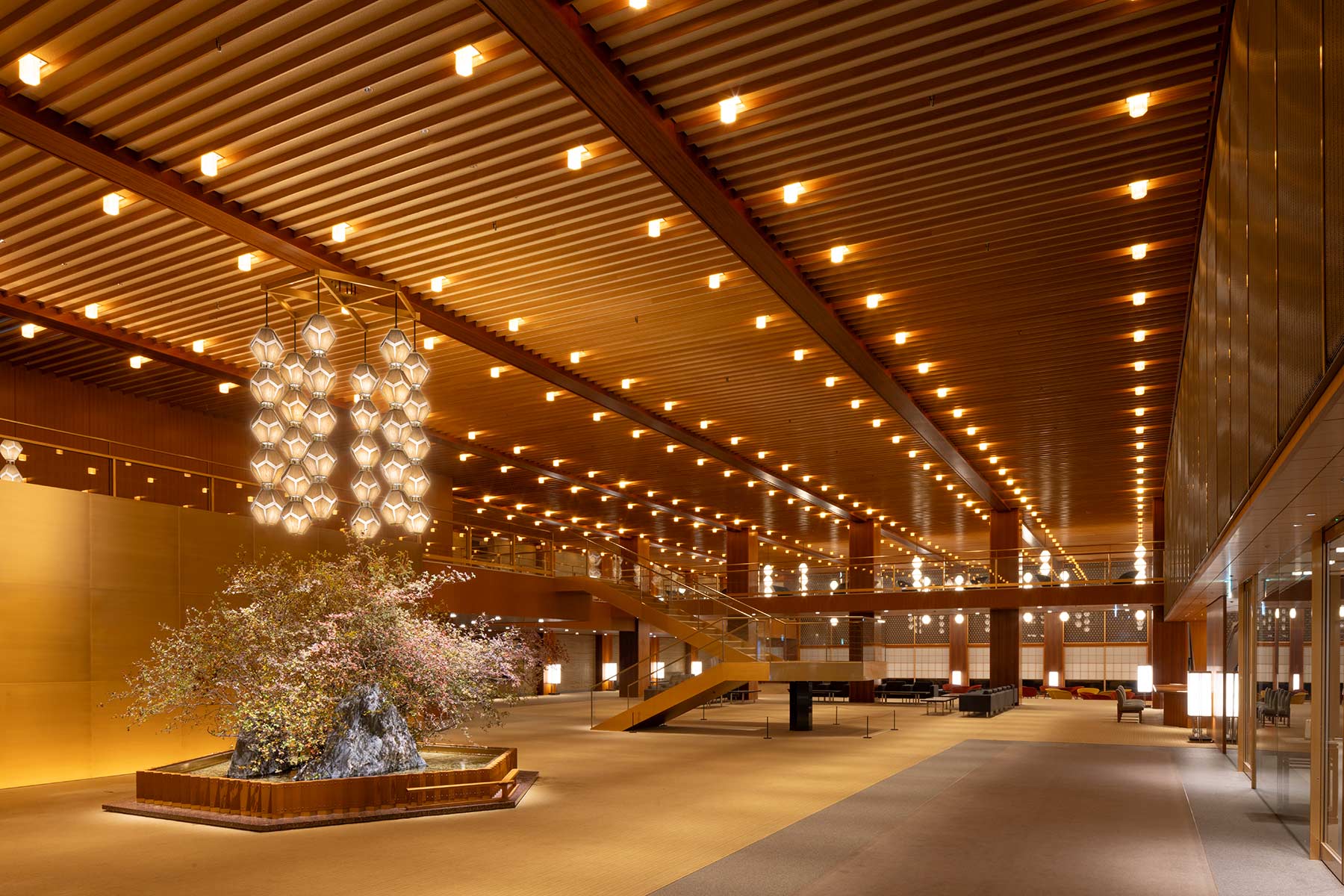
Serene and tranquil ambiance complementing the elegant fine dining experience.