Our verdict
Cuisine Michel Troisgros carries one of French gastronomy's most decorated lineages into the heart of Nishi-Shinjuku, operating from within the Hyatt Regency Tokyo. The restaurant represents a decades-long conversation between French technique and Japanese produce, positioning it among a small tier of Western-origin fine dining rooms that have put down genuine roots in the city rather than simply transplanting a European formula.
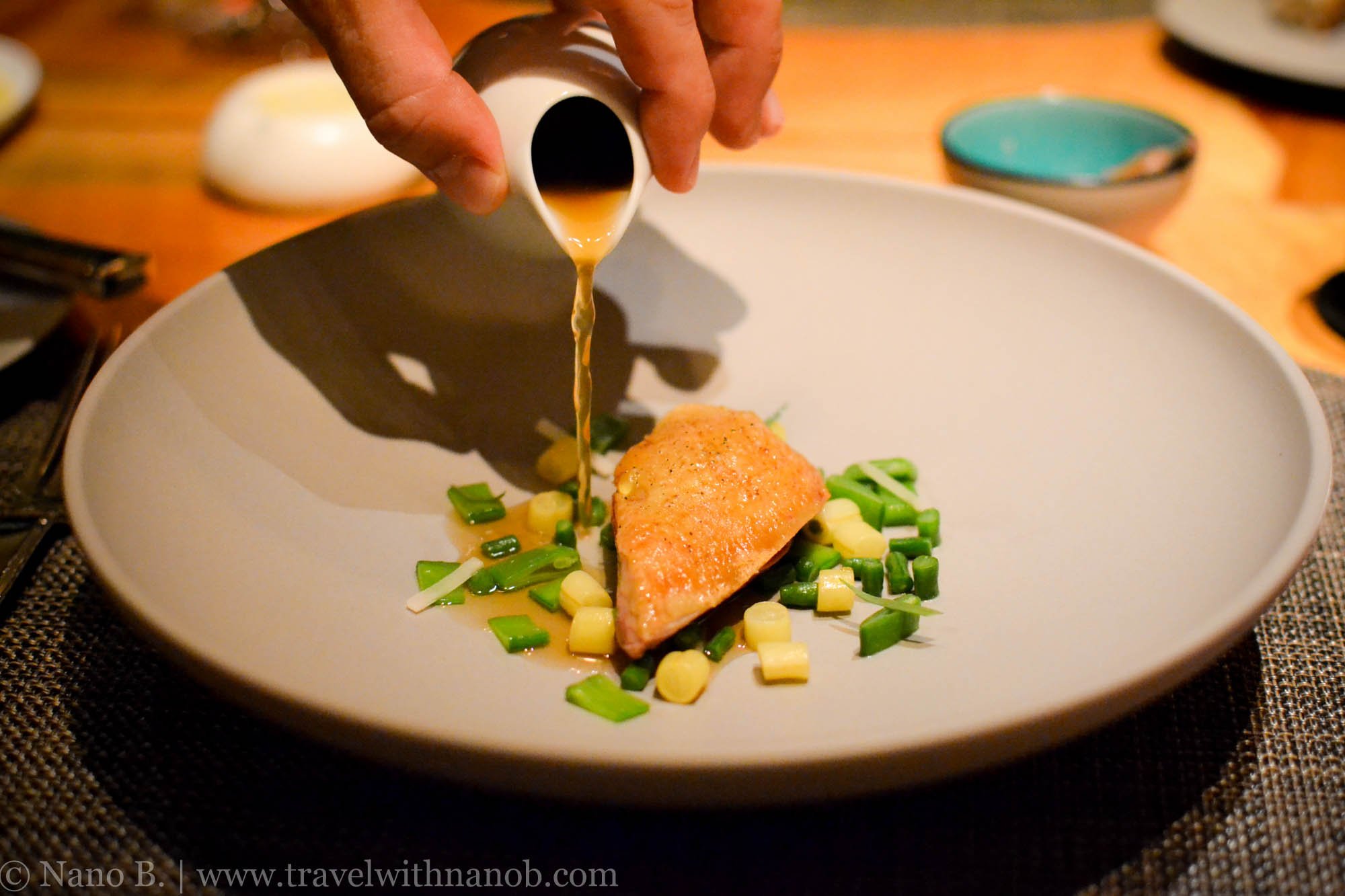
The menu
What to order
- Veil of Tofu with Mussels and Saffron
- Spiced and Burned Rack of Lamb
- Pumpkin tortellini
A French Institution That Chose Tokyo
The Troisgros name is not an import in the conventional sense. While most European fine dining arrivals treat Tokyo as an outpost, Cuisine Michel Troisgros has occupied its Nishi-Shinjuku address for long enough that it functions as part of the city's own fine dining fabric rather than an ambassador of something foreign. That distinction matters. Tokyo's premium French tier now includes a handful of rooms where the French-Japanese dialogue has matured over decades, and this is one of the addresses where that maturation is most legible in the cooking.
The Hyatt Regency setting places the restaurant in a well-established category: hotel fine dining that earns its own reputation independently of the property. Nishi-Shinjuku's tower district, dense with corporate headquarters and international hotel flagships, is not where Tokyo's most photographed food scenes play out. That works in the restaurant's favour. The clientele skews toward people who came specifically for the table, not guests who wandered in from a lobby. The room, refined above the city, reinforces that separation from street-level noise in a way that neighbourhood restaurants in Minami-Aoyama or Ginza cannot replicate.
The Service Architecture Behind the Meal
In Tokyo's premium French rooms, the division of labour between kitchen, sommelier, and front-of-house has become increasingly legible as a dining signal in its own right. At the top tier, the sommelier program is rarely decorative: it functions as a second editorial voice alongside the kitchen, shaping the meal's tempo and register through wine sequencing as much as through food pairing. This is the model that restaurants in the same bracket as L'Effervescence and Sézanne have refined, and it is the operating standard against which a room carrying the Troisgros lineage will inevitably be measured.
Front-of-house at this level serves a function that goes beyond service mechanics. In a room where the menu requires explanation, a well-calibrated floor team translates the kitchen's choices without condescending to the guest. The Troisgros approach to cooking has always involved a kind of restraint that needs context: the sourness, the clean acidic cuts, the lightness relative to classical French richness. A guest encountering these choices without framing may read them as understatement. With framing, they read as precision. That interpretive work belongs to the front-of-house, and the quality of that work separates a technically correct meal from one that lands with full force.
French Technique in a Japanese Ingredient Environment
The broader story of French cooking in Japan is, at this point, one of genuine hybridisation rather than transplantation. Tokyo now has French restaurants that could not exist anywhere else because their produce logic is entirely Japanese: the fish sourced from specific prefectures, the vegetables dictated by regional growers, the wagyu integrated into courses that a kitchen in Lyon would never conceive. This is the environment Cuisine Michel Troisgros has operated within, and the Troisgros family's documented engagement with Japanese ingredients dates back further than most Western chefs' relationships with this market.
That longevity puts the restaurant in a different position from newer French arrivals, including places like Crony, which brings a more contemporary Franco-Japanese sensibility to the conversation. Where newer entries tend to lead with ingredient provenance as a statement, the older French institutions in Tokyo have moved past provenance-as-story into something quieter: sourcing as a baseline assumption rather than a narrative device. Comparison with how L'Effervescence has navigated this same territory helps locate where Cuisine Michel Troisgros sits on the spectrum from classical French to integrated hybrid.
Placing It in Tokyo's Fine Dining Tier
Tokyo's Michelin-dense restaurant scene creates an unusual competitive condition. Restaurants here are not simply competing for customers; they are competing for attention within a city that holds more Michelin stars than Paris, Lyon, and London combined. The French category specifically has bifurcated into two modes: French restaurants that treat Japan as context and French restaurants that treat Japan as subject. Cuisine Michel Troisgros, given its history, sits closer to the former, which makes it a different kind of proposition from, say, the kaiseki-adjacent approach of RyuGin or the hyper-seasonal Japanese discipline of Harutaka.
For travellers building a Tokyo itinerary around fine dining, the question of which French room to prioritise is partly a question of what kind of French experience you want the city to deliver. The Troisgros address offers access to a lineage with a verifiable place in the canon of modern French cooking, inside a city that has absorbed and refined that tradition over decades. Comparable weight of pedigree is harder to find at a single address in Tokyo. For a wider picture of the city's dining range, our full Tokyo restaurants guide maps the categories systematically.
Planning Your Visit
The restaurant's address within the Hyatt Regency Tokyo means access is direct from Shinjuku Station, one of the city's central transit hubs. Nishi-Shinjuku is a practical base for visitors covering multiple parts of the city, with strong hotel options across categories. Our full Tokyo hotels guide covers the neighbourhood's accommodation range alongside other districts. For the broader Tokyo picture beyond restaurants, the bars guide, experiences guide, and wineries guide are useful complements.
Travellers extending their Japan itinerary beyond Tokyo will find comparable fine dining ambition at HAJIME in Osaka, Gion Sasaki in Kyoto, akordu in Nara, Goh in Fukuoka, 1000 in Yokohama, and 6 in Okinawa. For French fine dining in a transatlantic frame, Le Bernardin in New York City and Atomix in New York City offer useful points of reference for how European-origin cooking adapts to a non-European context.
| Venue | Cuisine | Price Tier | Michelin | Setting |
|---|---|---|---|---|
| Cuisine Michel Troisgros | French | ¥¥¥¥ | See below | Hotel (Hyatt Regency) |
| L'Effervescence | French | ¥¥¥¥ | 3 Stars | Freestanding, Minami-Aoyama |
| Sézanne | French | ¥¥¥¥ | Not listed | Hotel (Four Seasons) |
| Crony | Innovative, French | ¥¥¥¥ | 2 Stars | Freestanding |
| RyuGin | Kaiseki | ¥¥¥¥ | 3 Stars | Freestanding, Roppongi |
Frequently asked questions
Is Cuisine Michel Troisgros suitable for children?
At the price point and formality level this restaurant operates within, Tokyo's fine dining rooms of this tier are oriented toward adult dining; families with young children will find more practical options elsewhere in Shinjuku.
Is Cuisine Michel Troisgros better for a quiet night or a lively one?
Tokyo's hotel fine dining rooms in this bracket, particularly those drawing on a European pedigree as established as the Troisgros name, tend toward composed quiet rather than animated atmosphere. If the Michelin-weighted French tier in this city is your reference point, expect a room calibrated for conversation and focus rather than energy.
What dish is Cuisine Michel Troisgros famous for?
The Troisgros family's broader legacy is closely associated with the salmon with sorrel sauce, a dish that defined a moment in nouvelle cuisine history and remains one of the most documented recipes in modern French cooking. How that inheritance translates at the Tokyo address is not something we can confirm from available data, but the kitchen's lineage places it within a tradition where acidity and lightness have long been signature instincts rather than trends.
Should I book Cuisine Michel Troisgros in advance?
For any French room at this tier and address in Tokyo, booking ahead is the only reliable approach. Hotel fine dining rooms attached to major international properties tend to fill from both in-house guests and external reservations; last-minute availability is the exception rather than the standard. Plan your reservation before other elements of your itinerary, not after.
What do critics highlight about Cuisine Michel Troisgros?
Critical attention tends to focus on the durability of the Troisgros approach in a Japanese context, specifically how a cooking philosophy built around lightness, acidity, and clean technique has found productive alignment with the seasonal precision that defines Tokyo's leading fine dining at every register, from kaiseki counters to French-influenced rooms like this one.
How does Cuisine Michel Troisgros differ from other French restaurants that have opened in Tokyo more recently?
The key distinction is duration and depth of local engagement. Most European-origin French restaurants opening in Tokyo over the past decade are still in the process of building a Japanese ingredient vocabulary and a local supplier network. Cuisine Michel Troisgros has operated in the city long enough that its relationship with Japanese produce and its understanding of the Tokyo dining guest are structural rather than aspirational. That makes it a different kind of proposition from newer arrivals, however technically accomplished those newcomers may be, and it places the restaurant closer in character to the city's own established French canon than to the wave of recent international openings.
A quick peer reference to anchor this venue in its category.
| Venue | Cuisine | Price | Awards | Notes |
|---|---|---|---|---|
| Cuisine Michel TroisgrosThis venue (the venue you are viewing) | Contemporary French Fine Dining | Not listed | Not listed | Not listed |
| Harutaka | Edo-Style Omakase Sushi | $200–300 | 3 Michelin Stars · World's 50 Best #76 | Sushi |
| RyuGin | Modern Kaiseki | $500+ | 3 Michelin Stars · World's 50 Best #41 | Kaiseki, Japanese |
| L'Effervescence | Modern French with Japanese Influences | $200–300 | 3 Michelin Stars · World's 50 Best #69 | French |
| HOMMAGE | Modern French with Japanese Influences | $150–200 | 2 Michelin Stars · World's 50 Best #78 | Innovtive French, French |
| MAZ | Innovative Peruvian-Japanese Fusion | $150–200 | 2 Michelin Stars · World's 50 Best #28 | Innovative |
Continue exploring
More in Tokyo
Restaurants in Tokyo
All restaurants in Tokyo →




Bars in Tokyo
All bars in Tokyo →





Details
- Elegant
- Sophisticated
- Intimate
- Special Occasion
- Date Night
- Business Dinner
- Open Kitchen
- Hotel Restaurant
- Private Dining
- Sommelier Led
- Tasting Menu
- Prix Fixe
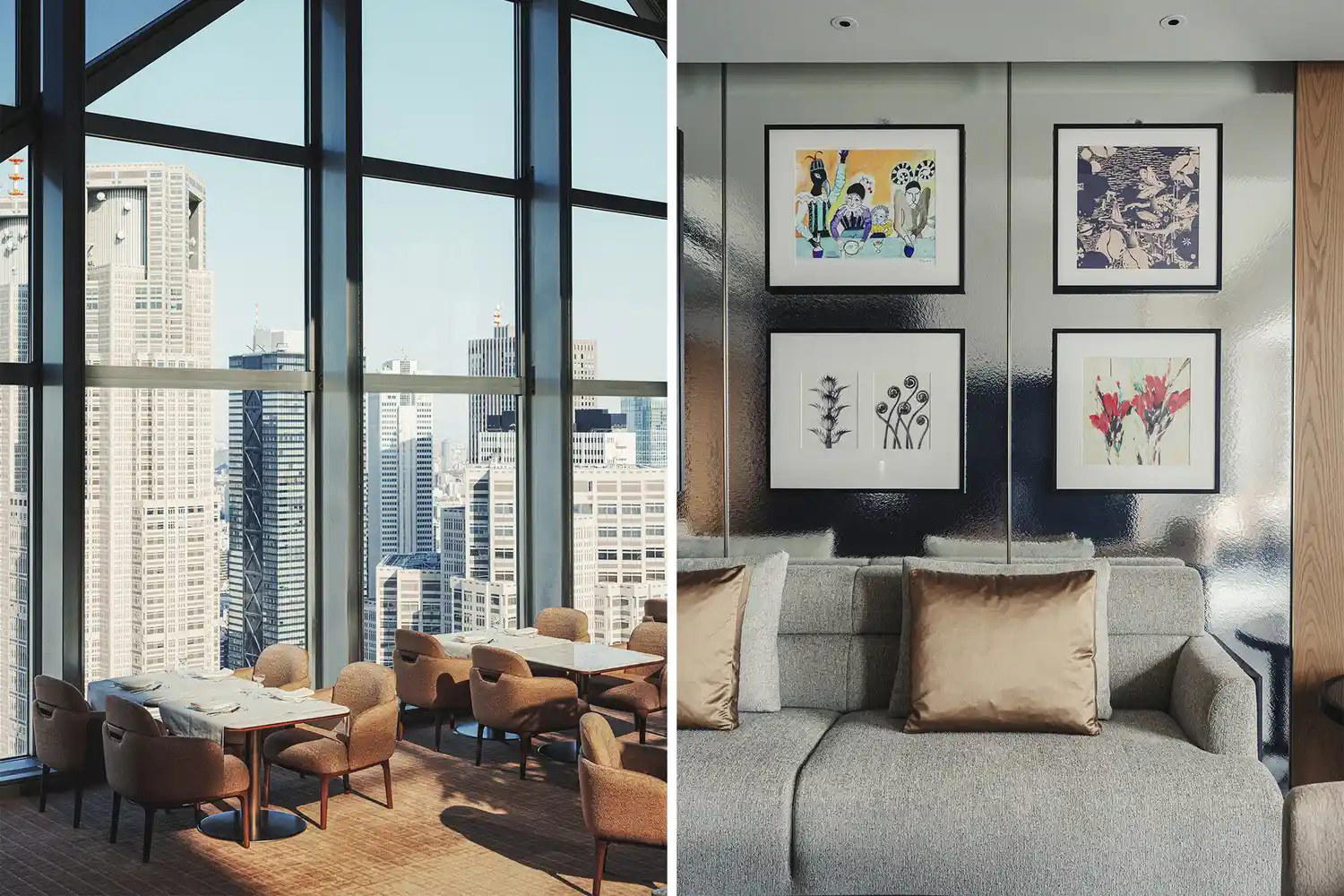
Elegant and refined dining room with natural materials, walnut wood, open kitchen, and French countryside-inspired peaceful atmosphere.