Our verdict
Bistro Ange occupies a quiet residential address in Nishiiwata, one of Toyohashi's less-trafficked neighbourhoods, placing it well outside the circuit that most visitors to Aichi Prefecture follow. The French bistro format here operates at a remove from the prefecture's industrial pace, drawing on the agricultural depth of the Tokai region to anchor its kitchen. For those already planning time in Aichi, it merits attention.

Pearl is the En Primeur Club membership app, where members save venues, book tables and use the concierge.
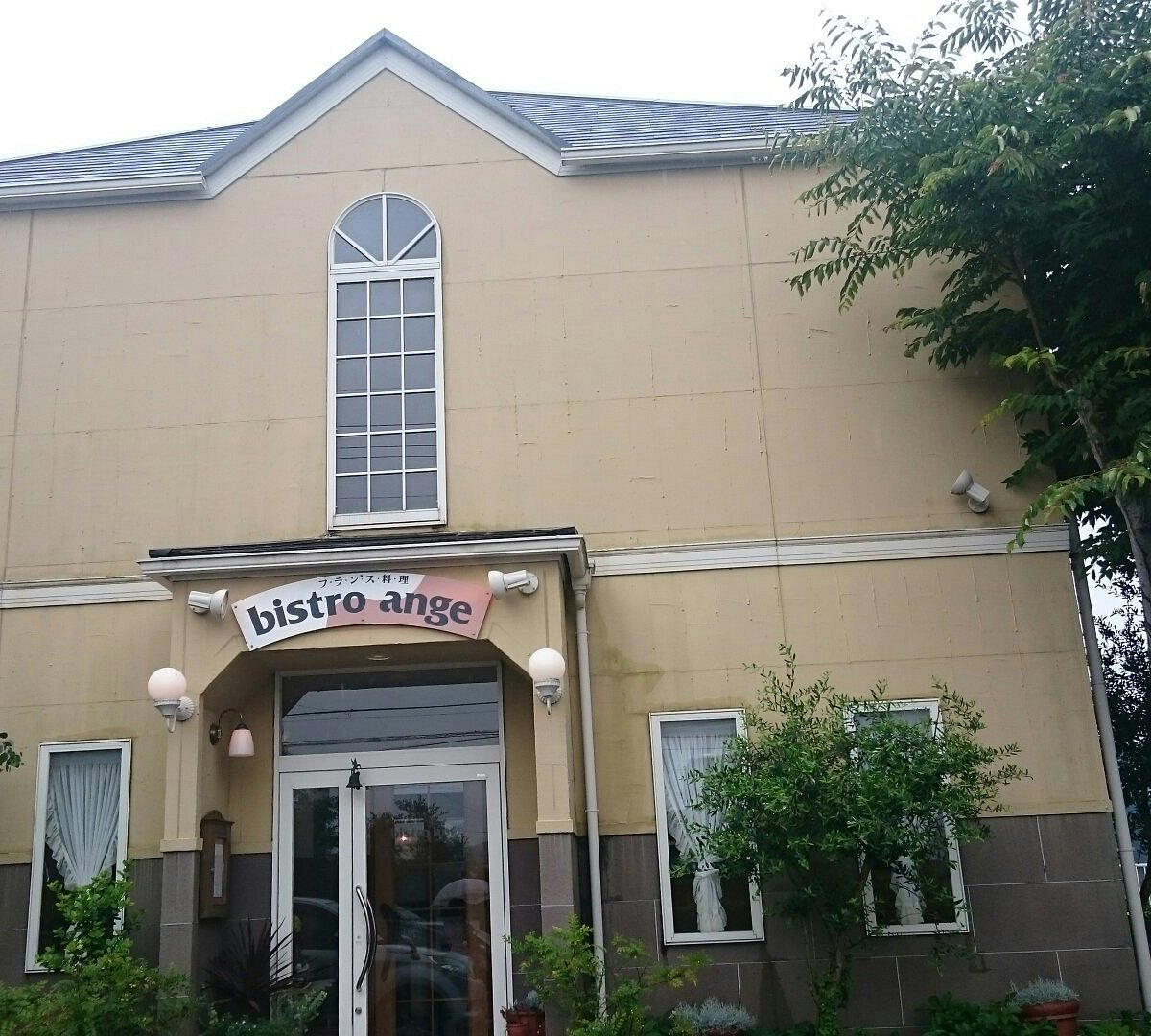
Toyohashi's Quiet Edge: What the Nishiiwata Address Signals
Toyohashi sits at the eastern end of Aichi Prefecture, closer to Shizuoka than to Nagoya, and its restaurant culture reflects that in-between geography. The city is not on the standard route between Tokyo and Kyoto, and its dining scene has developed without the pressure of international tourism that shapes so many Japanese restaurant cities. Bistro Ange occupies an address in Nishiiwata, a residential quarter of Toyohashi that does not function as a dining destination in any conventional sense. That location is itself a signal: this is not a restaurant built for passing trade or for a food-media moment. It is built for return visits by people who already know it is there.
That pattern, a technically serious kitchen operating in an unglamorous address in a secondary Japanese city, appears across the country. affetto akita in Akita and Ajidocoro in Yubari District both work within a similar logic: lower overheads, access to strong regional produce, and a local clientele that sustains the restaurant without relying on visitor flows. The tradeoff is visibility. For the reader willing to make a deliberate trip, that invisibility is often precisely the point.
The Tokai Region as a Producing Zone
The editorial angle worth holding onto when thinking about Bistro Ange is ingredient geography. Aichi Prefecture and the surrounding Tokai region are not typically discussed as a fine-dining larder in the way that, say, Hokkaido or Kyushu tend to dominate the conversation about Japanese regional produce. But the region has real agricultural depth. Mikawa Bay, which opens off the Pacific coast just south of Toyohashi, produces shellfish and seafood across a range of species. The Toyohashi area itself has a documented history of vegetable cultivation, including the Toyohashi carrot, which holds regional designation status. Inland from the city, the foothills of the Higashimikawa district supply small-farm produce to kitchens that know where to look.
A French bistro format operating in this context has access to materials that most French-trained kitchens outside Japan would not encounter. The interesting question, and the one that drives editorial interest in places like Bistro Ange, is how a kitchen working within a recognisably European tradition handles produce that is locally specific in ways European technique was not designed to address. Across Japan, that tension is one of the more productive forces in contemporary restaurant cooking. akordu in Nara works a version of this through a Spanish lens. Amaki in Aichi, operating in the same prefecture, demonstrates that the question is live across multiple registers within the region itself.
Bistro Format in a Japanese City: What the Category Means
The bistro designation, when it appears in Japan, covers a wide range of ambition levels. At one end are casual neighbourhood restaurants that have adopted French vocabulary without much engagement with French technique. At the other are serious kitchens that have chosen the bistro label deliberately, as a statement about portion scale, service register, and pricing position. The latter tend to work with shorter menus, seasonal rotation, and a closer relationship to the market than their more formal counterparts.
In Japanese cities outside Tokyo and Osaka, the bistro format has particular resonance because it sits between the accessibility of casual dining and the formality of kaiseki or high-end French. It allows a kitchen to work with good materials without requiring the full apparatus of a multi-course tasting menu. For comparison, HAJIME in Osaka and Harutaka in Tokyo operate at the opposite end of the formality spectrum, at price points and booking commitments that most local diners visit rarely. A bistro in a city like Toyohashi can function as the serious kitchen that a local diner returns to monthly rather than annually, and that frequency has its own kind of value for the quality of a city's food culture.
How Bistro Ange Sits Within the Aichi Dining Pattern
Aichi Prefecture's dining reputation has historically been shaped by Nagoya, which has a strong and idiosyncratic food culture built around dishes like miso katsu, hitsumabushi, and kishimen. Toyohashi, as the prefecture's second city, has never competed with Nagoya on those terms. What Toyohashi offers instead is a smaller, less observed restaurant scene that operates without the weight of a cuisine identity to maintain. That can be a constraint, but it also creates space for formats, French bistro included, that might feel incongruous in a city with stronger culinary branding.
Visitors arriving from outside Aichi should factor in Toyohashi's access profile. The city is on the Tokaido Shinkansen line, with direct access from Tokyo in roughly ninety minutes and from Osaka in under an hour, which makes it logistically feasible as a day trip or as an overnight stay for travellers moving between the two. The Nishiiwata address adds a short local transit leg from the main station. Our full Toyohashi restaurants guide covers the broader dining options in the city for those building a longer itinerary.
For context on how serious French-influenced kitchens operate in Japan at the highest tier, both Gion Sasaki in Kyoto and Goh in Fukuoka illustrate what the category can achieve when local sourcing and foreign technique are genuinely integrated. Internationally, Le Bernardin in New York City and Lazy Bear in San Francisco show the range of ways a kitchen can anchor itself in sourcing identity across different market contexts. Closer to Toyohashi, Abon in Ashiya, anchoa in Kanagawa, and Arakawa in Hyogo operate within roughly comparable regional-produce frameworks in adjacent parts of the Kansai and Tokai corridor. aki nagao in Sapporo, Aji Arai in Oita, Akakichi in Imabari, and Amegen in Saga each extend that pattern into other parts of Japan where French or European formats have found footing in agricultural regions with strong local produce identities.
Planning a Visit
Visitors should verify availability directly before making a trip, particularly if travelling from outside Toyohashi. The Nishiiwata address in the 440-0831 postcode places the restaurant in a quiet residential part of the city, and arrival by taxi from Toyohashi Station is the most practical approach. Given the neighbourhood character, walk-in dining is not something to rely on without prior confirmation.
Frequently asked questions
How would you describe the vibe at Bistro Ange?
Nishiiwata is a residential quarter in Toyohashi, a city that runs at a slower pace than Nagoya or Tokyo, and a bistro at that address is likely to reflect the neighbourhood rather than push against it. Expect a room that prioritises conversation over atmosphere performance. The bistro format in this context typically means a compact dining room, unhurried pacing, and a local-leaning regular crowd rather than a destination-dining circuit.
Is Bistro Ange worth visiting if I am travelling from Nagoya specifically for dinner?
Toyohashi is roughly 70 kilometres east of Nagoya along the Tokaido Shinkansen line, making it an accessible but deliberate trip. Bistro Ange sits in Nishiiwata, a residential area rather than a central dining district, which signals a neighbourhood restaurant rather than a flagship destination.
What should I order at Bistro Ange?
In French bistros operating across the Tokai region, the most coherent plates tend to be those built around Aichi Prefecture's agricultural output, local poultry, freshwater fish from the region's river systems, and vegetables from the Atsumi Peninsula. Asking the kitchen what is in season at the time of your visit is the most reliable way to eat well here.
Where is Bistro Ange located?
Bistro Ange is located at Japan, 〒440-0831 Aichi, Toyohashi, Nishiiwata, 3 Chome−3−6, Toyohashi.
In Context: Similar Options
| Venue | Cuisine | Price | Awards | Notes |
|---|---|---|---|---|
| Bistro AngeThis venue (the venue you are viewing) | French Bistro | Not listed | Not listed | Not listed |
| HAJIME | Avant-Garde Japanese Fine Dining | $300–500 | 3 Michelin Stars · World's 50 Best #83 | French, Innovative |
| Harutaka | Edo-Style Omakase Sushi | $200–300 | 3 Michelin Stars · World's 50 Best #76 | Sushi |
| L'Effervescence | Modern French with Japanese Influences | $200–300 | 3 Michelin Stars · World's 50 Best #69 | French |
| RyuGin | Modern Kaiseki | $500+ | 3 Michelin Stars · World's 50 Best #41 | Kaiseki, Japanese |
| Crony | Modern French with Japanese Influences | $150–200 | 2 Michelin Stars · World's 50 Best #34 | Innovative, French |
Continue exploring
More in Toyohashi
Restaurants in Toyohashi
All restaurants in Toyohashi →
Details
- Elegant
- Sophisticated
- Date Night
- Special Occasion
- Extensive Wine List
- A La Carte
Current opening hours
- Monday
- Closed
- Tuesday
- 11:30 AM–2 PM, 6–10 PM
- Wednesday
- 11:30 AM–2 PM, 6–10 PM
- Thursday
- 11:30 AM–2 PM, 6–10 PM
- Friday
- 11:30 AM–2 PM, 6–10 PM
- Saturday
- 11:30 AM–2 PM, 6–10 PM
- Sunday
- 11:30 AM–2 PM, 6–10 PM
Hours can change for holidays and private events. Hours as of .
Elegant atmosphere focused on sophisticated French dining.