Our verdict
青山ブション アミュゼ occupies the second floor of Minami Aoyama's 青山五番館ビル, situating itself within one of Tokyo's most concentrated stretches of European-influenced dining. Where the neighbourhood's top-tier French tables — several holding Michelin recognition — lean into ceremony and price escalation, this address operates at a different register: a bouchon format that prioritises produce provenance and lighter-footprint service over theatrical tasting menus.

Pearl is the En Primeur Club membership app — saves, bookings, and concierge access live there. Same editors, same standards.
- Address
- Japan, 〒107-0062 Tokyo, Minato City, Minamiaoyama, 5 Chome−9−8 青山五番館ビル 2F
- Phone
- +81364272630
- Hours
- Mon 11:30 AM–3 PM, 5:30–10 PMTue ClosedWed–Sun 11:30 AM–3 PM, 5:30–10 PM
- Website
- amuser-aoyama.com
- Directions
- Get directions
- Booking
- Book on the venue's website
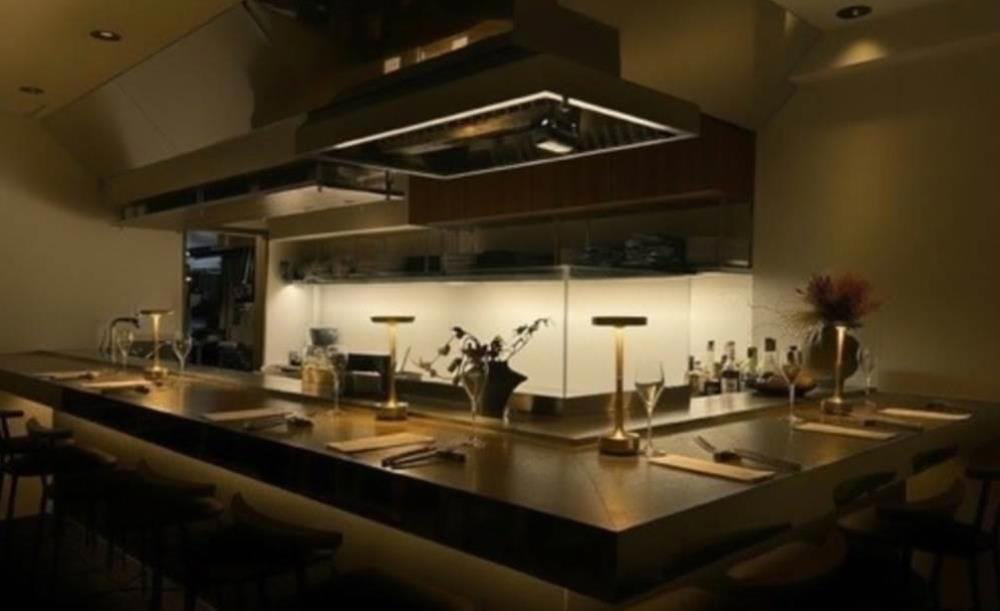
The menu
What to order
- 渡り蟹のトマトクリーム フェットチーネ
- 岩中豚のミラノ風カツレツ
- バスクチーズケーキ
Minami Aoyama and the French Table at a Different Register
The stretch of Minami Aoyama between Omotesando and Gaienmae has developed, over the past two decades, into one of Tokyo's most coherent French-dining corridors. The high end of that corridor is well documented: L'Effervescence holds multiple Michelin stars and built its identity partly around ethical sourcing and whole-ingredient thinking, while Sézanne operates in the rarefied tier where cover charges and advance booking are simply assumed. Below that ceiling, a smaller cohort of French addresses runs on bouchon and bistro logic: shorter menus, seasonal rotation, and a closer relationship between kitchen sourcing decisions and what actually lands on the plate.
青山ブション アミュゼ sits on the second floor of 青山五番館ビル on 5-chome Minami Aoyama. That building-level address is a practical detail worth holding onto: the venue is not street-visible in the way a ground-floor corner unit would be, which shapes both its clientele and its pace. It is not positioned to catch foot traffic from the Omotesando shopping corridor, and that positioning is consistent with how bouchon-format restaurants in any city tend to operate — through return visits and word-of-mouth rather than walk-in volume.
The Bouchon Format in a Tokyo Context
Lyon's bouchon tradition rests on economy of waste, seasonal proximity, and unfussy execution. When that format moves to Tokyo, it absorbs local supply-chain dynamics and a kitchen culture where ingredient provenance is tracked more granularly than in most European cities. The result, across several small French addresses in Aoyama and Daikanyama, is a bouchon register that often outperforms its European source material on sourcing rigour, even if it loses some of the Lyonnais convivial noise. Tokyo's stricter seasonal rhythms, combined with close relationships between small restaurants and farm suppliers in Nagano, Hokkaido, and Kyushu, give bouchon-format kitchens here a particular advantage in operating a low-waste, whole-animal or whole-vegetable approach without the philosophical posturing that sometimes accompanies it at higher price points.
The more useful comparisons are Florilège, which runs a sustainability-conscious French menu at ¥¥¥ and has built a Michelin profile from that position, and Crony, where the innovative-French format operates at ¥¥¥¥ with a strong emphasis on supplier narrative. Between those two coordinates, a bouchon address that holds its pricing closer to the former while maintaining sourcing discipline finds a coherent niche.
Sourcing, Seasonality, and the Ethics of a Small Kitchen
The sustainability argument for small-format French kitchens in Tokyo is structurally different from the one made in Europe. Japanese produce supply chains are, in general, shorter and more traceable — prefectural labelling is standard, direct farm relationships are common even at the bistro level, and seasonal menus change not on a quarterly basis but in response to actual market availability. A kitchen operating on bouchon principles in Aoyama benefits from that infrastructure without having to build it from scratch.
Waste reduction, in a bouchon context, is partly a matter of format: shorter menus with fewer ingredients mean less surplus. The traditional bouchon approach to secondary cuts and whole-carcass cookery maps naturally onto contemporary zero-waste thinking, and Tokyo's kitchen culture, with its deep precision around portioning and mise en place, reinforces rather than resists that discipline. This is not a venue-specific claim; it is a structural reality of operating a small French kitchen in this city at this price tier.
Across Japan, restaurants working at this intersection of European technique and local ethical sourcing have found recognition at multiple levels. HAJIME in Osaka and Gion Sasaki in Kyoto represent different formal traditions, French haute cuisine and kaiseki respectively, but both have built reputations on ingredient integrity and seasonal precision. Smaller addresses in less prominent cities pursue similar values: akordu in Nara, Goh in Fukuoka, and regional tables like 一本杉川嶋 in Nanao and 湖里庵 in Takashima demonstrate that ingredient-led cooking is not a Tokyo-only phenomenon. The same thread runs through addresses like 古牧山荘 in Nishikawa Machi and 大地乃台所 in Sapporo. For comparison from the international tier, Le Bernardin in New York City and Atomix illustrate how European-influenced formats adapted to non-European cities can develop distinct sourcing identities.
Practical Notes for the Visit
青山ブション アミュゼ is located at 5-9-8 Minami Aoyama, Minato-ku, on the second floor of 青山五番館ビル. The address is a ten-minute walk from Omotesando Station or a shorter approach from Gaienmae, depending on direction. Because the venue does not appear to list a public booking platform or direct phone number in current directories, the most reliable approach is to arrive with a reservation confirmed through local concierge channels, particularly for first-time visits. Minami Aoyama restaurants at this format and price point tend to run on compact seatings rather than continuous service, so confirming timing ahead is standard practice. For broader orientation to the city's French and contemporary dining circuit, the full Tokyo restaurants guide maps the neighbourhood and price-tier context in more detail.
Visitors with specific interest in French technique applied to Japanese produce, or in the sustainability dimension of Tokyo's mid-tier French scene, may also find value in comparing notes with addresses like Bistro Ange in Toyohashi and Birdland in Sakai, both of which operate in provincial Japanese markets where the European-influence-meets-local-supply dynamic takes on a different character than in the capital.
Frequently asked questions
Where do I go for 青山ブション アミュゼ?
青山ブション アミュゼ is located at Japan, 〒107-0062 Tokyo, Minato City, Minamiaoyama, 5 Chome−9−8 青山五番館ビル 2F, Tokyo.
How does 青山ブション アミュゼ differ from other French restaurants in the Omotesando and Aoyama area?
Where many Aoyama French addresses lean into contemporary tasting-menu formats or French-Japanese fusion, 青山ブション アミュゼ positions itself within the bouchon tradition — a Lyonnaise model built around unfussy seasonal execution and waste-conscious small-kitchen cooking. That makes it structurally closer to a neighbourhood canteen than a destination restaurant, which is a minority position in this part of Minato-ku. The second-floor location inside 青山五番館ビル at 5-9-8 Minami Aoyama reinforces the low-key framing.
What do people recommend at 青山ブション アミュゼ?
The kitchen works within Lyon's bouchon format, which means the focus falls on seasonal, produce-driven cooking rather than a fixed showpiece dish. Regulars tend to return for whichever items reflect the current market rather than a single signature — the format deliberately resists that kind of menu anchor. The restaurant is located on the second floor of 青山五番館ビル in Minami Aoyama, so the room itself is compact, which keeps the cooking range deliberately tight.
What's the best way to book 青山ブション アミュゼ?
No booking phone number or website is currently documented for 青山ブション アミュゼ. The most reliable approach is to visit the second floor of 青山五番館ビル at 5-9-8 Minami Aoyama, Minato-ku in person, or to check for reservation access via Japanese dining platforms such as Tabelog or Retty, where many small-format Tokyo restaurants maintain listings. For a bouchon-scale kitchen, walk-in availability at quieter lunch sittings is often a practical option.
What makes 青山ブション アミュゼ worth seeking out?
The Minami Aoyama corridor between Omotesando and Gaienmae has become one of Tokyo's more coherent French-dining strips over the past two decades, and 青山ブション アミュゼ occupies a specific register within it: the bouchon tradition of Lyon, which prizes economy, seasonal proximity, and restrained execution over theatrical tasting menus. That format is rare in Tokyo, where French dining skews toward either grand-hotel formality or contemporary omakase-style counters. The second-floor address at 青山五番館ビル keeps the room deliberately low-profile.
The Minimal Set
Comparable venues nearby, for context on price, style, and recognition.
| Venue | Cuisine | Price | Awards | Notes |
|---|---|---|---|---|
| 青山ブション アミュゼThis venue — the venue you are viewing | French Bistro with Italian influences | $50–100 | Not listed | Not listed |
| Cheval | Seasonal French with Japanese influences | $50–100 | Michelin Plate | Nihonbashi, Seasonal French with Japanese influences |
| 玉笑 | Yoshoku French Bistro | Not listed | Not listed | Shibuya, Yoshoku French Bistro |
| レクレルール | Wood-fired Modern French | $200–300 | Michelin Plate · Tabelog 100 #32 | Shibuya, Modern French with Wood-Fire Cooking |
| Air | Modern French with Japanese Ingredients | $50–100 | Not listed | Chūō, Modern French with Japanese Ingredients |
| Dame Jeanne | French Bistro | $500+ | Not listed | Shibuya, French Bistro |


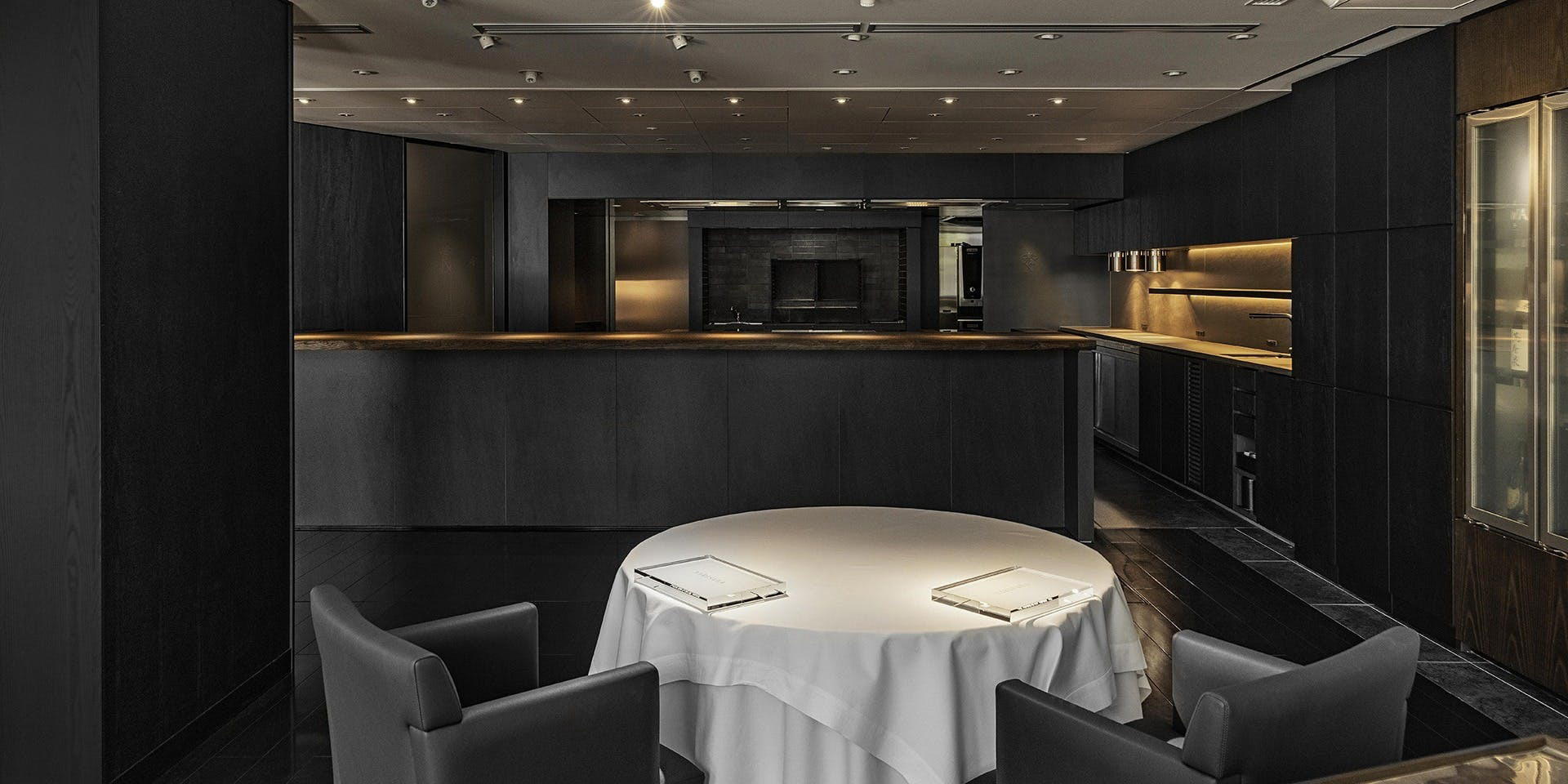












Details
- Cozy
- Elegant
- Intimate
- Date Night
- Business Dinner
- Special Occasion
- Open Kitchen
- Extensive Wine List
- A La Carte
- Prix Fixe
- Wine Program
- Vegetarian Friendly
Current opening hours
- Monday
- 11:30 AM–3 PM, 5:30–10 PM
- Tuesday
- Closed
- Wednesday
- 11:30 AM–3 PM, 5:30–10 PM
- Thursday
- 11:30 AM–3 PM, 5:30–10 PM
- Friday
- 11:30 AM–3 PM, 5:30–10 PM
- Saturday
- 11:30 AM–3 PM, 5:30–10 PM
- Sunday
- 11:30 AM–3 PM, 5:30–10 PM
Hours can change for holidays and private events. Last verified .
Cozy adult space with open kitchen, clean and sophisticated interior, lively yet intimate atmosphere.