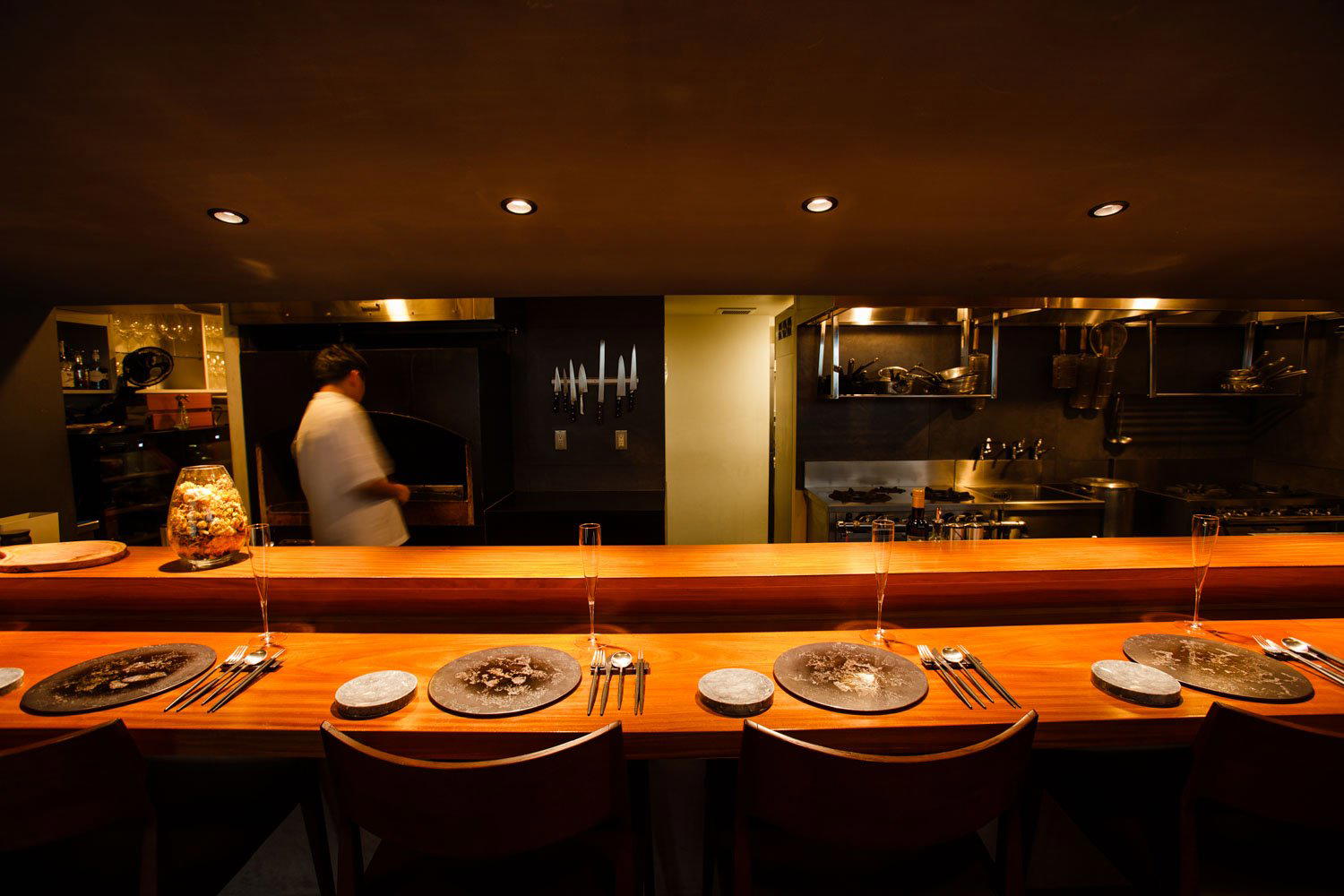
タクボ occupies the ground floor of a low-key residential building in Daikanyama, one of Tokyo's quieter dining neighbourhoods. The restaurant sits in the Ebisu-west corridor where small, format-driven rooms have gradually displaced the area's older café scene. With limited publicly available detail, it rewards direct investigation by those already familiar with Tokyo's mid-tier to upper-tier dining map.
 Discover on Pearl
Pearl is the En Primeur Club membership app — saves, bookings, and concierge access live there. Same editors, same standards.
- Address
- Japan, 〒150-0021 Tokyo, Shibuya, Ebisunishi, 2 Chome−13−16 ラングス代官山 1F
- Phone
- +81364553822
- Website
- tacubo.com
Daikanyama's Quiet Ambition: Where Tokyo's Neighbourhood Dining Goes Serious
タクボ is a restaurant in Tokyo serving 薪火イタリアン, with a price tier of about $2500 per person and a 4.4 Google rating. In the Ebisu-west and Daikanyama corridor, the stretch of Shibuya-ku running along Ebisunishi toward Sarugakucho, that paradox is particularly acute. The area shed its bubble-era café identity gradually through the 2000s and 2010s, replaced by a more considered restaurant culture that prizes format discipline over signage. タクボ, located on the ground floor of the Langs Daikanyama building at 2 Chome-13-16 Ebisunishi, is a product of that shift: a small, address-specific room in a neighbourhood where the building name matters more than the frontage.
That address places it in a specific competitive context. Daikanyama and its immediate surrounds have attracted a cohort of chef-driven rooms that operate below the Roppongi and Ginza price ceilings but above the casual neighbourhood izakaya tier. The dining mode here is deliberately contained, smaller menus, shorter service windows, and a guest experience shaped more by what happens at the pass and across the dining room floor than by the scale of the room itself.
The Collaboration at the Centre of the Experience
In the category of small, format-driven Tokyo restaurants, the type that has proliferated across Daikanyama, Nakameguro, and Yoyogi-Uehara over the past decade, the quality of the experience depends less on any single performer and more on how the kitchen, the floor, and the beverage program function as a unit. This is the structural reality that separates memorable small rooms from merely competent ones.
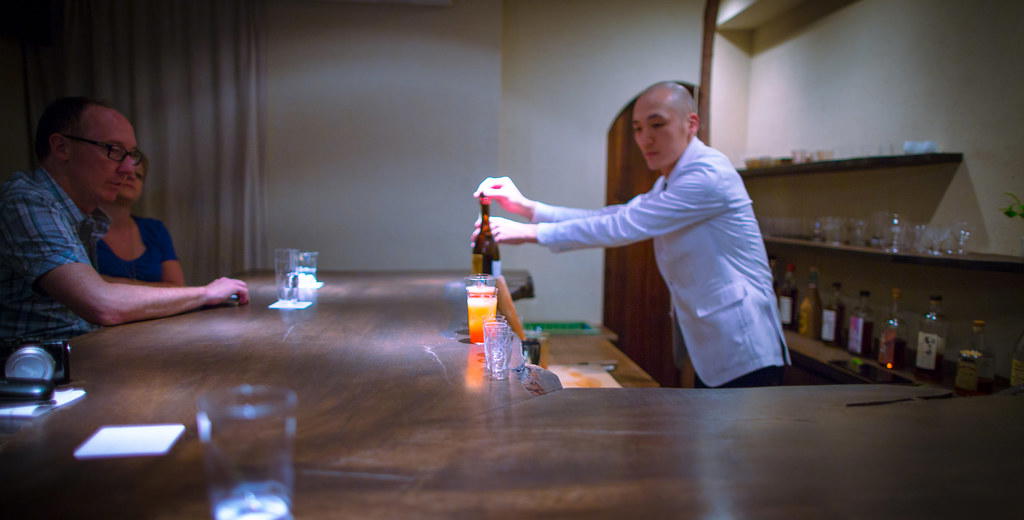
At venues of this type, the front-of-house read of a table determines pacing, and pacing in a compact room is everything. When a sommelier or drinks lead is operating in sync with kitchen output, the gaps between courses compress without feeling rushed; the meal acquires a rhythm that the guest registers emotionally before they register it intellectually. The leading iterations of this format in Tokyo, and across Japan's wider restaurant scene, from Gion Sasaki in Kyoto to Goh in Fukuoka, share that quality of seamless internal communication between positions.
Tokyo's mid-to-upper neighbourhood tier has increasingly adopted this collaborative operating model in response to staffing economics as much as philosophy. A smaller team, properly coordinated, can deliver a more coherent experience than a larger brigade working in silos. That structural logic is visible at several Daikanyama and Ebisu-area addresses, and it frames how a room like タクボ should be understood: not as a solo vehicle, but as an ensemble format where the team dynamic is the product.
Where タクボ Sits in the Tokyo Dining Map
Positioning タクボ against Tokyo's wider restaurant field requires context. The Ebisunishi location places it among a cohort of format-disciplined rooms operating outside the main luxury corridors of Ginza and Roppongi. Restaurants in this tier typically price below the ¥¥¥¥ ceiling occupied by addresses like Harutaka, L'Effervescence, RyuGin, and Sézanne, while still operating with a degree of menu intention that separates them from casual dining.
The neighbourhood comparison set for Daikanyama-area rooms overlaps with the Florilège tier, French-influenced or hybrid rooms at ¥¥¥ that trade on precision rather than prestige address. Crony, with its innovative French approach, represents a broadly comparable operating register. These rooms collectively make the Ebisu-Daikanyama zone one of the more interesting areas to eat in Tokyo if your preference runs toward considered mid-scale dining over ceremony-heavy tasting menus.
For context beyond Tokyo, the closest structural analogues in Japan's wider scene are rooms like akordu in Nara or Bistro Ange in Toyohashi, restaurants where the room size and format discipline are themselves editorial statements about what fine dining should feel like outside the major luxury tiers. Internationally, the team-led small-room format has parallels at Atomix in New York City, where front-of-house coordination is as programmatically considered as the kitchen output.
The Daikanyama Setting and What It Implies
The Langs Daikanyama building on Ebisunishi is a residential-commercial low-rise of the type that houses a disproportionate number of Tokyo's better small restaurants. Ground-floor tenancies in these buildings typically offer modest frontage, limited natural light, and an interior scale that forces the kitchen to work within tight constraints. Those constraints, in the hands of a coordinated team, become advantages: the room is never anonymous, the distances between kitchen and table are short, and the intimacy of the space makes service errors immediately visible, which tends, over time, to raise the standard of what's delivered.
Daikanyama as a neighbourhood has a longer history of design-led, quality-conscious retail and hospitality than its relatively low international profile might suggest. The area developed its current character through the 1990s and early 2000s, attracting an affluent local clientele with sophisticated consumption habits and relatively limited appetite for the tourist-facing formats of central Tokyo. That demographic legacy shapes the dining culture: rooms here tend to be quieter, more considered, and less reliant on the kind of external validation, guidebook rankings, social media visibility, that drives reservation queues elsewhere in the city.
For those extending beyond Tokyo, comparable neighbourhood-dining registers are worth seeking at HAJIME in Osaka and across the regional dining map that includes 一本木 佐川製 in Nanao, 夕木山乃 in Sapporo, 湖邊庵 in Takashima, 庭羽屋 in Nishikawa Machi, and Birdland in Sakai. The range of formats across those addresses illustrates how varied Japan's non-major-city dining offer has become. International points of reference for the team-coordination model also extend to Le Bernardin in New York City, where front-of-house discipline at scale has long been considered as important as the kitchen's technical output.
Accolades, Compared
Comparable venues nearby, for context on price, style, and recognition.
| Venue | Cuisine | Price | Awards | Notes |
|---|---|---|---|---|
| タクボThis venue — the venue you are viewing | 薪火イタリアン | $$$$ | , | |
| Inbosuko Jingumae | High-end Seasonal Italian Counter | $$$$ | , | Shibuya |
| イル・プレージョ | Modern Creative Italian | $$$$ | , | Shibuya |
| サローネ トウキョウ | Contemporary Italian Ristorante | $$$$ | , | Chiyoda |
| Bulgari Cafe II | Italian Fusion Cafe & Bar | $$$$ | 1 recognition | Chūō |
| リストランテ ヤギ | Modern Italian Fine Dining | $$$$ | , | Shibuya |









At a Glance
- Elegant
- Intimate
- Cozy
- Sophisticated
- Hidden Gem
- Date Night
- Special Occasion
- Business Dinner
- Chefs Counter
- Open Kitchen
- Sake Program
- Extensive Wine List
薪の香りとオープンキッチンの活気ある落ち着いた空間。