

Star Wine List · Forbes Recommended
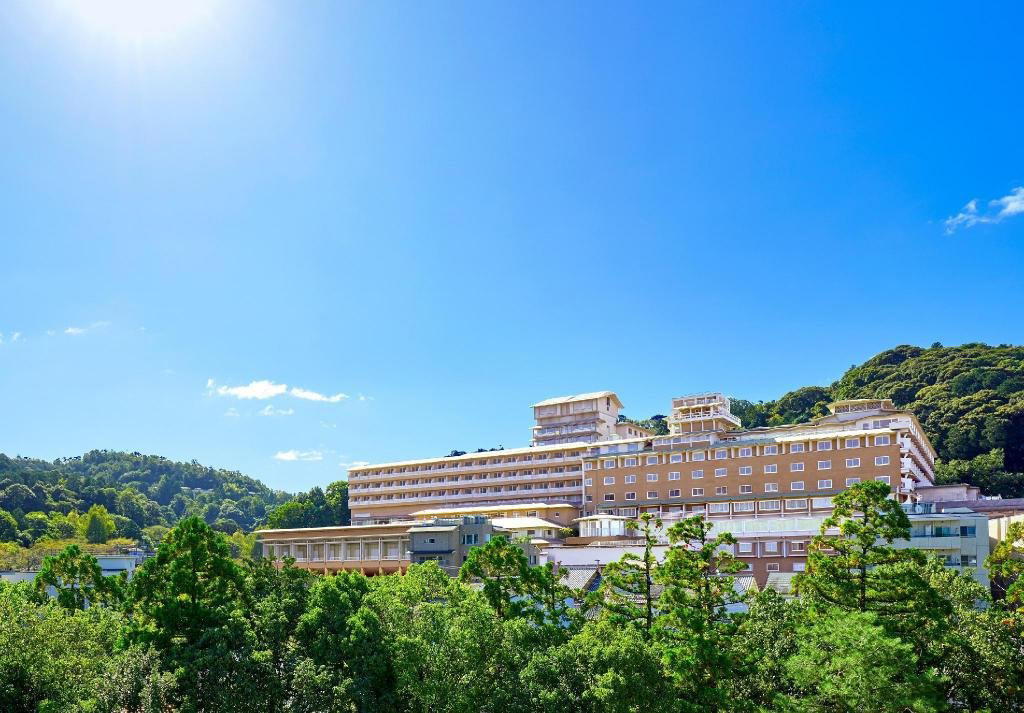
Occupying a hillside position in Higashiyama-ku, The Westin Miyako Hotel Kyoto has operated at the upper tier of Kyoto hospitality for more than 130 years. Its Star Wine List recognition for 2026 signals a beverage program that competes with newer luxury entrants.

Pearl is the En Primeur Club membership app — saves, bookings, and concierge access live there. Same editors, same standards.
- Address
- 1 Awataguchi Kachocho, Higashiyama-ku
- Phone
- 81-75-771-7111
- Website
- marriott.com
- Directions
- Get directions
Where Higashiyama's Temple Corridor Meets Institutional Hospitality
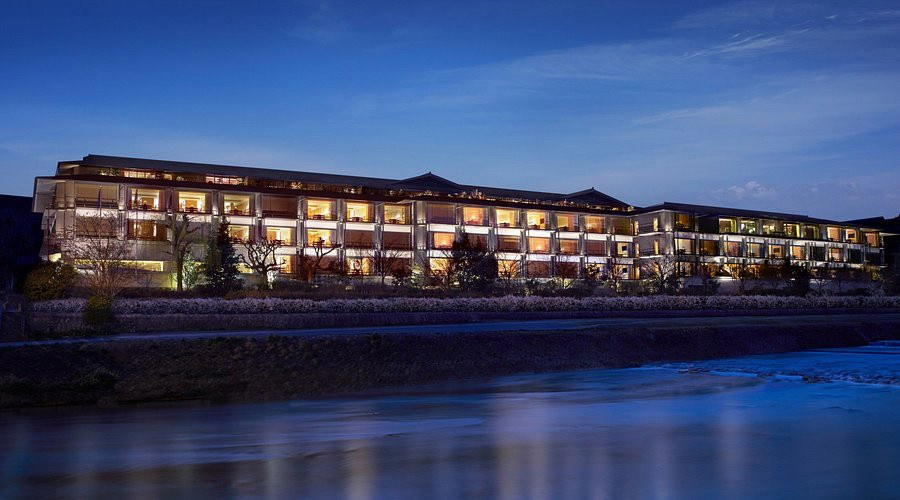
Approaching the Westin Miyako from Awataguchi, the street narrows and the city's ambient noise drops before the property comes into view. This is Higashiyama-ku at its quieter eastern edge, where the foothills press in close and the Nanzenji temple complex is a short walk north. In a city where location carries as much weight as room quality, proximity to this corridor — Nanzenji, Heian Shrine, the Philosopher's Path — positions the hotel differently from properties anchored to central Kawaramachi or the Nishiki Market axis. Guests staying here access the eastern cultural district on foot rather than by taxi.
The Westin Miyako's founding predates Japan's modern hospitality industry. With more than 130 years of continuous operation in high-end Kyoto accommodation, it belongs to a cohort of hotels whose institutional memory runs deeper than any contemporary luxury brand playbook. In a market where properties like Aman Kyoto and Four Seasons Hotel Kyoto arrived within the last decade, the Miyako's longevity is itself a credential. The hotel has witnessed, and adapted through, every shift in how international and domestic travelers relate to Kyoto as a destination.
The Wine Program in Context
The Westin Miyako Hotel Kyoto received Star Wine List recognition for 2026, a designation that places its cellar and service program within a verified tier of international wine programs. Star Wine List evaluates depth of selection, breadth across regions, and the quality of presentation and service, criteria that go beyond simple bottle count. For a hotel of this age and format, carrying that recognition signals that the beverage operation has been maintained and updated in line with contemporary standards rather than left to coast on historical reputation.
In Kyoto's hotel dining environment, wine programs at international properties tend to split between those that orient primarily toward Japanese sake and spirits, appropriate for the cultural context, and those that maintain a serious international wine list alongside traditional offerings. The Miyako's Star Wine List credential for 2026 suggests it falls into the latter category, giving guests who arrive with specific wine expectations a program that has been independently assessed. For Kyoto properties with dining ambitions, this kind of third-party recognition carries more weight than in-house claims, particularly when the city's newer entrants are still establishing their beverage identities. Travelers who want to compare beverage offerings across the city's hotel tier can consult our full Kyoto restaurants guide.
Longevity as a Sourcing Credential
Hotels that have operated continuously in a single city for over a century tend to develop supplier relationships that newer properties simply cannot replicate on opening day. In Kyoto, this matters because the city's food and agricultural networks are dense, regional, and relationship-dependent. Kyoto vegetables, kyo-yasai, are grown by a small number of specialist farmers whose production is absorbed almost entirely by longstanding restaurant and hotel accounts. Access is not purchased; it is earned over time.
The same logic applies to Kyoto's tofu producers, Uji tea suppliers, and the regional fish markets that feed the city's kaiseki kitchens. Institutional hotels of this vintage are often embedded in supply chains that newer, design-led properties are still trying to access. This is a structural advantage, not a marketing claim, and it is worth weighing when assessing what a property of this age can deliver across its food and beverage operations.
Properties that have entered the Kyoto market more recently, including HOTEL THE MITSUI KYOTO, SOWAKA, and The Shinmonzen, compete on design coherence and boutique intimacy. Ace Hotel Kyoto and Dusit Thani Kyoto bring distinct international brand identities. The Westin Miyako's competitive argument is different: it offers the kind of operational depth that only time can build, combined with the reliability that comes with Westin's international service standards.
The Higashiyama Position
Kyoto's luxury hotel market has spread across several distinct zones in recent years. The riverine Okazaki area, the Fushimi corridor, the central Nakagyo ward, and the northern Kita-ku precincts all host premium properties with different use-case profiles. Higashiyama-ku's eastern hillside is the most temple-dense of these zones, with Kiyomizudera, Kodaiji, Chion-in, and the entire Gion district accessible within a short radius. For guests whose primary interest is cultural immersion in Kyoto's older fabric, this location offers fewer trade-offs than a central-city hotel that requires ground transport to reach the major shrine and temple precincts.
The trade-off runs in the other direction when it comes to Kyoto's commercial and culinary center. Nishiki Market, the Gion restaurant corridors, and the Shijo shopping axis all require more intentional travel from the Higashiyama hillside. This is a legitimate consideration for travelers who plan to split time between cultural and gastronomic programs, though the gap is manageable by taxi or the city's bus network.
Planning Your Stay
Kyoto operates on tight availability windows during sakura season (late March to early April) and koyo (autumn foliage, typically mid-November), when hotel rooms across all tiers, from ryokan to international luxury brand, compress quickly. A property of the Westin Miyako's scale has more capacity than boutique competitors, but Higashiyama-ku as a whole attracts concentrated visitor traffic during these periods given its density of photogenic temple grounds. Booking several months ahead for either peak season is the baseline approach.
Travelers routing through Japan's broader luxury hotel circuit will find useful regional comparisons in properties like Gora Kadan in Hakone, Asaba in Izu, and Nishimuraya Honkan in Kinosaki-cho, all properties where institutional depth and regional sourcing relationships form a similar part of the value proposition. For those building a Japan itinerary around design-led or arts-oriented stays, Benesse House in Naoshima, Zaborin in Kutchan, and ENOWA Yufu in Yufu represent a different cohort. International travelers comparing against non-Japan properties in the luxury tier might also reference Bvlgari Hotel Tokyo, Aman New York, or Aman Venice for a sense of where the Miyako sits within the global luxury hospitality conversation. Additional Japan context is available through Amanemu in Mie, Fufu Kawaguchiko, Fufu Nikko, Halekulani Okinawa, Jusandi in Ishigaki, and Sekitei in Hatsukaichi-shi.
Accolades, Compared
Comparable venues nearby, for context on price, style, and recognition.
| Venue | Cuisine | Price | Awards | Notes |
|---|---|---|---|---|
| The Westin Miyako Hotel KyotoThis venue — the venue you are viewing | Historic luxury resort-style hotel blending Japanese tradition with modern comforts | Not listed | Star Wine List · Forbes Recommended | Not listed |
| Maana Kiyomizu | Restored machiya townhouses with contemporary minimalist interiors | $300–500 | Michelin Selected | Higashiyama |
| Fufu Kyoto | Modern ryokan with Japanese garden and private onsens | Not listed | 1 Michelin Key | Sakyō |
| MOGANA | Modernist reimagination of traditional Japanese aesthetics with contemporary European design influences, positioned as an intimate design-focused luxury boutique hotel. | Not listed | Michelin Selected | Nakagyō |
| Hotel Okura Kyoto | Classic luxury hotel harmonizing European architecture with Kyoto traditions | $200–300 | Star Wine List · Forbes Recommended | Nakagyō |
| 俵屋旅館 | Traditional Japanese ryokan with modern comforts and historical integrity. | $300–500 | Not listed | Nakagyo-ku |
Recognition history
Dated appearances from independent guides and award organizations, with the underlying list record or original source where available.
Star Wine List
Star Wine List
Forbes Recommended
Forbes
Continue exploring
More in Kyoto
Hotels in Kyoto
Browse all →
Bars in Kyoto
Browse all →

Restaurants in Kyoto
Browse all →
Wineries in Kyoto
Browse all →
Details
- Elegant
- Sophisticated
- Scenic
- Quiet
- Honeymoon
- Romantic Getaway
- Business Trip
- Wellness Retreat
- Historic Building
- Panoramic View
- Destination Spa
- Wi Fi
- Pool
- Spa
- Fitness Center
- Room Service
- Concierge
- Business Center
- Garden
- Mountain
- Wheelchair Accessible
- Elevator
- Step Free Entrance
- Accessible Parking
Elegant and serene atmosphere with natural light, mountain views, and tranquil garden settings praised in guest reviews.