




3 Michelin Stars · La Liste Top Restaurants · Tabelog Bronze #283
Our verdict
Mizai sits in Kyoto’s high-form kaiseki tier, where seasonality, dashi, vessels, and service rhythm matter as much as luxury signals. Chef Hitoshi Ishihara’s restaurant carries Michelin three-star recognition in 2025, La Liste 92 points in 2026, Tabelog Award 2026 Bronze status, and placement on Opinionated About Dining’s 2026 Japan ranking, making it a serious reference point for Kyoto kaiseki rather than a casual temple-district dinner.

Pearl is the En Primeur Club membership app — saves, bookings, and concierge access live there. Same editors, same standards.
- Address
- Japan, 〒605-0071 Kyoto, Higashiyama Ward, Maruyamacho, 618
- Phone
- +81 75-551-3310
- Hours
- Mon–Tue 6–10 PMWed ClosedThu–Sun 6–10 PM
- Website
- mizai.jp
- Directions
- Get directions
- Booking
- Book on the venue's website
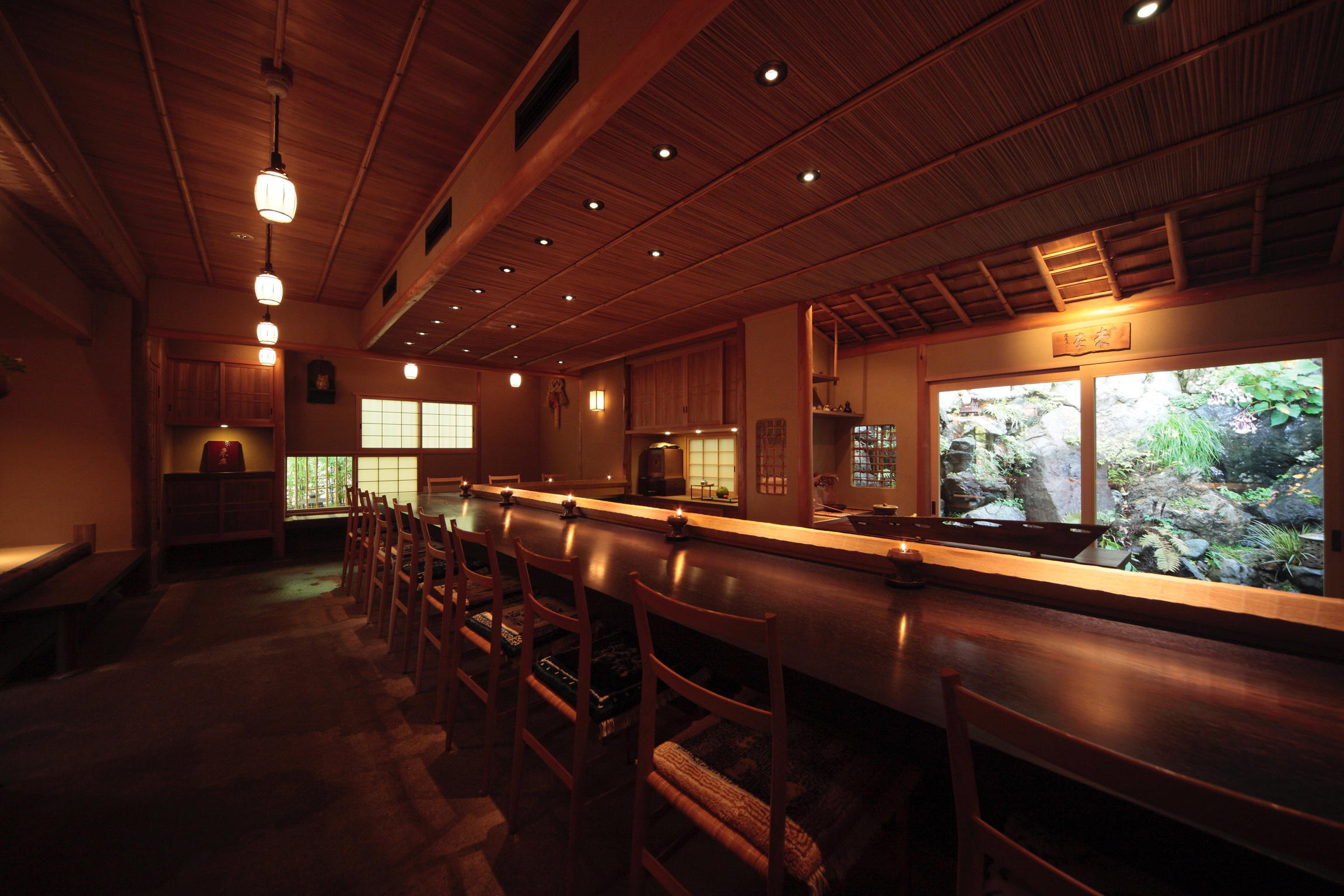
Maruyama Park changes character after dusk. The daytime procession of temple-bound visitors thins, lantern light takes over, and Kyoto’s eastern hills press closer to the dining rooms that trade in ceremony rather than spectacle. In that setting, kaiseki is not simply a long meal with seasonal ingredients. It is a coded sequence of temperature, timing, vessels, rice, broth, and restraint, with each course judged against a tradition that leaves little room for improvisation without consequence.
Mizai belongs to the Kyoto school where the kitchen’s authority begins with fundamentals: dashi clarity, the handling of seasonal produce, the placement of rice within the meal, and the ability to make a small shift in season read without explanation. Chef Hitoshi Ishihara’s name gives the room its public identity, but the more useful way to read the restaurant is against Kyoto’s kaiseki grammar. Here, reputation has been built less on novelty than on discipline inside a form that already has its own hierarchy.
Kaiseki measured by dashi, rice, and seasonal control
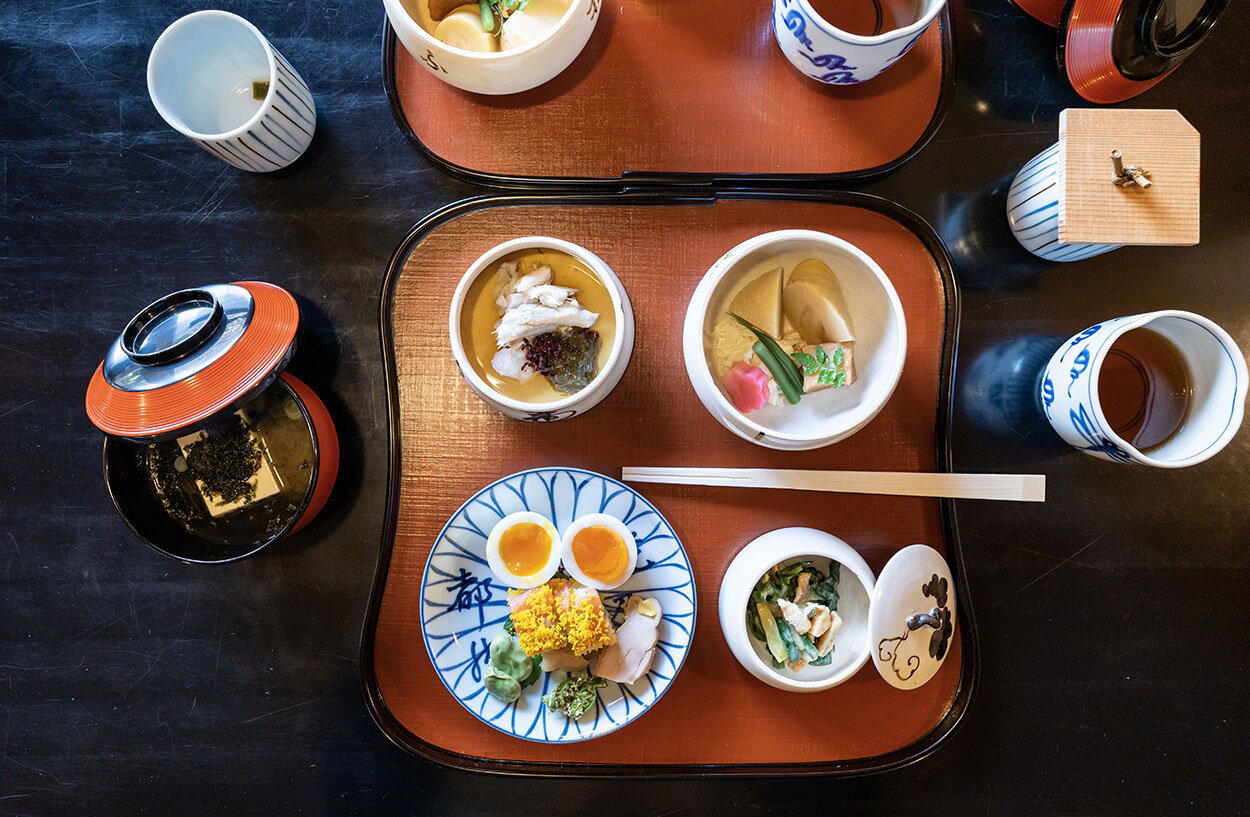
Kyoto kaiseki sits at the intersection of aristocratic court cooking, temple restraint, and tea ceremony logic. The strongest rooms in the city do not win attention through excess. They persuade through broth, knife work, the order of service, and the confidence to let seasonal materials carry the argument. Mizai’s known association with chakaiseki matters because that form places rice, soup, and a modest opening structure at the center rather than treating them as supporting details.
That distinction separates this style from the broader luxury tasting-menu template familiar in global dining capitals. A Kyoto kaiseki meal is not designed as a crescendo of rare ingredients. It is closer to a calibrated seasonal reading, with mountain vegetables, seafood, rice, tea, ceramics, lacquerware, and incense carrying cultural information. The room’s Michelin three-star recognition in 2025, La Liste score of 92 points in 2026, Tabelog Award 2026 Bronze status, and inclusion in the 2026 OAD Top Restaurants in Japan Ranked list at number 130 all point to sustained external validation, but those signals matter because the category itself is unforgiving.
The restaurant’s Tabelog history is also revealing: Bronze in 2026, Bronze in 2025 and 2024, Silver from 2017 through 2023, plus selection for Tabelog Japanese cuisine WEST “Tabelog 100” in 2025, 2023, and 2021. In Japan, where Tabelog’s high-score culture can be especially demanding for traditional Japanese cuisine, that continuity says more than a single-year headline. It places the restaurant inside a durable Kyoto conversation rather than a short-lived awards cycle.
How it fits Kyoto's kaiseki hierarchy
Kyoto’s serious kaiseki rooms divide into different temperaments. Some lean toward grand institutional ceremony, some toward Gion polish, and others toward counter intimacy where the diner is closer to the pace of the kitchen. Within that field, Mizai reads as a formal, ingredient-led address whose public reputation is tied to precision, ritual structure, and the tea-ceremony side of kaiseki rather than theatrical reinvention.
For travelers mapping the city’s high-end Japanese dining, comparison is useful. Gion Nishikawa and Gion Owatari sit in the same broad Kyoto kaiseki conversation, while Gion Maruyama, Gion Sasaki, and Godan Miyazawa help show how wide the city’s Japanese fine-dining spectrum becomes once format, room energy, and price tier are taken seriously. The decision is not simply which restaurant has stronger recognition. It is whether the desired evening is temple-adjacent quiet, Gion refinement, counter-led momentum, or a more contemporary reading of the same seasonal discipline.
That is also why Kyoto rewards repeat meals across different addresses rather than a single definitive booking. A diner who understands dashi at one table will notice a different philosophy of extraction, salt, and aroma at the next. Rice can be ceremonial, comforting, or declarative depending on when it appears and how the room frames it. Seasonal produce can be treated with austerity in one kitchen and with generosity in another. Mizai’s value lies in how clearly it occupies the ritual end of that range.
Who should choose this style of Kyoto dinner
This is a restaurant for diners who are comfortable letting the meal move at kaiseki pace. The rewards are cumulative rather than immediate: a broth that clarifies the season, the relationship between a bowl and its contents, the way rice anchors the sequence, the movement from savory restraint into tea. Travelers seeking heavy luxury cues or a parade of named luxury ingredients may find Kyoto’s more tradition-bound rooms demanding. Those who care about Japanese culinary structure will read the same restraint as the point.
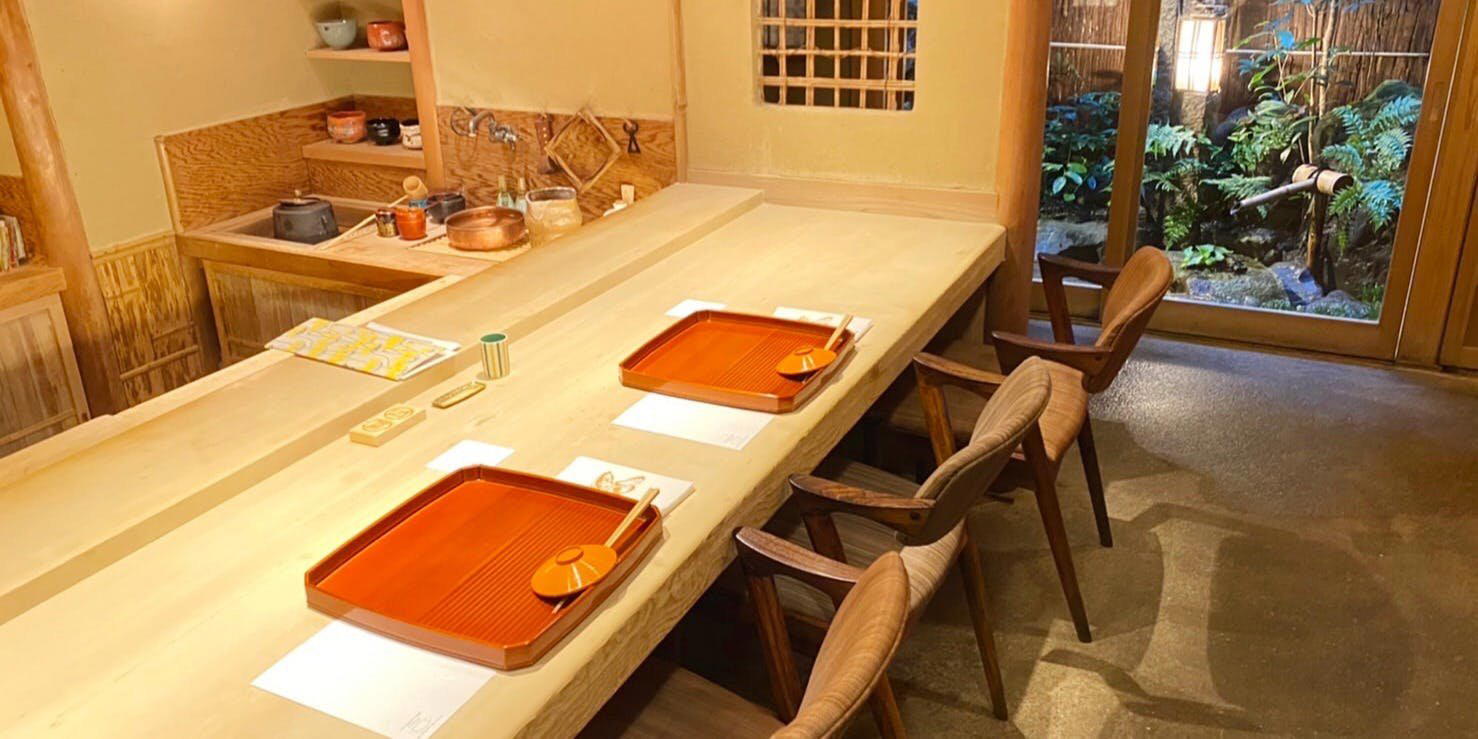
The practical implications follow from the format. A small counter-led room, reservation-only access, private-room availability, non-smoking policy, sake and wine service, and credit-card acceptance place it firmly in the high-planning category of Kyoto dining. The restaurant’s cancellation terms and confirmation process also make it a booking to arrange with fixed travel dates, not as a flexible addition to a loose itinerary.
For a wider view of the city, use Our full Kyoto restaurants guide to compare kaiseki with sushi, tempura, and modern Japanese rooms, then pair the meal with Our full Kyoto hotels guide for neighborhood planning. Drinking and cultural context sit separately in Our full Kyoto bars guide, Our full Kyoto wineries guide, and Our full Kyoto experiences guide. For broader Japanese and kaiseki references beyond Kyoto, compare Ginza Kojyu, Kaiseki, Japanese in Tokyo and Aburi Hana, Kaiseki, Japanese in Toronto; for a different register entirely, the wider archive ranges from -Grilled beef Sukiyaki- KAMAKURA TANUKIAN 鎌倉 たぬき庵 in Kamakura and. 鮪と炭火焼き うお炭 秋葉原店 in Tokyo to.cafe in Osaka.know in Kumamoto, (Shoku) Vietnam in Kawasaki, and [Curry Senmon Ten] Maruyama Kyoju. in Sapporo.
Frequently asked questions
Is Mizai chef-led?
The chef associated with Mizai is Hitoshi Ishihara.
What's the cuisine at Mizai?
Mizai serves Kaiseki, Japanese cuisine.
What does dinner at Mizai typically cost?
Pricing at Mizai is listed as ¥¥¥¥.
What time does Mizai open and close?
Hours at Mizai: Hours: Monday 6–10 pm Tuesday 6–10 pm Wednesday Closed Thursday 6–10 pm Friday 6–10 pm Saturday 6–10 pm Sunday 6–10 pm.
Where exactly is Mizai?
Mizai is located in Kyoto.
What has Mizai built its reputation on?
Mizai has built its reputation on reservation-only kaiseki at a 14-counter-seat room in Kyoto, with repeated Tabelog recognition, including Bronze in 2026 and Silver in earlier years. Its positioning is reinforced by the 2026 OAD Top Restaurants in Japan ranking and chef Hitoshi Ishihara’s focus on counter service in Higashiyama.
Compact Comparison
Nearby venues at a similar price tier for orientation.
| Venue | Cuisine | Price | Awards | Notes |
|---|---|---|---|---|
| MizaiThis venue — the venue you are viewing | Traditional Kaiseki | $300–500 | 3 Michelin Stars · La Liste Top Restaurants | Not listed |
| Kikunoi Honten | Kyoto Kaiseki Ryotei | $300–500 | 3 Michelin Stars · La Liste Top Restaurants | Kaiseki, Japanese |
| Jiki Miyazawa | Modern Kaiseki | $100–150 | 1 Michelin Star | Kaiseki, Japanese |
| Kodaiji Wakuden | Luxury Kaiseki | $300–500 | 2 Michelin Stars · La Liste Top Restaurants | Kaiseki, Japanese |
| Gion Nishikawa | Michelin-Starred Kaiseki | $200–300 | 2 Michelin Stars · La Liste Top Restaurants | Kaiseki, Japanese |
| Gion Owatari | Traditional Kaiseki | $300–500 | 1 Michelin Star · Tabelog Bronze #347 | Kaiseki, Japanese |
Recognition history
Dated appearances from independent guides and award organizations, with the underlying list record or original source where available.
Michelin 3 Stars
Michelin
La Liste Top Restaurants
La Liste
Opinionated About Dining Top Restaurants in Japan Ranked #130
Opinionated About Dining
Tabelog Bronze #283
Tabelog
The Best Chef Three Knives
The Best Chef
Full recognition history (13 entries)
La Liste Top Restaurants
La Liste
Michelin 3 Stars
Michelin
Opinionated About Dining Top Restaurants in Japan Ranked #99
Opinionated About Dining
Tabelog 100 #98 · No. 98
Tabelog · Tabelog 100 - Japanese cuisine - WEST - 2025
Tabelog Bronze
Tabelog
Michelin 3 Stars
Michelin
Opinionated About Dining Top Restaurants in Japan Ranked #68
Opinionated About Dining
Opinionated About Dining Top Restaurants in Japan Ranked #54
Opinionated About Dining
Continue exploring
More in Kyoto
Restaurants in Kyoto
Browse all →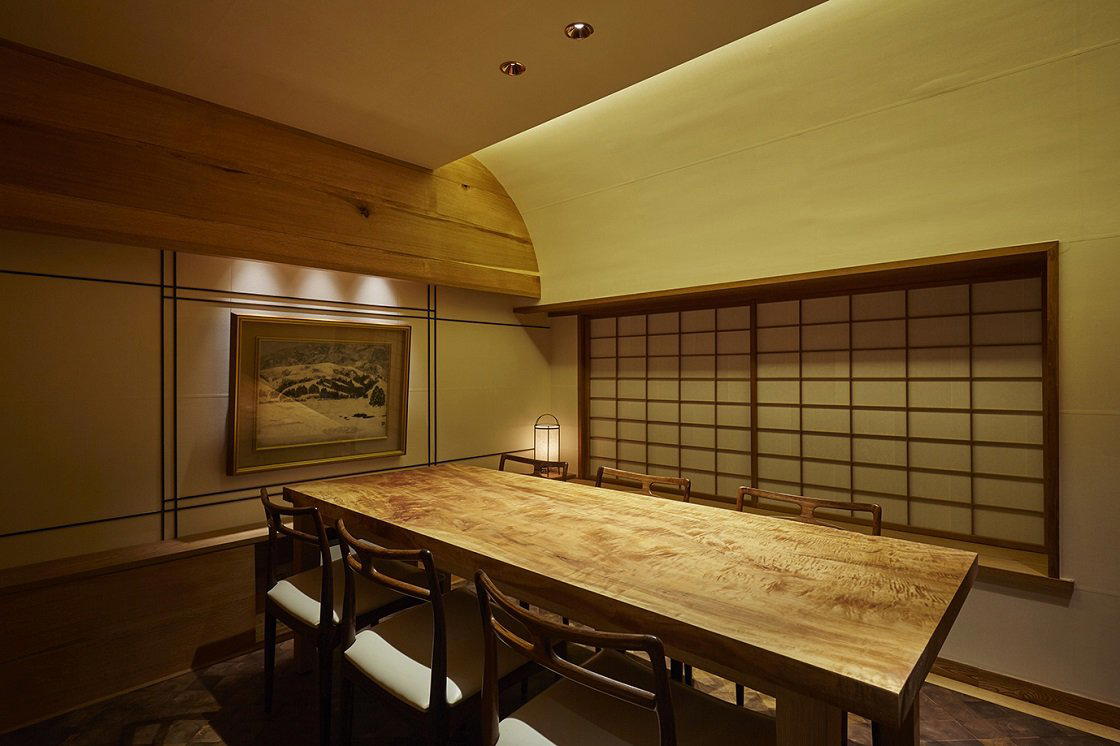
Bars in Kyoto
Browse all →
Hotels in Kyoto
Browse all →
Wineries in Kyoto
Browse all →
Details
- Elegant
- Sophisticated
- Intimate
- Quiet
- Special Occasion
- Date Night
- Chefs Counter
- Garden
- Sake Program
- Garden
- Tasting Menu
- Counter Dining
Current opening hours
- Monday
- 6–10 PM
- Tuesday
- 6–10 PM
- Wednesday
- Closed
- Thursday
- 6–10 PM
- Friday
- 6–10 PM
- Saturday
- 6–10 PM
- Sunday
- 6–10 PM
Hours can change for holidays and private events. Last verified .
Dignified and ceremonial with Japanese style and modern design harmony, calm atmosphere enhanced by garden lanterns and incense.