
Set at the foot of the Arashiyama Mountains in western Kyoto, MUNI KYOTO by Onko Chishin pairs a contemporary European design sensibility with the quietude of a traditional Japanese riverside setting. Twenty-one rooms, a Michelin-recognised restaurant, and a tranquil spa make it a natural choice for milestone stays. Rates from $759 per night position it firmly within Kyoto's upper tier of boutique luxury.
Pearl is the En Primeur Club membership app — saves, bookings, and concierge access live there. Same editors, same standards.
- Address
- 3 Sagatenryūji Susukinobabachō, Ukyo Ward, Kyoto, 616-8385
- Phone
- +81 75-863-1110
- Website
- munihotels.com
- Directions
- Get directions
 Saves & bookings on Pearl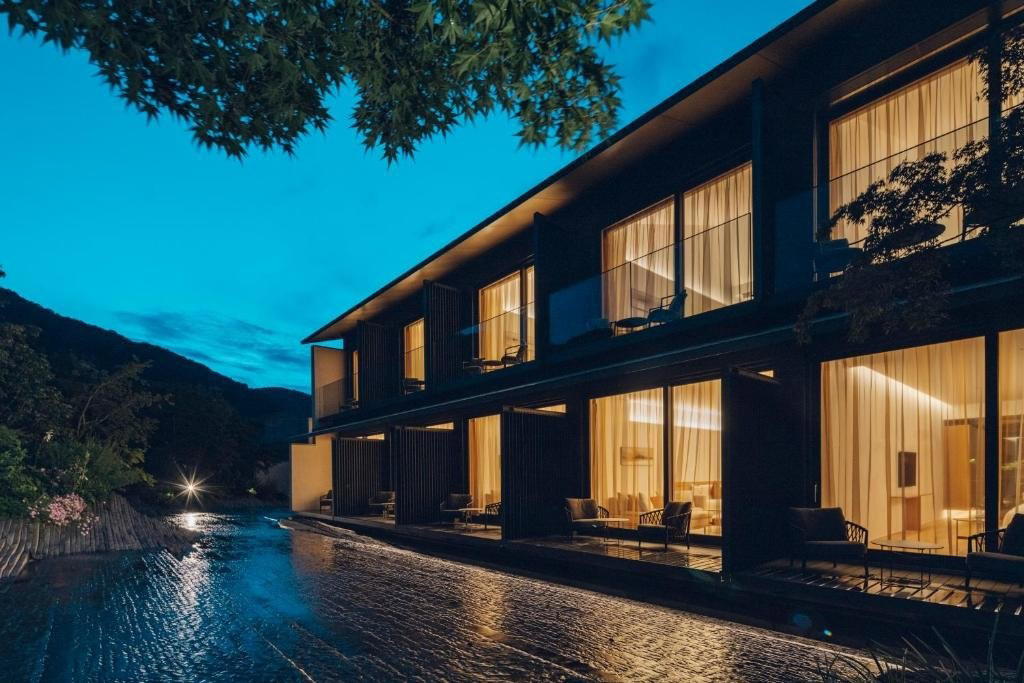
Where the Arashiyama Mountains Meet a Different Kind of Kyoto Hotel
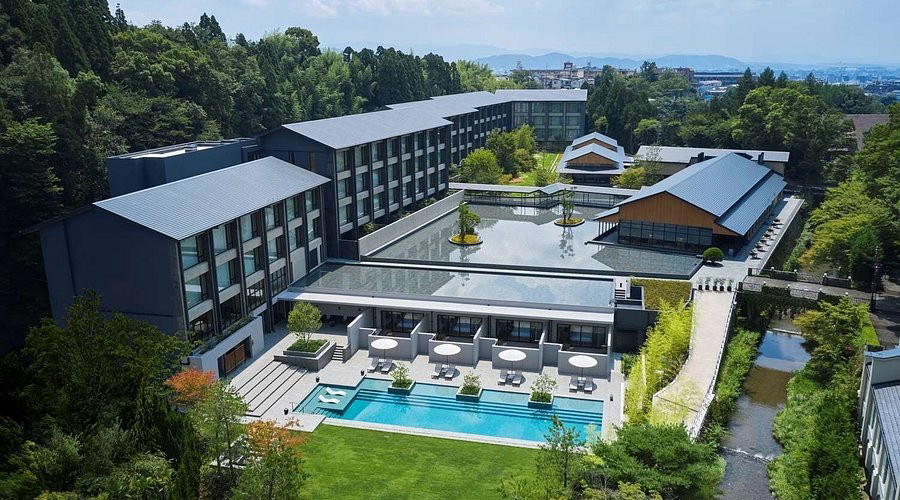
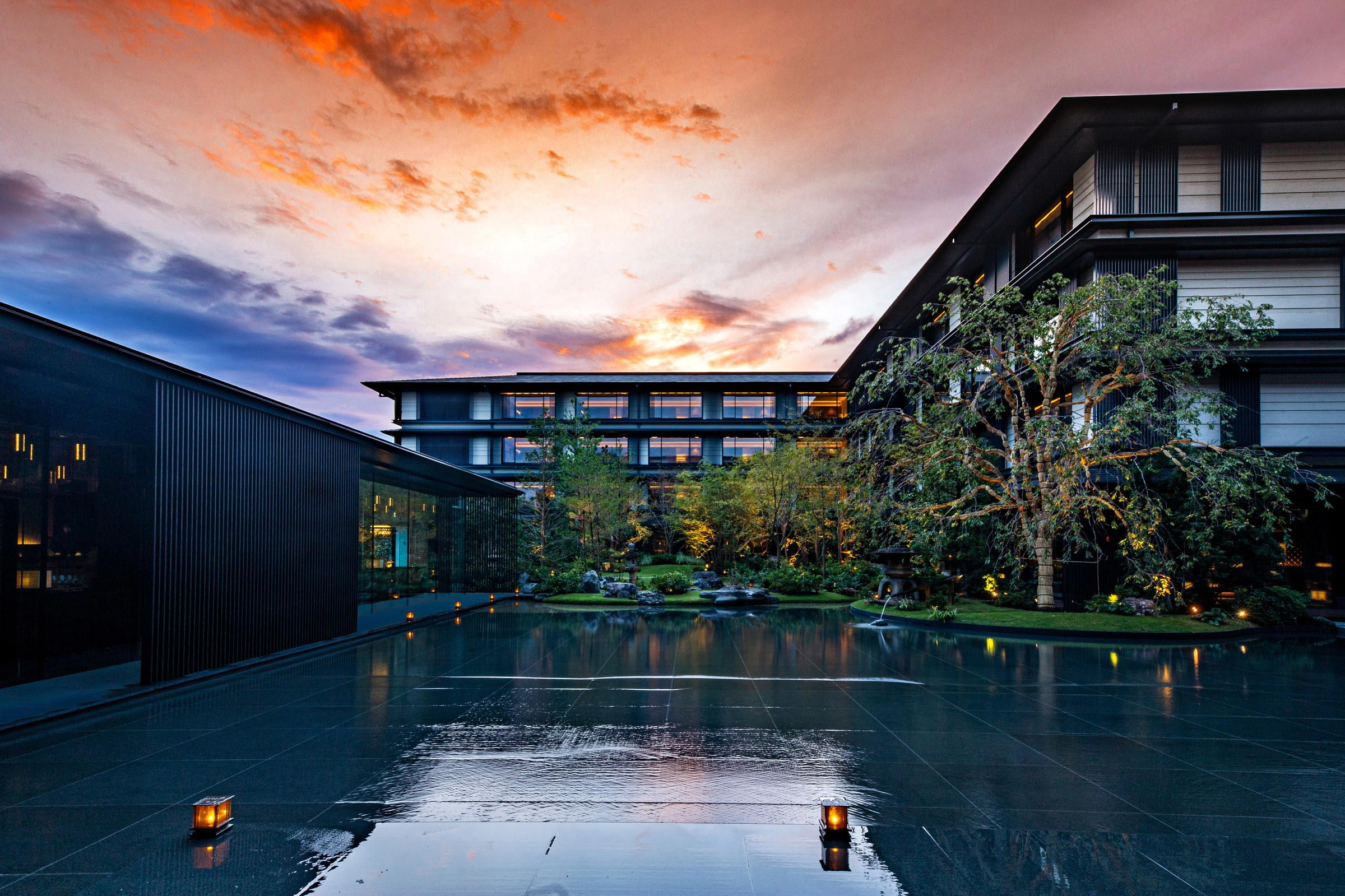
The approach to western Kyoto's Sagano district already does most of the work. By the time you reach the foot of the Arashiyama Mountains, Kyoto's temple-dense city centre feels like a different world. The Ōi River moves quietly below the Togetsukyo Bridge, and the forested ridgeline beyond it absorbs the horizon. It is in this setting that MUNI KYOTO by Onko Chishin makes its case, a 21-room, five-star hotel in Kyoto with a Michelin Key, contemporary design, and riverside views.
The district sits roughly forty minutes from central Kyoto by public transport, and that gap in travel time corresponds to a measurable drop in ambient noise, street-level congestion, and the general compression of mass tourism. Hotels here compete less on proximity to Nishiki Market and more on how convincingly they can deliver stillness. Among that competitive set, which includes international-brand properties elsewhere in the city such as Aman Kyoto and Four Seasons Hotel Kyoto, MUNI KYOTO occupies a smaller, more intimate tier, with just 21 rooms against the larger footprints that define many of the city's flagship luxury addresses.
Design That Refuses the Expected
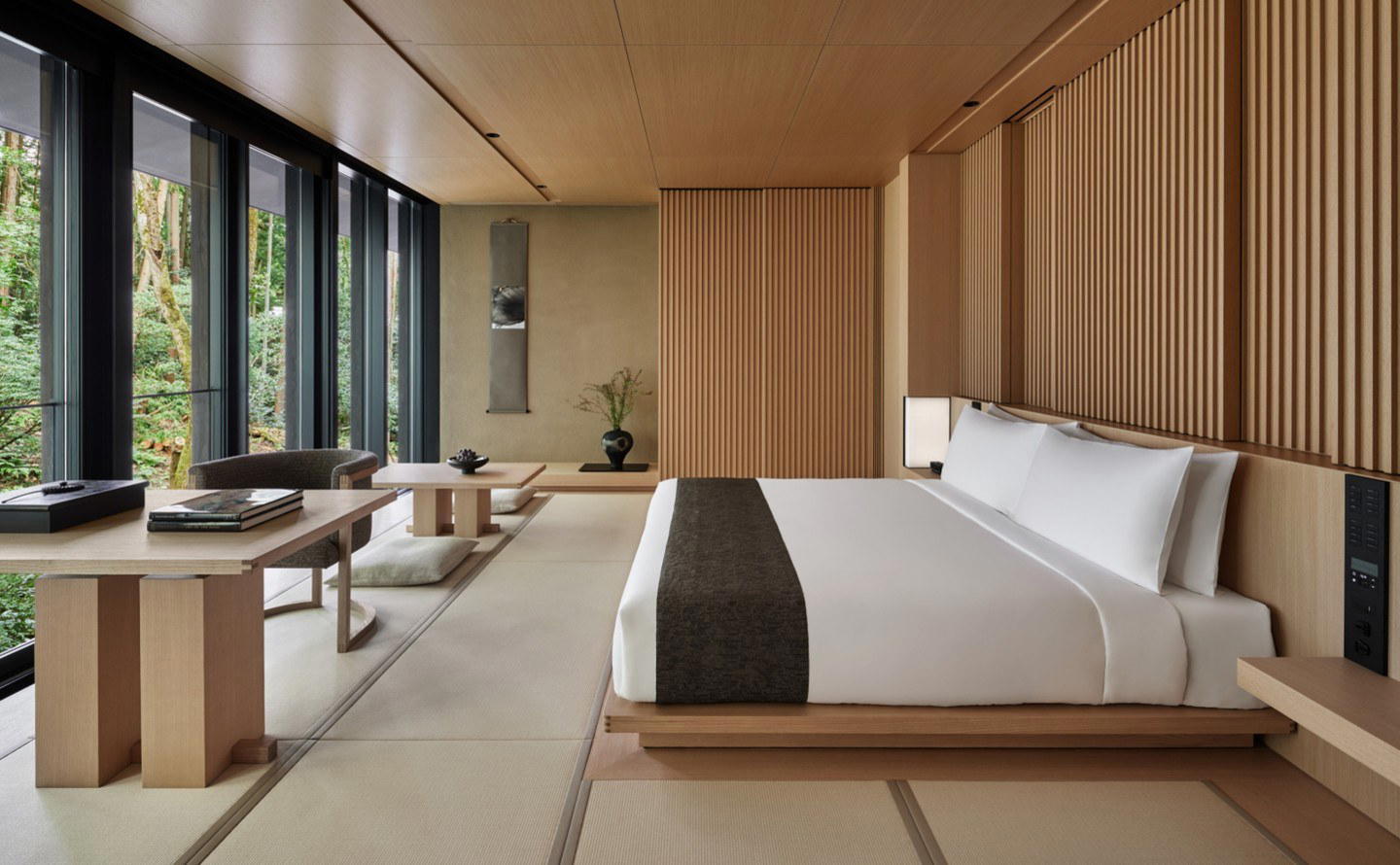
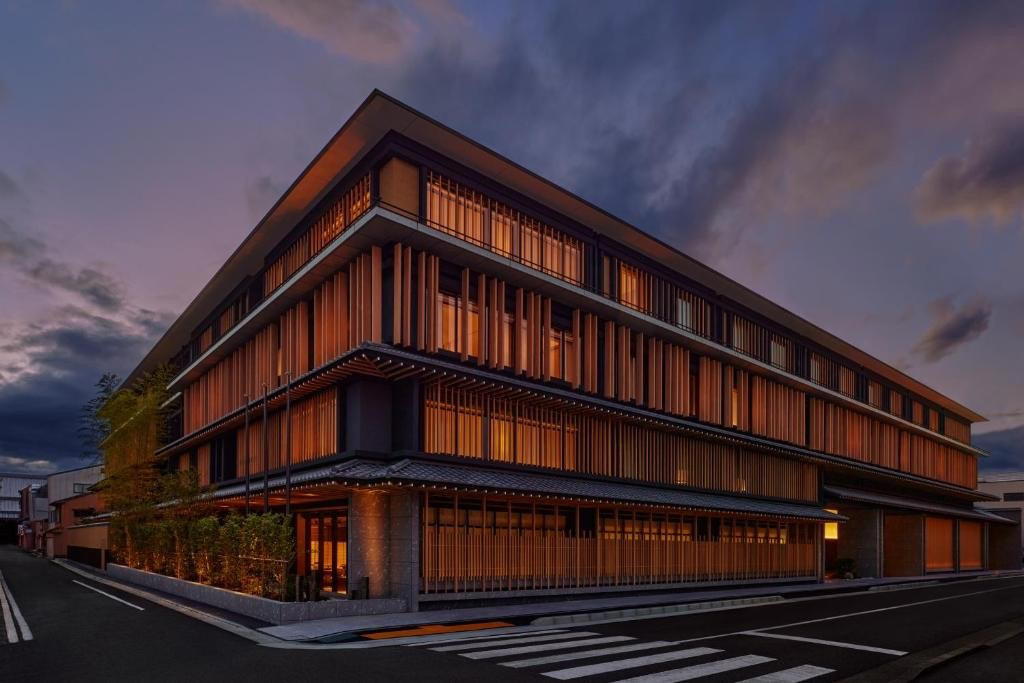
Kyoto hotels at the premium end tend to split into two visible camps. The first pursues Japanese minimalism through exposed timber, washi screens, and tatami, a visual language that reads as authenticity but is, in many cases, a highly curated reconstruction. The second, smaller camp takes a deliberate step sideways. MUNI KYOTO belongs to the latter. The interiors favour grey and cream tones, and the furnishings are drawn from B&B; Italia, a Milan-based manufacturer whose reference points are more Milan Furniture Fair than Gion machiya. The effect is cooler and more spare than the warm tones common to ryokan-influenced properties, and it sits in productive contrast to the lush riverine setting just beyond the windows.
Properties such as Benesse House in Naoshima and Zaborin in Kutchan have demonstrated that a contemporary design vocabulary can coexist with deeply Japanese hospitality principles without one cancelling out the other. At MUNI KYOTO, the calibration runs through the service model and the spa rather than through surface materials, a quieter, less legible form of Japaneseness that rewards guests who arrive with some contextual knowledge of what they are looking at.
A Setting Built for Milestone Occasions
MUNI KYOTO falls clearly into the second category. The combination of 21 rooms, a riverside mountain setting, Michelin recognition for its restaurant, and rates that begin at $759 per night places it in a bracket where the decision to stay is itself expressive. Anniversary trips, significant birthdays, honeymoons, and the kind of travel that marks a deliberate transition in one's life, these are the occasions that the property's scale and quietude actively support.
Kyoto is already a city with strong associations with ceremony and contemplation. Its temple culture, its seasonal rhythms (cherry blossom in April, autumn colour through November), and its longstanding position as Japan's historical capital give almost any visit a degree of significance that other cities don't automatically confer. A stay at a property like MUNI KYOTO amplifies that existing character. The mountain views, the proximity to the Togetsukyo Bridge, one of Arashiyama's most photographed landmarks, and the sense of remove from the city's tourist infrastructure combine to produce conditions that are, in practical terms, good for paying attention to whoever you are travelling with.
For travellers comparing options across the city, HOTEL THE MITSUI KYOTO, Park Hyatt Kyoto, and SOWAKA each offer a different interpretation of premium Kyoto hospitality. The Mitsui brings a central location and the prestige of a historic property; the Park Hyatt delivers panoramic views from Higashiyama; SOWAKA leans into refined machiya aesthetics in Gion. MUNI KYOTO's distinction is geographic and atmospheric, it is the only property in this comparable set that places you inside the Arashiyama landscape rather than at a manageable distance from the city's heritage sites.
The Restaurant and the Michelin Signal
In 2024, the Michelin Guide awarded MUNI KYOTO one Key. Michelin Keys recognise properties where the overall experience reaches a standard of strong quality, and they carry weight in a city as densely recognised as Kyoto. The designation places the hotel's dining within the upper tier of Kyoto's hotel restaurant market, a competitive category that includes properties affiliated with international luxury groups far larger than MUNI KYOTO's 21-room footprint.
The restaurant and café together form a meaningful part of the occasion-stay proposition. For guests marking a significant trip, the ability to dine at Michelin-level quality without leaving the property, and to do so with a commanding view of the Togetsukyo Bridge, removes the logistical negotiation that can deflate a special evening in an unfamiliar city. The spa adds a further layer. Tranquility is not an accident at this kind of property; it is a designed condition, and one that guests at this price point have specifically come to inhabit.
Planning a Stay: Practical Considerations
MUNI KYOTO by Onko Chishin has 21 rooms and rates from $759 per night. At that price point in Kyoto's western outskirts, it sits above mid-market boutique properties but occupies the same bracket as properties such as The Shinmonzen and Dusit Thani Kyoto. The property's small room count means availability tightens during Kyoto's peak seasons.
Arashiyama rewards a full-day pace, with Tenryu-ji's garden, the bamboo grove, and the river within walking range of the hotel. For travellers planning a broader Japan itinerary, comparable design-led boutique properties elsewhere in the country include Gora Kadan in Hakone, Asaba in Izu, ENOWA Yufu in Yufu, and Fufu Kawaguchiko in Fujikawaguchiko.
Amanemu in Mie or Aman Kyoto directly. For premium urban hotels beyond Japan, Bvlgari Hotel Tokyo, Aman New York, and The Fifth Avenue Hotel in New York City offer reference points in a comparable price tier. Further afield, Aman Venice shares a similar logic of location-as-amenity that informs MUNI KYOTO's positioning. Other notable Japanese properties worth contextualising against include Halekulani Okinawa, Jusandi in Ishigaki, Nishimuraya Honkan in Kinosaki-cho, Sekitei in Hatsukaichi-shi, and Fufu Nikko in Nikko, each representing a distinct region and approach within Japan's premium accommodation market.
Recognition, Side-by-Side
Comparable venues nearby, for context on price, style, and recognition.
| Venue | Cuisine | Price | Awards | Notes |
|---|---|---|---|---|
| MUNI KYOTO by Onko ChishinThis venue — the venue you are viewing | Contemporary luxury riverside retreat blending Japanese tranquility with modern design | $$$$ | Michelin 1 Key | Not listed |
| Genji Kyoto | Contemporary Japanese sanctuary inspired by the Tale of Genji | $$$$ | Michelin 1 Key | Shimogyō |
| Suiran, a Luxury Collection Hotel, Kyoto | Traditional Japanese luxury ryokan blended with modern amenities | $$$$ | Michelin 1 Key | Ukyō |
| Hiiragiya | Traditional Japanese ryokan blending Edo-Meiji heritage with modern comforts | $$$$ | Michelin 1 Key | Nakagyō |
| Four Seasons Hotel Kyoto | Contemporary luxury resort anchored by historic Japanese heritage, featuring modern amenities integrated with traditional design elements and cultural programming. | $$$$ | Michelin 1 Key | Higashiyama |
| ROKU KYOTO, LXR Hotels & Resorts | Mountain resort blending Japanese artisanship with modern luxury | $$$$ | Michelin 1 Key | Kita |
Recognition history
Dated appearances from independent guides and award organizations, with the underlying list record or original source where available.
Michelin Guide New Hotels New Hotel
Michelin Guide New Hotels
Michelin 1 Key
Michelin
Michelin 1 Key
Michelin
Continue exploring
More in Kyoto
Hotels in Kyoto
Browse all →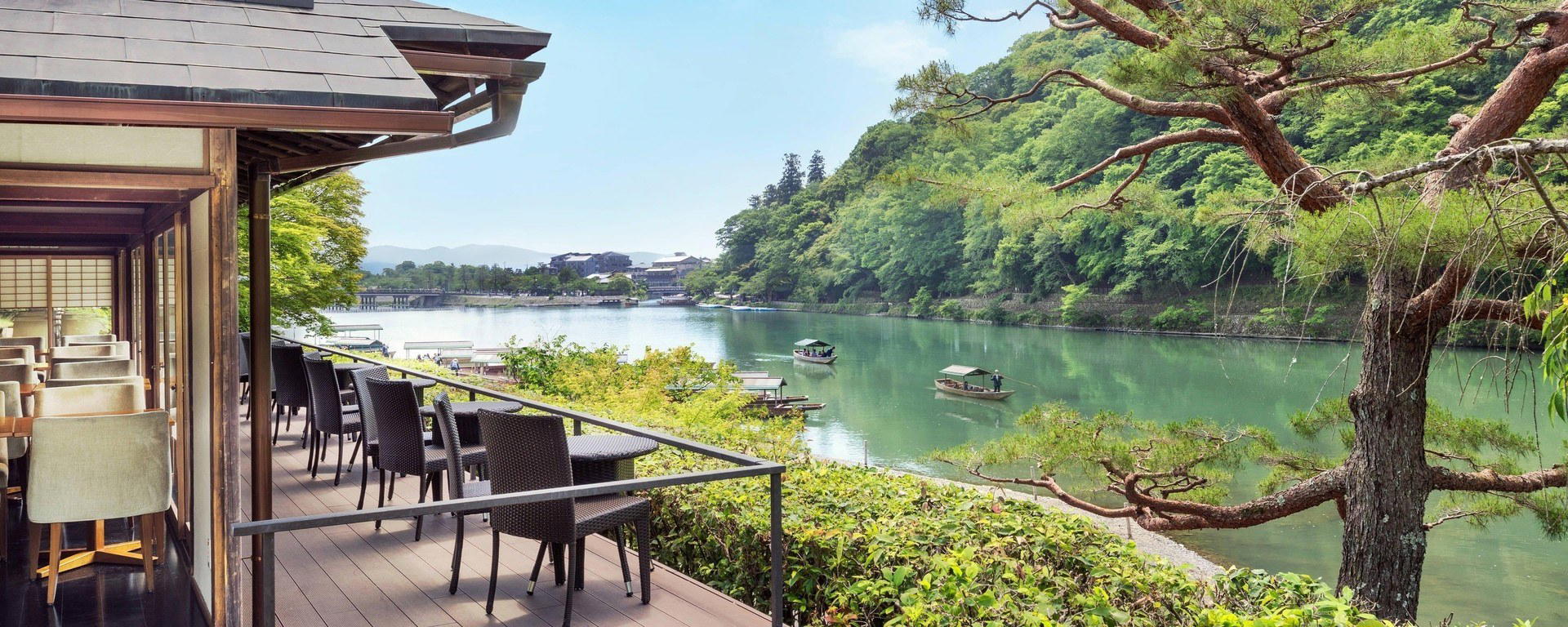
Bars in Kyoto
Browse all →
Restaurants in Kyoto
Browse all →

Wineries in Kyoto
Browse all →
At a Glance
- Quiet
- Elegant
- Modern
- Minimalist
- Scenic
- Sophisticated
- Romantic Getaway
- Honeymoon
- Anniversary
- Wellness Retreat
- Garden
- Terrace
- Historic Building
- Design Destination
- Wi Fi
- Spa
- Fitness Center
- Room Service
- Concierge
- Garden
- Garden
- Mountain
- Wi Fi
- Spa
- Fitness Center
- Room Service
- Concierge
- Garden
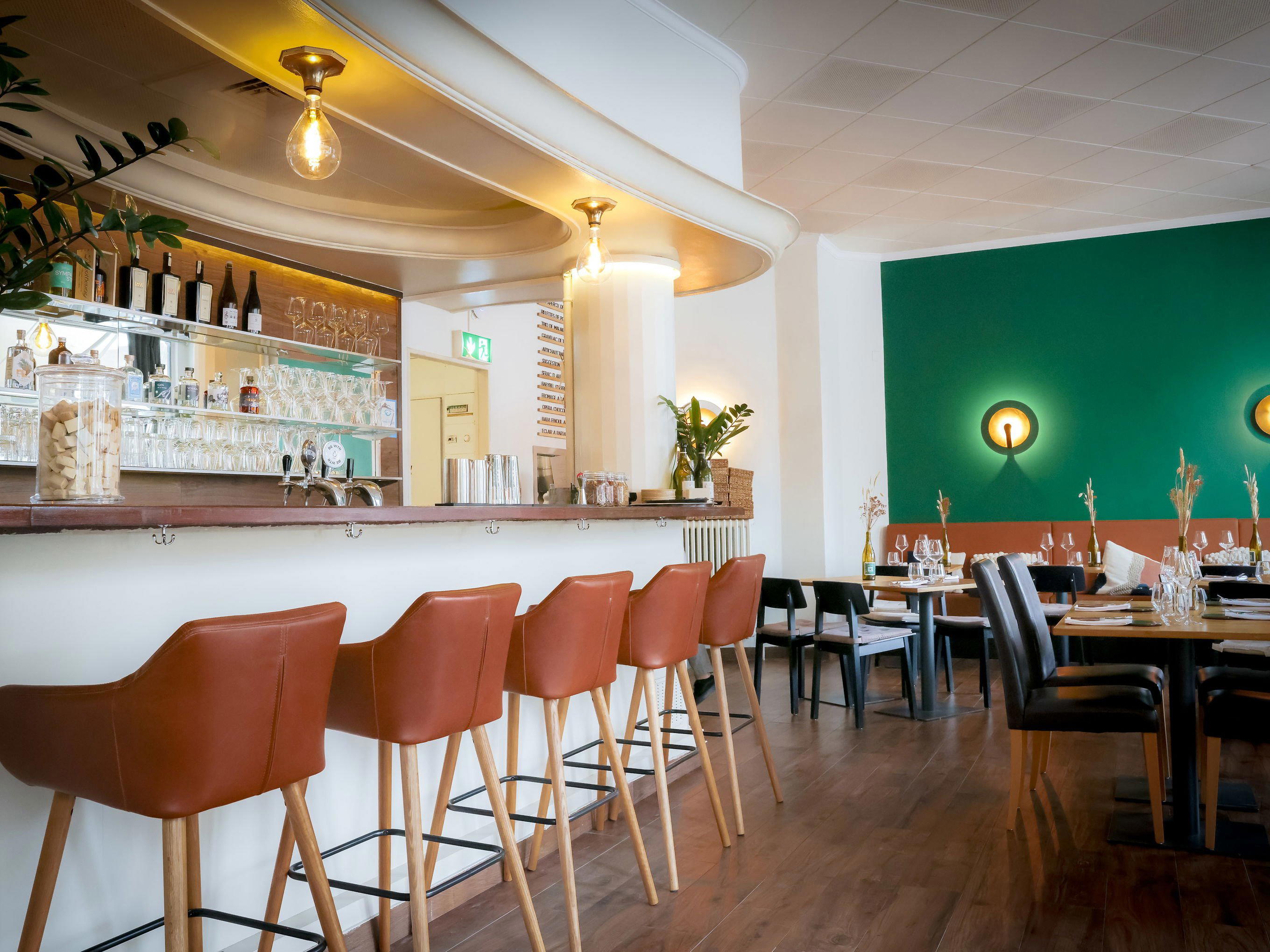
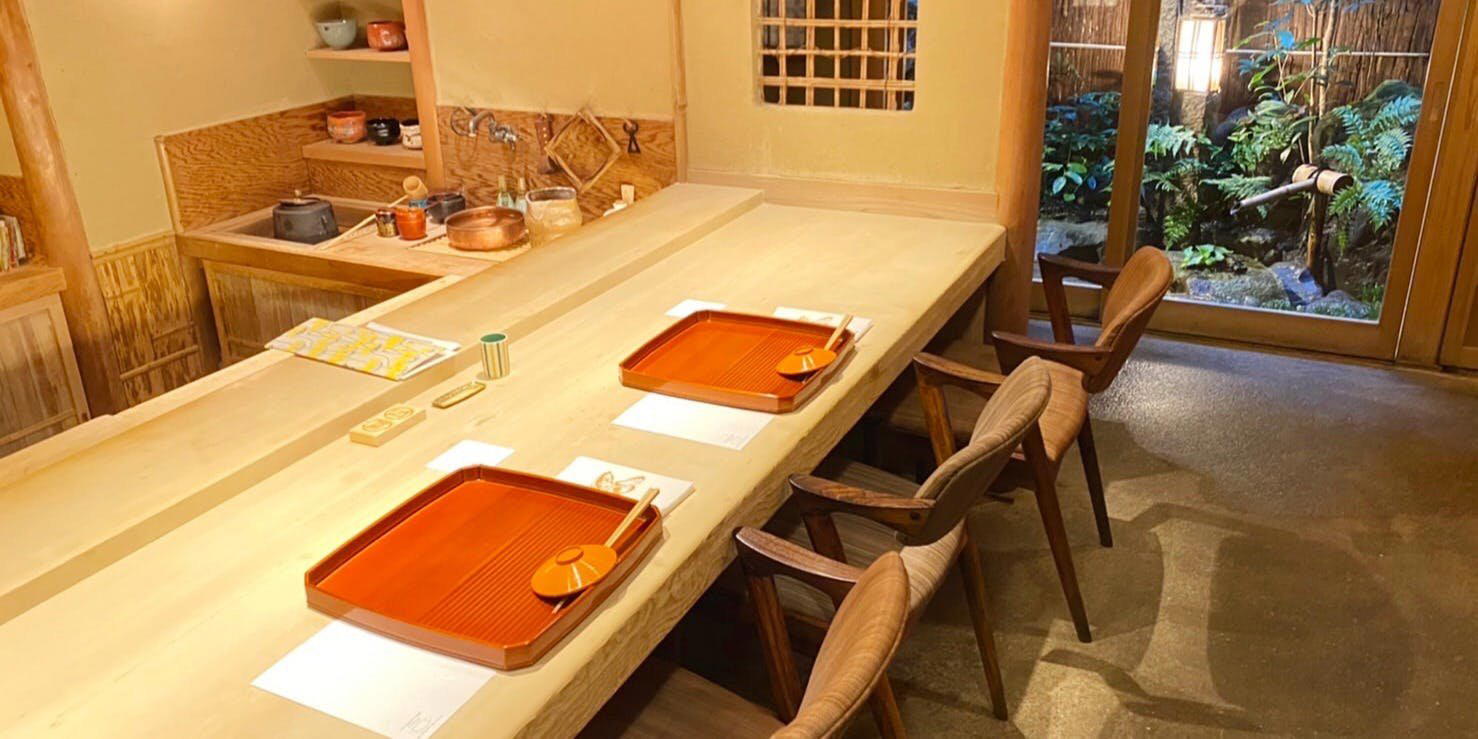
Tranquil and relaxing atmosphere with natural materials like stone and wood, high ceilings, and river sounds from balconies, enhanced by soft lighting and spa-like serenity.