

A 34-room Michelin Selected property occupying floors 7 to 12 of a Ginza backstreet building, Fufu Tokyo Ginza trades the neighbourhood's luxury-retail spectacle for a different register entirely: private onsen filled with volcanic water from Atami, washi-paper check-in alcoves, and rooms where every terrace looks inward rather than outward. Rates from $728 per night.
Pearl is the En Primeur Club membership app — saves, bookings, and concierge access live there. Same editors, same standards.
- Address
- Hulic Ginza Building, 1-7-10 Ginza, Chuo-ku, Tokyo 104-0061, Japan
- Phone
- 0570-0117-22
- Website
- fufutokyo.jp
 Saves & bookings on Pearl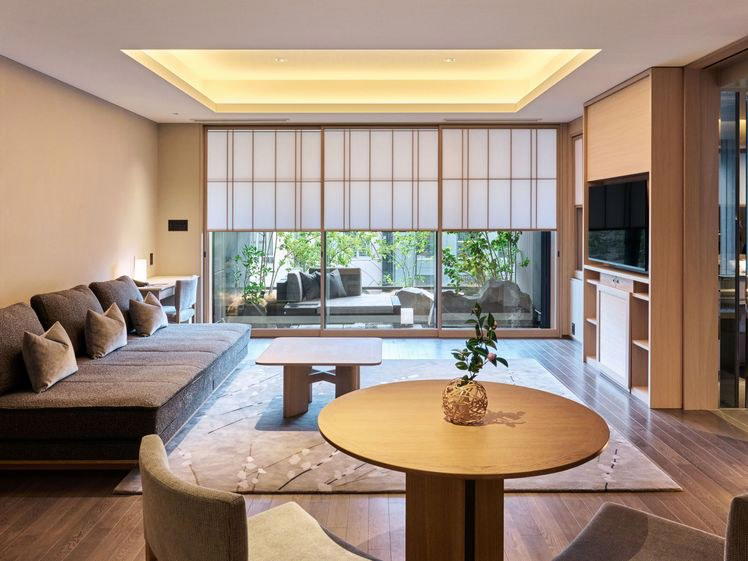
Seclusion as a Design Principle in Tokyo's Densest District
Ginza is one of the most surveilled neighbourhoods on earth, in the sense that its streets are built to be seen in. Luxury flagships compete for sight lines; every boutique facade is a studied display. The premium hotel format that has taken hold here in recent years runs parallel to that logic: grand lobbies, destination restaurants, views calibrated to impress. Fufu Tokyo Ginza operates by a different set of calculations entirely. The property sits on a quiet backstreet behind the Harry Winston flagship, accessed through an earthen wall and a darkened hallway that ends at an ikebana flower lantern, its petals and leaf veins lit from within. The arrival sequence is not theatrical in the way Ginza theatrics usually work. It pulls attention downward and inward rather than upward and outward.
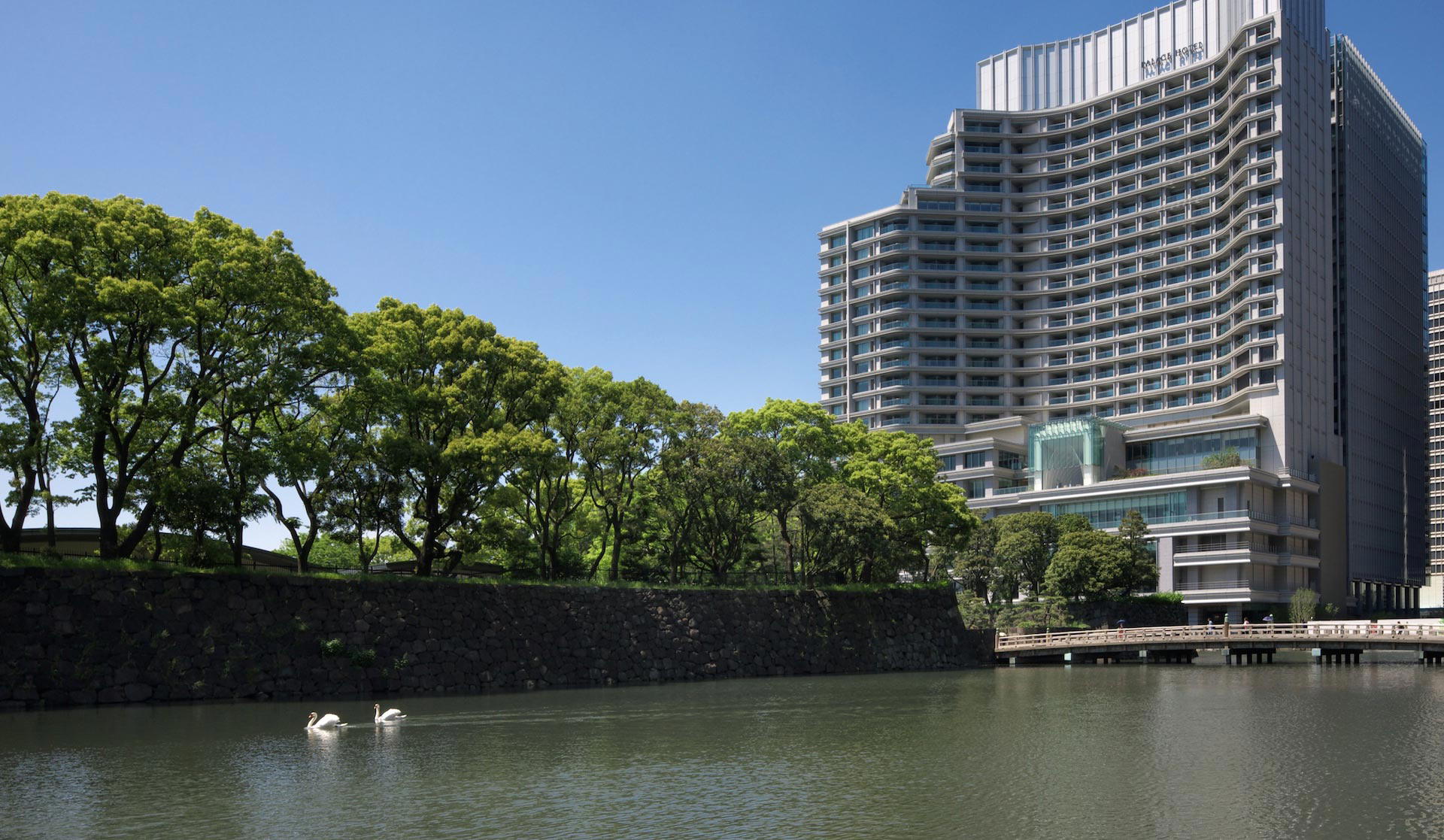
This is a meaningful distinction in a city of 14 million people. Tokyo's upper tier of accommodation has bifurcated over the past decade: on one side, large-footprint international hotels with all-day restaurants and rooftop bars designed for the broadest possible audience, including properties like Bvlgari Hotel Tokyo, Aman Tokyo, Four Seasons Hotel Tokyo at Otemachi, and Palace Hotel Tokyo; on the other, smaller properties where the primary product is privacy and material specificity rather than scale. Fufu Tokyo Ginza is a 5-star hotel in Ginza, Tokyo, with 34 rooms and a nightly rate from $747. With 34 rooms and check-in conducted in individual alcoves partitioned by snow-white washi paper, the hotel functions less like a conventional luxury address and more like an urban ryokan with a serious design program.
Materials That Respond to Time
The ryokan tradition has always involved a deliberate relationship with natural materials: tatami that compresses underfoot, hinoki cypress that deepens in fragrance with humidity, shoji screens that modulate light rather than block it. Fufu Ginza extends that tradition into a contemporary vocabulary without abandoning its logic. The elevator interior is lined with aluminum silver engineered to oxidise gradually, so the surface changes with exposure rather than remaining static. The bar is built from zelkova wood. Mud tiles in the hallways were pressed with willow-leaf impressions before firing. The lobby, which reportedly carries the scent of smoked green tea, uses herringbone check-in alcoves as both a spatial and philosophical statement: arrival here is individual, not collective.
This material attentiveness reflects a broader current in Japanese luxury hospitality that prizes restraint and craft provenance over imported grandeur. Properties like Gora Kadan in Hakone, Zaborin in Kutchan, and Asaba in Izu operate along similar principles in more rural settings. Fufu Ginza represents a compression of that ethos into a dense urban context, which is the more demanding design problem. Getting seclusion right in central Tokyo requires a degree of architectural intentionality that a forested ryokan achieves partly through geography.
The Onsen Question: Logistics Made Meaningful
Every room at Fufu Ginza includes a private onsen filled with volcanic water transported from Atami, a coastal hot-spring town approximately 90 minutes southwest by train. The decision to truck thermal water into a central Tokyo building rather than use urban water supply is both a logistical commitment and an editorial statement about what the property considers non-negotiable. Volcanic onsen water has a mineral composition, temperature retention, and skin-feel that municipal water cannot replicate, and guests who have used onsen at properties like Amanemu in Mie or Nishimuraya Honkan in Kinosaki-cho will recognise the difference immediately.
The rooftop extends this water-centred program with an open-air foot bath arranged around private cabanas. The format is calibrated against the hotel's central concern: guests sip sparkling yuzu soda and wine in a configuration that prevents any one group from intruding on another's field of view. The eight-seat sushi counter inside the property uses retractable booths to the same effect, separating diners physically when desired. Noise management, line-of-sight control, and the structuring of space around individual rather than collective experience are consistent themes throughout the building.
Sustainability Through Longevity and Material Honesty
Responsible luxury in hospitality is often discussed in terms of carbon accounting or supply-chain certification. Fufu Ginza's approach operates at a different register, closer to what might be called material honesty: using substances that are intended to age rather than pretend not to, sourcing onsen water from a verifiable geological origin, and keeping a room count low enough that the property never exerts the operational pressure on a neighbourhood that larger hotels inevitably do. The 34-room scale means staffing ratios that support careful service without the labour throughput of a 200-room tower. It also means that guests rarely encounter each other, which is itself a form of resource consciousness: space, attention, and quiet are not diluted.
This connects Fufu Ginza to a set of Japanese properties that treat the built environment as a long-term object rather than a depreciating asset. Benesse House in Naoshima operates on a similar logic of material integrity and controlled scale. Sekitei in Hatsukaichi-shi and Kamenoi Besso in Yufu share a comparable commitment to craft over surface. The Fufu brand itself now extends to multiple properties, including Fufu Nikko in Nikko and Fufu Kawaguchiko in Fujikawaguchiko, each following a consistent framework of small room counts, onsen access, and material specificity in different geographic settings.
Where It Sits in the Tokyo Premium Field
At rates from $728 per night and holding a Michelin Selected designation in the 2025 hotels guide, Fufu Ginza occupies a price point below the headline rates of Tokyo's flagship international properties but above the mid-tier business hotel category. The Michelin Selected status places it in a recognised tier of quality without the star ranking system applied to restaurants, serving as a verifiable trust signal for first-time visitors uncertain about the property's standing. the property functions as a counterpoint to the grand-lobby format represented by Andaz Tokyo, The Capitol Hotel Tokyu, JANU Tokyo, and Bellustar Tokyo. Those properties are built for visibility. This one is built for its opposite.
Guests who travel for experiences that trade scale for depth, whether at HOTEL THE MITSUI KYOTO, Halekulani Okinawa, Jusandi in Ishigaki, The Fifth Avenue Hotel in New York City, Badrutt's Palace Hotel in St. Moritz, or Hôtel de Paris Monte-Carlo, will read Fufu Ginza's proposition without needing it explained. For others, the darkened entry corridor, the washi-paper alcoves, and the absence of a visible hotel crowd are the product, not incidental features of it.
Planning Your Stay
The property is located in the Hulic Ginza Building at 1 Chome-7-10 Ginza, Chuo City. Rates begin at $747 per night.
Price Lens
Comparable venues nearby, for context on price, style, and recognition.
| Venue | Price | Awards | Notes |
|---|---|---|---|
| Fufu Tokyo GinzaThis venue — the venue you are viewing | $$$$ | 5-Star | |
| Azabudai Hills | $$$$ | 5-Star | Minato, contemporary urban village luxury |
| The Kitano Hotel Tokyo | $$$$ | 5-Star | Chiyoda, Relais & Chateaux service apartment-style boutique hotel |
| 1 Hotel Tokyo | $$$$ | 5-Star | Minato, Sustainable luxury lifestyle hotel with biophilic design |
| Trunk Hotel Cat Street | $$$$ | 4-Star | Shibuya, Eco-chic boutique with upcycled materials and socialising ethos. |
| Conrad Tokyo | $$$$ | 5-Star | Minato, Modern luxury high-rise with Japanese influences |
Continue exploring
More in Tokyo
Hotels in Tokyo
Browse all →
Bars in Tokyo
Browse all →


Restaurants in Tokyo
Browse all →

At a Glance
- Elegant
- Sophisticated
- Intimate
- Modern
- Quiet
- Romantic Getaway
- Anniversary
- Business Trip
- Private Villa
- Historic Building
- Wifi
- Restaurant
- Room Service
- Concierge
- Garden
Tranquil and thoughtfully designed spaces with softly shifting natural light through yukimi-shoji screens, evoking a serene Japanese resort atmosphere in the heart of Ginza.