
1 Michelin Key · World Luxury Hotel Awards WLHA Regional Winner
Bellustar Tokyo occupies the top floors of the 47-story Tokyu Kabukicho Tower in Shinjuku, earning a Michelin 1 Key in 2024 and a Global Win for Best Architectural Design. Its 97 rooms draw on traditional Japanese living concepts within a near-monochrome minimalist shell, sitting well above Kabukicho's street-level intensity. Rates from $743 per night position it against Tokyo's premium architectural hotel tier.

Pearl is the En Primeur Club membership app, where members save venues, book tables and use the concierge.
Above Kabukicho: What the Altitude Buys You
Tokyo's luxury hotel market has developed two distinct spatial logics. The first clusters in the established commercial corridors of Marunouchi, Otemachi, and Roppongi, where properties like Aman Tokyo, Four Seasons Hotel Tokyo at Otemachi, and Bvlgari Hotel Tokyo compete on address pedigree and proximity to corporate and cultural hubs. The second, smaller tier makes altitude and architectural ambition the primary argument. Bellustar Tokyo belongs firmly to the second group. It occupies floors 39 through 47 of Yuko Nagayama's Tokyu Kabukicho Tower, a 47-story structure that rises above one of Shinjuku's most chaotic and recognisable districts. The contrast between what the street below offers and what the hotel delivers at the leading is not incidental, it is the entire concept.
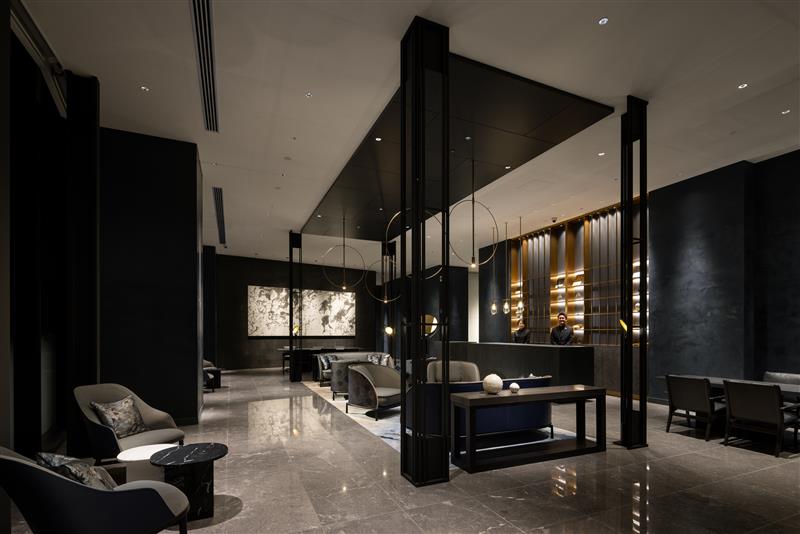
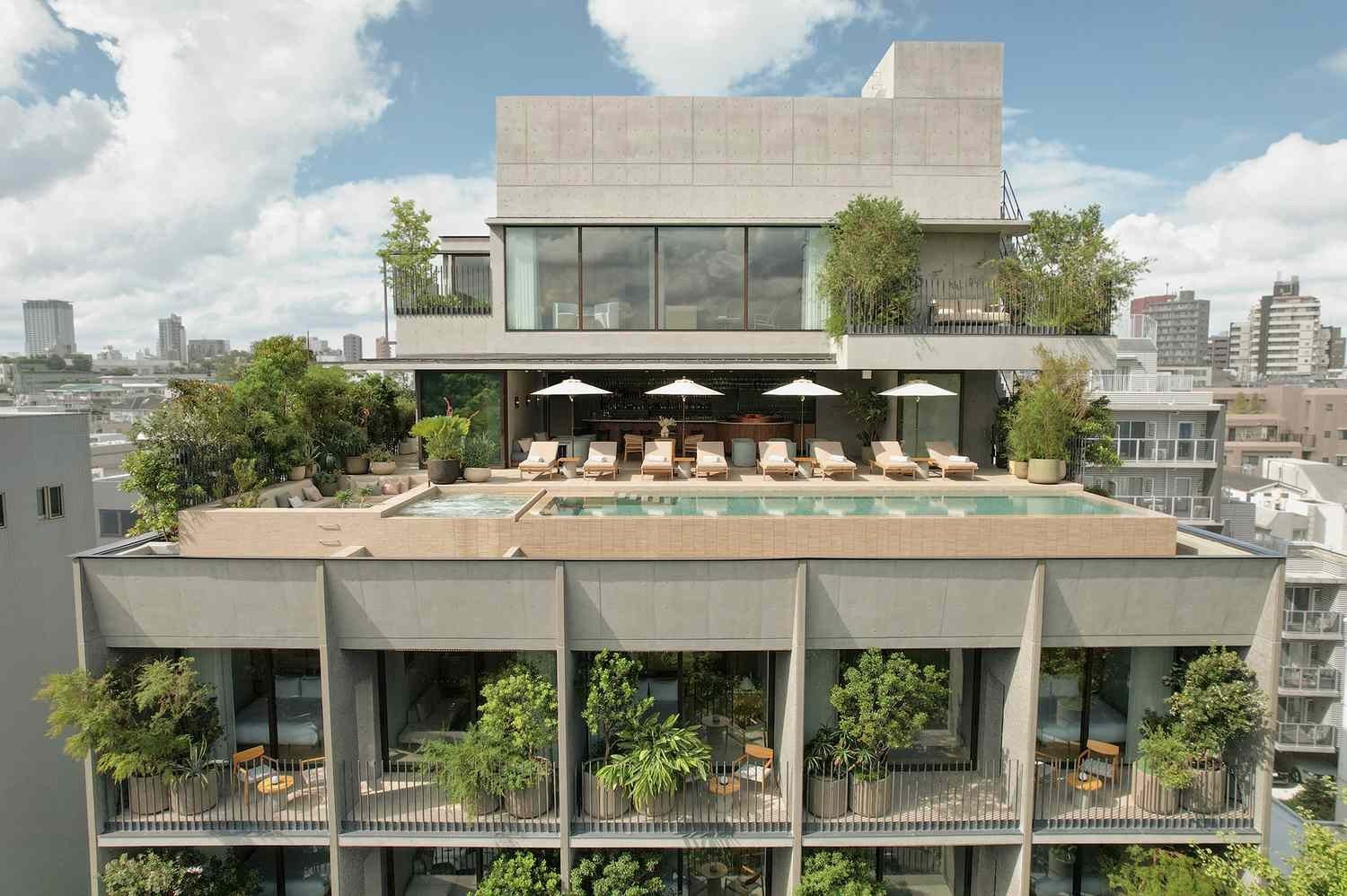
Approaching Kabukicho by foot or taxi, the tower reads as a deliberate architectural statement in a neighbourhood better known for neon density than considered design. Once inside the hotel floors, the transition is immediate. The interiors operate in a near-monochrome palette, the spatial logic is compressed and deliberate, and the noise of Shinjuku below registers as something abstract rather than present. That kind of sensory inversion, city as spectacle observed rather than experienced, is a design posture that architect Nagayama has applied with some precision. The hotel earned a Global Win for Leading Architectural Design, a recognition that speaks to that ambition being read as successful by external judges.
The Michelin Signal and What It Covers
In 2024, Bellustar Tokyo was awarded a Michelin 1 Key, a designation that sits within Michelin's relatively new hotel rating framework rather than its restaurant guide. The 1 Key classification, as Michelin applies it, identifies hotels offering a notably high-quality experience across accommodation, service, and atmosphere. Within Tokyo's competitive luxury hotel sector, where properties like Palace Hotel Tokyo, Andaz Tokyo, and JANU Tokyo are all operating at high levels, Michelin recognition carries positioning weight even at the entry tier of the key system. Forbes Travel Guide has also flagged the property for forthcoming star rating assessment, meaning the formal review infrastructure around Bellustar is still being assembled, worth knowing for travellers who use Forbes ratings as a booking filter.
The hotel also holds a Regional Winner designation for Luxury Leisure Hotel, which frames its competitive identity more precisely. This is not a business-travel property optimised for convenience and connectivity. The positioning is leisure-oriented, with an emphasis on retreat within the city rather than integration with it. That distinction affects everything from room design to food and beverage programming, and it should shape how you approach the booking decision.
Rooms, Penthouses, and the Logic of Choosing a Floor
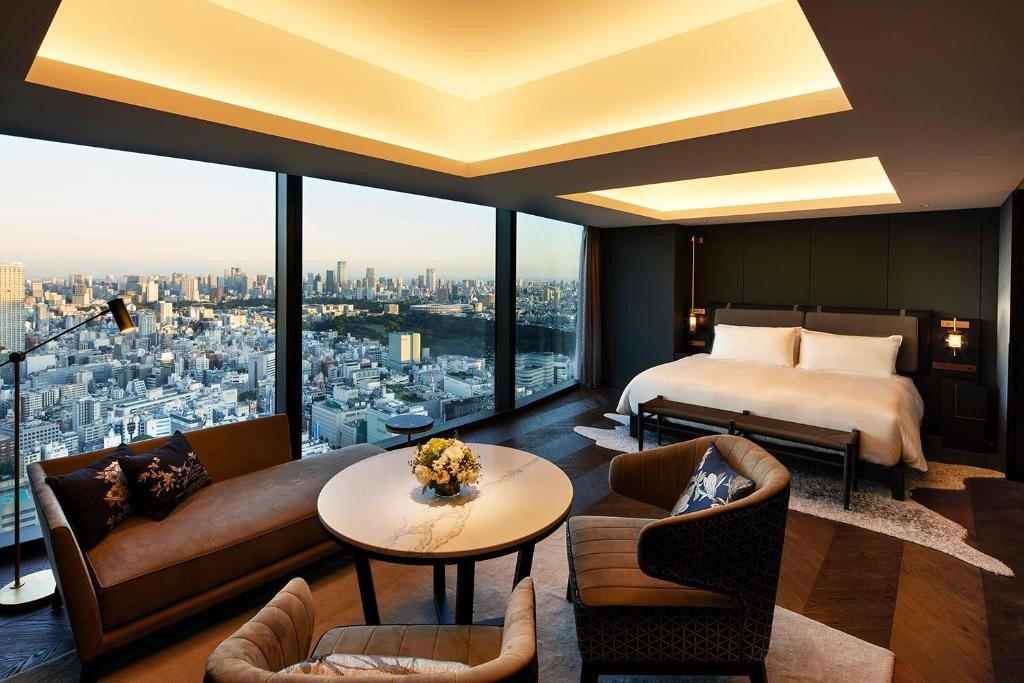
Bellustar Tokyo holds 97 rooms and suites across its upper-floor footprint. Room concepts are grounded in traditional Japanese living principles, though the execution avoids historical pastiche. The aesthetic is contemporary minimalism with conceptual reference to Japanese domestic space: proportions, material restraint, and the relationship between interior and view are the operative elements. The five penthouses take this further, offering residential-scale layouts where square footage becomes part of the proposition in a city where space is consistently compressed.
For most travellers, the floor selection decision is primarily about view orientation. Given the hotel's position in Shinjuku, rooms facing west and north will read the city differently from those oriented toward the more ordered skyline to the east and south. The tower's height, Bellustar begins at the 39th floor, means that even the entry-level rooms sit well above the visual noise of the streets below. The five penthouses represent a different category of stay, structured more like short-term apartments than hotel rooms, and priced accordingly above the $743 entry rate.
Dining at Altitude: French, Teppanyaki, and Sushi
Tokyo's hotel dining scene has bifurcated sharply between properties that treat food and beverage as amenity and those that treat it as programme. Bellustar sits in an interesting middle position. The hotel houses a modern French restaurant alongside teppanyaki and sushi options, which is a more complete dining stack than many comparably sized properties offer. The inclusion of teppanyaki and sushi alongside European fine dining reflects a standard that high-end Tokyo hotels have maintained for decades: the expectation that guests will want access to serious Japanese dining without leaving the building, particularly given that Shinjuku's street-level dining, while extensive, can be logistically demanding for first-time visitors arriving late or departing early.
The French option slots Bellustar into a consistent pattern among Tokyo's architecturally ambitious hotels, where European fine dining operates as a counterpoint to Japanese-format options rather than a replacement. This pairing logic is worth understanding for travellers who plan to use the hotel's restaurants as a primary dining base during their stay. For a broader view of where Tokyo's restaurant scene is moving, our full Tokyo restaurants guide covers the city's dining character in greater detail.
Planning the Stay: Booking, Timing, and What to Expect
At $743 per night as a starting rate, Bellustar Tokyo positions itself toward the upper segment of Tokyo's hotel market without reaching the price ceiling occupied by properties like Four Seasons Hotel Tokyo at Marunouchi or the Bvlgari Hotel Tokyo. At 97 rooms, availability can tighten during Tokyo's peak demand windows: cherry blossom season in late March and early April, the autumn foliage period in November, and major national holiday clusters including Golden Week in late April and early May. Booking three to four months in advance for these periods is advisable, particularly if room category or view orientation matters to your stay.
The Tokyu Kabukicho Tower address places the hotel within walking distance of Shinjuku Station, one of Tokyo's most connected transit hubs, with access to JR lines, the Tokyo Metro, and the Odakyu and Keio private rail networks. For travellers arriving from Narita or Haneda, the station's connections reduce transfer complexity significantly. The neighbourhood itself, Kabukicho and the surrounding Shinjuku entertainment district, operates at high intensity at street level through the late evening hours. Guests who prioritise quiet in the surrounding area rather than purely within the room should factor this in, though the hotel's upper-floor position provides considerable acoustic separation from the street.
The hotel's current status with Forbes Travel Guide as a property under assessment means that travellers booking in the near term will be doing so without a finalised Forbes star classification. For those who rely on Forbes ratings to benchmark service standards, the Michelin 1 Key designation and the architectural and leisure awards provide a partial signal in the interim.
Travellers extending their Japan stay beyond Tokyo will find strong contextual contrast in the ryokan and resort properties available elsewhere in the country. Gora Kadan in Hakone, Zaborin in Kutchan, Amanemu in Mie, and HOTEL THE MITSUI KYOTO in Kyoto represent the traditional accommodation strand, while Benesse House in Naoshima offers the art-island alternative. For onsen-focused stays, ENOWA Yufu in Yufu, Asaba in Izu, and Nishimuraya Honkan in Kinosaki-cho each occupy distinct regional positions. Island options further afield include Halekulani Okinawa, Jusandi in Ishigaki, and Fufu Kawaguchiko in Fujikawaguchiko near Mount Fuji. Those looking to extend further into western Japan might consider Sekitei in Hatsukaichi-shi and Fufu Nikko in Nikko. For international reference points in urban luxury design, Aman New York, The Fifth Avenue Hotel in New York City, and Aman Venice sit in a comparable architectural-ambition tier.
The Essentials
Comparable venues nearby, for context on price, style, and recognition.
| Venue | Price | Awards | Notes |
|---|---|---|---|
| Bellustar Tokyo, A Pan Pacific HotelThis venue (the venue you are viewing) | Not listed | 1 Michelin Key · World Luxury Hotel Awards WLHA Regional Winner | Not listed |
| Hotel New Otani Tokyo Executive House Zen | Not listed | 1 Michelin Key · La Liste Top Hotels | Chiyoda, Exclusive executive tower within a landmark hotel featuring Zen-inspired design and private lounge. |
| Mandarin Oriental Tokyo | $500–750 | 1 Michelin Key · La Liste Top Hotels | Chūō, Contemporary Japanese luxury with futuristic architectural design featuring floor-to-ceiling windows and minimalist elegance. |
| The Peninsula Tokyo | Not listed | 1 Michelin Key · La Liste Top Hotels | Chiyoda, Classic luxury with modern Japanese touches |
| The Tokyo Station Hotel | Not listed | 1 Michelin Key · Small Luxury Hotels of the World Member | Chiyoda, Historic luxury railway hotel with preserved architecture. |
| The Aoyama Grand Hotel | $1–100 | 1 Michelin Key · World Luxury Hotel Awards WLHA Country Winner | Minato, Mid-century modern boutique landmark |
Recognition history
Dated appearances from independent guides and award organizations, with the underlying list record or original source where available.
Michelin 1 Key
Michelin
World Luxury Hotel Awards WLHA Regional Winner
World Luxury Hotel Awards
Full recognition history (5 entries)
Michelin 1 Key
Michelin
World Luxury Hotel Awards WLHA Global Winner
World Luxury Hotel Awards
Michelin 1 Key
Michelin
Continue exploring
More in Tokyo
Hotels in Tokyo
All hotels in Tokyo →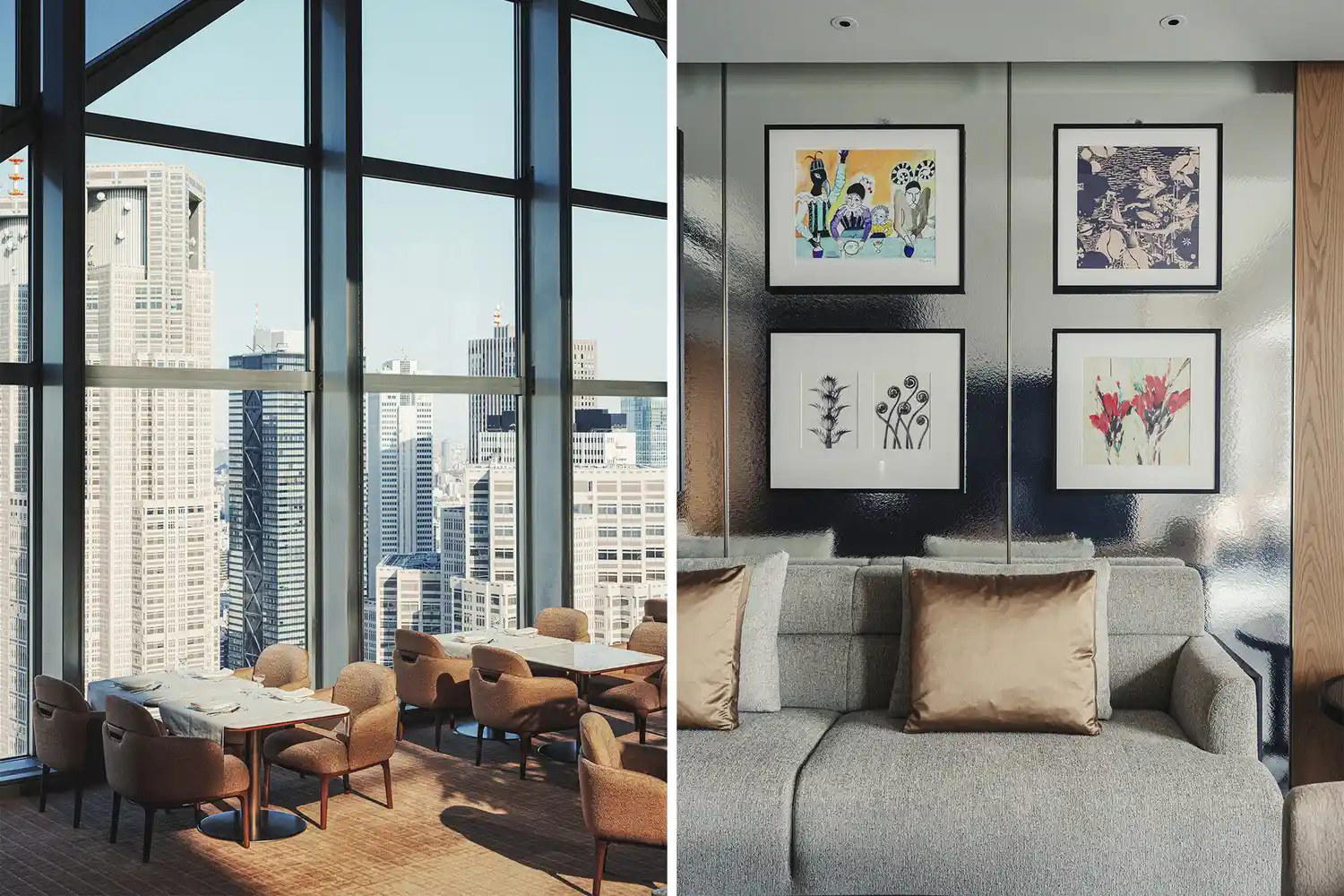


Bars in Tokyo
All bars in Tokyo →






Details
- Modern
- Elegant
- Sophisticated
- Minimalist
- Romantic Getaway
- Business Trip
- Anniversary
- Panoramic View
- Rooftop Pool
- Wi Fi
- Spa
- Fitness Center
- Room Service
- Concierge
- Skyline
- Wheelchair Accessible
- Elevator
Sleek, modern minimalist design with light-filled spaces, serene tranquility, and dramatic city vistas creating a refined retreat above the urban bustle.