Tabelog 100 #57
Our verdict
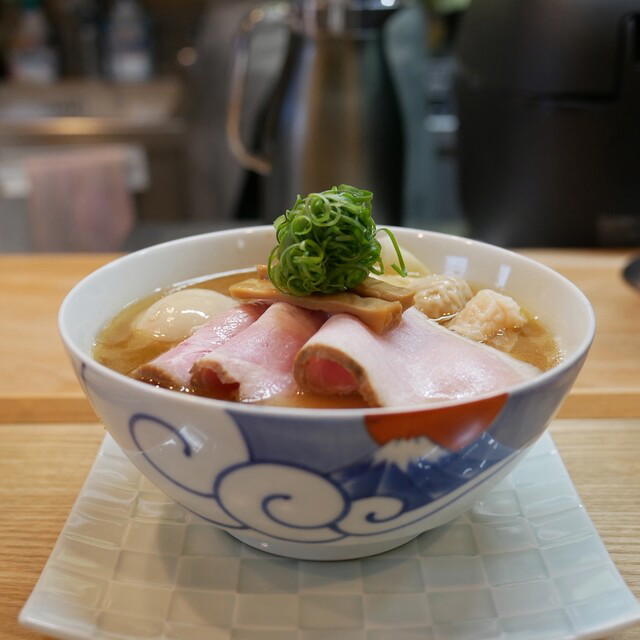
Ranked eighth in Ramen Beast's Top 10 Bowls of 2025, Sousakumen Hitosuji sits in the residential streets of Honancho in Suginami, well away from the ramen circuits that cluster around central Tokyo stations. The kitchen specialises in creative ramen, with the Tokujo Tantanmen paired with a seiro set drawing the most attention from serious bowl-chasers making the trip out west.

Pearl is the En Primeur Club membership app, where members save venues, book tables and use the concierge.
The menu
See the current menu on x.com →Tokyo's ramen scene divides, roughly, into two competing instincts: the purist school, where a bowl is measured by the fidelity of its broth to a single regional tradition, and the sousakumen school, where the bowl is a canvas. Sousakumen, literally "creative noodles", has grown from a fringe position into one of the city's more contested categories, attracting the kind of attention that once went exclusively to tonkotsu and shoyu specialists. Sousakumen Hitosuji, tucked into the residential quarter of Honancho in Suginami City, operates squarely within that creative tradition, and its ranking as eighth in Ramen Beast's Top 10 Bowls of 2025 places it among a small group of Tokyo bowls considered worth tracking by dedicated ramen writers.
The Neighbourhood Sets the Register
Honancho sits on the Marunouchi Line's western stretch, several stops past Nakano, in a part of Suginami where the streetscape is quiet enough that a well-lit ramen shop reads as a destination rather than a convenience. This matters in Tokyo, where geography shapes expectation. A ramen counter in Shinjuku or Shibuya competes for passing trade; one in a low-density residential neighbourhood like Honancho tends to build a different kind of following, regulars who live nearby, and enthusiasts who have made the deliberate choice to come. The ritual of travelling for ramen is, in itself, a meaningful part of how serious Tokyo eaters signal commitment to the bowl in front of them. Honancho carries no particular dining cachet the way Ginza or Roppongi might, which means the shop earns its audience through word-of-mouth and editorial notice rather than location advantage.
The Sousakumen Ritual: How to Eat Here
Creative ramen shops in Tokyo tend to treat the dining sequence with more deliberateness than their traditional counterparts. At Hitosuji, the featured pairing, the Tokujo Tantanmen with a seiro set, suggests a meal built around contrast and progression rather than a single, immediate impact. Tantanmen in its Japanese interpretation generally runs closer to sesame-forward and moderately spiced than the fiery Sichuan original, and "tokujo" (special grade or superior) signals an upgraded bowl within that category. A seiro set, typically steamed rice or additional accompaniments served in a bamboo steamer, extends the meal beyond the bowl itself, adding a textural and temperature counterpoint that slows the pace of eating in a way that single-bowl formats rarely allow.
This kind of pairing is characteristic of the more considered end of the sousakumen category: the kitchen is asking you to eat in sequence, to move between the noodles and the accompaniment, rather than to finish one vessel and leave. Compared to the fast-turnover model common at high-volume ramen shops around major stations, Fuunji in Shinjuku being a useful reference point for that speed-and-intensity format, a seiro-set pairing implies a slower, more structured sit.
Where Hitosuji Sits in the Broader Scene
Tokyo's most-discussed ramen counters in 2025 span a wide range of styles and price points. Shops like Afuri have moved toward wider commercial footprints and yuzu-forward profiles aimed partly at international visitors, while others like Chukasoba Ginza Hachigou operate in high-rent central locations that position ramen within a more formal dining context. Chukasoba KOTETSU represents another strand of the chukasoba tradition that values restraint and clarity. Hitosuji's placement in Honancho, and its identity within the sousakumen rather than the chukasoba or shoyu-purist categories, puts it in a different competitive tier: neighbourhood-anchored, creatively oriented, and dependent on editorial recognition and ramen-community circulation for its profile.
The Ramen Beast ranking is a meaningful trust signal in this context. Ramen Beast operates as a specialist publication focused specifically on bowl-level evaluation, and its 2025 list is built around actual eating and comparative judgment rather than aggregated user scores. An eighth-place ranking on that list, in a city with thousands of active ramen shops, indicates genuine peer recognition within the enthusiast community rather than casual popularity. For comparison, ramen destinations across Japan that have drawn similar specialist attention include Chukasoba Mugen in Osaka and Chukasoba Oshitani in Nara, both of which operate within the same specialist-recognition circuit.
The Tantanmen Tradition and What "Tokujo" Signals
Tantanmen occupies an interesting position in Tokyo's ramen hierarchy. As a Sichuan-derived import adapted over decades of Japanese interpretation, it has developed its own domestic logic: less numbing heat, more emphasis on sesame paste depth, often with a richer, more emulsified broth than a typical Japanese shoyu or shio bowl. The "tokujo" designation at Hitosuji signals an upgraded version within that framework, likely a richer broth, higher-grade toppings, or additional components that distinguish it from a standard order. In the sousakumen tradition, this kind of tiered menu structure is common, allowing the kitchen to express its range across price points while guiding first-time visitors toward the kitchen's most considered output.
Pairing a tokujo tantanmen with a seiro set is a creative-format choice that connects Hitosuji to a broader tendency in Tokyo's more ambitious noodle shops: the interest in building a complete meal experience rather than a single, punctual bowl. The same instinct can be seen in the kaiseki-inflected precision of spots like Chuogo Hanten Mita, though Hitosuji operates at a different register and price point.
Planning the Visit
Honancho is served by the Tokyo Metro Marunouchi Line, making it accessible from central Tokyo with a direct connection, though the journey from Shinjuku or Otemachi takes time. The address, 2 Chome-18-6 Honan, Suginami City, places the shop within the residential grid rather than a commercial strip, so arriving with navigation assistance is worth doing rather than assuming visible signage from the station.
For visitors building a broader Japan itinerary beyond Tokyo, EP Club covers the full range of serious dining across the country, from HAJIME in Osaka and Gion Sasaki in Kyoto to akordu in Nara, Goh in Fukuoka, Abon in Ashiya, affetto akita in Akita, Aji Arai in Oita, Ajidocoro in Yubari District, Akakichi in Imabari, and aki nagao in Sapporo. The full Tokyo restaurants guide covers the city's wider dining range across categories and price tiers.
Frequently asked questions
Is Sousakumen Hitosuji suitable for children?
The shop is a ramen counter in a quiet Honancho residential pocket of Suginami, which generally means compact seating and a focused dining format. Tantanmen, the featured bowl here, carries a spice-forward profile that may not suit younger palates. Families with older children who can handle a more deliberate counter setting should be fine; those with toddlers may find the format less accommodating.
What should I expect atmosphere-wise at Sousakumen Hitosuji?
Hitosuji sits in Honancho, a residential stretch on the Marunouchi Line's western run through Suginami, a neighbourhood where foot traffic is low and the surroundings are unhurried. The sousakumen (creative ramen) format in Tokyo typically means a tighter, more considered counter operation than a high-volume chain, so expect a deliberate pace and a focused menu rather than a buzzy, crowded room.
What's Sousakumen Hitosuji known for in terms of accolades?
Sousakumen Hitosuji has received recognition including:
What should I eat at Sousakumen Hitosuji?
Ramen Beast ranked Hitosuji 8th in its Top 10 Bowls of Ramen in 2025, citing the Tokujo Tantanmen paired with the Seiro Set as the featured combination. Tokujo signals a premium-tier build within the tantanmen category, so that pairing is the reference order for a first visit.
How would you describe the cuisine at Sousakumen Hitosuji?
Where is Sousakumen Hitosuji in Tokyo?
Sousakumen Hitosuji is located at 2 Chome-18-6 Honan, Suginami City, Tokyo 168-0062, Japan, Tokyo.
What's the best way to book Sousakumen Hitosuji?
Arriving early, particularly at opening, is standard practice for counters of this standing, especially given the shop's 2025 Ramen Beast recognition. Checking for any updated contact details via local ramen community boards before visiting is advisable.
Reputation Context
Comparable venues nearby, for context on price, style, and recognition.
| Venue | Cuisine | Price | Awards | Notes |
|---|---|---|---|---|
| Sousakumen HitosujiThis venue (the venue you are viewing) | Modern Creative Ramen | $10–20 | Tabelog 100 #57 | Not listed |
| Tokyo En | Japanese | $10–20 | Tabelog Bronze #464 | Chūō |
| HIKINIKU TO COME (挽肉と米) | Hamburger steak set menu (Japanese-style) | $20–30 | Tabelog 100 #59 | Shibuya |
| Koenji Yakiniku Kokochi Ichiba ten | Yakiniku & Horumon (Japanese BBQ) | $30–50 | Tabelog 100 #80 | Suginami |
| TAKESHIN Yoyogiuehara ten | Tonkatsu & Katsudon | $20–30 | Tabelog 100 #24 | Shibuya |
| 梢 | Modern Japanese Kaiseki | Not listed | Not listed | Shinjuku |
Recognition history
Dated appearances from independent guides and award organizations, with the underlying list record or original source where available.
Tabelog 100 #57 · No. 57
Tabelog · Tabelog 100 - Ramen - TOKYO - 2025